Instruments & Voices
Choir
Pronounced KWY-er
A choir is a group of singers performing together, usually with several voices on each part. A mixed choir most often sings in four parts, soprano, alto, tenor and bass (SATB), with or without accompaniment.
A choir (or chorus) is a group of people singing together, with several singers on each part. Choirs sing in churches, schools, concert halls and community centers, in styles from Renaissance polyphony to gospel music, pop arrangements and musical theater. "Choir" and "chorus" mean much the same thing; "chorus" is often used for large groups and for the singers in an opera or musical.
The four voice parts
Most mixed choirs sing in four parts, abbreviated SATB:
- Soprano: the highest part, usually with the melody.
- Alto: the lower women's part, often in harmony just below the sopranos.
- Tenor: the higher men's part.
- Bass (bass): the lowest part and the foundation of the harmony.
Baritones and mezzo-sopranos join the part that suits their range best. Parts can split further (divisi) into first and second sopranos, for example, for six or eight parts. Choirs of one kind of voice are common too: treble and children's choirs, women's choirs (SSAA) and men's choirs (TTBB).
How choral music is written
Choral music is written in one of two ways:
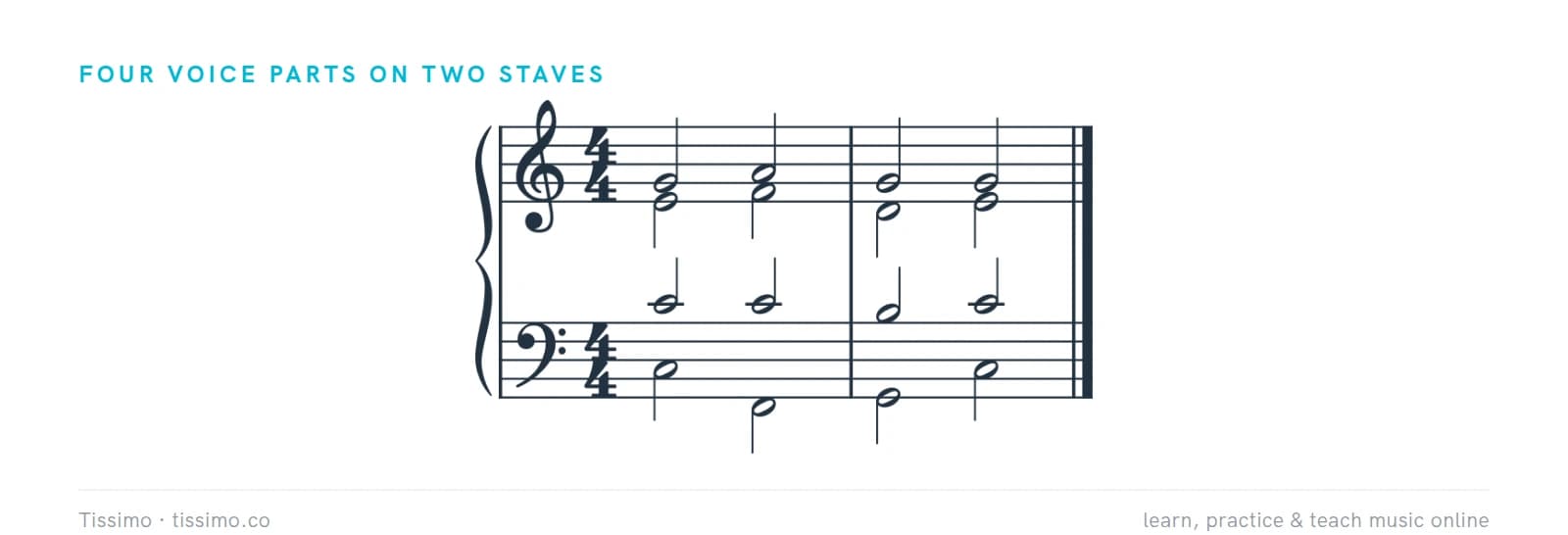
- Closed score: two staves, like piano music. Soprano and alto share the treble staff (soprano stems up, alto stems down); tenor and bass share the bass staff. Hymnals use this layout.
- Open score: one staff per part. Here the tenor usually reads a treble clef with a small 8 below it, meaning the notes sound an octave lower.
Singing in a choir
A choir sings A cappella (unaccompanied) or with piano, organ, a band or an orchestra. The conductor sets the tempo, shapes the phrasing and balances the parts, while singers work on blend: matching vowels, intonation, breathing places and the endings of words, so the group sounds like one instrument. Learning your part means hearing it against the others, so choir singing is excellent ear training.
Tips for new choir singers
- Mark your music in pencil: breaths, dynamics and the notes your section finds tricky.
- Listen across the choir as much as to yourself; if you can't hear the singers next to you, you are probably too loud.
- Warm up before rehearsal and drink water; a relaxed, well-supported voice blends best.
- Practicing solfège and sight-reading makes learning new music much faster.
Common questions
What is the difference between a choir and a chorus?
Very little: both are groups of singers with several voices per part. "Chorus" is often used for large groups and for the singing ensemble of an opera or musical; "choir" is often used for church, school and chamber groups.
What does SATB mean?
Soprano, alto, tenor, bass: the four standard parts of a mixed choir, from highest to lowest. Music written for these four parts is called SATB music.
Practice it: free worksheets
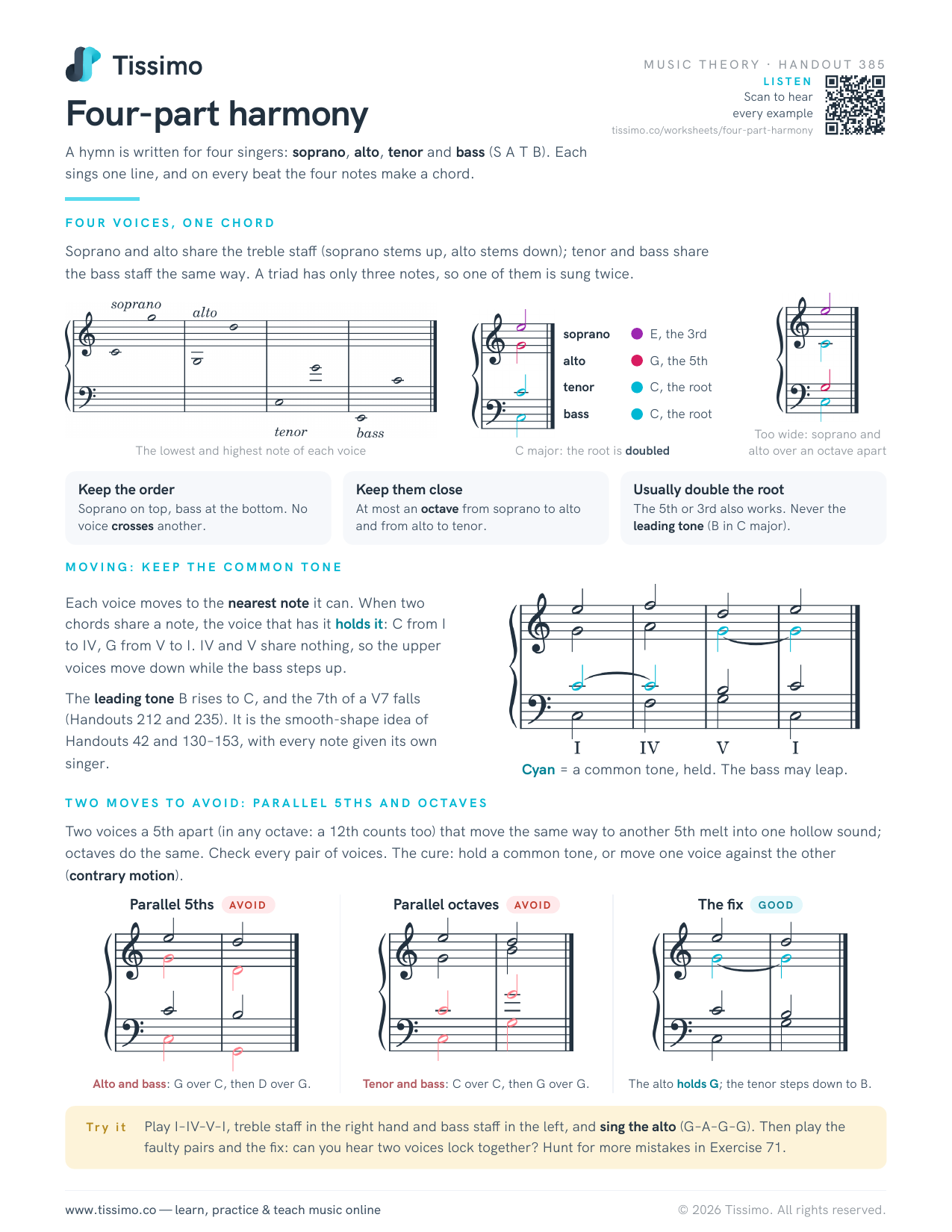 Four-part harmonyA hymn is written for four singers: soprano, alto, tenor and bass (S A T B). Each sings one line, and on every beat the four notes make a chord.
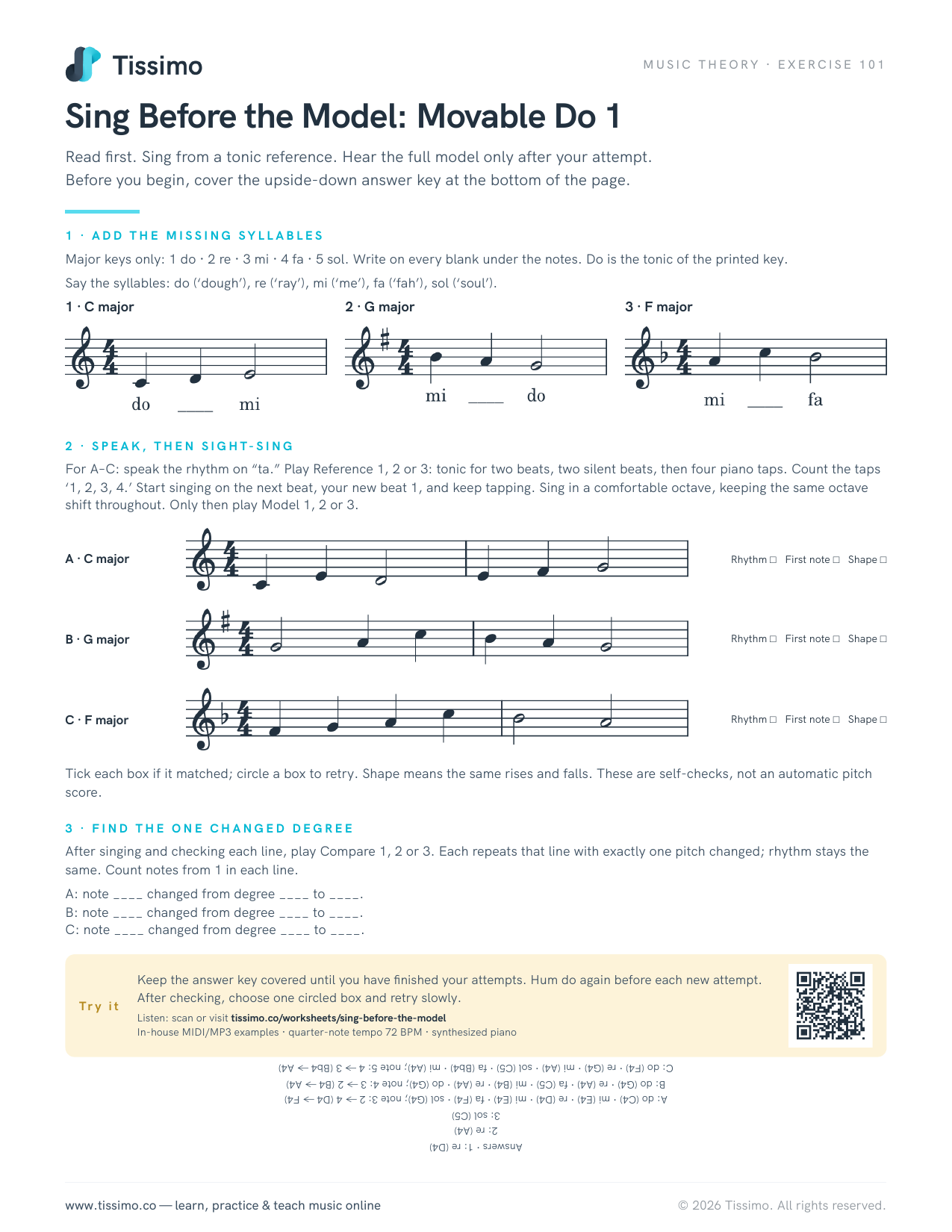 Sing Before the Model: Movable Do 1Read first. Sing from a tonic reference. Hear the full model only after your attempt. Before you begin, cover the upside-down answer key at the bottom of the page.
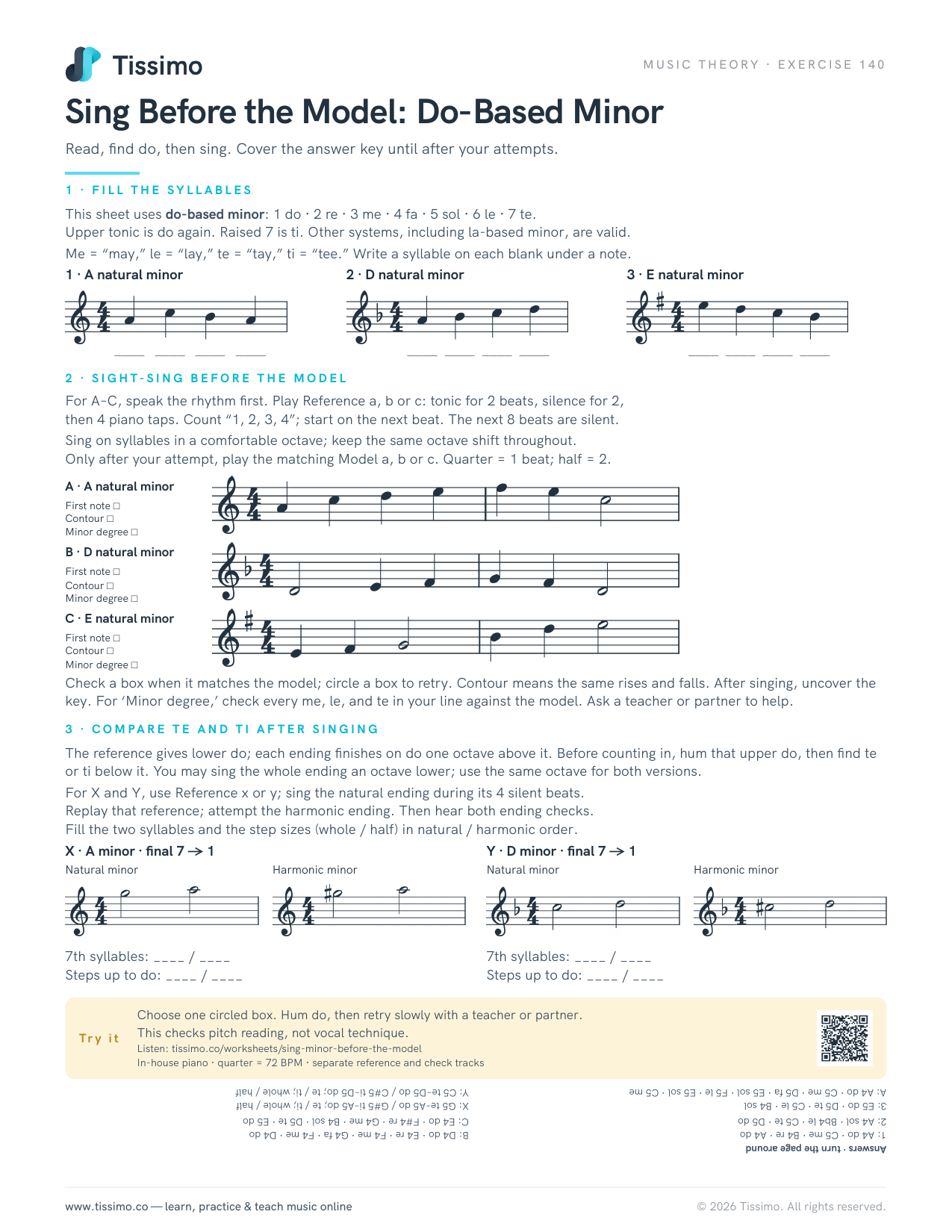 Sing Before the Model: Do-Based MinorRead, find do, then sing. Cover the answer key until after your attempts.
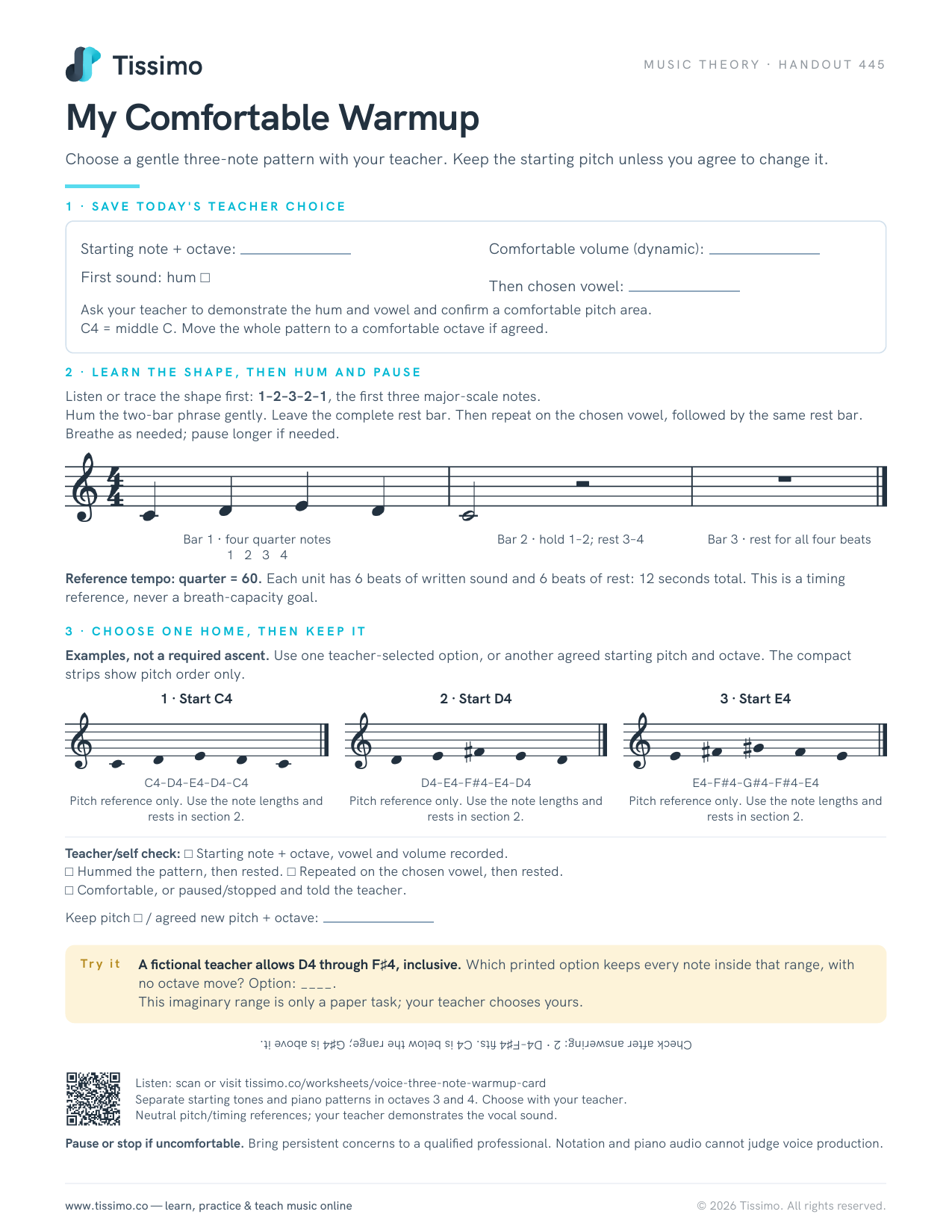 My Comfortable WarmupChoose a gentle three-note pattern with your teacher. Keep the starting pitch unless you agree to change it.
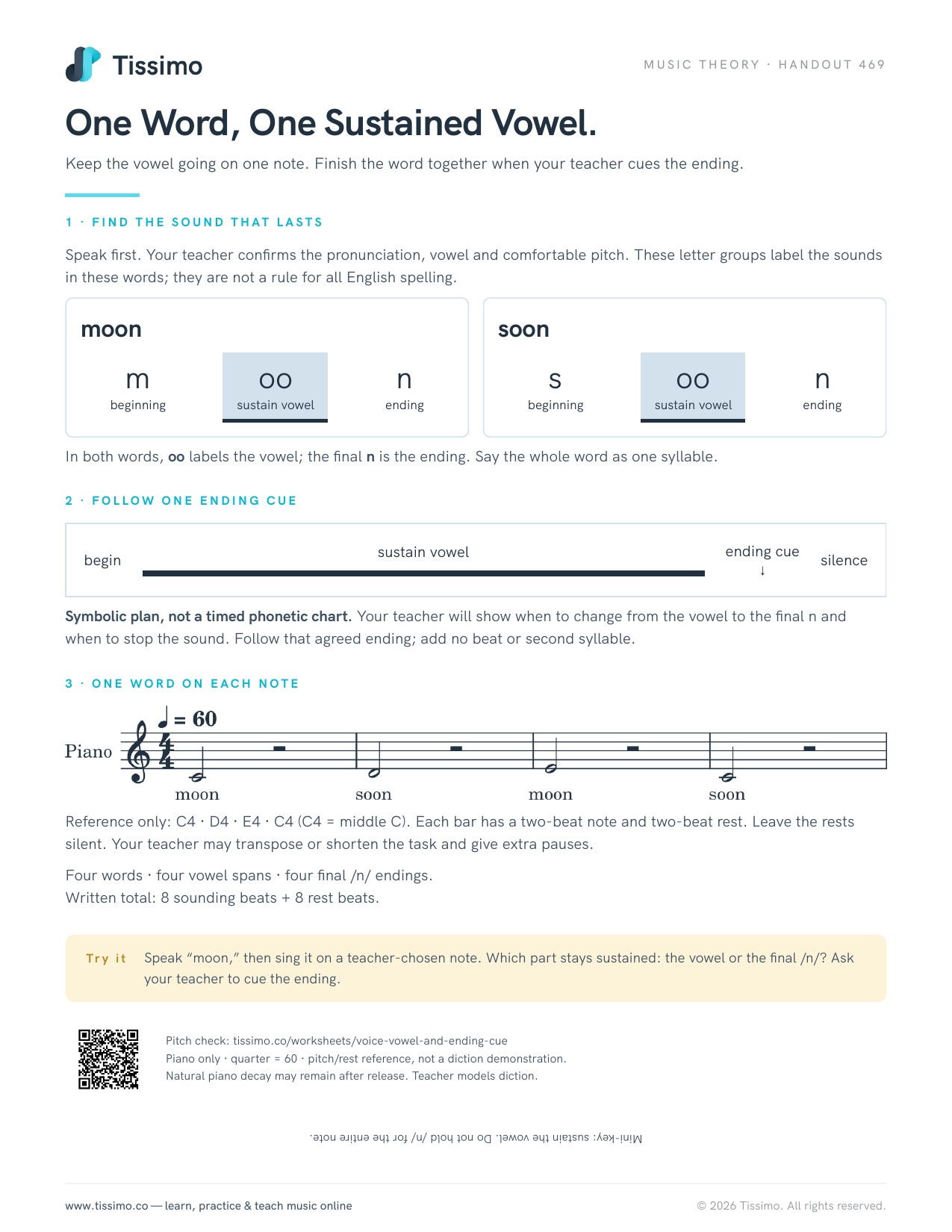 One Word, One Sustained Vowel.Keep the vowel going on one note. Finish the word together when your teacher cues the ending.
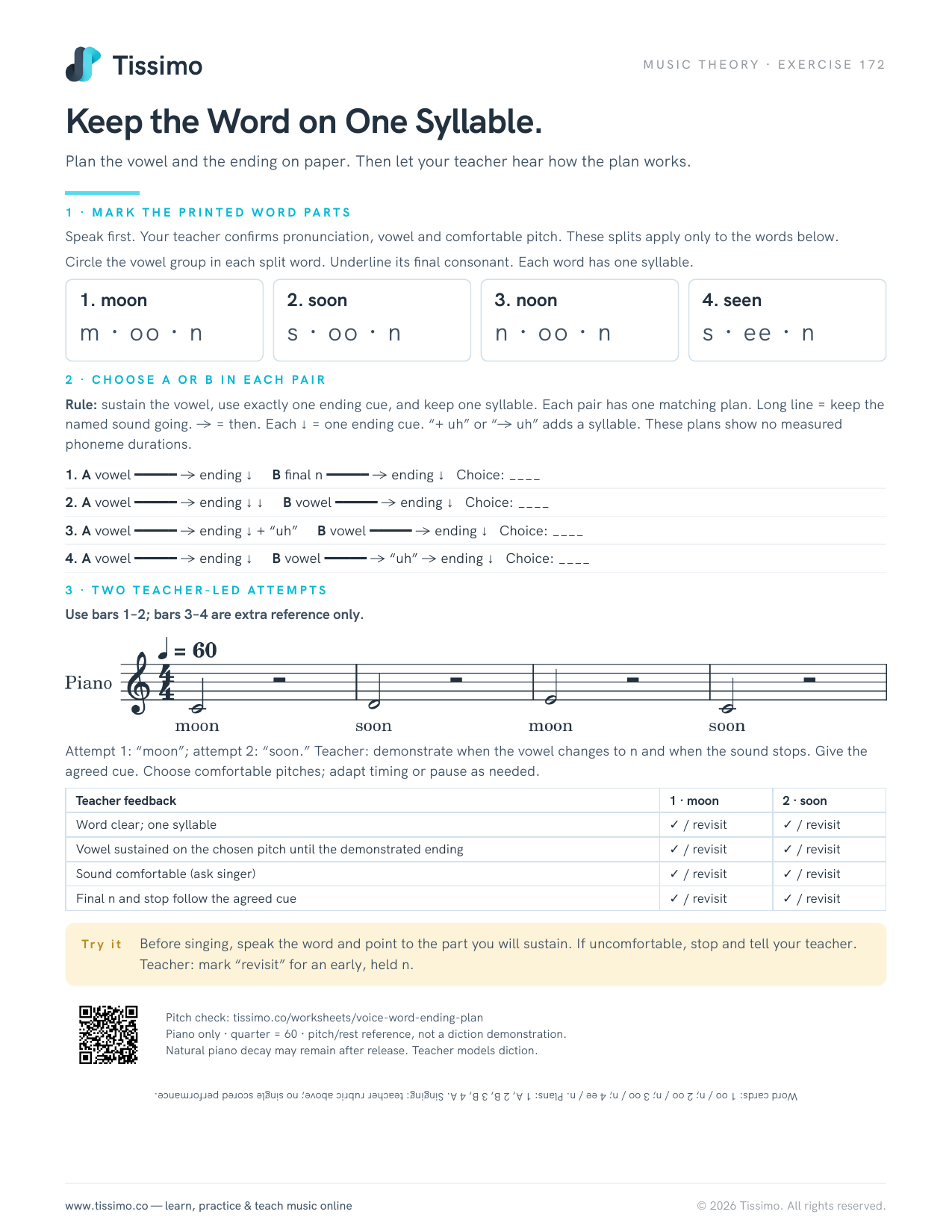 Keep the Word on One Syllable.Plan the vowel and the ending on paper. Then let your teacher hear how the plan works.