Instruments & Voices
Tenor
Pronounced TEN-er
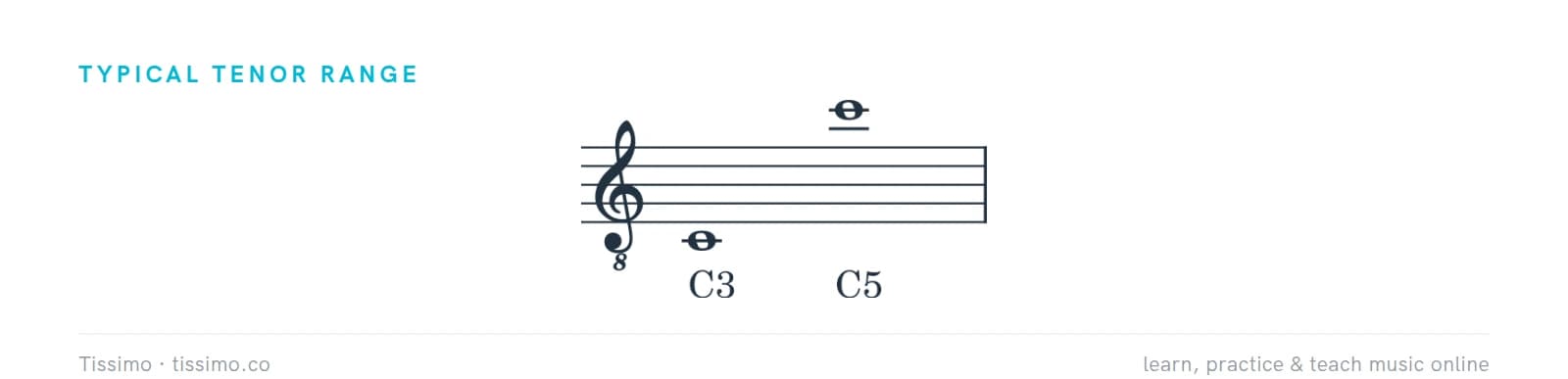
Tenor is the highest common adult male voice type, with a typical classical range of about C3 to C5. Tenor parts are usually written in treble clef with an 8 below it, sounding an octave lower than written.
The tenor is the highest of the standard adult male voices, above the baritone and bass. Tenors sing the leading male roles in much opera and operetta, carry melodies in many musical-theater and pop styles, and form the upper men's section of a choir. The name comes from the Latin for "to hold": in medieval polyphony the tenor held the main melody, often a chant, while other voices moved around it.
Range
A typical classical tenor range is about C3 to C5. That top note, the tenor's "high C," is a famous test in opera. Choral tenor parts usually stay below about G4 or A4. Many tenors develop a strong, ringing top by learning to blend smoothly from chest voice into a mixed sound.
Kinds of tenor
- Light (leggero) tenor: agile and bright, with an easy top; common in Rossini and Baroque music.
- Lyric tenor: warm and flowing; the voice of many romantic leads.
- Spinto and dramatic tenor: heavier and more powerful, able to ride over a big orchestra.
- Heldentenor ("heroic tenor"): a large, enduring voice for the heaviest roles, especially Wagner's.
How tenor parts are written
Tenor music is written an octave higher than it sounds, so it can use the familiar treble clef. The clef usually has a small 8 underneath as a reminder; sometimes the plain treble clef is used and the octave is simply understood. In hymnals and other closed scores, the tenor shares the bass clef staff with the bass, written at pitch with stems up.
Tips for tenors
- Don't carry a heavy chest voice to the top; let it lighten and mix as you go up.
- Practice the passage between registers (roughly around D4 to G4 for many tenors) slowly, on easy vowels.
- If you can't yet reach tenor notes comfortably, sing baritone for a while; voices often settle in the late teens and twenties.
Common questions
How do I know if I am a tenor or a baritone?
Range helps, but comfort matters more. A tenor's voice usually feels at home around the top of the bass staff and above, with an easier high range; a baritone sounds fuller lower down and tires sooner up high. A voice teacher can listen to your color and where your voice changes register.
Why is tenor music written in treble clef?
Writing the notes an octave higher keeps them on the familiar treble staff instead of on ledger lines above the bass staff. The small 8 under the clef means the music sounds an octave lower than written.
Practice it: free worksheets
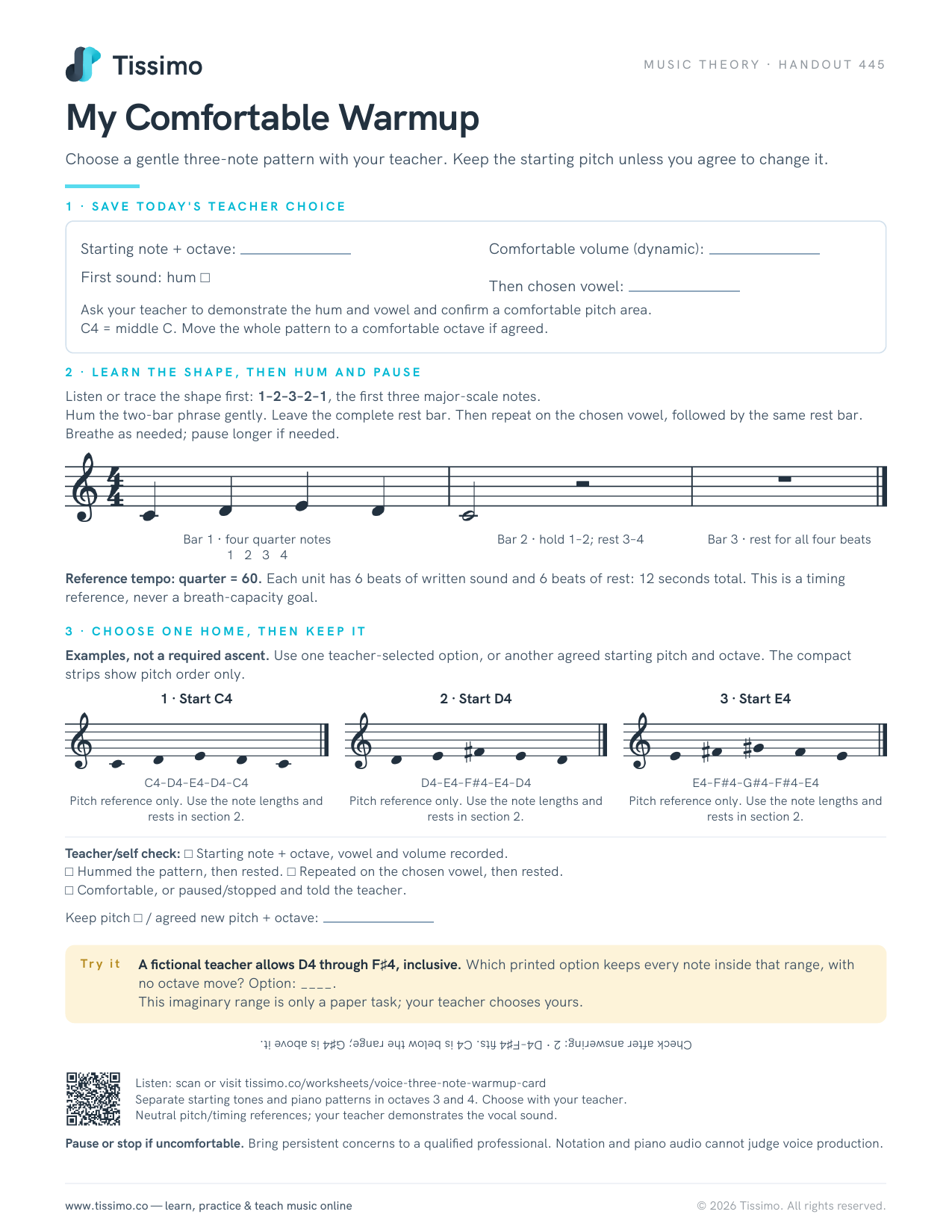 My Comfortable WarmupChoose a gentle three-note pattern with your teacher. Keep the starting pitch unless you agree to change it.
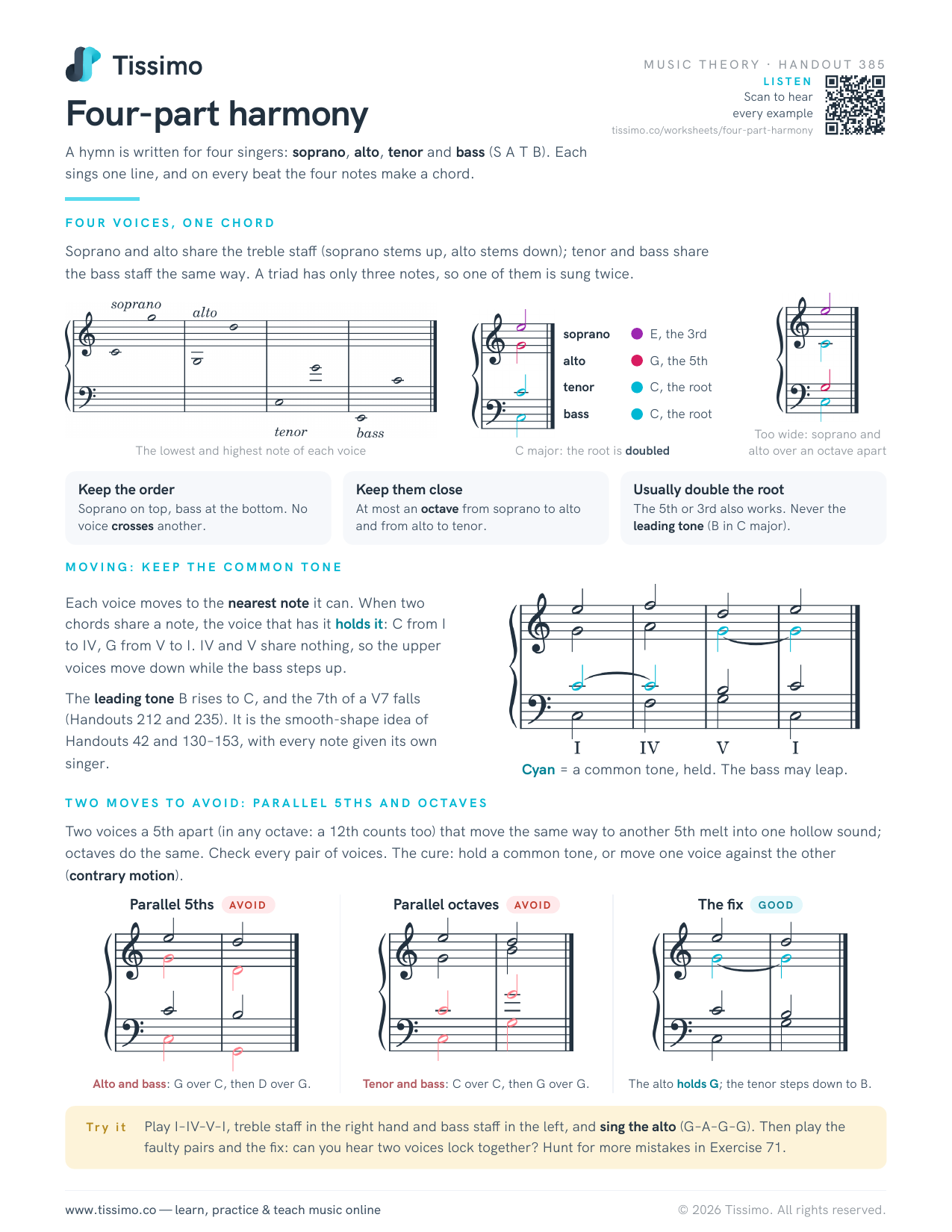 Four-part harmonyA hymn is written for four singers: soprano, alto, tenor and bass (S A T B). Each sings one line, and on every beat the four notes make a chord.
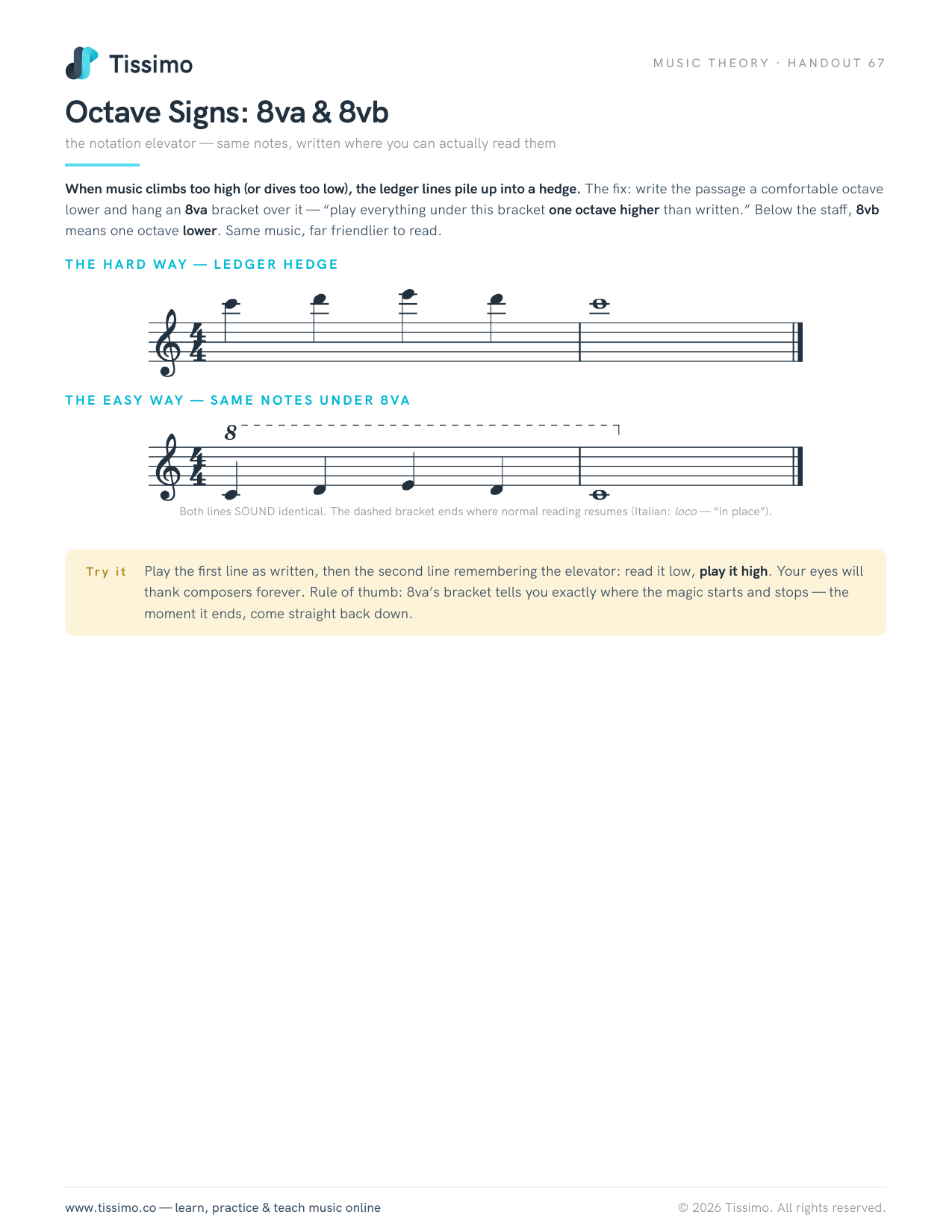 Octave Signs: 8va & 8vbthe notation elevator — same notes, written where you can actually read them