Instruments & Voices
Baritone
Pronounced BARE-ih-tohn
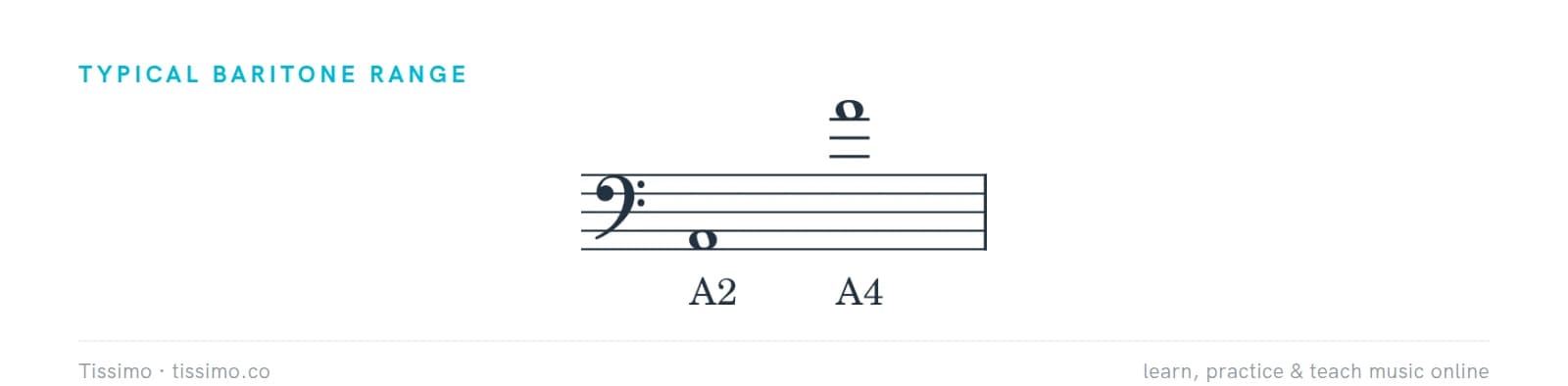
Baritone is the male voice type between tenor and bass, with a typical classical range of about A2 to A4. It is often described as the most common adult male voice and is written in bass clef.
The baritone lies between the tenor and the bass, and it is often described as the most common adult male voice. A baritone voice has some of the tenor's ring at the top and some of the bass's depth at the bottom, with a strong, warm middle range. In opera, baritones play many of the most interesting characters, from comic schemers to tragic fathers and villains.
Range
A typical classical baritone range is about A2 to A4. Many baritones can sing a few notes higher or lower, and the exact limits vary from singer to singer. The richest part of the voice is usually the middle, around the top half of the bass staff.
Kinds of baritone
- Lyric baritone: lighter and smoother, often suited to song recitals and lighter opera roles. Figaro in Rossini's The Barber of Seville is a famous baritone role.
- Dramatic baritone: darker and more powerful, with a strong top; Verdi wrote many great roles for this voice.
- Bass-baritone: a voice with the depth of a bass and much of the baritone's range.
In a choir
Most choirs have no separate baritone part, so baritones sing whichever part suits them: second tenor if their top is easy, first bass otherwise. In barbershop quartets, one of the four parts is actually called baritone; it usually lies close to the melody (the lead), moving below and sometimes above it.
How baritone parts are written
Baritone parts are written in bass clef at the pitch they sound. In some choral and popular music the part is written in a treble clef with an 8 below it, like a tenor part.
Tips for baritones
- Keep the top light and mixed; forcing a heavy sound upward is the most common baritone problem.
- Use the strong middle range to build breath support and steady tone.
- Many young men's voices sound like baritones at first and later move up or down; let a teacher guide you.
Common questions
What is the difference between a baritone and a bass?
A baritone sits higher, with a brighter top and a typical range of about A2 to A4. A bass has a deeper, darker sound and a typical range of about E2 to E4.
What is the most common male voice type?
Baritone is usually described as the most common adult male voice, but every voice is individual, and a teacher's ear is the best guide to yours.
Practice it: free worksheets
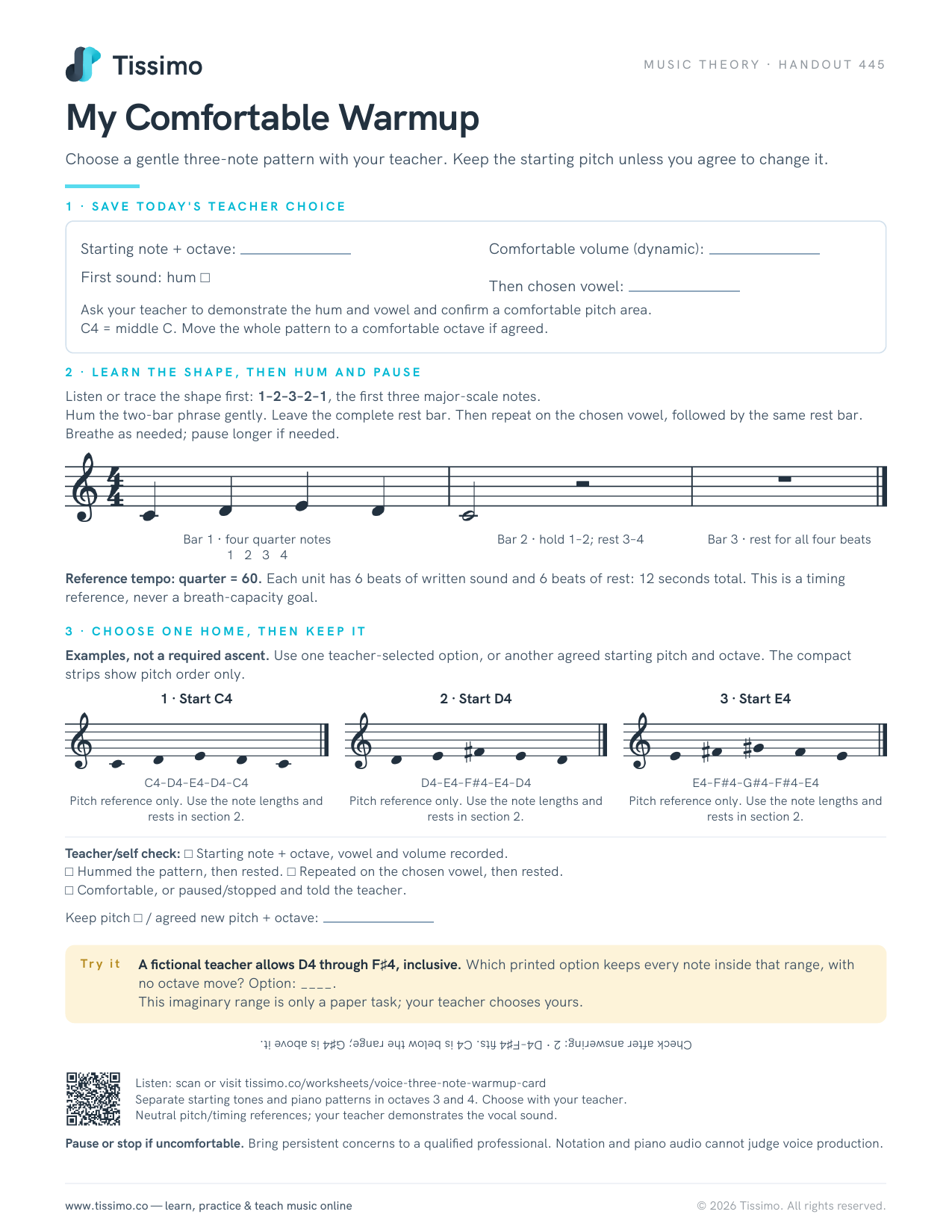 My Comfortable WarmupChoose a gentle three-note pattern with your teacher. Keep the starting pitch unless you agree to change it.
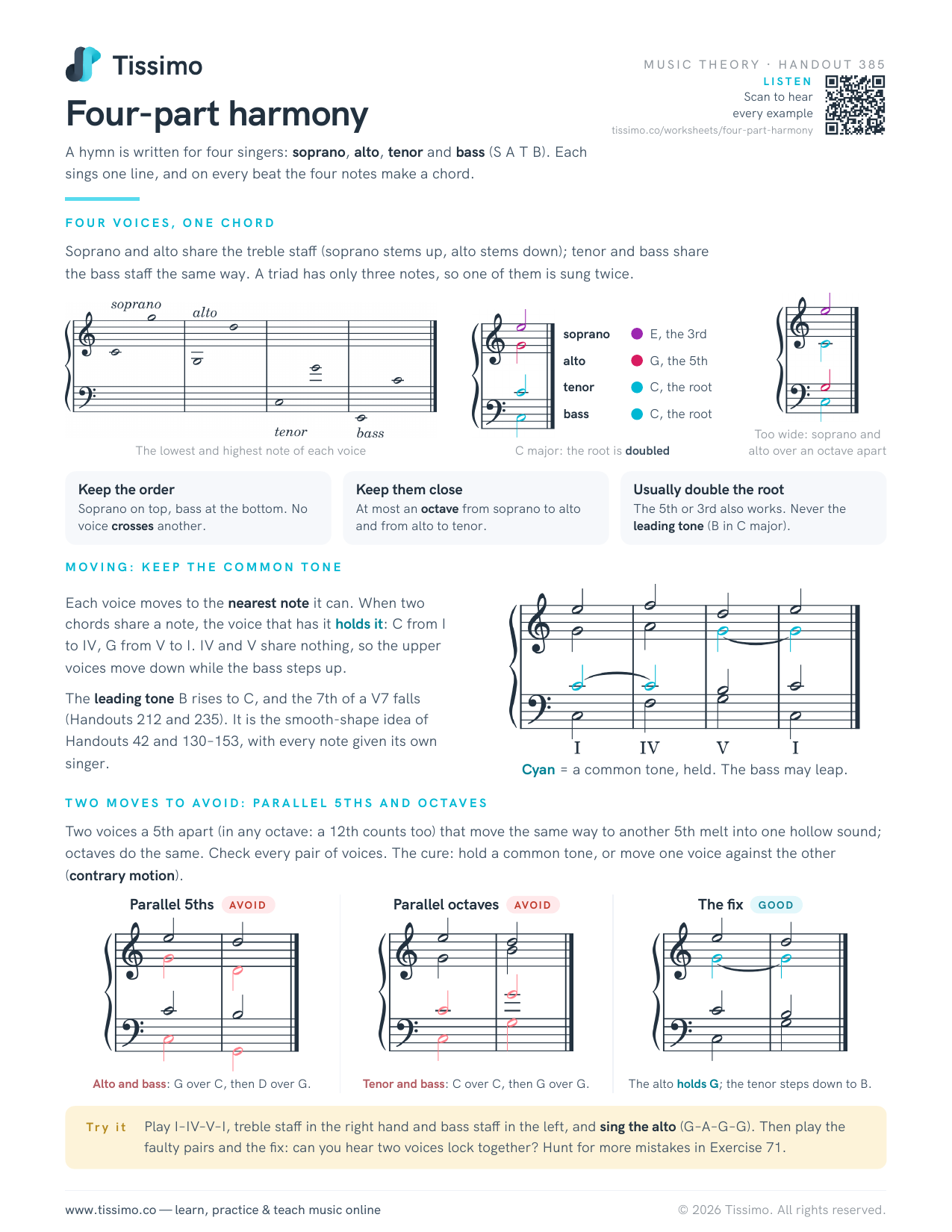 Four-part harmonyA hymn is written for four singers: soprano, alto, tenor and bass (S A T B). Each sings one line, and on every beat the four notes make a chord.
 The Bass Clef & the Grand StaffThe bass staff holds the lower notes, usually played by the left hand. It works just like the treble staff (Handout 351), but its clef names a different line.