Technique & Performance
A Cappella
Pronounced ah kuh-PEL-uh
A cappella means singing without instrumental accompaniment. A choir, a vocal group or a soloist sings every part, and in modern groups the voices may also imitate the bass and drums.
The term comes from church music: Italian a cappella means "in the manner of the chapel". It first described the style of church choral music and broadened to mean any singing without instruments. Today you hear a cappella singing in church and concert choirs, barbershop quartets, gospel groups, school and college vocal ensembles, and pop-style groups that arrange songs for voices alone.
How a cappella groups work
With no instruments, the singers supply everything:
- Harmony: the parts often divide into soprano, alto, tenor and bass (four-part harmony), sometimes more.
- Bass line: in contemporary groups, a bass singer may sing low, instrument-like lines on syllables such as "dm" or "bm".
- Rhythm: some groups add vocal percussion, or beatboxing, imitating a drum kit with the mouth.
- Melody: a soloist or a section carries the tune while the others accompany on vowels or syllables.
The challenge: staying in tune
Without a piano to lean on, an a cappella group has to keep its own pitch, and over a long piece many groups slowly sink flat. To stay in tune:
- Start from a clear reference. Groups often take their starting notes from a pitch pipe or a keyboard.
- Listen down to the bass. Tune each chord from the lowest part upward.
- Keep breath and energy up on descending lines, where pitch tends to sag.
- Learn how chords like to be tuned. Experienced singers adjust some notes slightly, for example a major third a touch low, which is part of good intonation in a group.
- Check the final pitch against the starting reference, so you know whether the group drifted.
For students
Singing a cappella is excellent ear training: you have to hear your part against the others with no instrument to guide you. Start with rounds (canon) and two-part songs, then move to three and four parts. Singing short melodies from a tonic, as in Sing Before the Model, builds the inner hearing that unaccompanied singing needs.
Common questions
How do you spell a cappella?
The standard spelling is a cappella: two words, with a double p and a double l. Spellings such as acapella and a capella are common but less standard.
Is beatboxing a cappella?
In contemporary a cappella groups, vocal percussion (beatboxing) is common and counts as part of the a cappella sound, because it is made with the voice.
Practice it: free worksheets
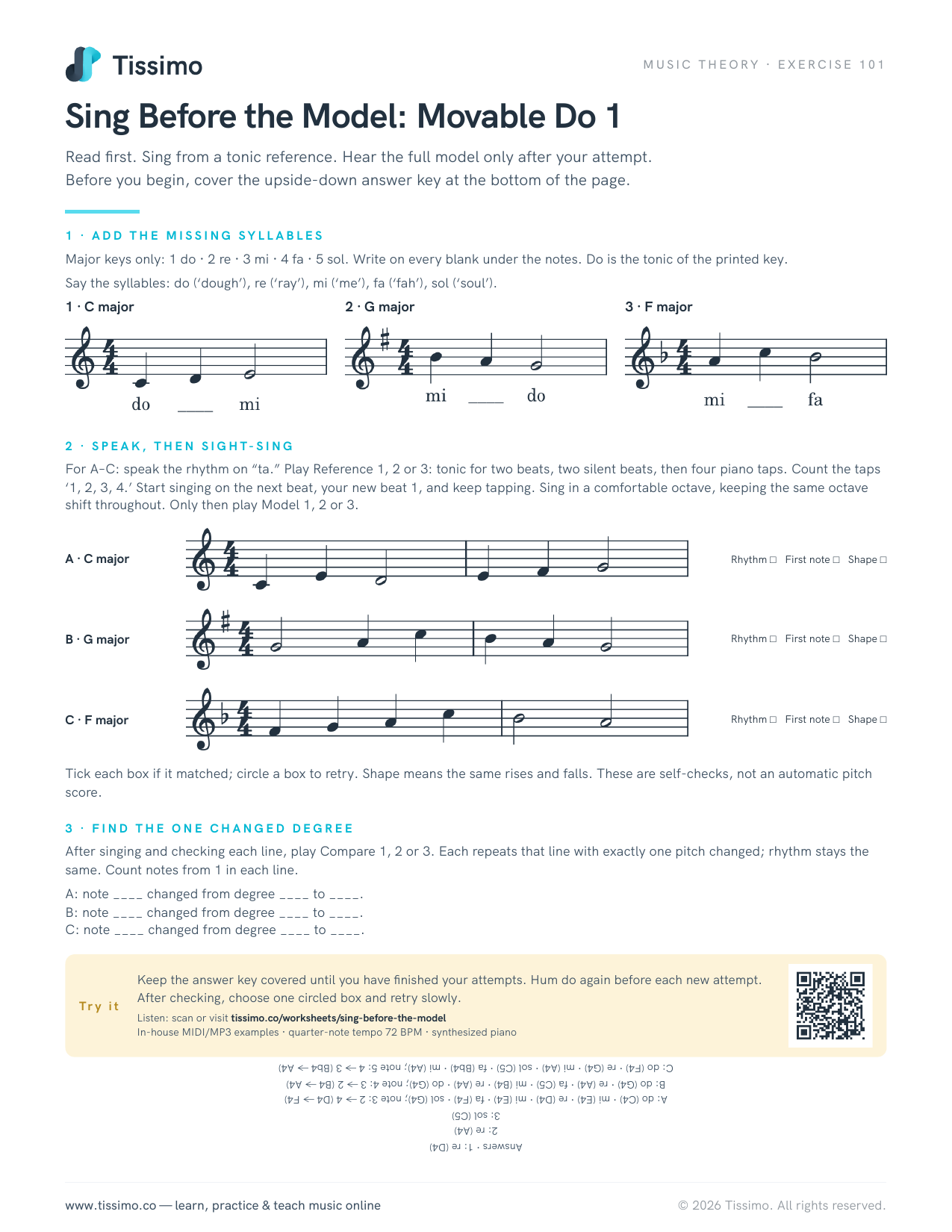 Sing Before the Model: Movable Do 1Read first. Sing from a tonic reference. Hear the full model only after your attempt. Before you begin, cover the upside-down answer key at the bottom of the page.
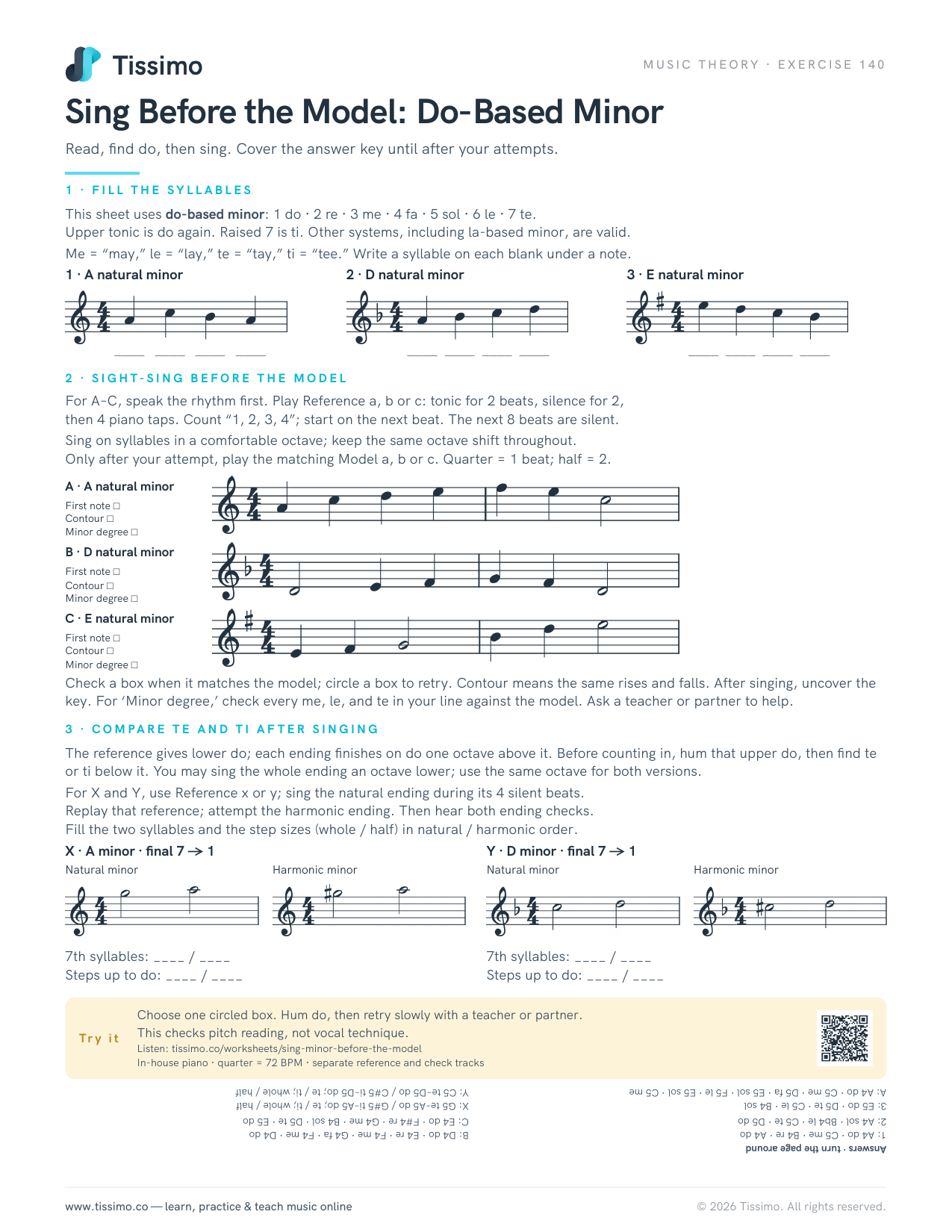 Sing Before the Model: Do-Based MinorRead, find do, then sing. Cover the answer key until after your attempts.
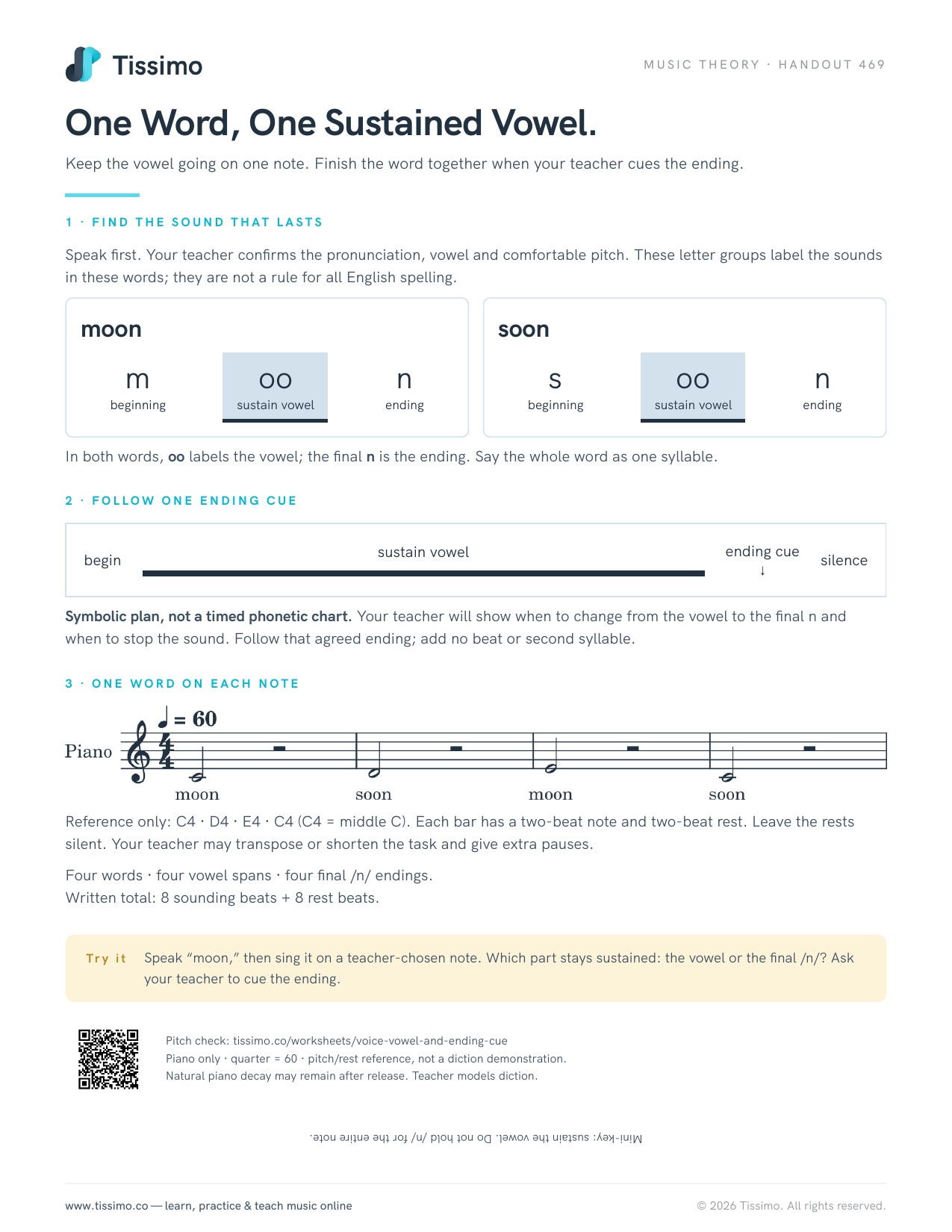 One Word, One Sustained Vowel.Keep the vowel going on one note. Finish the word together when your teacher cues the ending.
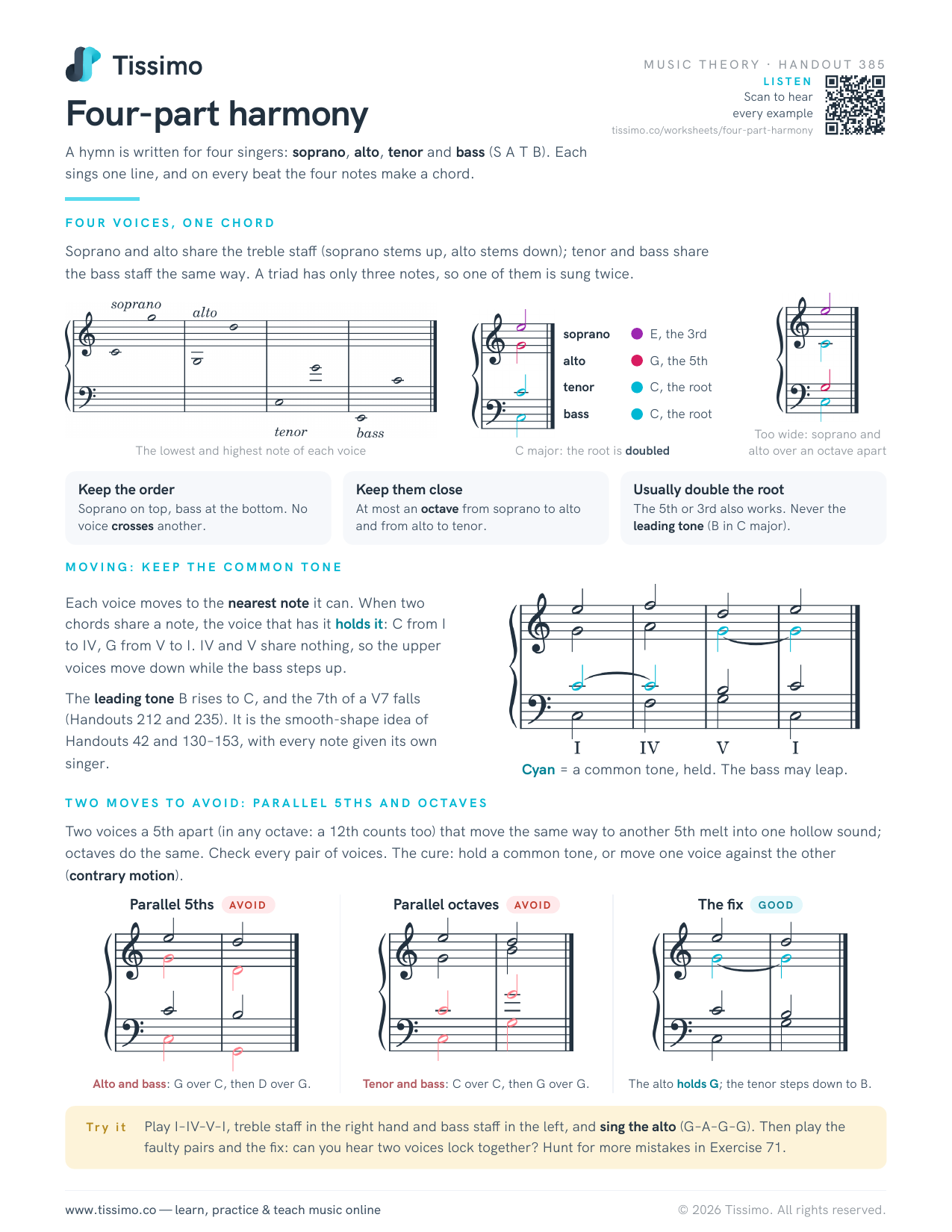 Four-part harmonyA hymn is written for four singers: soprano, alto, tenor and bass (S A T B). Each sings one line, and on every beat the four notes make a chord.