Tempo Markings
A Tempo
Pronounced ah TEM-poh
A tempo means 'in time': return at once to the tempo you were playing before a change such as a ritardando, rallentando, ritenuto or accelerando.
A tempo means "in time". It tells you to return to the tempo you were playing before a change, and it most often follows a ritardando, rallentando, ritenuto or accelerando. It is printed above the staff, usually in italics, at the point where the original speed comes back.
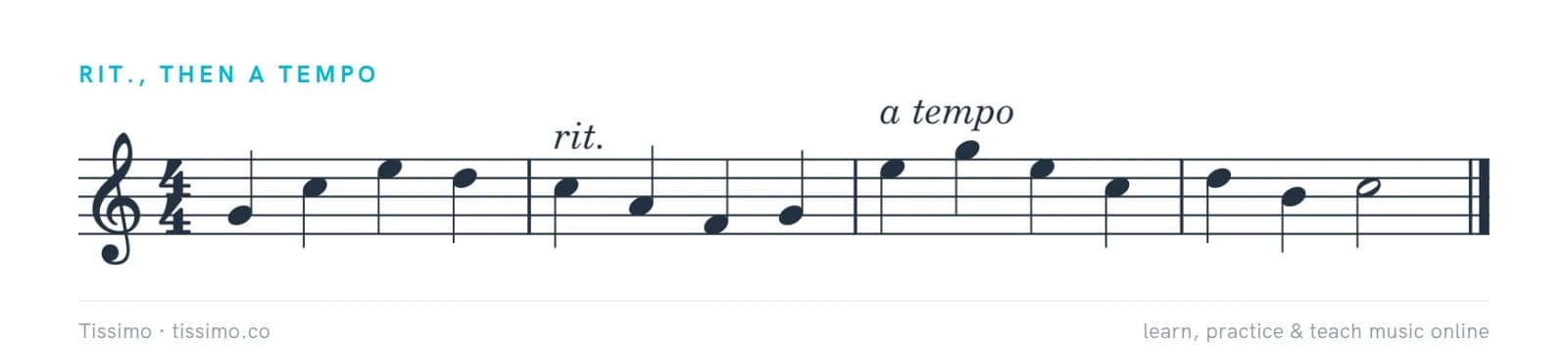
Snap back, don't drift
A gradual change happens over several beats, but a tempo does not: the original tempo returns at once, on the first note under the words. The skill is remembering that tempo while the music is slowing down or speeding up. Keep the old beat alive in your head during the rit., so you can step straight back into it. The Ritardando & Accelerando handout suggests practicing with the metronome on for the a tempo bars and off for the bends: can you land exactly on the click?
A tempo or Tempo primo?
A tempo returns to the tempo just before the change. Tempo primo (Tempo I) returns to the first tempo of the piece or section, which matters when the music has passed through more than one tempo, for example after a più mosso section. Composers do not always keep the two strictly apart, so read the context.
You may also see In tempo, which means the same thing; Burgmüller writes it in his Arabesque.
A common confusion
A tempo is not "at full speed". If a piece marked andante slows down and then says a tempo, it means back to andante, not faster than before. And after a fermata, composers often leave a tempo unwritten: the original speed is simply assumed to continue.
Dynamics & Tempo Ladders asks how fast you play the a tempo bar, and Match the terms: level 3 and the Musical terms & signs chart define it as a return to the original speed.
Common questions
What is the difference between a tempo and tempo primo?
A tempo returns to the speed just before a change. Tempo primo (Tempo I) returns to the opening tempo of the piece or section, even after several different tempos.
Practice it: free worksheets
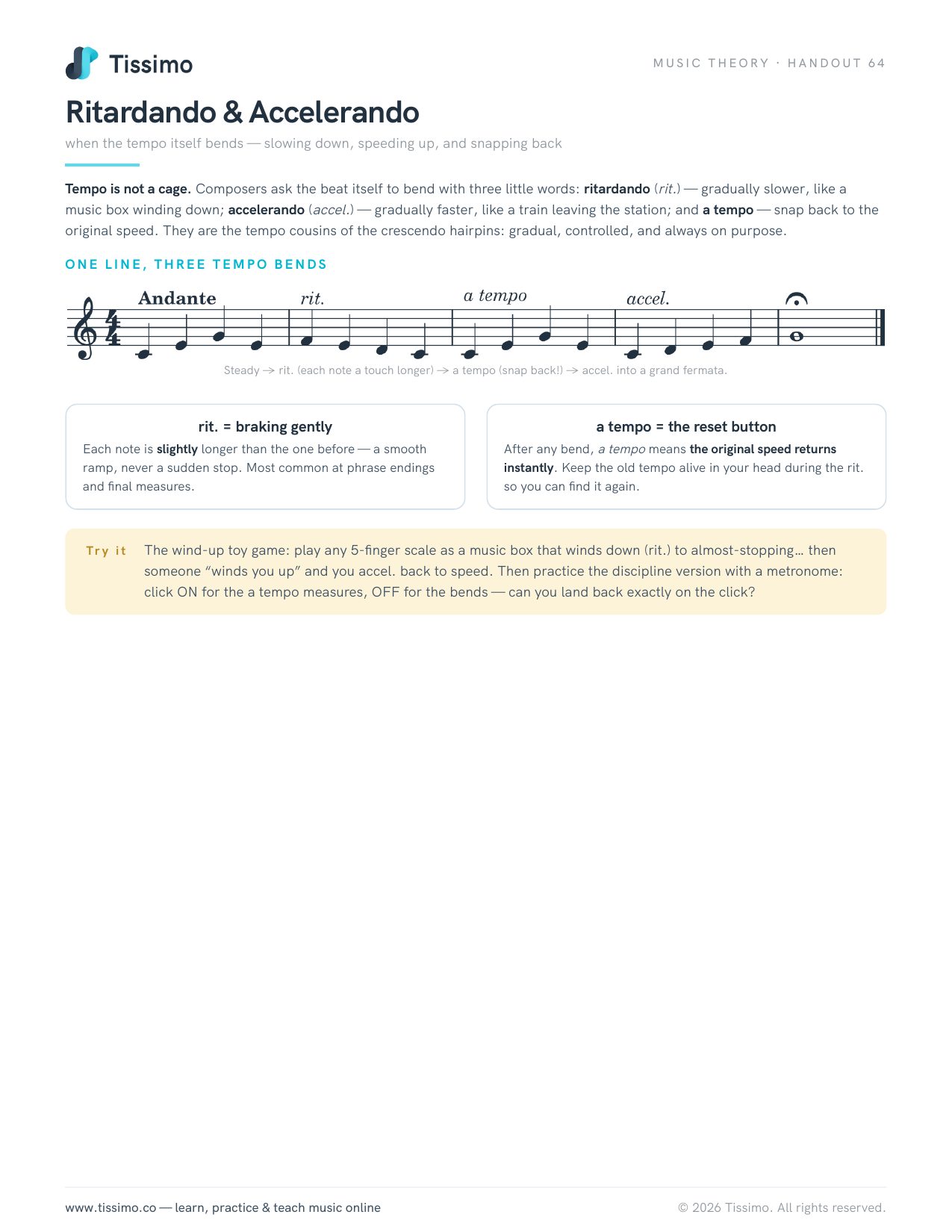 Ritardando & Accelerandowhen the tempo itself bends — slowing down, speeding up, and snapping back
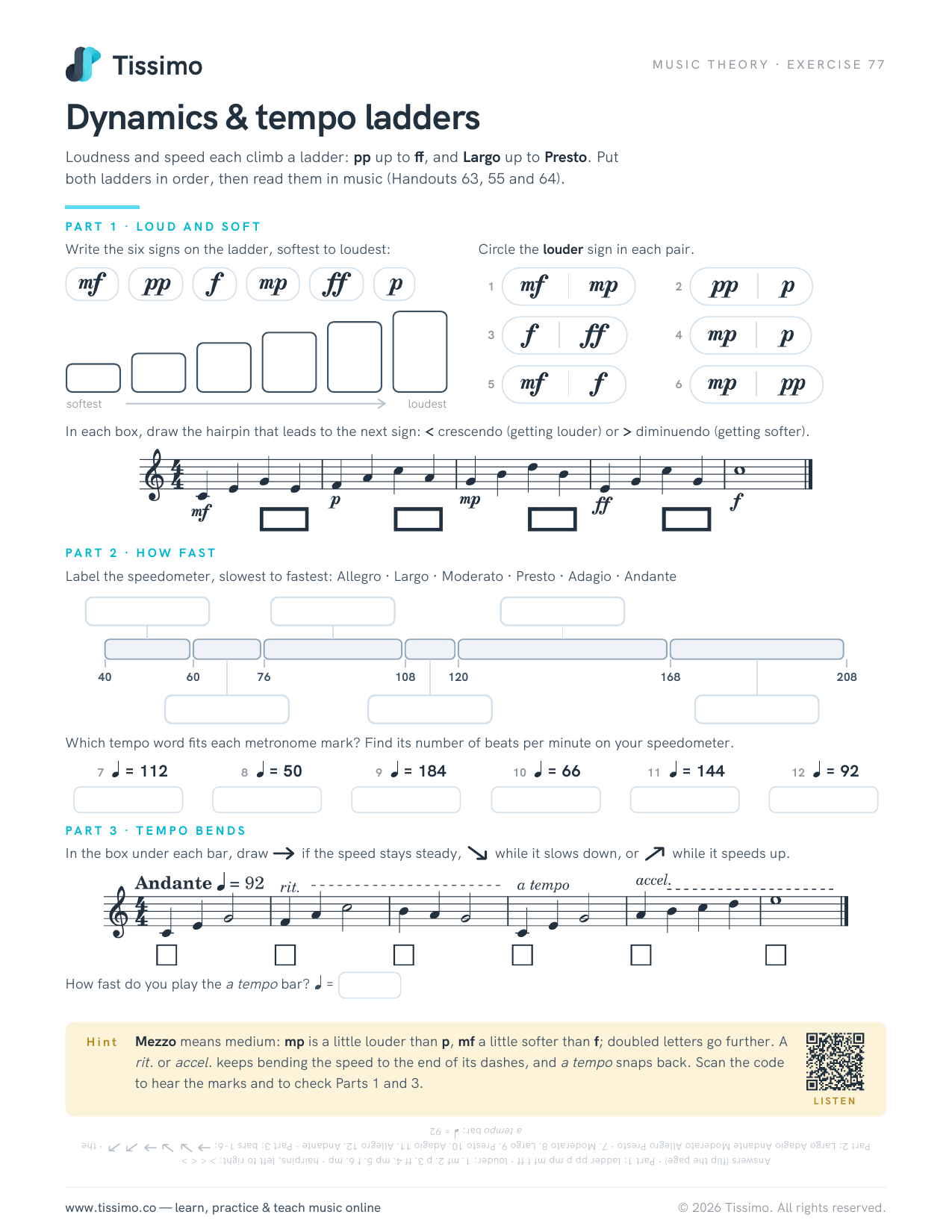 Dynamics & tempo laddersLoudness and speed each climb a ladder: pp up to ff, and Largo up to Presto. Put both ladders in order, then read them in music (Handouts 63, 55 and 64).
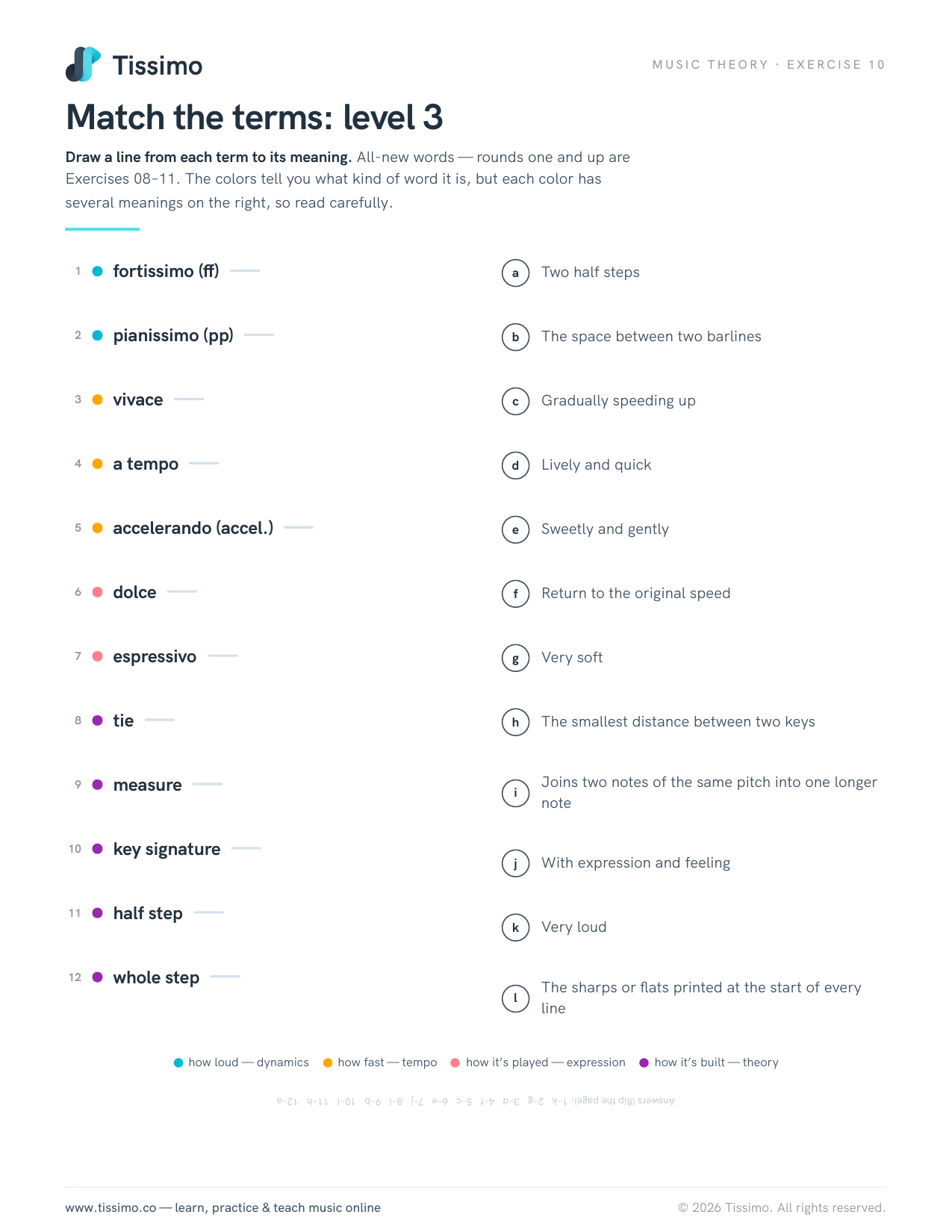 Match the terms: level 3Draw a line from each term to its meaning. All-new words — rounds one and up are Exercises 08–11. The colors tell you what kind of word it is, but each color has several meanings on the right, so read carefully.
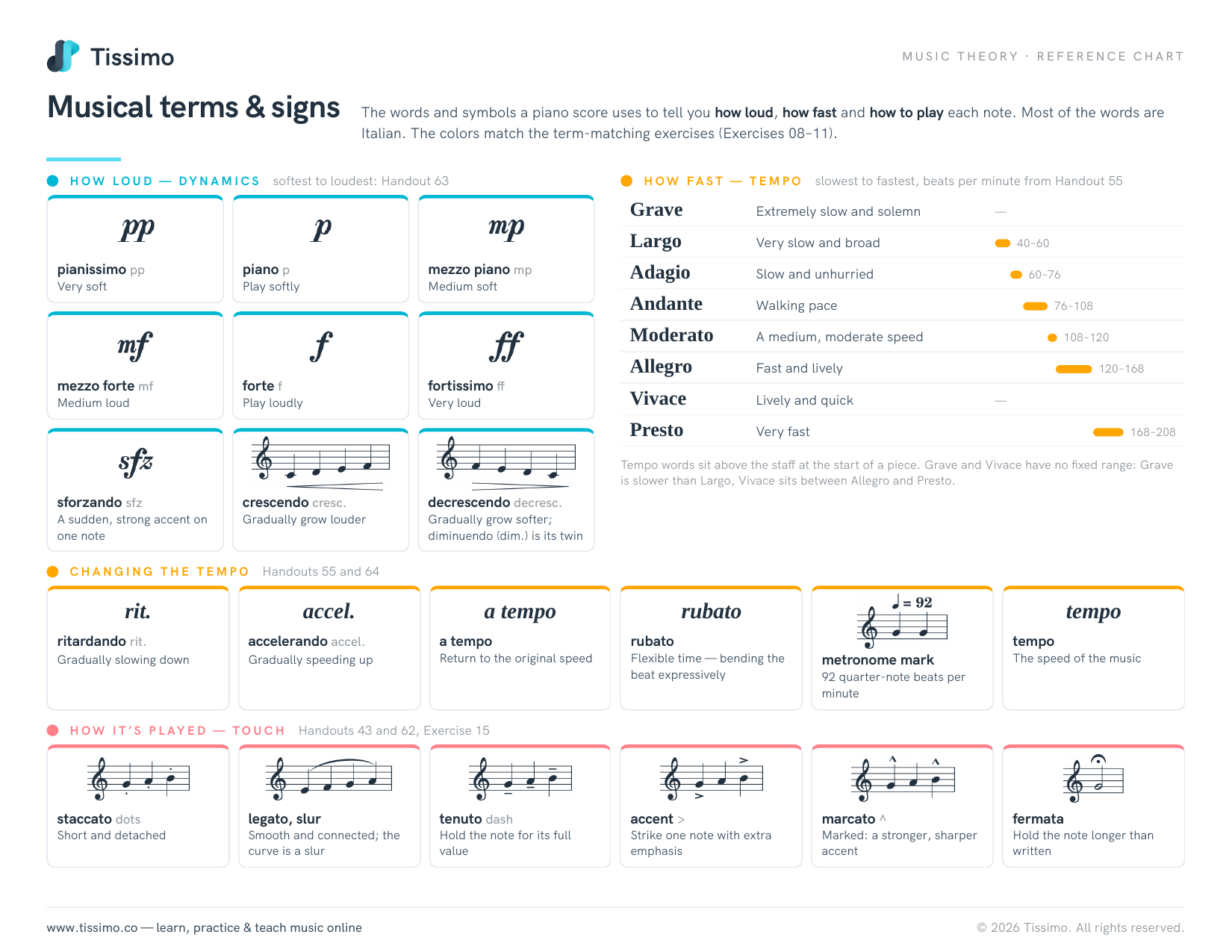 Musical terms & signsThe words and symbols a piano score uses to tell you how loud, how fast and how to play each note. Most of the words are Italian. The colors match the term-matching exercises (Exercises 08–11, 74 and 75).