Tempo Markings
Rallentando
Pronounced rah-len-TAHN-dohWritten as rall.
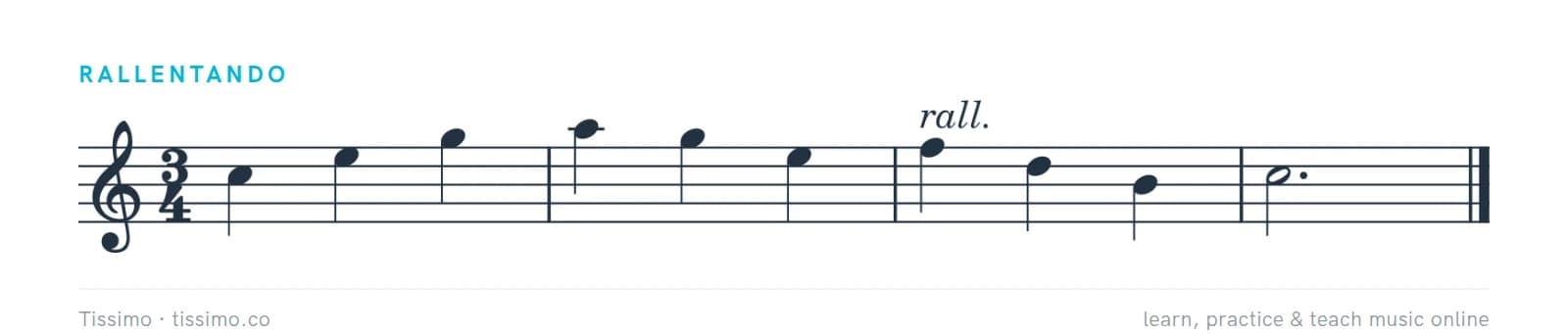
Rallentando, written rall., means gradually slowing down. In practice it is used almost exactly like ritardando: the tempo relaxes little by little from the marking onward.
Rallentando means "slowing down", from the Italian rallentare, to slow or to slacken. Written rall., it asks for a gradual decrease in tempo, just like ritardando.
Rall. or rit.?
Most musicians treat rallentando and ritardando as the same instruction, and many dictionaries define them identically. Some players hear a shade of difference, reading rallentando as a relaxing or winding down and ritardando as a deliberate holding back, but composers have not used the two words consistently enough to make that a rule. What is clear is that both are gradual, unlike ritenuto, which slows down at once.
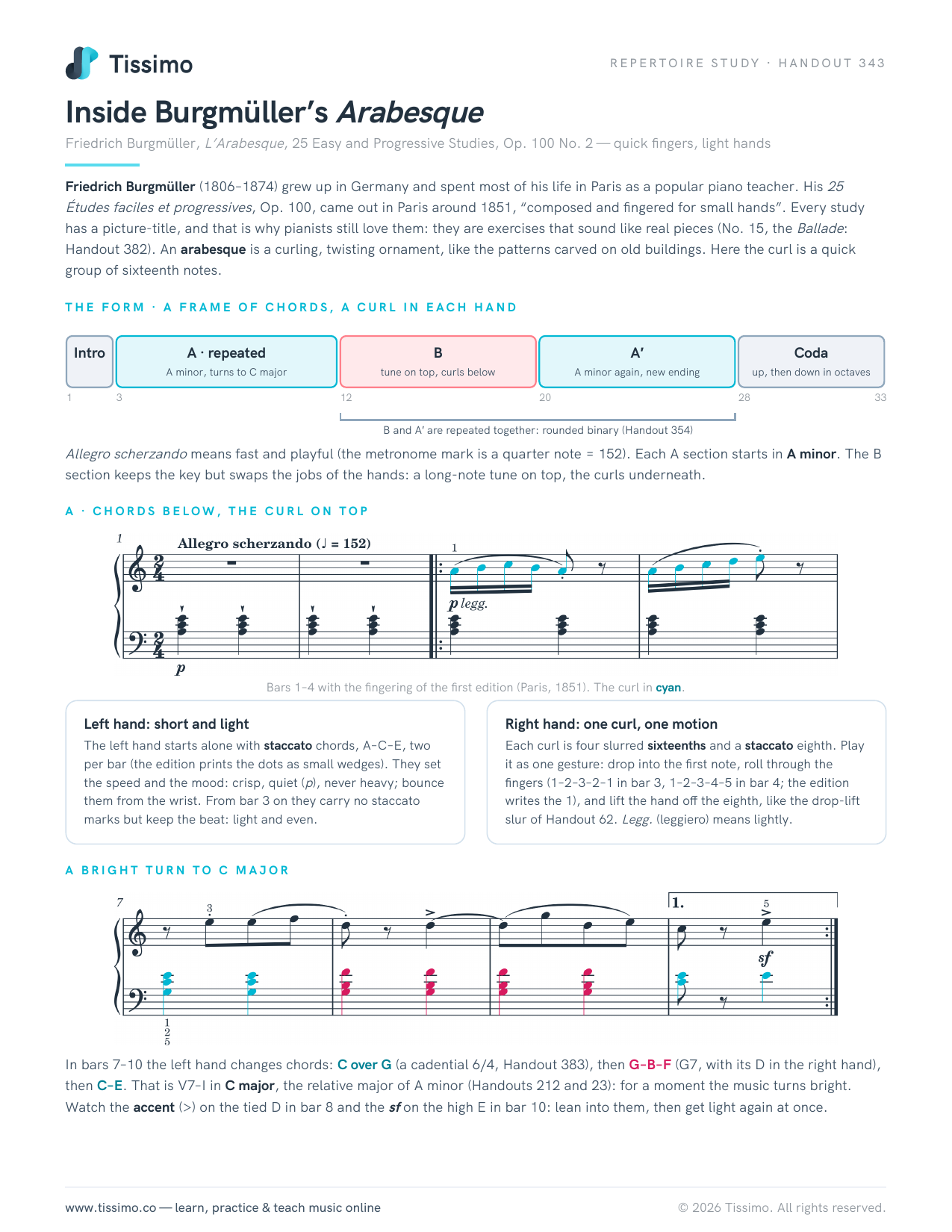
You will often see rall. near the end of a piece, or just before the opening theme returns. Burgmüller uses it in his Arabesque; our Arabesque study looks at the piece bar by bar.
Playing rall.
The craft is the same as for any gradual slowing:
- Keep the tempo until the word, then spread the slowing evenly over the passage.
- Decide in advance how slow the last note should be.
- If A tempo follows, return to the original speed at once.
- At the end of a piece, let the final chord sound fully before you release it.
A rall. that slows down too much too soon sounds like the music has run out of energy. Aim for a feeling of arrival, not of stopping halfway.
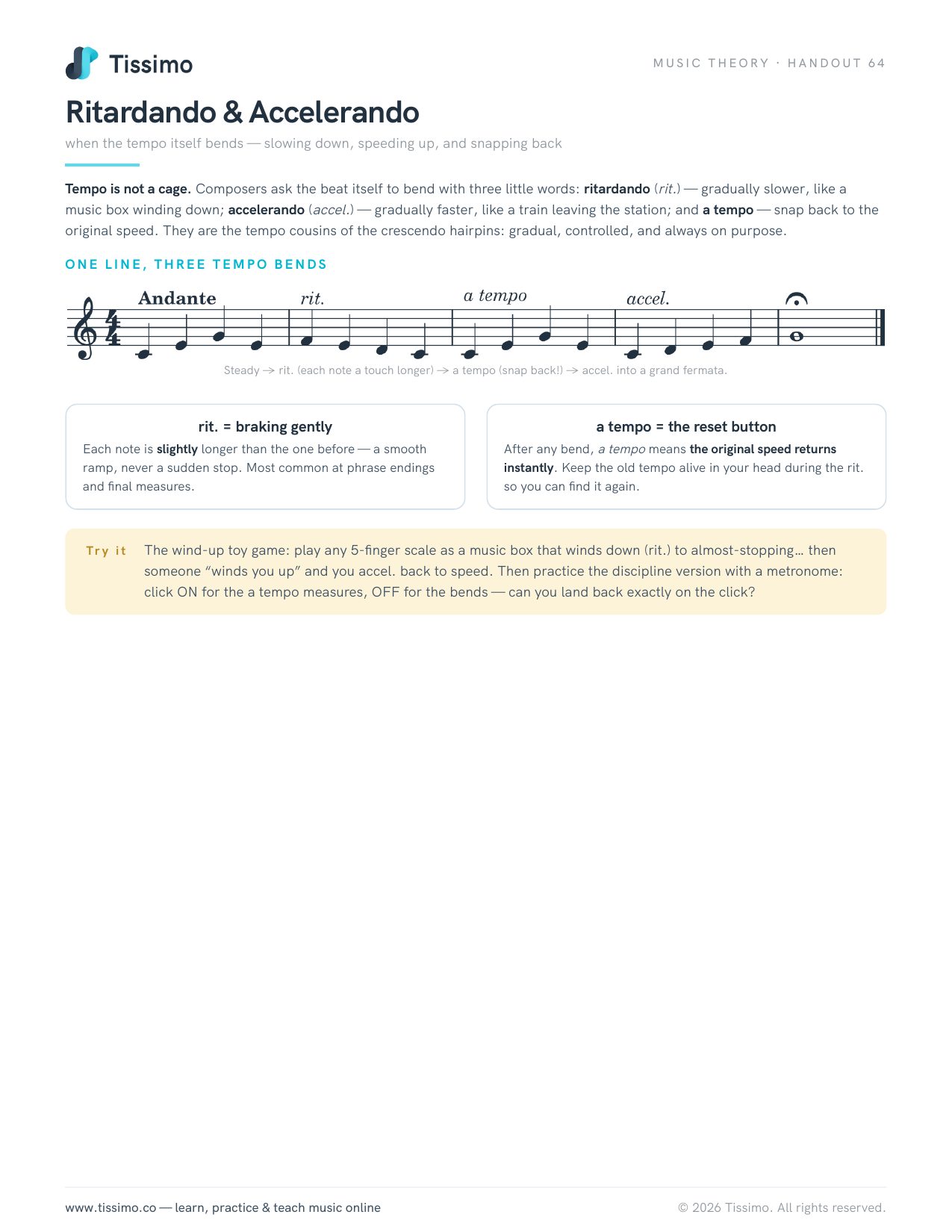
The advice in Ritardando & Accelerando for rit., a smooth ramp rather than a sudden stop, applies to rall. as well.
Common questions
Is rallentando the same as ritardando?
For practical purposes, yes. Both mean slowing down gradually. Some musicians feel rallentando is a little more relaxed, but there is no agreed difference.