Styles, Genres & Eras
Ragtime
Ragtime is an American piano style that flourished from the late 1890s to around 1920, combining a syncopated right-hand melody with a steady, march-like left hand. Scott Joplin was its most famous composer.
Ragtime was the popular music of America around 1900. It grew up in African American communities, especially in Missouri, and spread nationwide through sheet music sold for home pianos, piano rolls and live performance. The name is usually explained as "ragged time," for the way the melody pulls against the beat.
The sound of ragtime
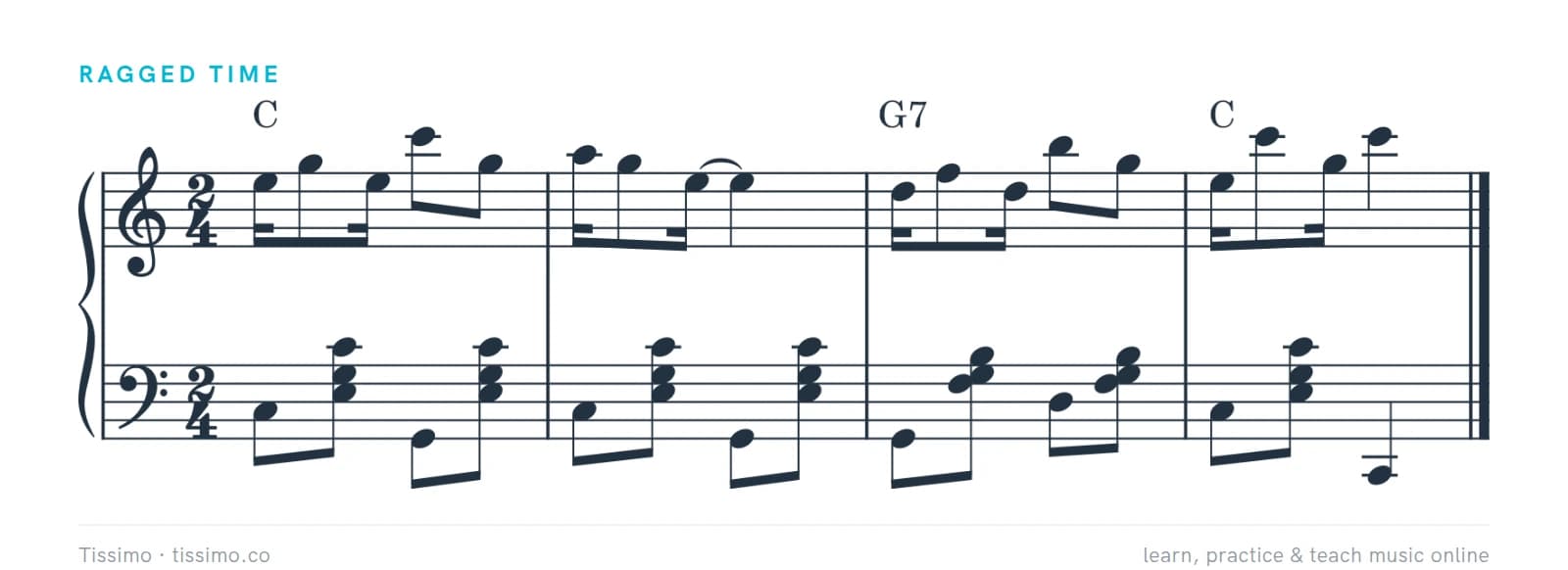
- The left hand keeps strict time. A low bass note on the beat alternates with a chord on the off-beat, "oom-pah," in steady eighth notes, as in a march.
- The right hand is syncopated. Melody notes land on the weak sixteenths and are often tied over the beat, so accents fall where the beat is not (see syncopation).
- 2/4 time (sometimes cut time) and a moderate tempo.
- Straight, not swung. Ragtime eighths and sixteenths are played evenly; the lilt comes from the syncopation, not from swing.
Form
A classic rag is built like a march: a chain of 16-bar sections called strains, most of them repeated, often with a short introduction and a trio section in the subdominant key. A typical layout is Intro – AA – BB – A – CC – DD. Joplin's "The Entertainer" follows this plan closely; the Inside The Entertainer study maps it bar by bar.
Composers
Scott Joplin, known as the "King of Ragtime," wrote the "Maple Leaf Rag" (1899), a best-selling piece of sheet music, and "The Entertainer" (1902), as well as an opera, Treemonisha. James Scott and Joseph Lamb are often named with him as the leading composers of classic ragtime.
Joplin wanted his rags played as carefully as classical music and warned in print against playing ragtime fast; "The Entertainer" is marked "Not fast."
Legacy
Ragtime fed directly into early jazz and into stride piano, a more virtuosic style in which the left hand leaps between low bass notes and mid-range chords. A revival in the 1970s, helped by the film The Sting (1973) and its Joplin soundtrack, brought "The Entertainer" back to a wide audience.
Playing a rag
Practice the left hand alone until it is completely steady, ideally with a metronome. Then add the right hand slowly, counting sixteenths ("1 e & a, 2 e & a") so the syncopations land exactly. Keep the tempo relaxed: the syncopation, not speed, makes ragtime exciting. The Syncopation and Two Beats in a Bar worksheets help.
Common questions
Is ragtime the same as jazz?
No. Ragtime is mostly composed and written out, played straight rather than swung, and usually not improvised. It was one of the main sources of early jazz.
Who is the King of Ragtime?
Scott Joplin, composer of the "Maple Leaf Rag" (1899) and "The Entertainer" (1902).
Practice it: free worksheets
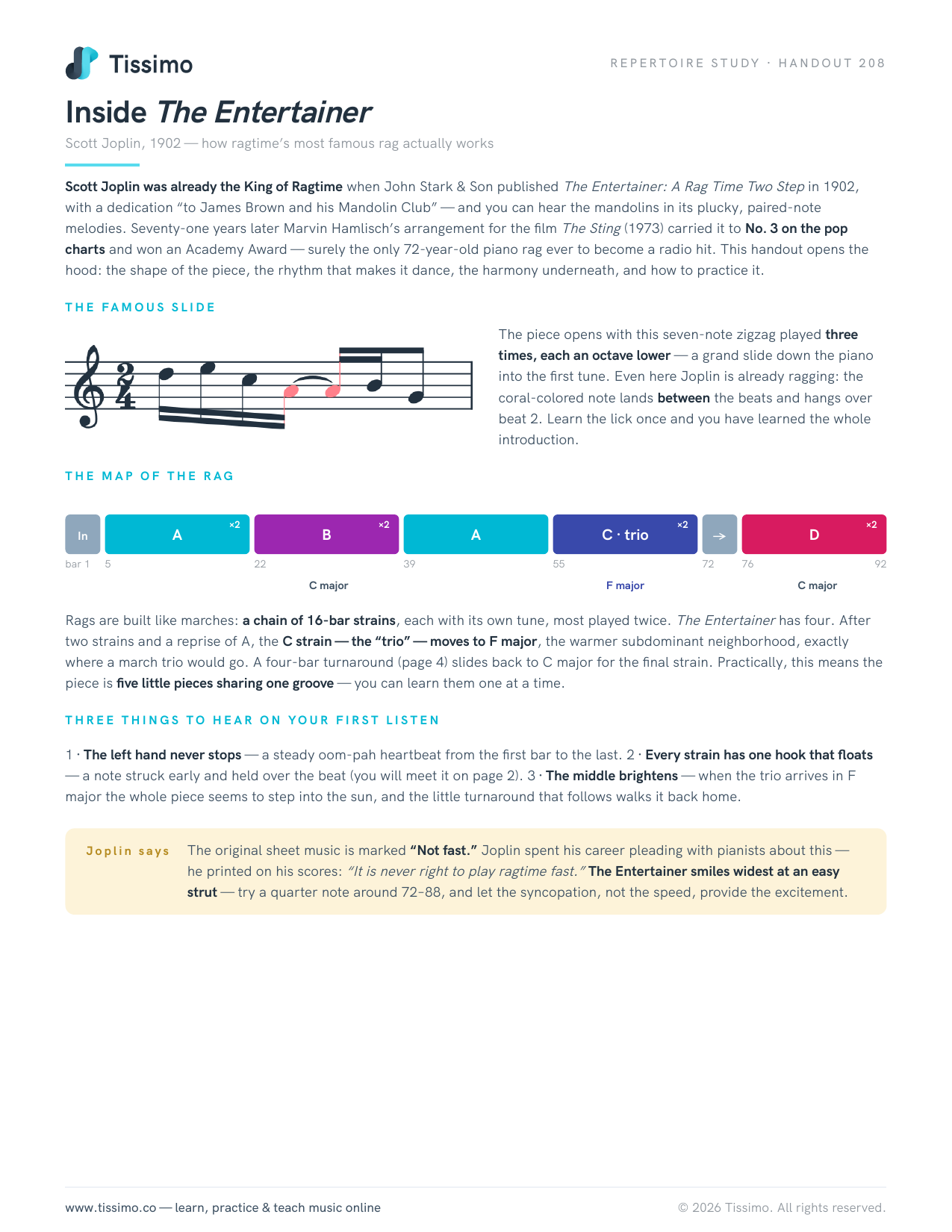 Inside The EntertainerScott Joplin, 1902 — how ragtime’s most famous rag actually works
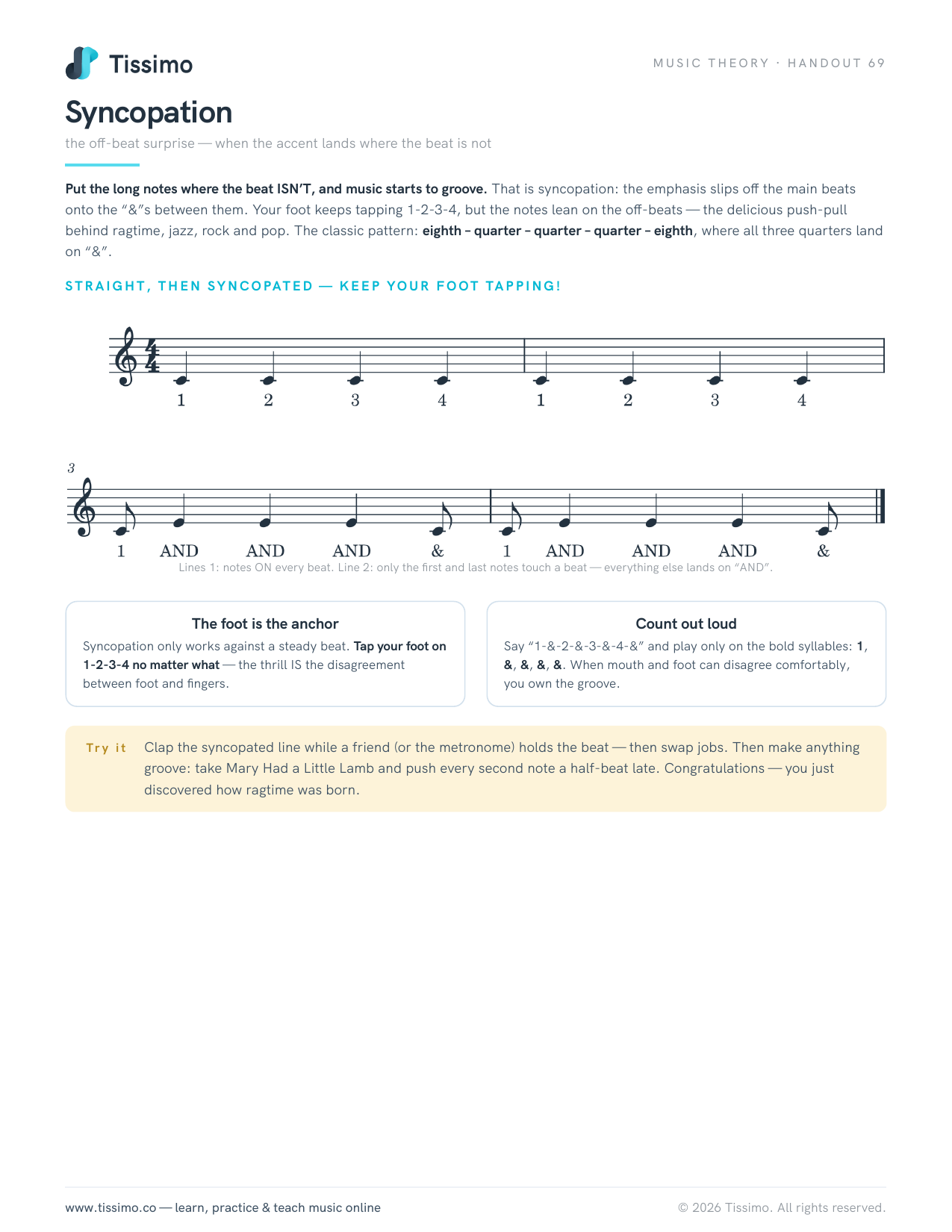 Syncopationthe off-beat surprise — when the accent lands where the beat is not
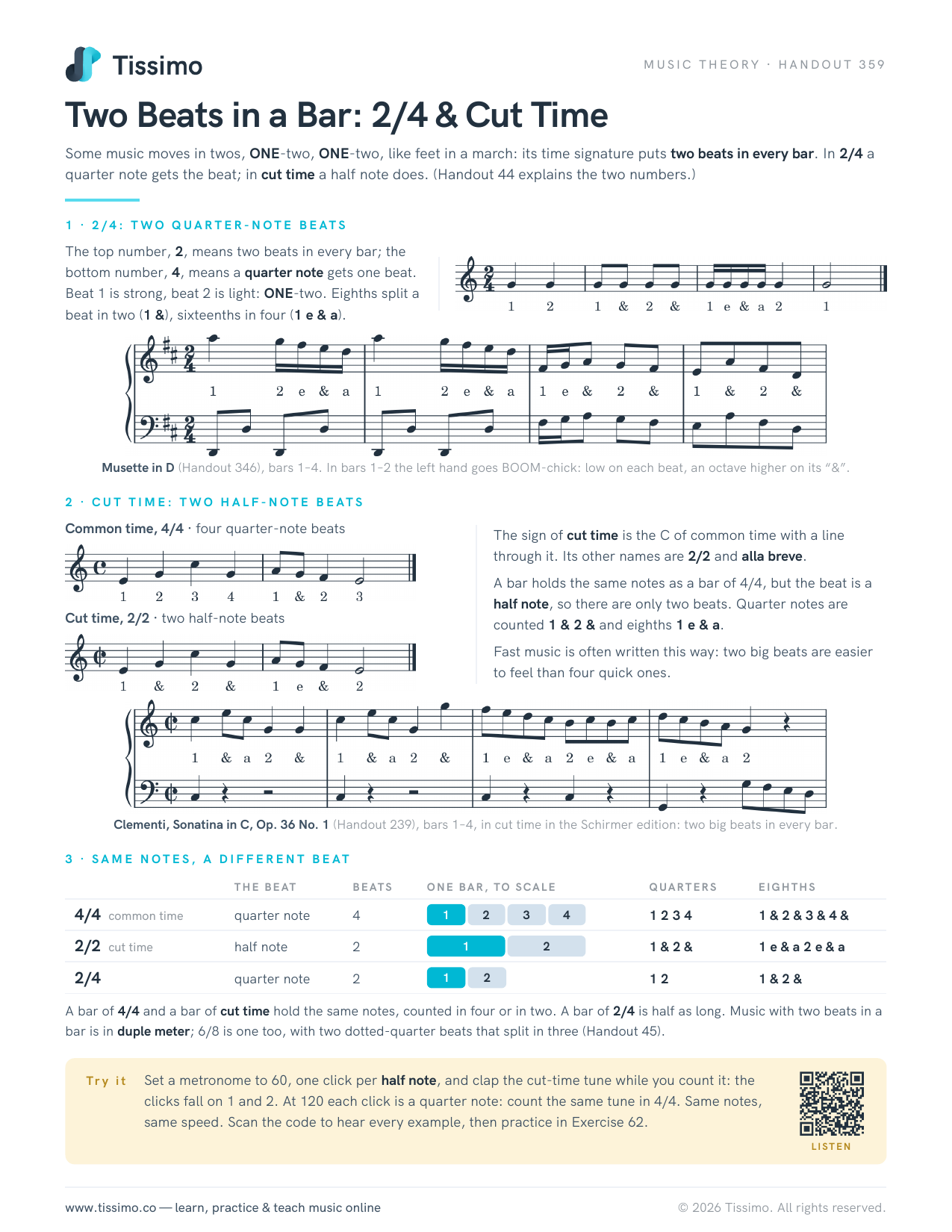 Two Beats in a Bar: 2/4 & Cut TimeSome music moves in twos, ONE-two, ONE-two, like feet in a march: its time signature puts two beats in every bar. In 2/4 a quarter note gets the beat; in cut time a half note does. (Handout 44 explains the two numbers.)
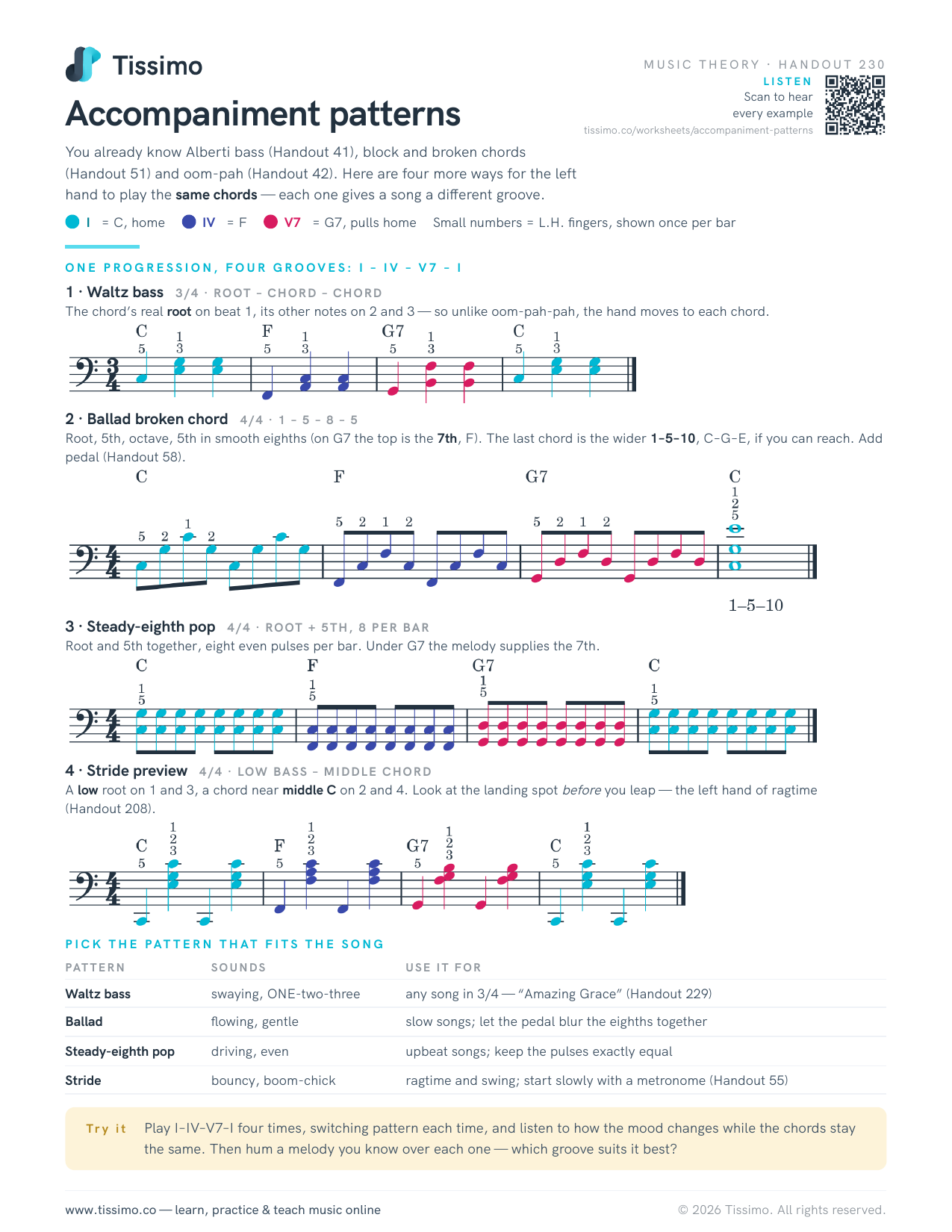 Accompaniment patternsYou already know Alberti bass (Handout 41), block and broken chords (Handout 51) and oom-pah (Handout 42). Here are four more ways for the left hand to play the same chords — each one gives a song a different groove.