Tempo Markings
Ritenuto
Pronounced ree-teh-NOO-tohWritten as riten.
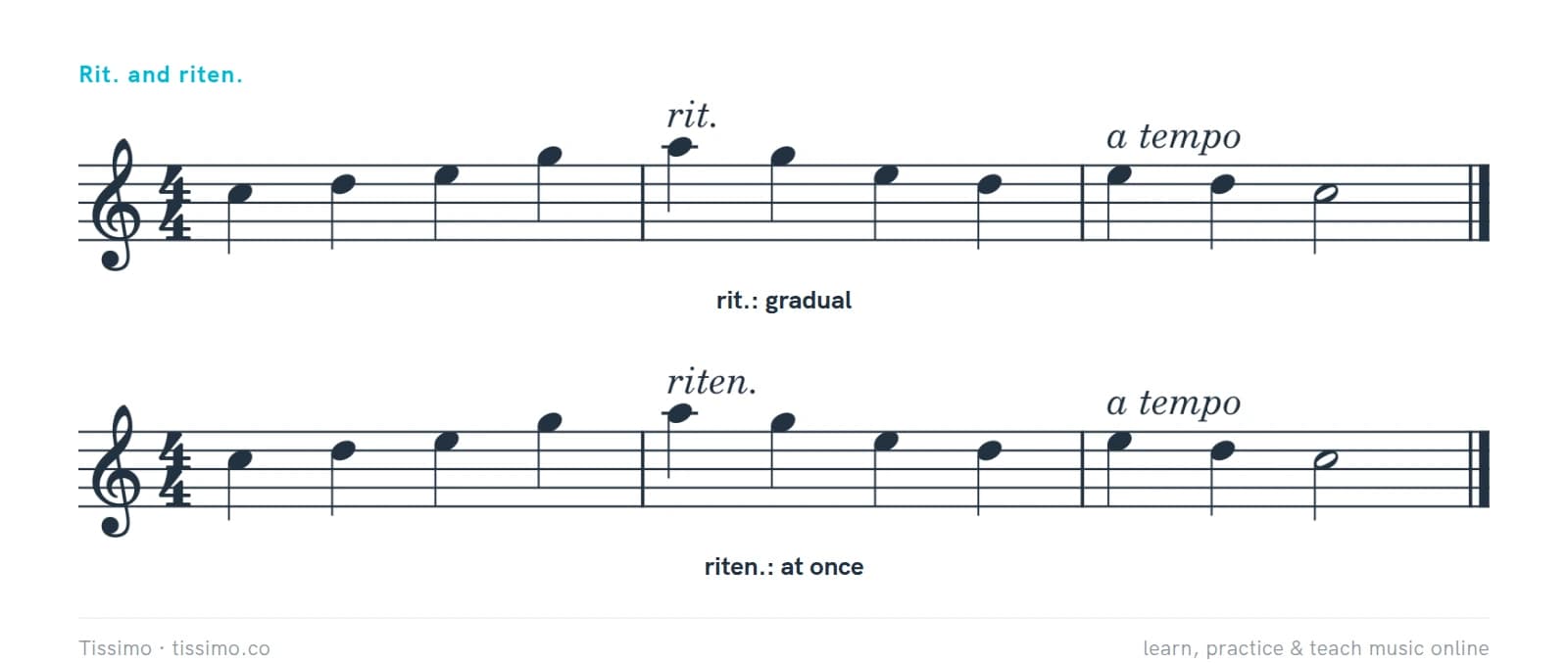
Ritenuto, written riten., means held back: play at a slower tempo immediately, from the marking onward, rather than slowing down gradually as in a ritardando.
Ritenuto means "held back". Written riten., it asks for an immediate slower tempo: the music steps down to a new speed at the marking instead of slowing gradually. That is the difference from ritardando and rallentando, which ramp down beat by beat.
Where you meet it
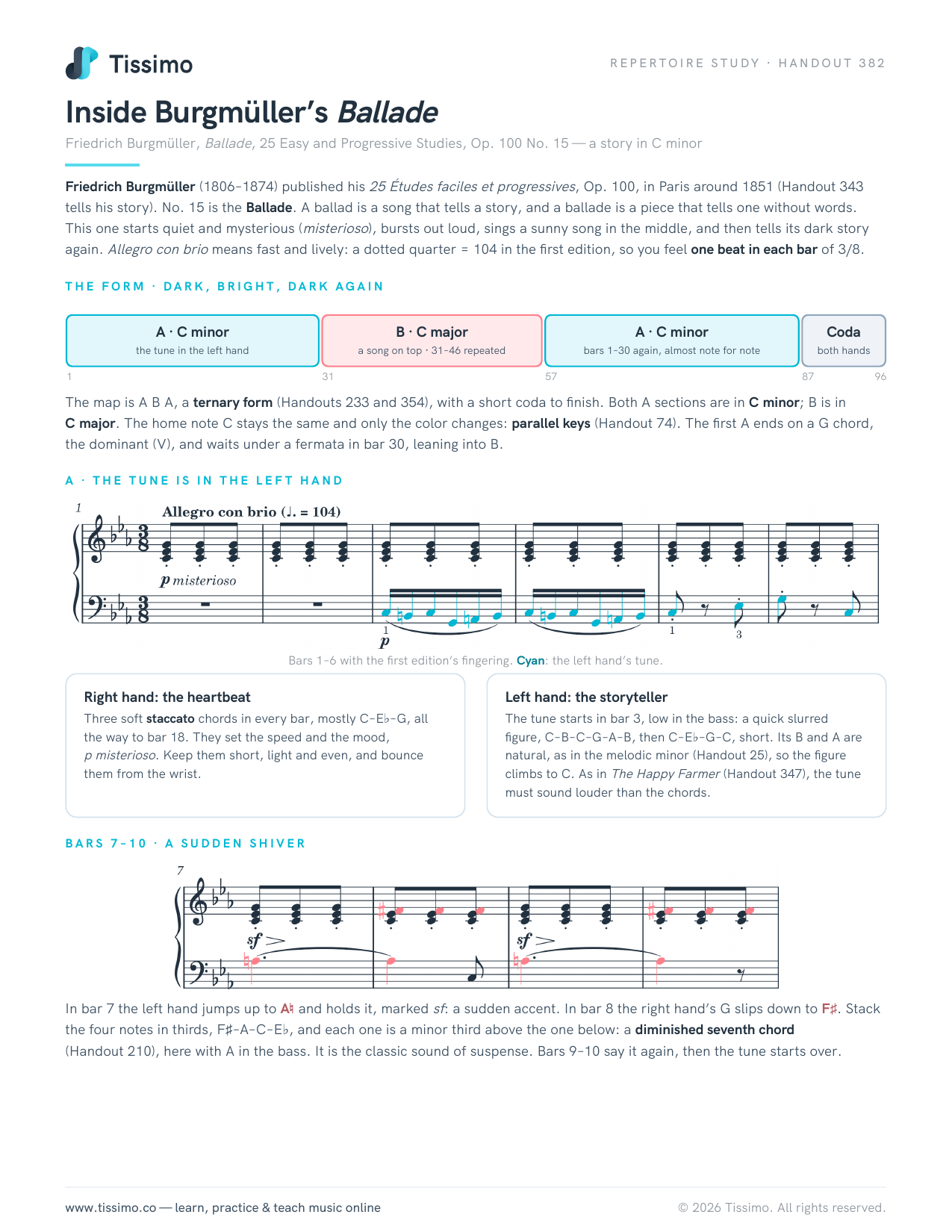
Ritenuto often marks a short moment of emphasis: a phrase held back for a bar or two before A tempo restores the speed, or a few notes that deserve special weight and care. Poco riten. asks for only a slight holding back; it appears, for example, in Burgmüller's Ballade (see our Ballade study).
The abbreviation problem
Because rit. can stand for either ritardando or ritenuto, the meaning is not always clear. Most players read rit. as the gradual kind unless the context suggests otherwise, for instance a single held-back bar followed straight away by a tempo. Editors who want to be precise write ritard. for the gradual kind and riten. for the sudden one.
Playing ritenuto
- Decide the new tempo before you reach the word, and land on it with the first note under the marking.
- Keep that slower tempo steady for the length of the passage. Ritenuto is a new tempo, not a continuing slowdown.
- Listen to the music around it. A ritenuto usually highlights something: a turn in the harmony, the top of a phrase, a quotation of an earlier theme. Let the extra time show it.
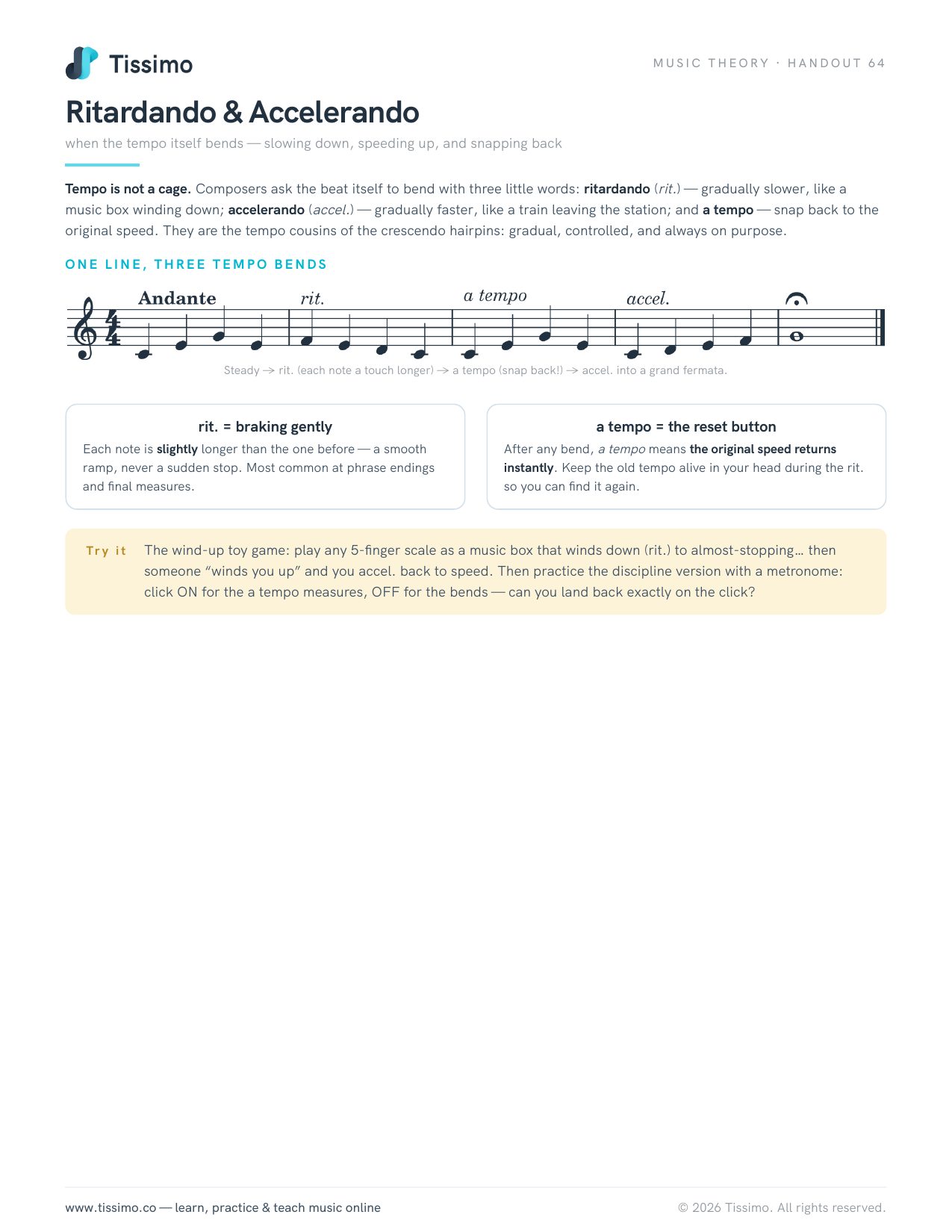
For the gradual kind of slowing, compare the rit. in Ritardando & Accelerando.
Common questions
What is the difference between ritenuto and ritardando?
Ritenuto slows down at once: the first note under the word is already at the new, slower tempo. Ritardando slows down gradually, a little more on each beat.