Tempo Markings
Poco
Pronounced POH-koh
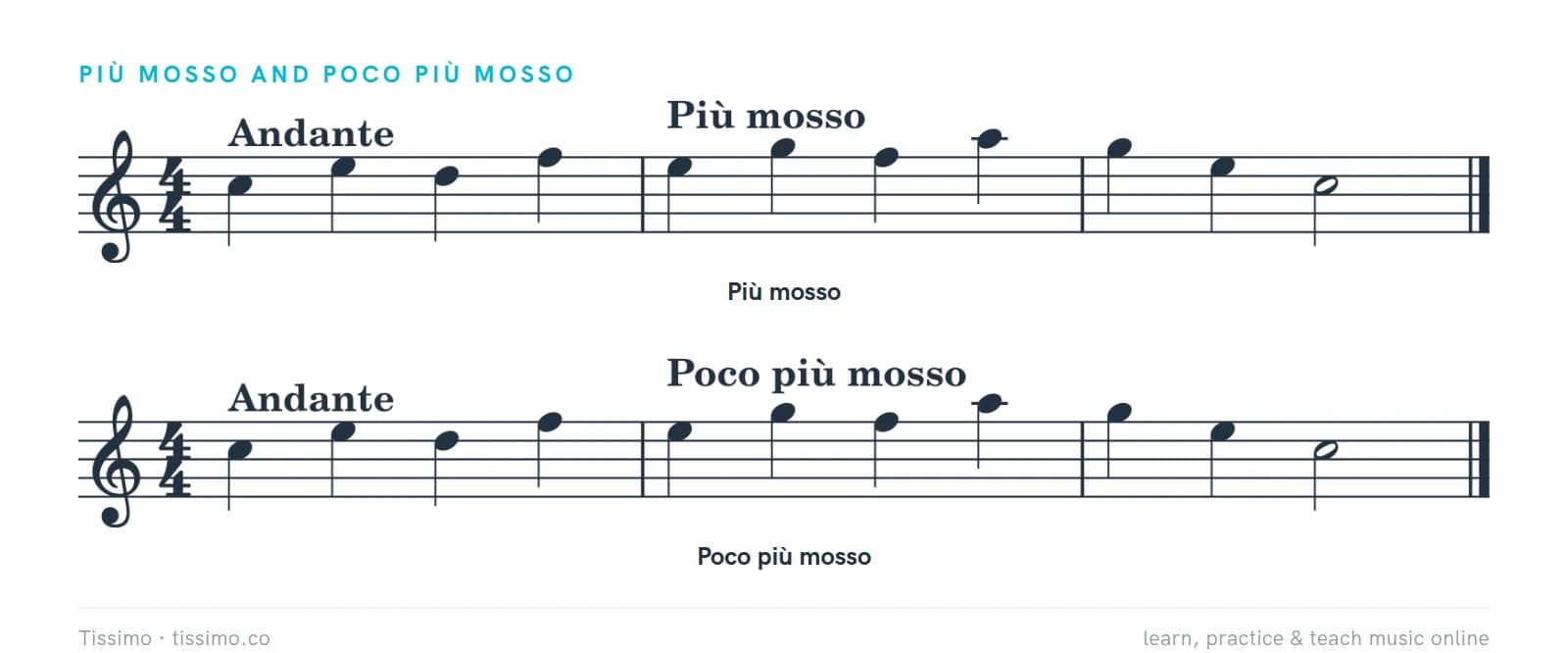
Poco is an Italian modifier meaning 'a little'. It softens the word beside it: poco rit. slows down slightly, poco cresc. grows a little louder, poco più mosso is a little faster.
Poco means "little" or "a little", and un poco means "a little" too. Like molto, it does not stand alone: it scales down the instruction beside it.
Poco in real markings
- Tempo changes: poco rit. (slow down slightly), poco accel., poco più mosso (a little faster), poco meno mosso (a little slower).
- Dynamics: poco cresc., poco dim., poco f (moderately loud, not a full forte).
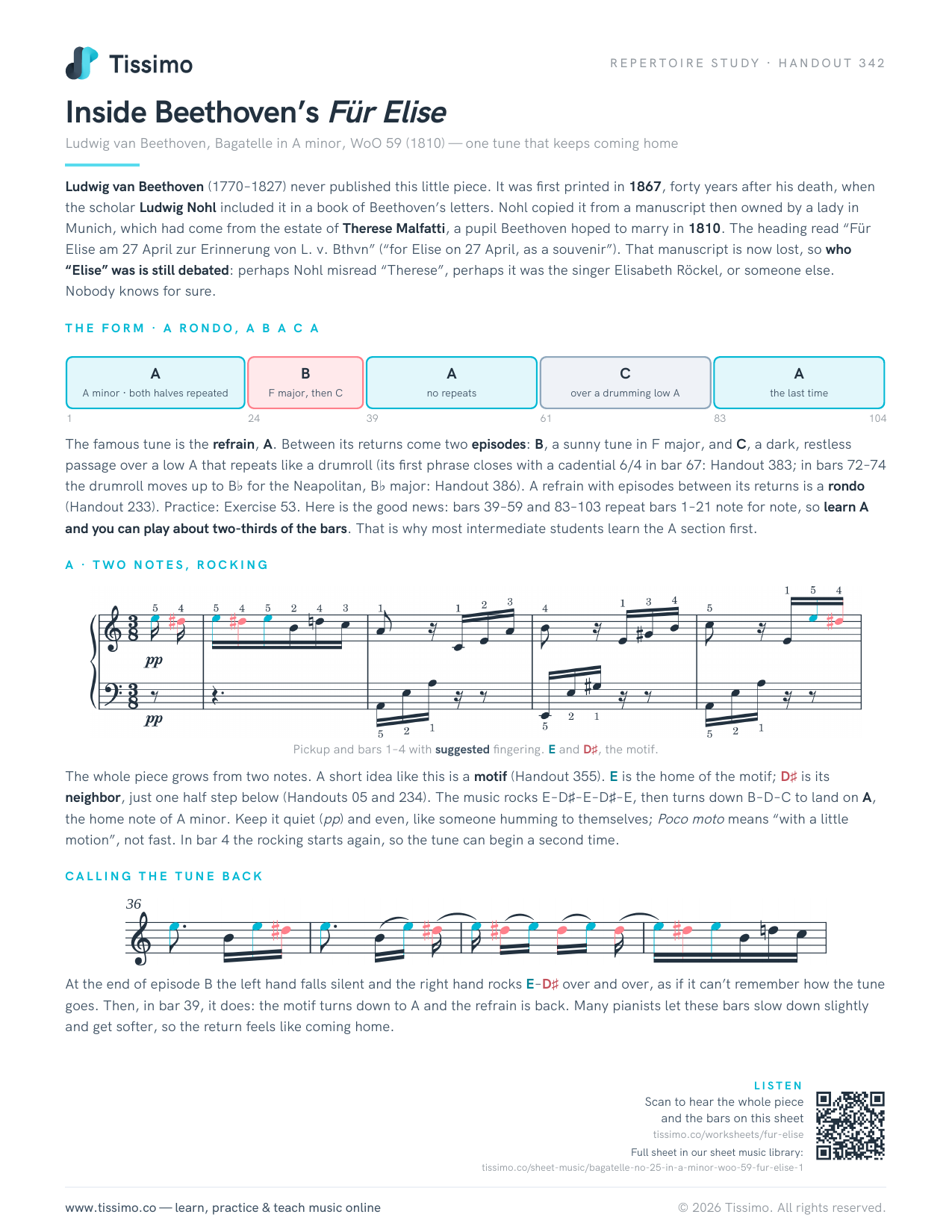
- Tempo words: Beethoven's Für Elise is marked Poco moto, "with a little motion" (see our Für Elise study). His Ninth Symphony opens Allegro ma non troppo, un poco maestoso: fast, not too fast, a little majestic.
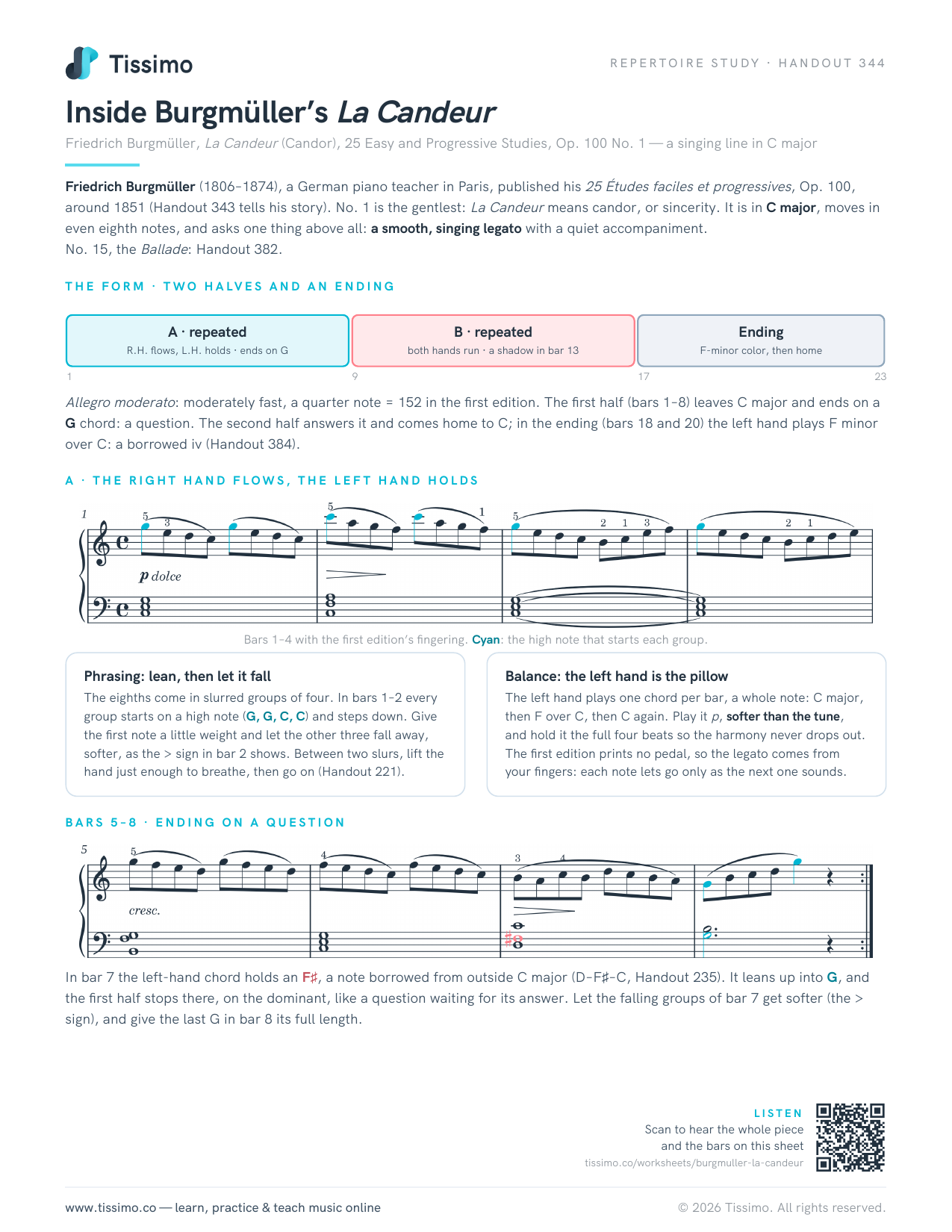
- Combined: Burgmüller's La Candeur has dolce e poco rit., sweetly and slowing a little (see our La Candeur study).
Poco and poco a poco
Poco alone means a small amount. Poco a poco, "little by little", means gradually: poco a poco cresc. is a long, slow build, which can end up very loud. Do not confuse "a little" with "little by little".
Playing poco
A poco change should be noticeable but modest. A poco rit. that slows as much as a full ritardando loses the composer's distinction; one that slows so little that nobody notices is not there at all. Try recording yourself: if a listener can hear the change without it drawing attention to itself, you have found poco.
Common questions
What does poco rit. mean?
Slow down a little: a gentle, gradual ritardando, noticeably less than a plain rit. and much less than molto rit.