Tempo Markings
Meno Mosso
Pronounced MEH-noh MOHS-soh
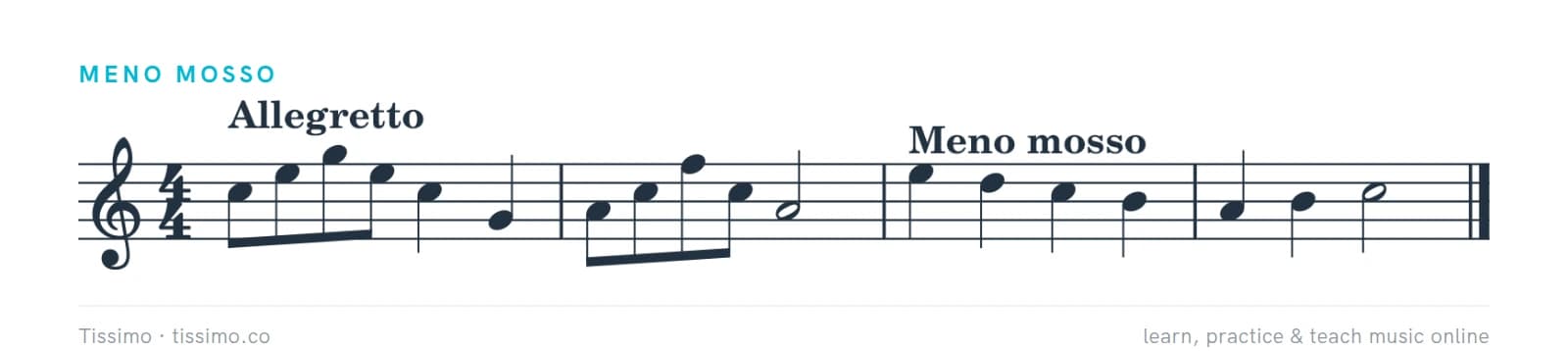
Meno mosso means 'less motion': play slower from this point on. The new, calmer tempo starts at once rather than gradually and lasts until another tempo marking appears.
Meno mosso combines meno, "less", with mosso, "moved". It asks for a slower tempo starting at once: the first note under the marking is already at the new speed. Like più mosso, it is printed above the staff, often in bold, and the new tempo holds until the next marking, very often Tempo I.
Meno mosso versus ritardando
A ritardando slows down gradually, beat by beat, and often leads back to A tempo. Meno mosso is a new tempo, steady from the start. That makes it a natural choice for a contrasting section: a calmer, more lyrical middle part of a lively piece, for instance, before the opening returns in its original tempo.
How much slower?
The marking leaves the amount to you. Poco meno mosso is only a little slower; molto meno mosso is much slower. Let the character of the new music guide you: a song-like melody needs time to sing, but it should not sound like a different piece.
Meno with other words
Meno means "less" of whatever follows: meno forte (less loud), meno allegro (less fast, so slower again), meno espressivo. Read the whole phrase rather than assuming meno always means slower.
Playing it
Hear the new tempo before you arrive, and land on it with the first note. Keep the slower beat steady through the section; it is easy to drift back toward the old tempo without noticing.
Compare the gradual changes practiced in Ritardando & Accelerando.
Common questions
What is the difference between meno mosso and ritardando?
Meno mosso is a new, slower tempo that starts at once and stays steady. Ritardando slows down gradually, a little more on each beat.