Dynamics & Expression
Espressivo
Pronounced es-preh-SEE-vohWritten as espr.
Espressivo, written espr. or espress., means 'expressively': play with feeling, giving the melody shape, color and a little freedom. It often marks the line that matters most.
Espressivo means "expressive". Written in full or shortened to espr. or espress., it asks you to play with feeling: to shape the melody with dynamics and color, and to give it some freedom of timing. Con espressione means the same. Molto espressivo asks for even more.
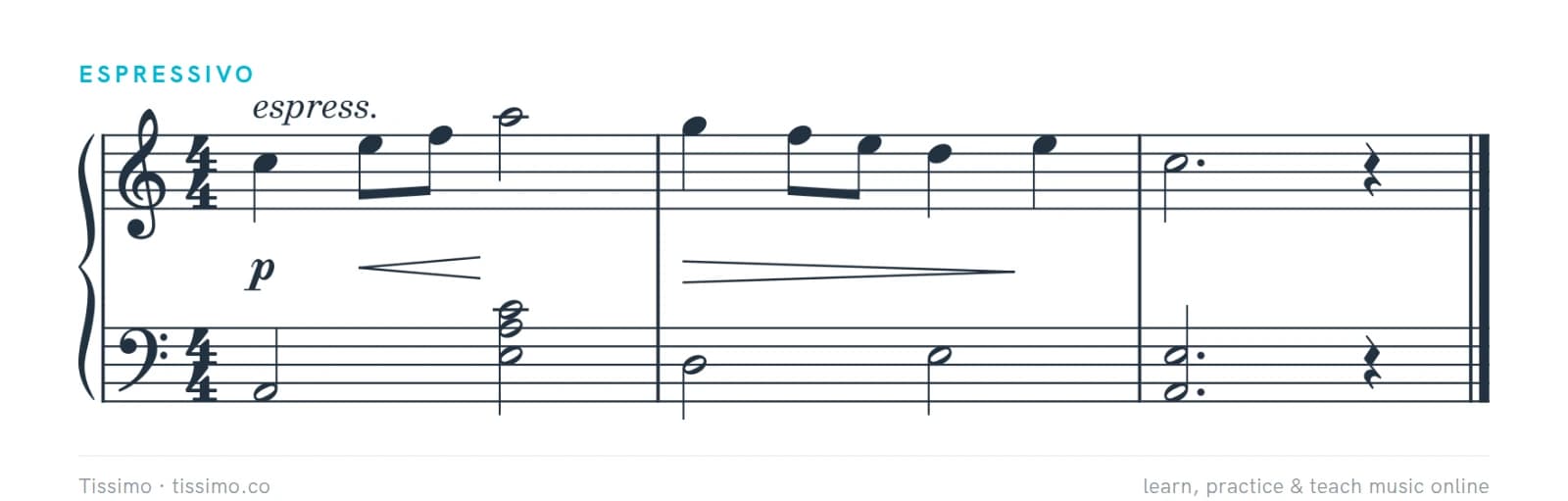
What "expressive" means in practice
Every piece should be played with expression, so why write it? Composers usually mark espressivo where something specific is needed:
- A melody to bring out. Espressivo often signals the most important line, the one that should sing over everything else.
- More shape than usual. Let the phrase swell and relax more than in the surrounding music, with small crescendos and diminuendos following the melodic contour.
- Some flexibility. A touch of rubato at the high point of a phrase, or a little extra time on an expressive interval.
- A change of mood. After a plain passage, espressivo tells you the music has become more personal or intense.
Chopin's Prelude in E minor marks its sighing melody espress. (see our Prelude in E minor study).
How much is too much?
Espressivo invites expression, not exaggeration. The danger is distorting the rhythm or swooping the dynamics so much that the melody loses its shape. Some composers write espressivo ma non troppo to warn against that (see ma non troppo). A good test: if the expression draws attention to the player rather than the music, scale it back.
Our Match the terms: level 3 sheet defines espressivo as "with expression and feeling".
The Musical terms & signs chart lists espressivo with the other character words; for shaping a melody, see Phrasing.
Common questions
What does espress. mean in music?
Espress. is short for espressivo: play expressively, with feeling, shaping the melody with dynamics, tone color and a little flexibility in time.
Practice it: free worksheets
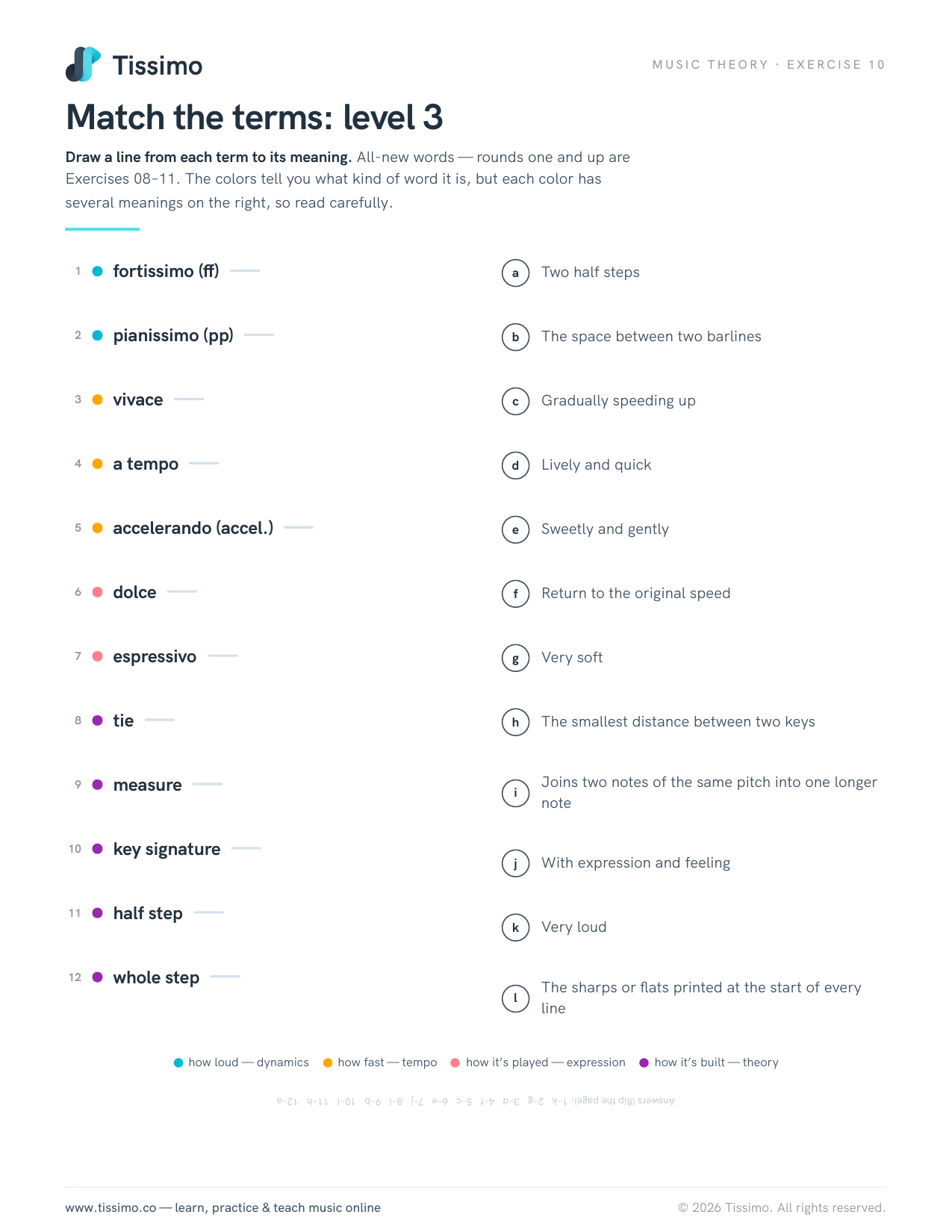 Match the terms: level 3Draw a line from each term to its meaning. All-new words — rounds one and up are Exercises 08–11. The colors tell you what kind of word it is, but each color has several meanings on the right, so read carefully.
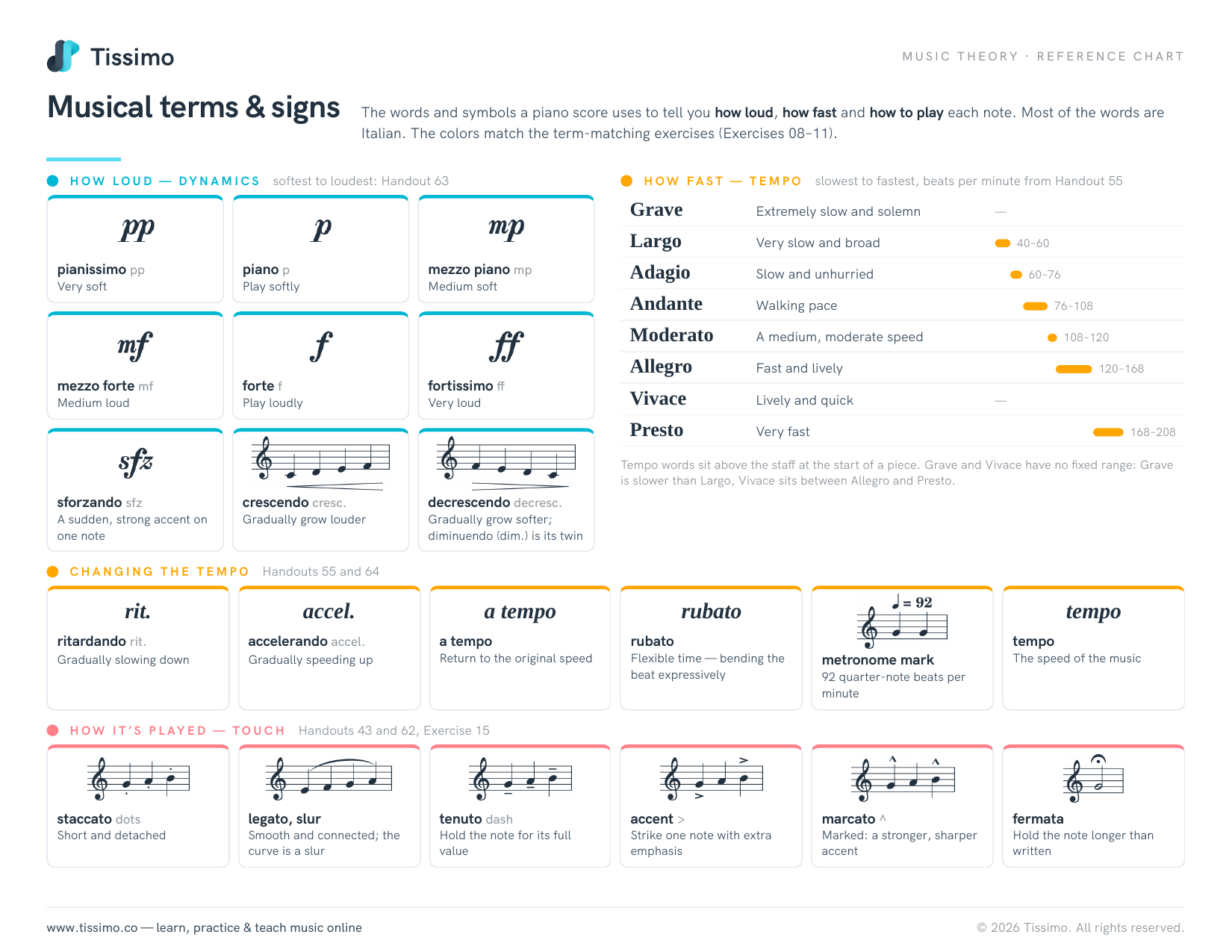 Musical terms & signsThe words and symbols a piano score uses to tell you how loud, how fast and how to play each note. Most of the words are Italian. The colors match the term-matching exercises (Exercises 08–11, 74 and 75).
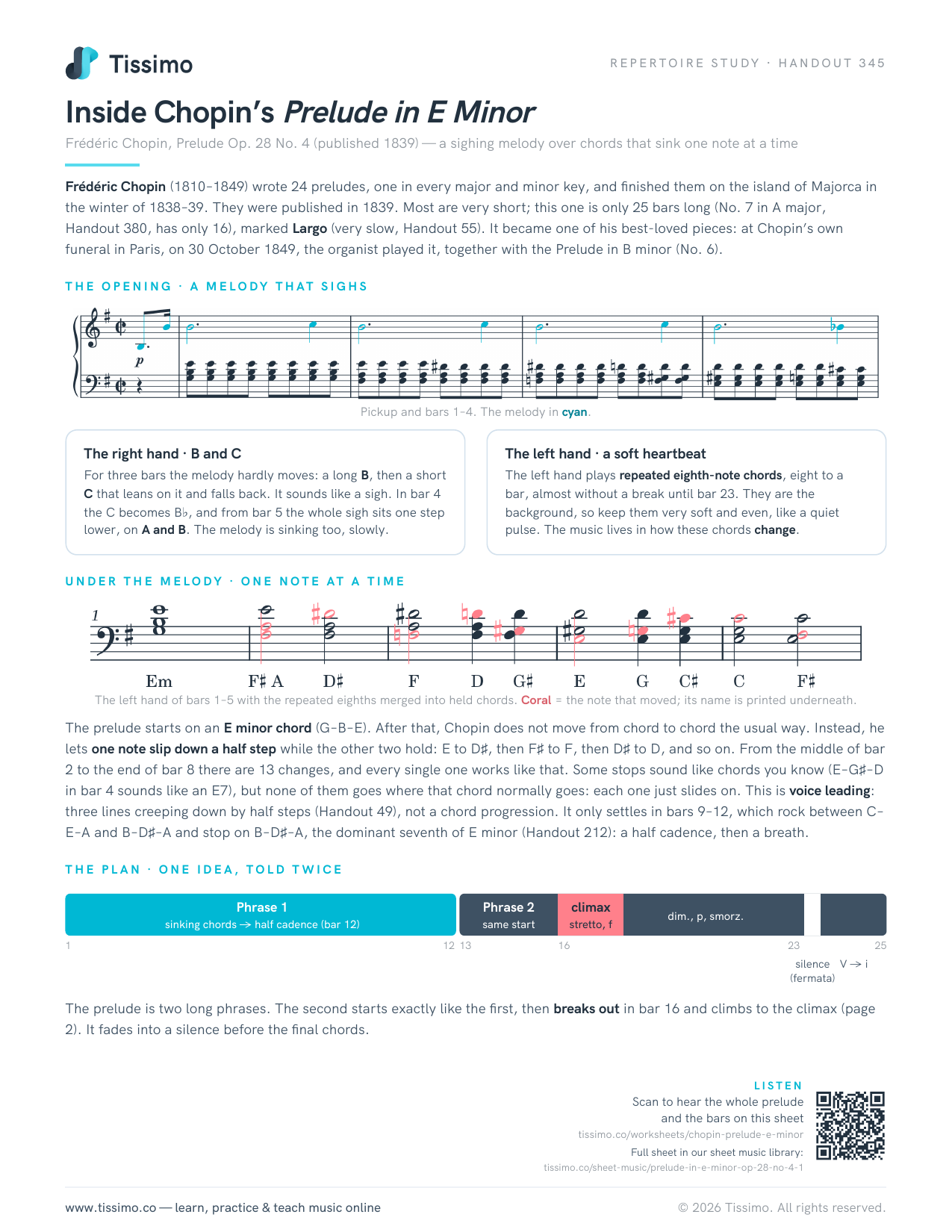 Inside Chopin’s Prelude in E MinorFrédéric Chopin, Prelude Op. 28 No. 4 (published 1839) — a sighing melody over chords that sink one note at a time
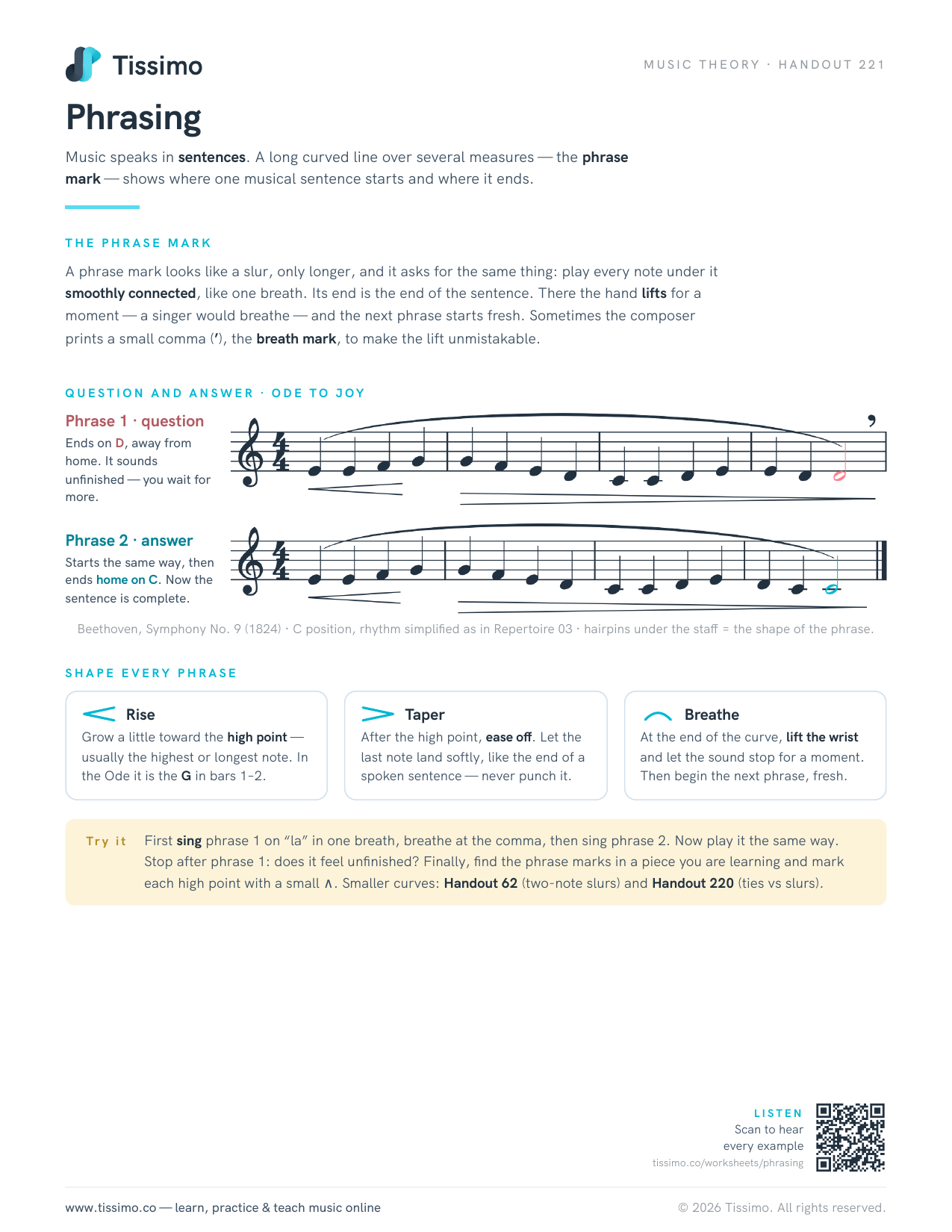 PhrasingMusic speaks in sentences. A long curved line over several measures — the phrase mark — shows where one musical sentence starts and where it ends.