Tempo Markings
Ma Non Troppo
Pronounced mah nohn TROHP-poh
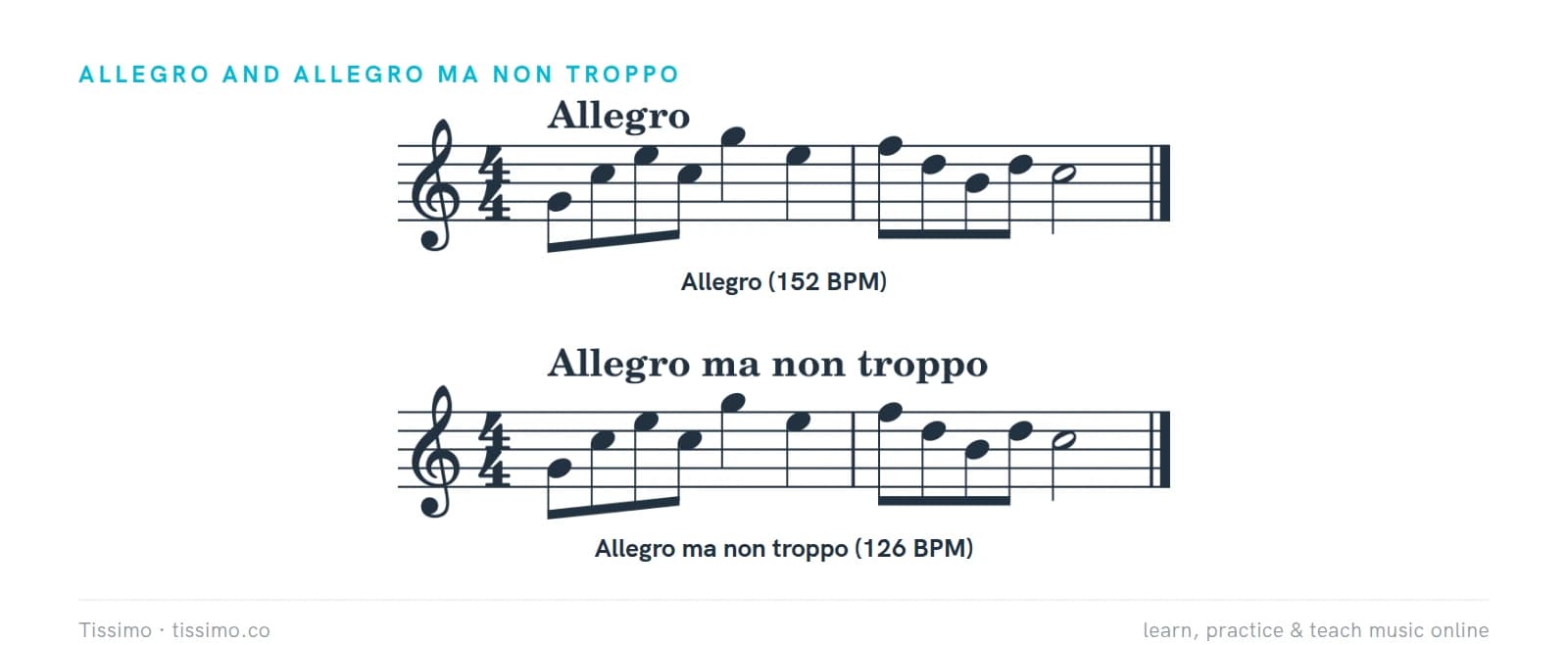
Ma non troppo means 'but not too much'. It restrains the word before it: Allegro ma non troppo is fast but not too fast, Adagio ma non troppo is slow but not too slow.
Ma non troppo means "but not too much". It follows a tempo or expression word and holds it back from going to extremes: Allegro ma non troppo is fast, but not too fast; Adagio ma non troppo is slow, but not too slow. Non troppo alone means the same.
Famous examples
- Beethoven's Sixth Symphony (the "Pastoral") opens Allegro ma non troppo.
- His Ninth Symphony opens Allegro ma non troppo, un poco maestoso: fast but not too fast, and a little majestic.
- Lento ma non troppo and Andante ma non troppo are also common.
What it warns against
Ma non troppo usually corrects a natural tendency. An allegro tempts players to rush, so ma non troppo asks for the energy of allegro with a little more breadth. An adagio tempts players to drag, so ma non troppo keeps it moving. It can also qualify expression: espressivo ma non troppo means expressive, but without overdoing it.
Choosing the tempo
Start from your normal tempo for the main word, then pull it back toward the middle of the scale. For Allegro ma non troppo that might mean the lower part of the allegro range; for Adagio ma non troppo, the upper part of the adagio range. As with molto and poco, the exact amount is a musical judgment.
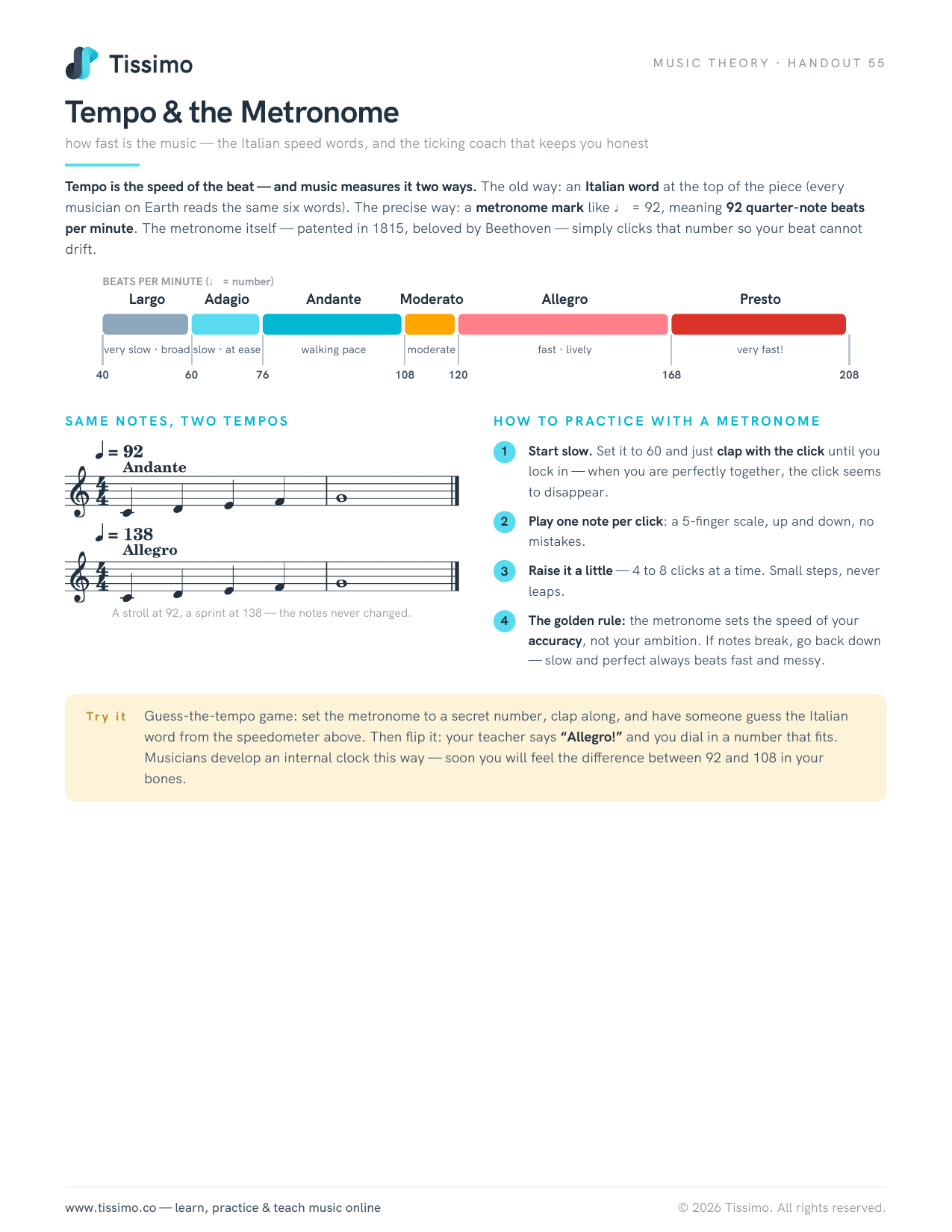
A metronome makes the difference easy to hear: try the two tempos in the example with the routine from Tempo & the Metronome.
Common questions
What does allegro ma non troppo mean?
Fast, but not too fast. Keep the lively character of allegro while choosing a slightly more moderate speed.