Scales, Keys & Modes
Lydian Mode
Pronounced LID-ee-un
The Lydian mode is a major-sounding scale with a raised 4th: the white keys from F to F. Its sharpened 4th degree gives it a bright, floating, slightly dreamy sound.
The Lydian mode is the white keys from F to F: F G A B C D E F. It has a major 3rd, so it sounds major, but its 4th degree (B) is a half step higher than in the F major scale, where the 4th is B♭. That raised 4th, a tritone above the tonic, is what makes Lydian sound the way it does.
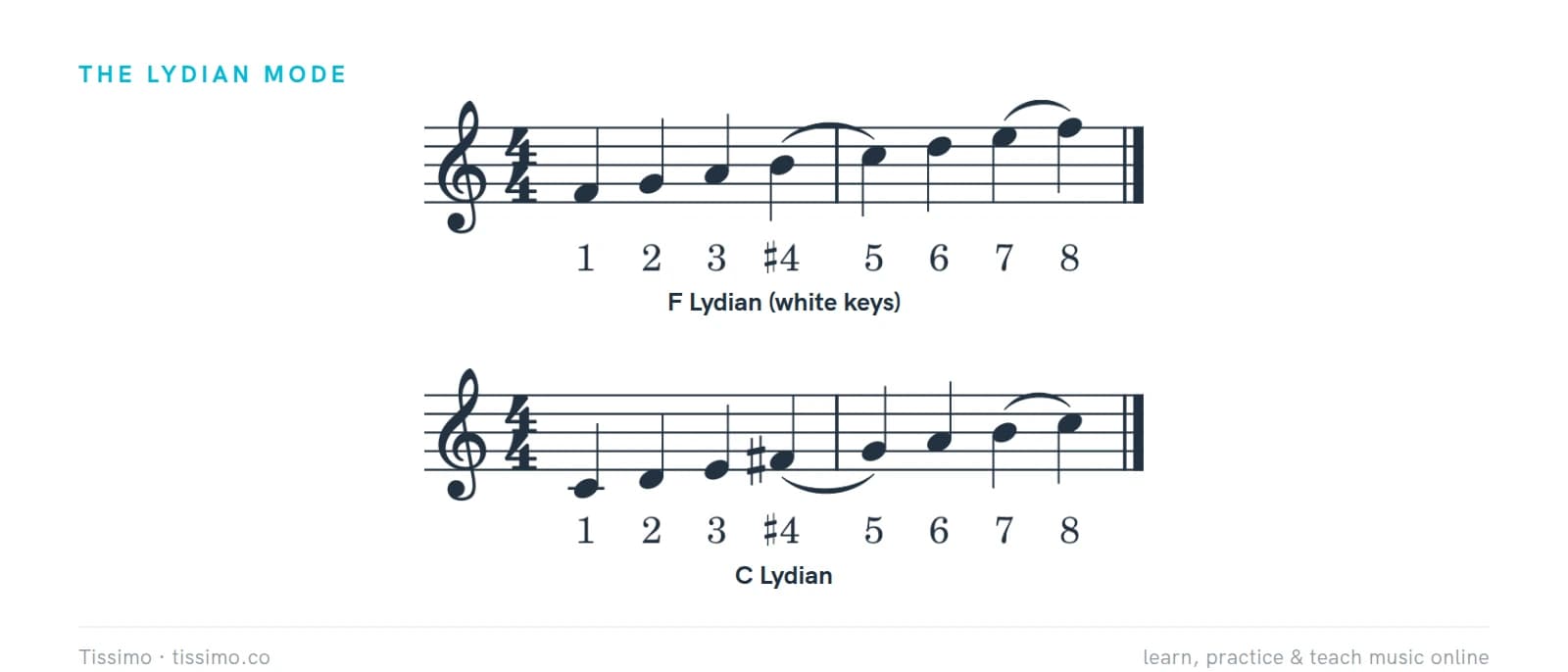
The step pattern
W – W – W – H – W – W – H
Three whole steps in a row open the scale, which is why the 4th lands so high. Measured against the major scale, Lydian is 1 2 3 ♯4 5 6 7: major with one note raised. Of the seven modes it is the brightest.
The Lydian sound
In ordinary major, the 4th degree wants to fall to the 3rd (B♭ to A in F). The raised 4th has no such pull; it hovers above the 3rd and leans up toward the 5th instead. The chord that shows it best is the major triad on the 2nd degree: in F Lydian, G major (G B D). Alternating the tonic chord with that major II, F to G and back, gives the floating, lifted sound the mode is known for.
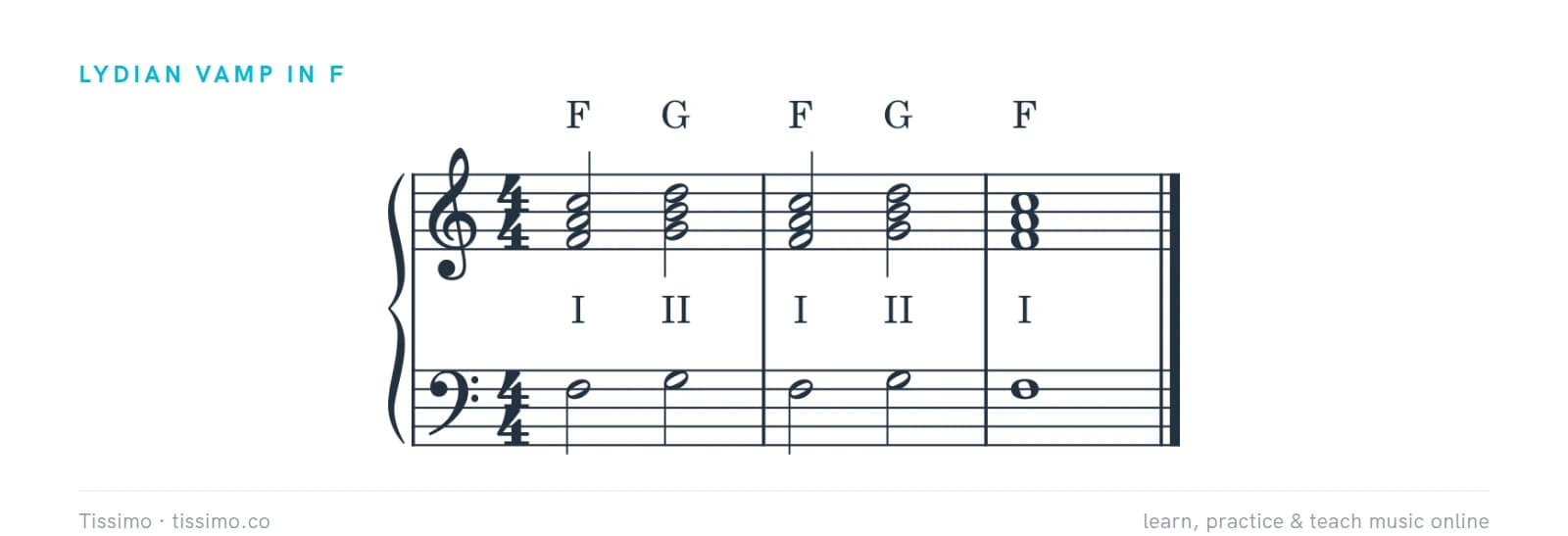
Where you hear it
Film and television composers often use Lydian for a sense of wonder, flight or magic. It is common in jazz, where it is the usual chord-scale for a major seventh chord with a ♯11 (Fmaj7♯11), and you will hear it in some rock and pop songs that want a bright, unresolved major color.
In medieval chant, the mode on F was common, but singers often sang B♭ instead of B to avoid the tritone above F, which made the music sound much like F major. Lydian with its raised 4th intact came into its own much later.
Finding Lydian in any key
Lydian starts on the 4th degree of a major scale. To find any Lydian mode, go down a perfect fourth (five half steps) to its parent major key: F Lydian uses the notes of C major, C Lydian those of G major (one sharp), C D E F♯ G A B C, and D Lydian those of A major (three sharps). Or take the major scale on the same note and raise its 4th.
Common questions
What is the difference between Lydian and major?
One note: the 4th degree. Lydian's 4th is a half step higher (B in F Lydian, B♭ in F major), a tritone above the tonic, which makes the mode brighter and less settled.
Why does the Lydian mode sound dreamy?
Its raised 4th does not pull down to the 3rd the way an ordinary 4th does, and the major chord on the 2nd degree gives progressions a lifted, unresolved feel. The music seems to hover rather than settle.
Practice it: free worksheets
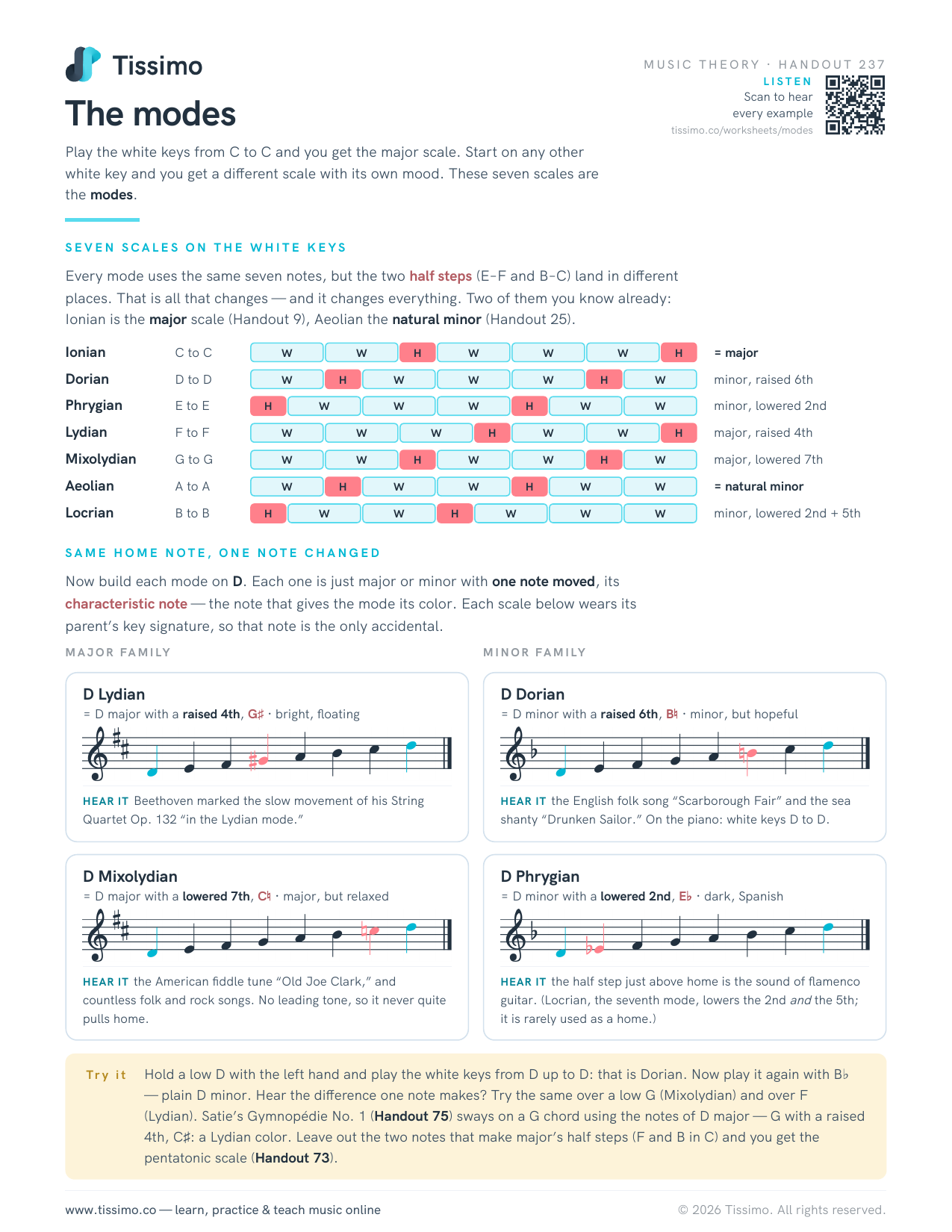 The modesPlay the white keys from C to C and you get the major scale. Start on any other white key and you get a different scale with its own mood. These seven scales are the modes.
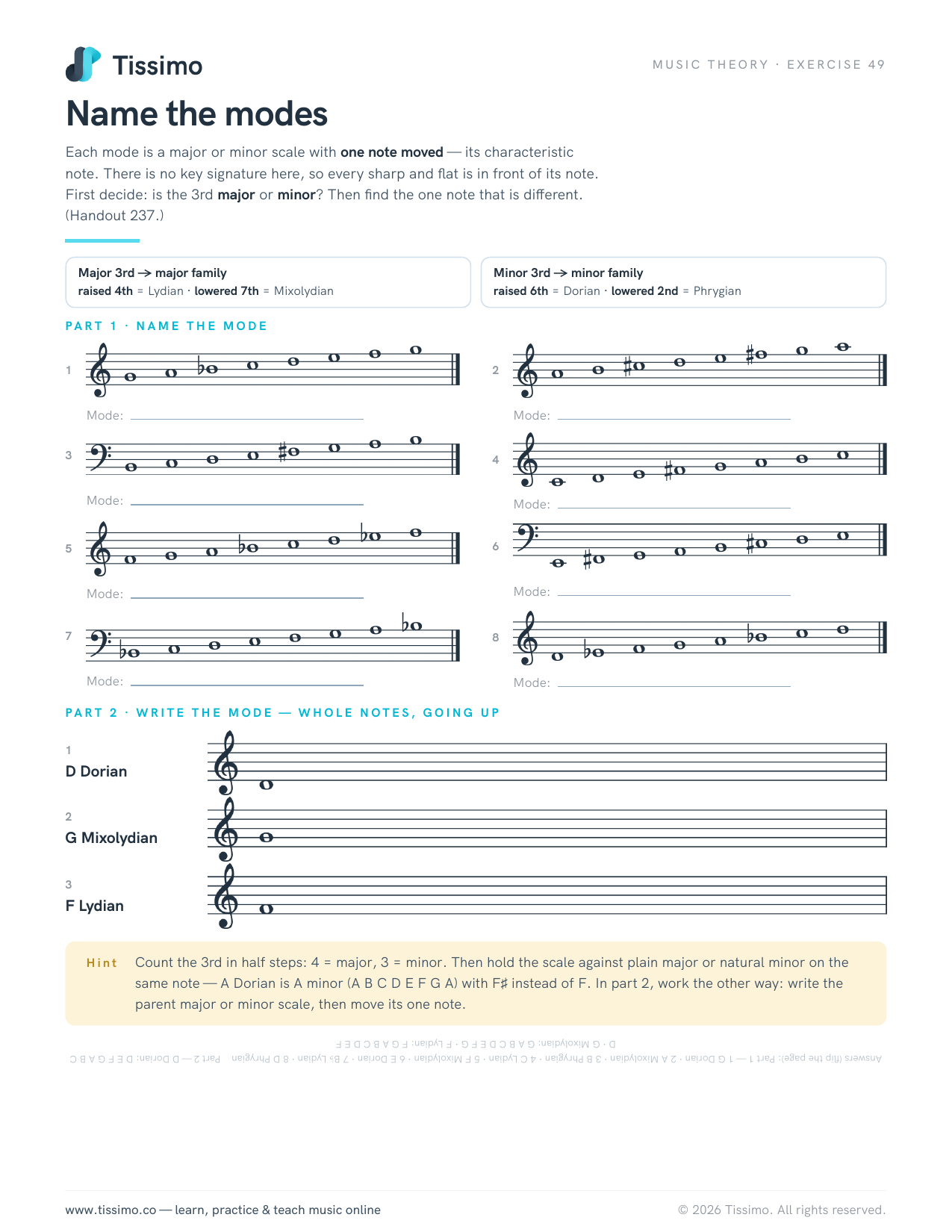 Name the modesEach mode is a major or minor scale with one note moved — its characteristic note. There is no key signature here, so every sharp and flat is in front of its note. First decide: is the 3rd major or minor? Then find the one note that is different. (Handout 237.)
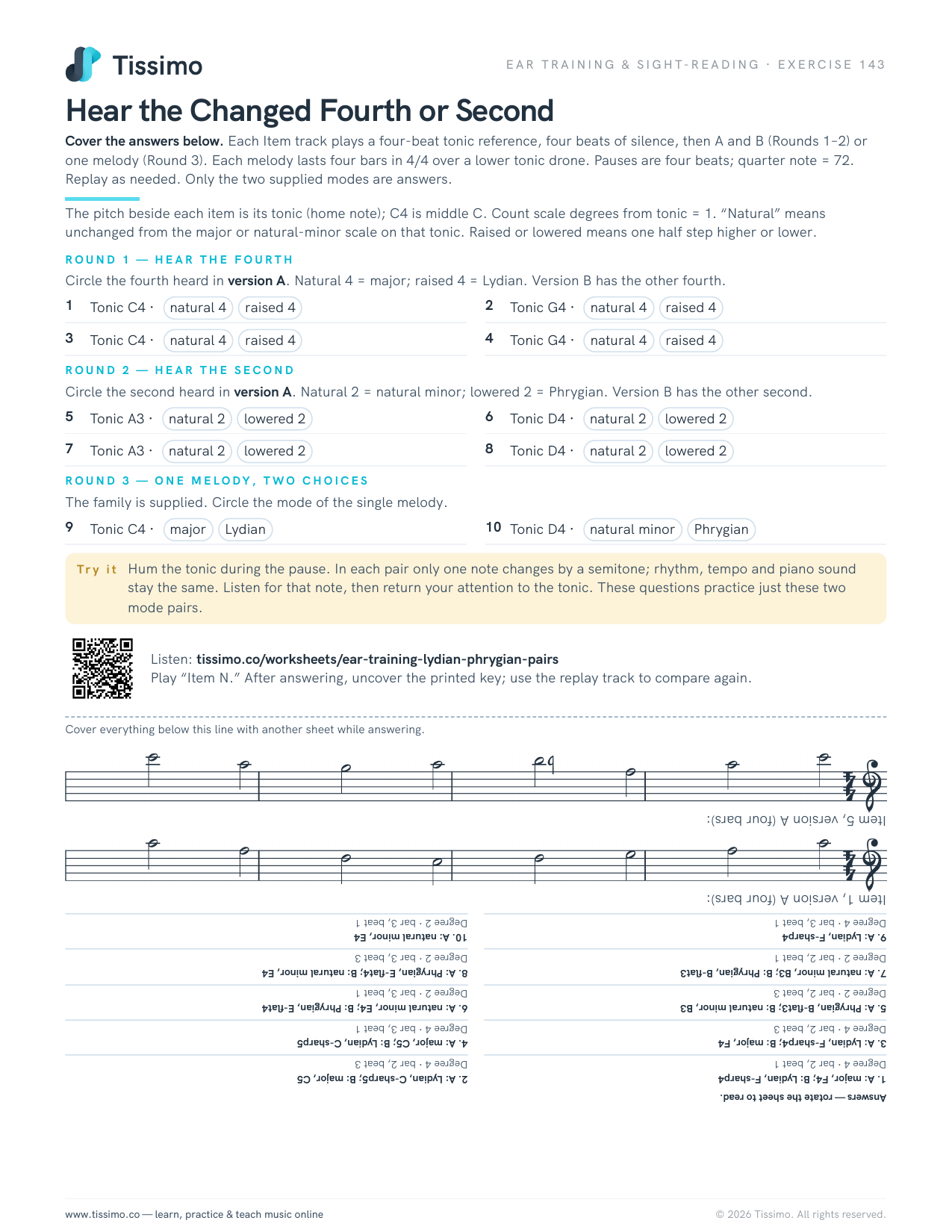 Hear the Changed Fourth or SecondCover the answers below. Each Item track plays a four-beat tonic reference, four beats of silence, then A and B (Rounds 1–2) or one melody (Round 3). Each melody lasts four bars in 4/4 over a lower tonic drone. Pauses are four beats; quarter note = 72. Replay as needed. Only the two supplied modes are answers.
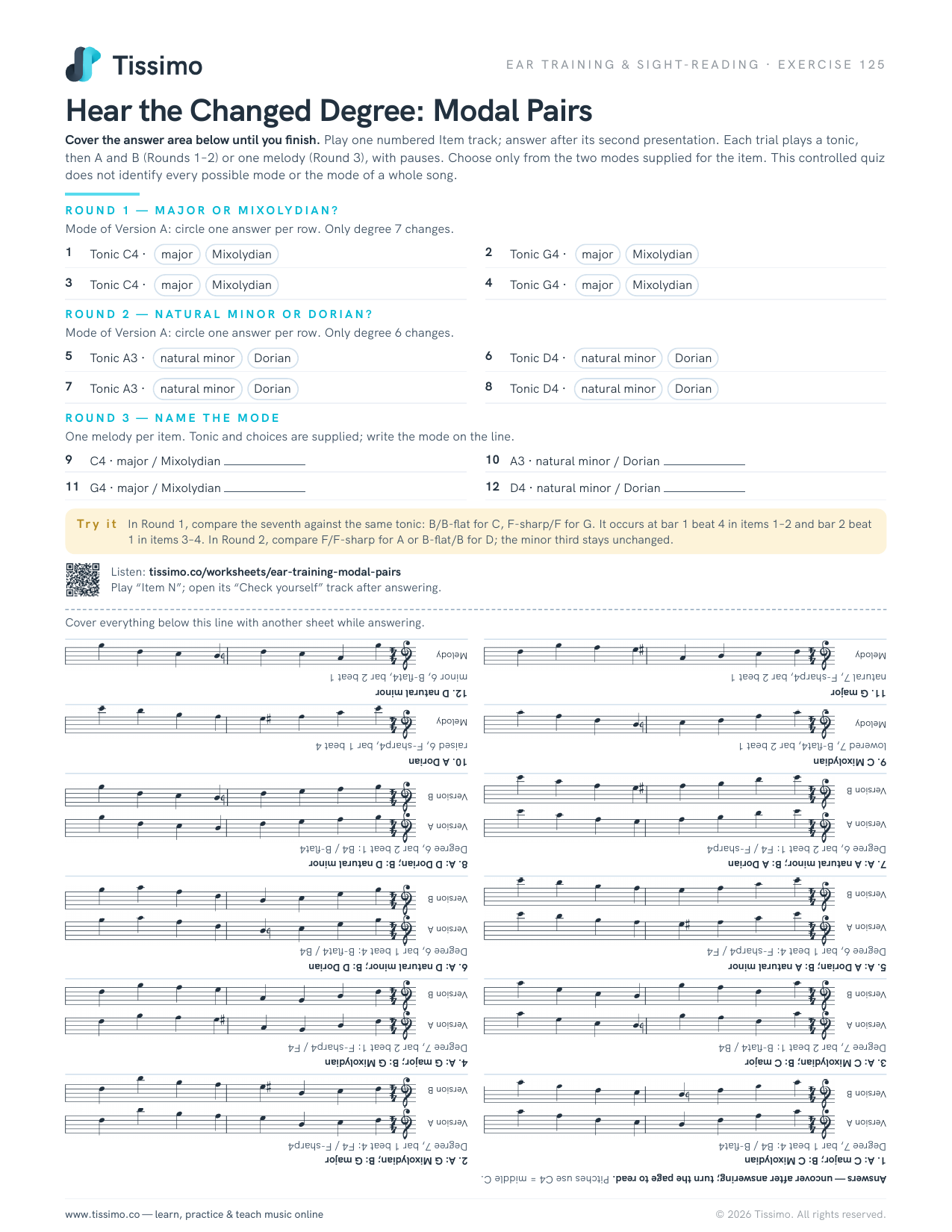 Hear the Changed Degree: Modal PairsCover the answer area below until you finish. Play one numbered Item track; answer after its second presentation. Each trial plays a tonic, then A and B (Rounds 1–2) or one melody (Round 3), with pauses. Choose only from the two modes supplied for the item. This controlled quiz does not identify every possible mode or the mode of a whole song.