Scales, Keys & Modes
Minor Pentatonic Scale
Pronounced pen-tuh-TON-ik
The minor pentatonic scale is a five-note scale made of degrees 1, ♭3, 4, 5 and ♭7. In A it is A C D E G. It is a favorite scale for blues and rock solos.
The minor pentatonic scale is five notes taken from the natural minor scale: its 1st, 3rd, 4th, 5th and 7th degrees. In A that gives A C D E G, and then A again an octave up.
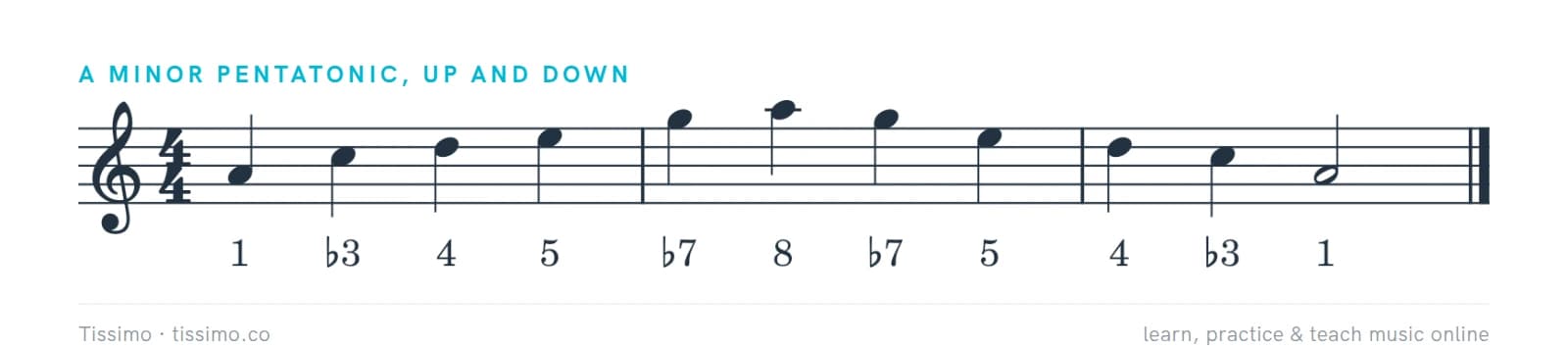
Measured against the major scale, those are degrees 1, ♭3, 4, 5 and ♭7. The notes left out, the 2nd and the 6th (B and F in A minor), are the ones that form natural minor's half steps, so like its major cousin the minor pentatonic has none. Its step pattern is:
(W+H) – W – W – (W+H) – W
Same notes as the major pentatonic
A minor pentatonic uses exactly the notes of C major pentatonic, starting from A. The two are relatives, like A minor and C major. If you know one, you know the other: every major pentatonic contains the minor pentatonic of its 6th degree.
The scale of blues and rock solos
The minor pentatonic is the starting point for a lot of blues and rock improvising. One reason is practical. On guitar it falls into compact "box" shapes that keep the hand in one position, and in E it fits the open strings: all six open strings in standard tuning (E A D G B E) belong to E minor pentatonic (E G A B D). Another reason is its sound. The ♭3 and ♭7 are close to the blue notes of blues singing, and the scale works over minor chords and, with a bluesy edge, over the dominant seventh chords of a twelve-bar blues. Add one note, the ♭5, and it becomes the blues scale.
Using it on the piano
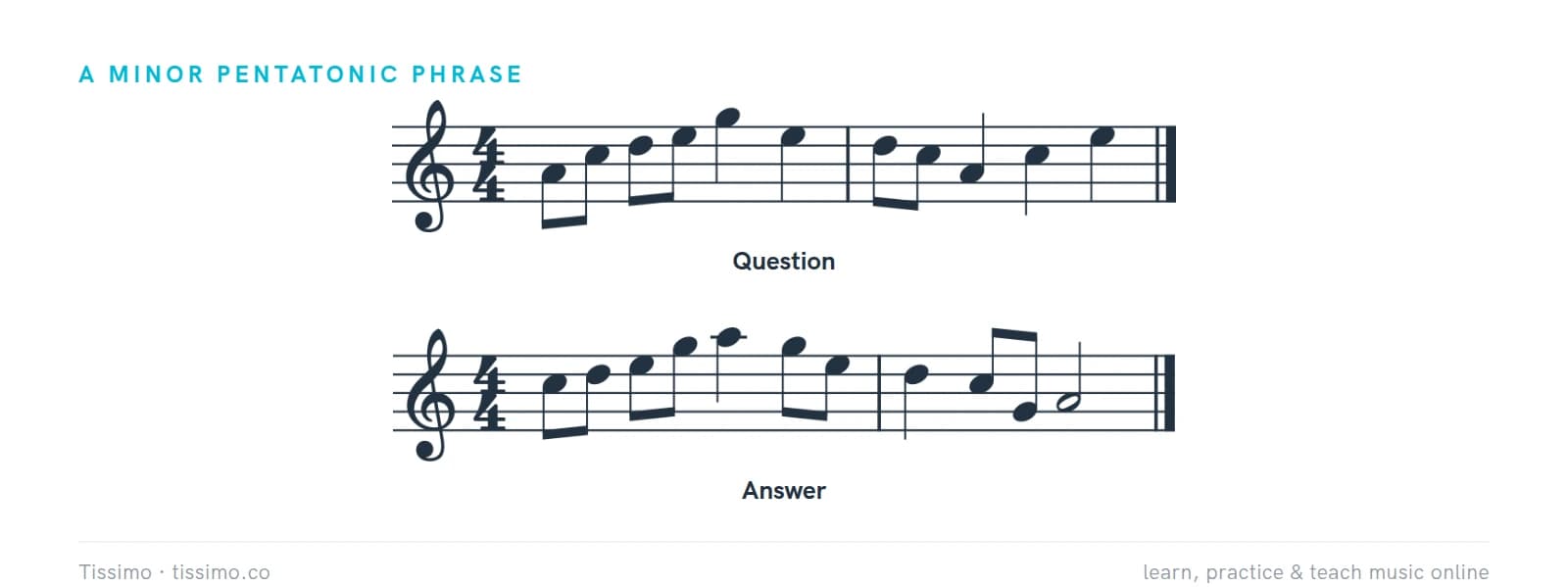
Hold an A minor chord in the left hand and improvise in the right on A C D E G, finishing phrases on A or E. With only five notes there are few decisions to make, so you can concentrate on rhythm and shape: repeat a short idea, change its ending, and leave space between phrases. The Pentatonic & Blues Scales and Improvising with the Pentatonic show you how to build a solo from it.
Common questions
What is the difference between the major and minor pentatonic scales?
They can share the same five notes with a different home: C major pentatonic is C D E G A, and A minor pentatonic is A C D E G. Built on the same tonic they differ: C minor pentatonic is C E♭ F G B♭.
Why do guitarists use the minor pentatonic so much?
It lies under the hand in compact shapes, it suits the blues and rock harmony guitarists play over, and with no half steps it is hard to hit a note that clashes. In E it even fits all six open strings.
Practice it: free worksheets
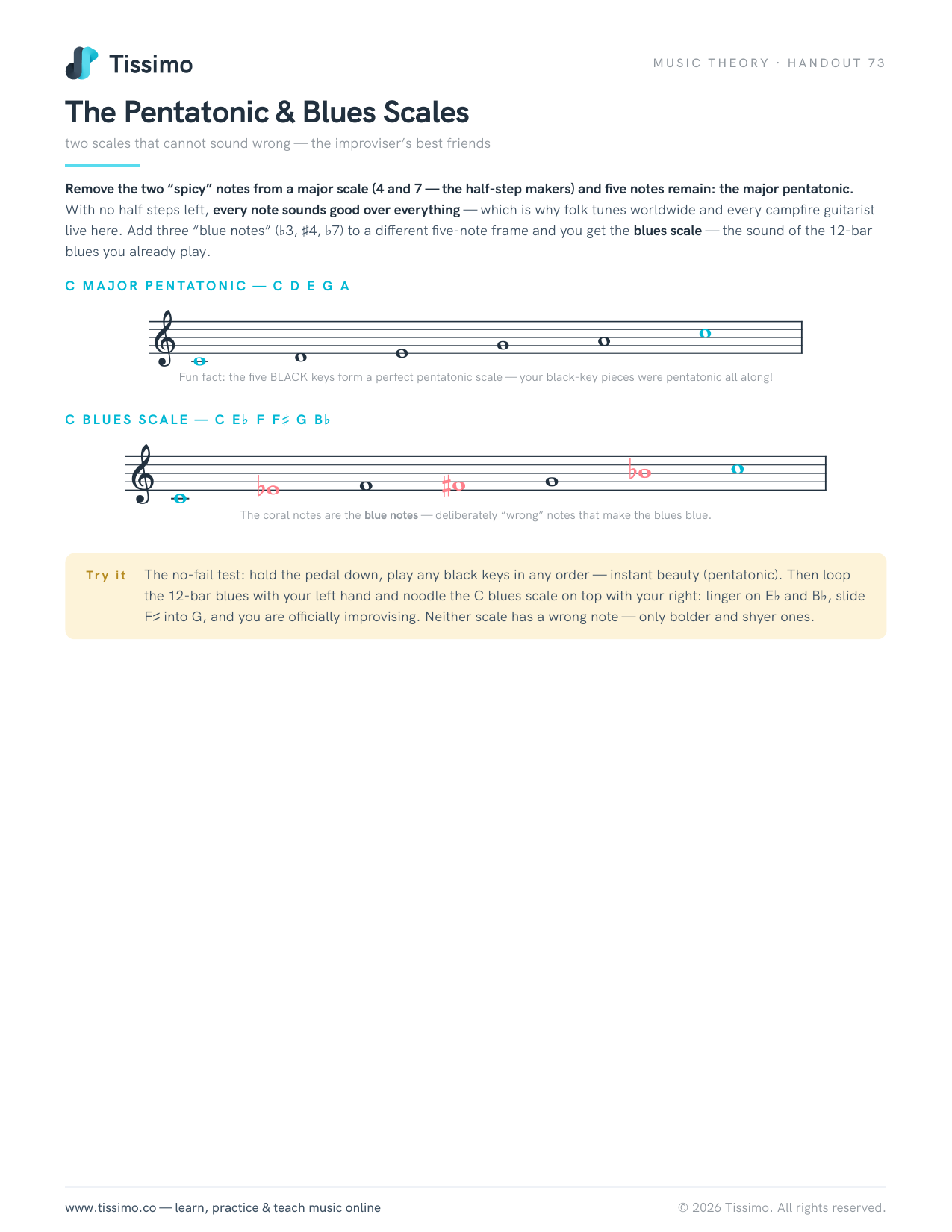 The Pentatonic & Blues Scalestwo scales that cannot sound wrong — the improviser’s best friends
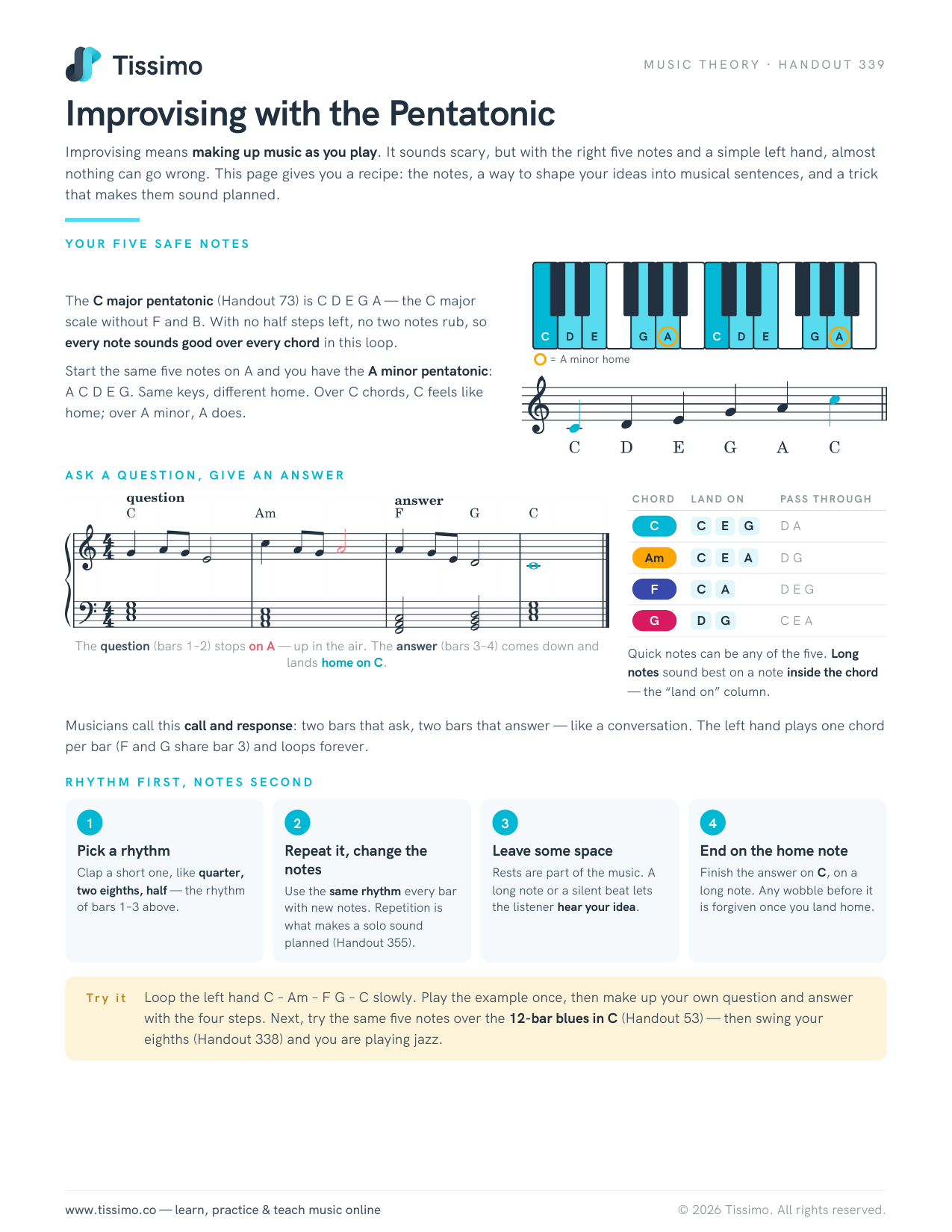 Improvising with the PentatonicImprovising means making up music as you play. It sounds scary, but with the right five notes and a simple left hand, almost nothing can go wrong. This page gives you a recipe: the notes, a way to shape your ideas into musical sentences, and a trick that makes them sound planned.
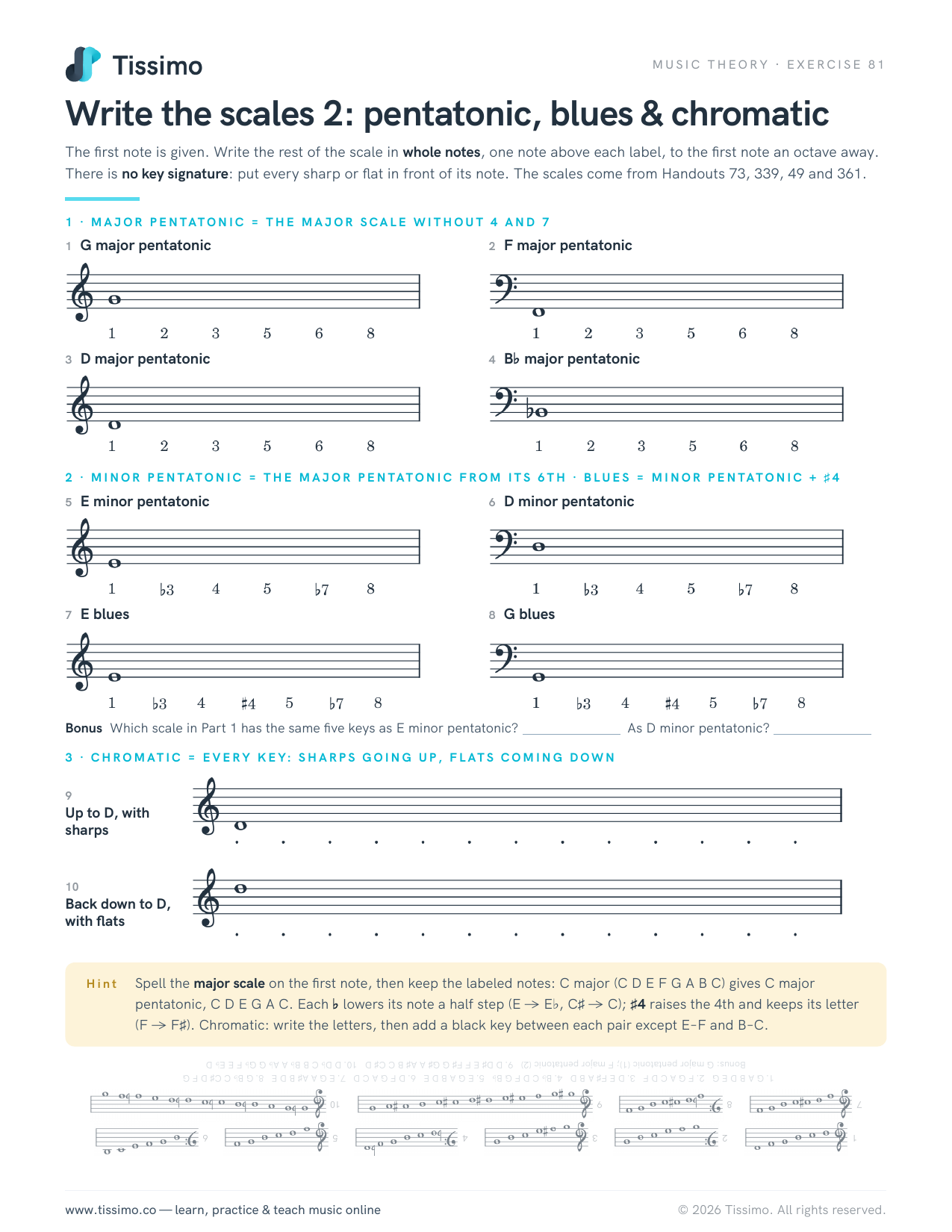 Write the scales 2: pentatonic, blues & chromaticThe first note is given. Write the rest of the scale in whole notes, one note above each label, to the first note an octave away. There is no key signature: put every sharp or flat in front of its note. The scales come from Handouts 73, 339, 49 and 361.
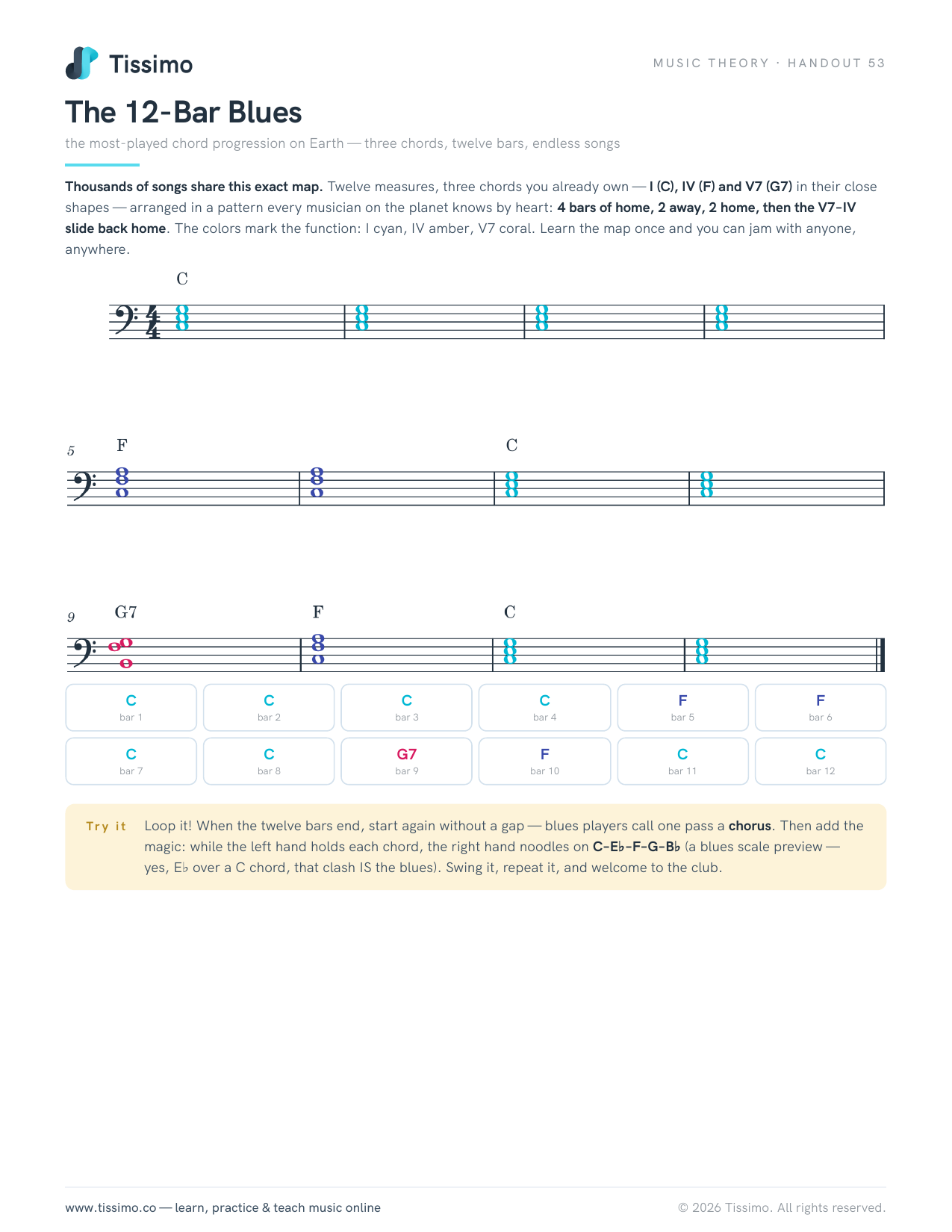 The 12-Bar Bluesone of the best-known chord progressions — three chords, twelve bars, endless songs