Scales, Keys & Modes
Relative Key
Relative keys are a major key and a minor key that share the same key signature, such as C major and A minor. Their major and natural minor scales use the same notes. The relative minor's tonic is three half steps below the major's.
Every major key has a minor partner with the same key signature: its relative minor. Every minor key, in turn, has a relative major. C major and A minor are relatives: neither key signature has sharps or flats. C major and A natural minor use the same white-key collection, but music in A minor often also uses F♯ and G♯. What differs is the home note, the tonic.
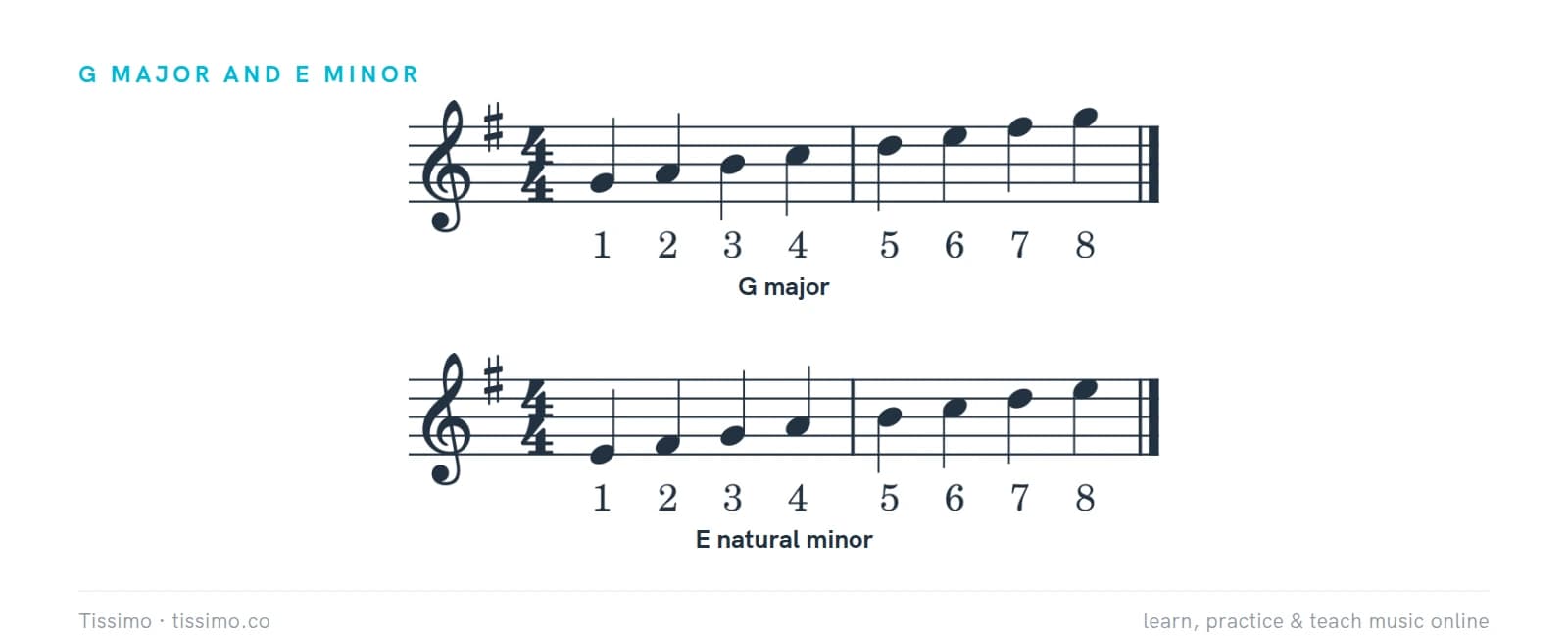
Finding the relative minor or major
- From a major key, go down three half steps (a minor third) to find its relative minor: C → A, G → E, F → D, E♭ → C.
- From a minor key, go up three half steps to find its relative major: A → C, E → G, D → F, C → E♭.
- Or count scale degrees: the relative minor's tonic is the 6th degree of the major scale, and the relative major's tonic is the 3rd degree of the minor scale.
Check the letter names as well as the half steps: the relative minor's tonic is always two letter names below the major's (E♭, D, C), so the relative minor of E♭ major is C minor, never B♯ minor.
Same signature, different music
Because relative keys share a signature, a key signature alone cannot tell you whether a piece is in the major key or its relative minor. Look at where the melody comes to rest and at the first and last chords. Then look for accidentals: a minor key usually raises its 7th degree, so G♯ in a piece with no key signature points to A minor rather than C major. The natural minor scale uses the relative major's notes exactly; the harmonic and melodic forms add raised notes.
Relative keys in pieces
Relative keys are close neighbors, so music moves between them easily. A minor-key piece very often modulates to its relative major, for a second theme or a middle section, and major-key pieces visit their relative minor too. On the circle of fifths, each major key is usually printed with its relative minor right beside it.
Relative or parallel?
Do not confuse relative keys with parallel keys. Relatives share a key signature but not a tonic (C major and A minor). Parallels share a tonic but not a key signature (C major and C minor, which has three flats). Parallel vs Relative Minor sets the two side by side, and Relative or parallel? tests you on them.
Common questions
How do you find the relative minor of a major key?
Go down three half steps from the major key's tonic, to the letter name two below it: C major → A minor, G major → E minor, B♭ major → G minor. The relative minor's tonic is also the 6th degree of the major scale.
What is the relative minor of C major?
A minor. Both key signatures have no sharps or flats. A natural minor uses the same white keys as C major, but A minor music may also raise F and G to F♯ and G♯.
Practice it: free worksheets
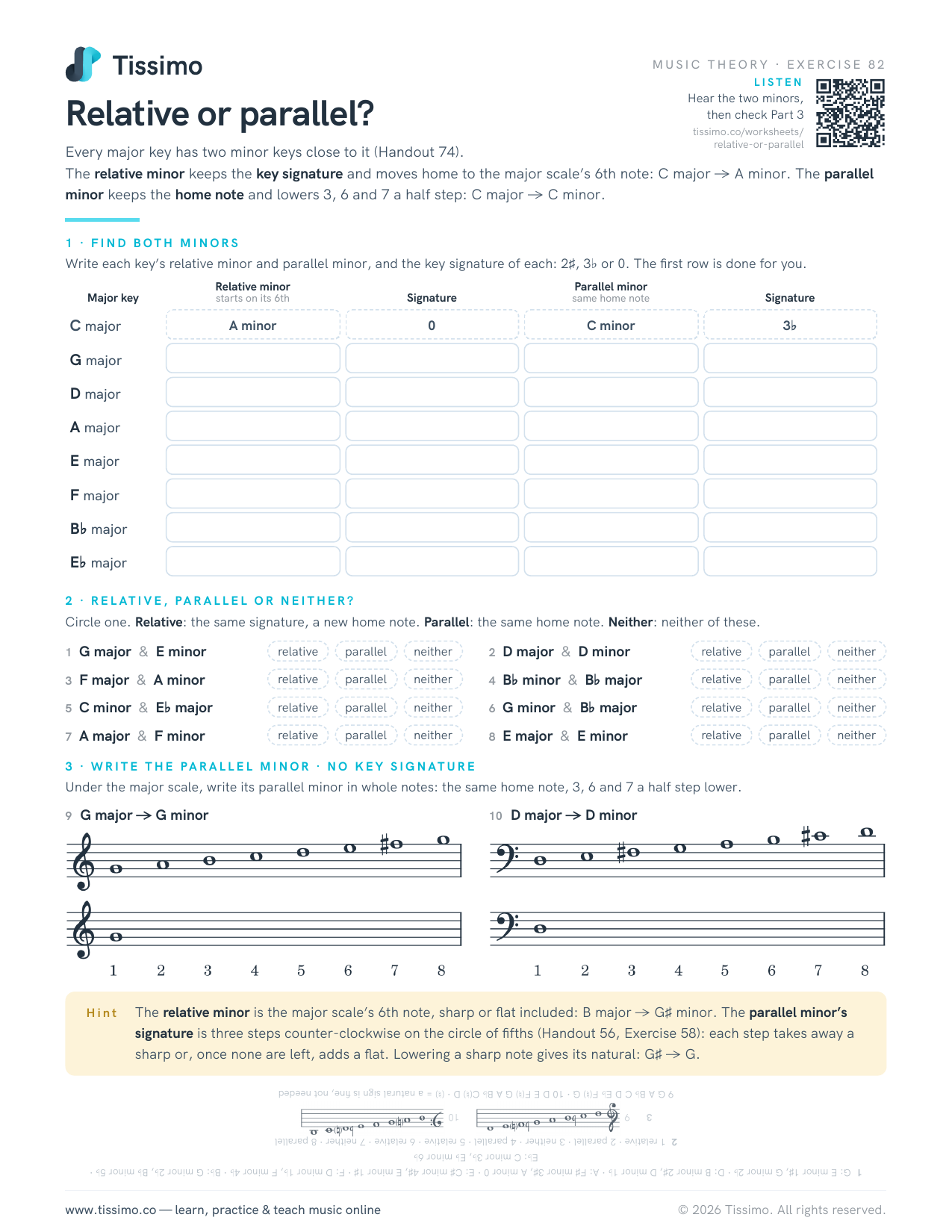 Relative or parallel?Every major key has two minor keys close to it (Handout 74). The relative minor keeps the key signature and moves home to the major scale’s 6th note: C major → A minor. The parallel minor keeps the home note and lowers 3, 6 and 7 a half step: C major → C minor.
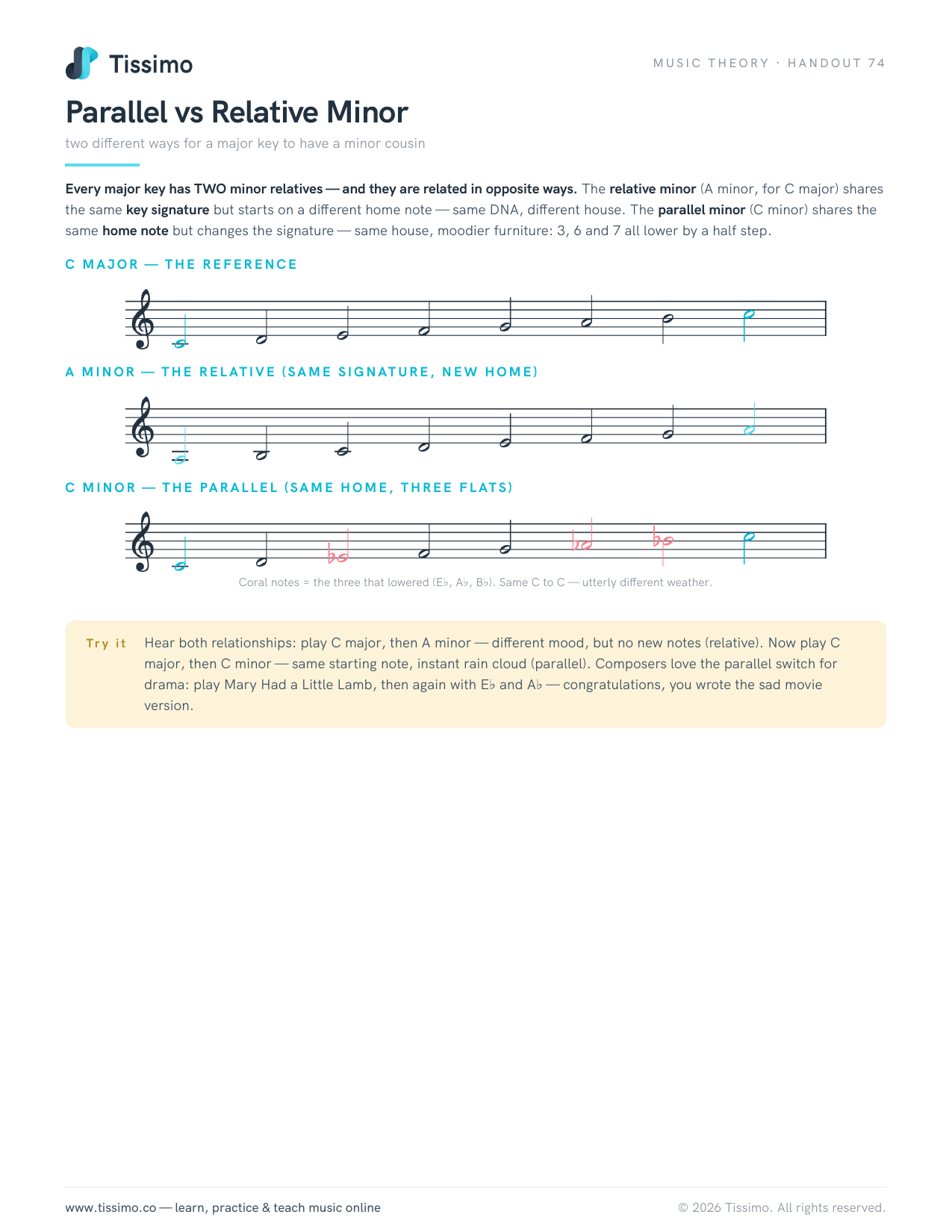 Parallel vs Relative Minortwo different ways for a major key to have a minor cousin
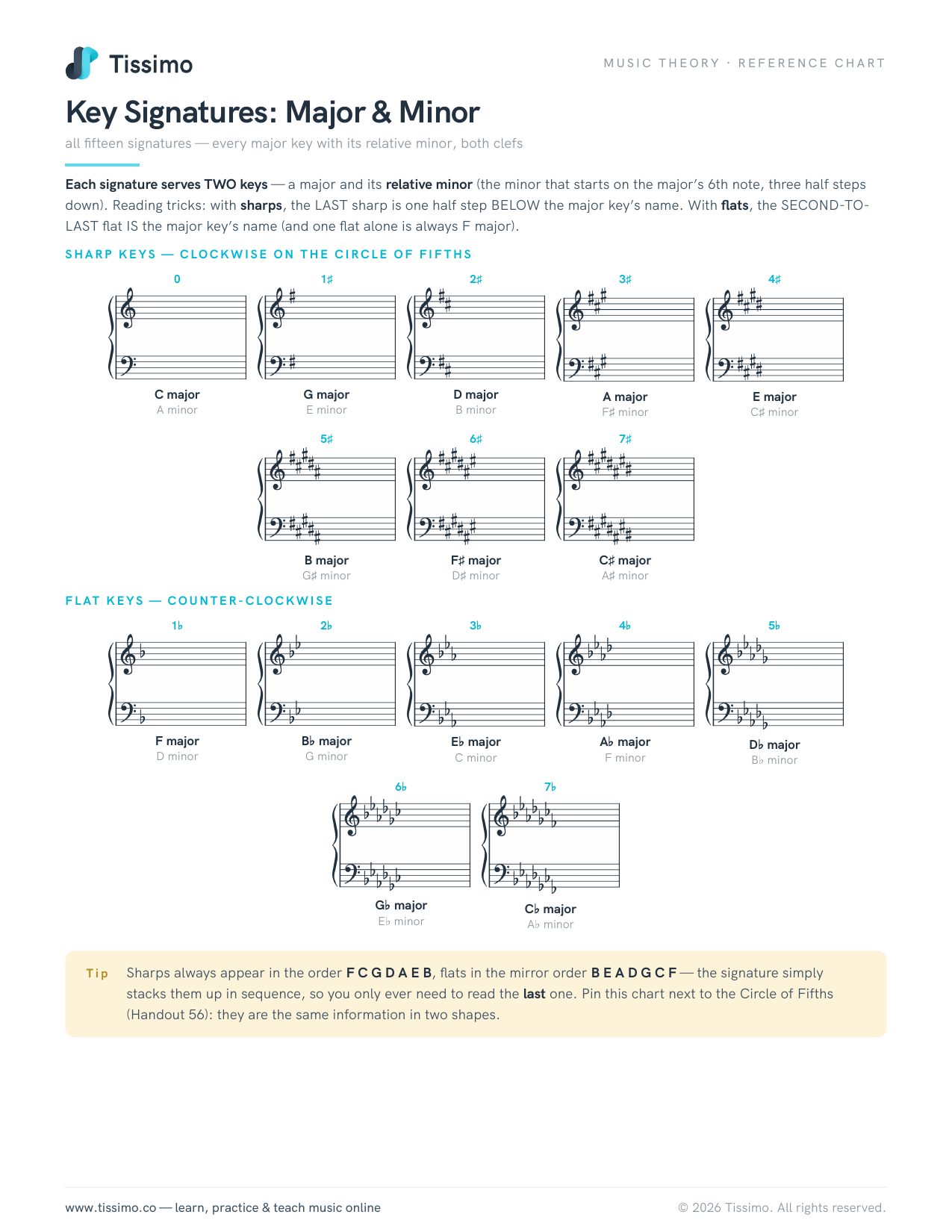 Key Signatures: Major & Minorall fifteen signatures — every major key with its relative minor, both clefs
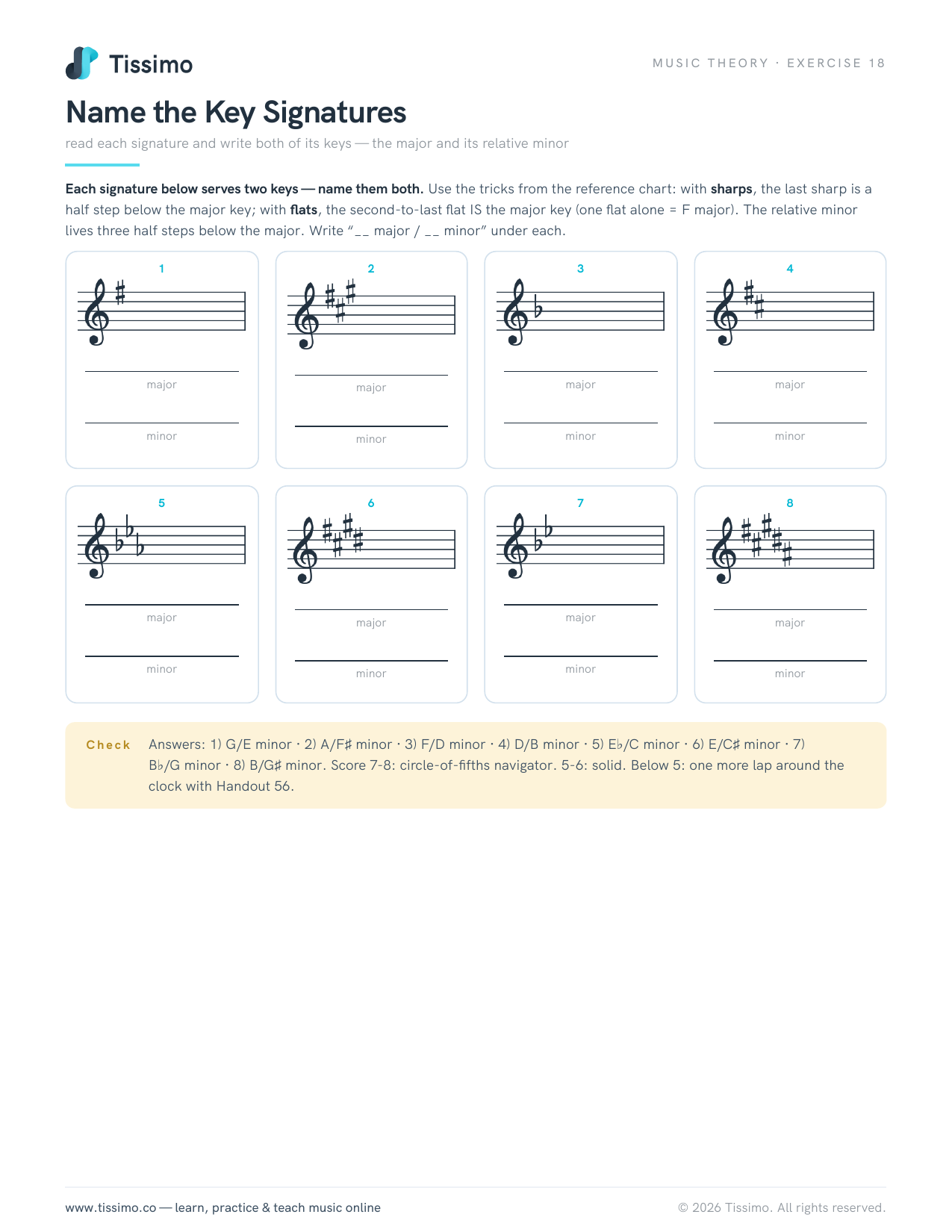 Name the Key Signaturesread each signature and write both of its keys — the major and its relative minor
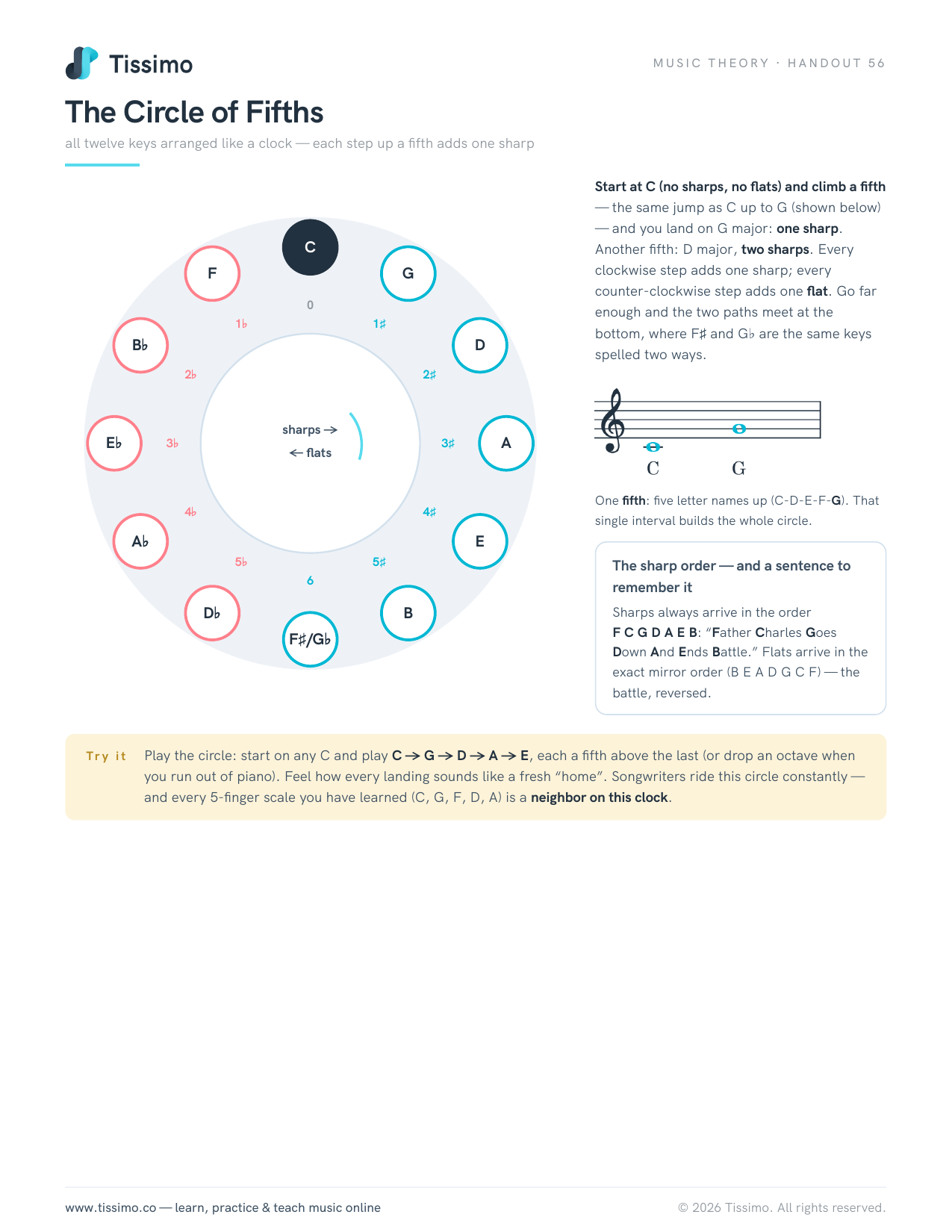 The Circle of Fifthsall twelve keys arranged like a clock — each step up a fifth adds one sharp
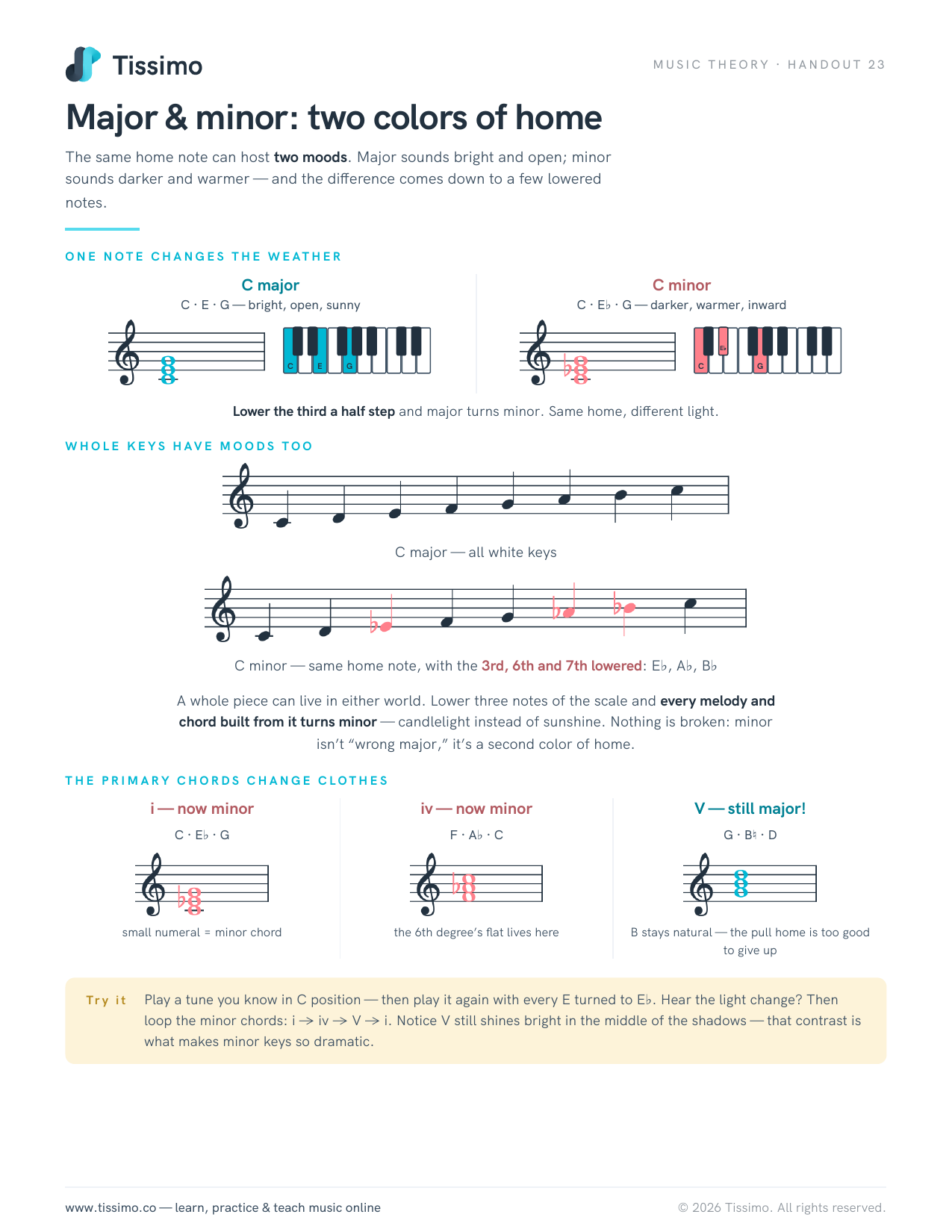 Major & minor: two colors of homeThe same home note can host two moods. Major sounds bright and open; minor sounds darker and warmer — and the difference comes down to a few lowered notes.