Scales, Keys & Modes
Submediant
Pronounced sub-MEE-dee-unt
The submediant is the sixth degree of a scale: A in C major, F in A minor. Its chord, vi in a major key, is the relative minor's tonic chord and the usual target of a deceptive cadence.
The submediant is scale degree 6: A in C major, F in A minor. In movable-do solfège it is la in a major key.
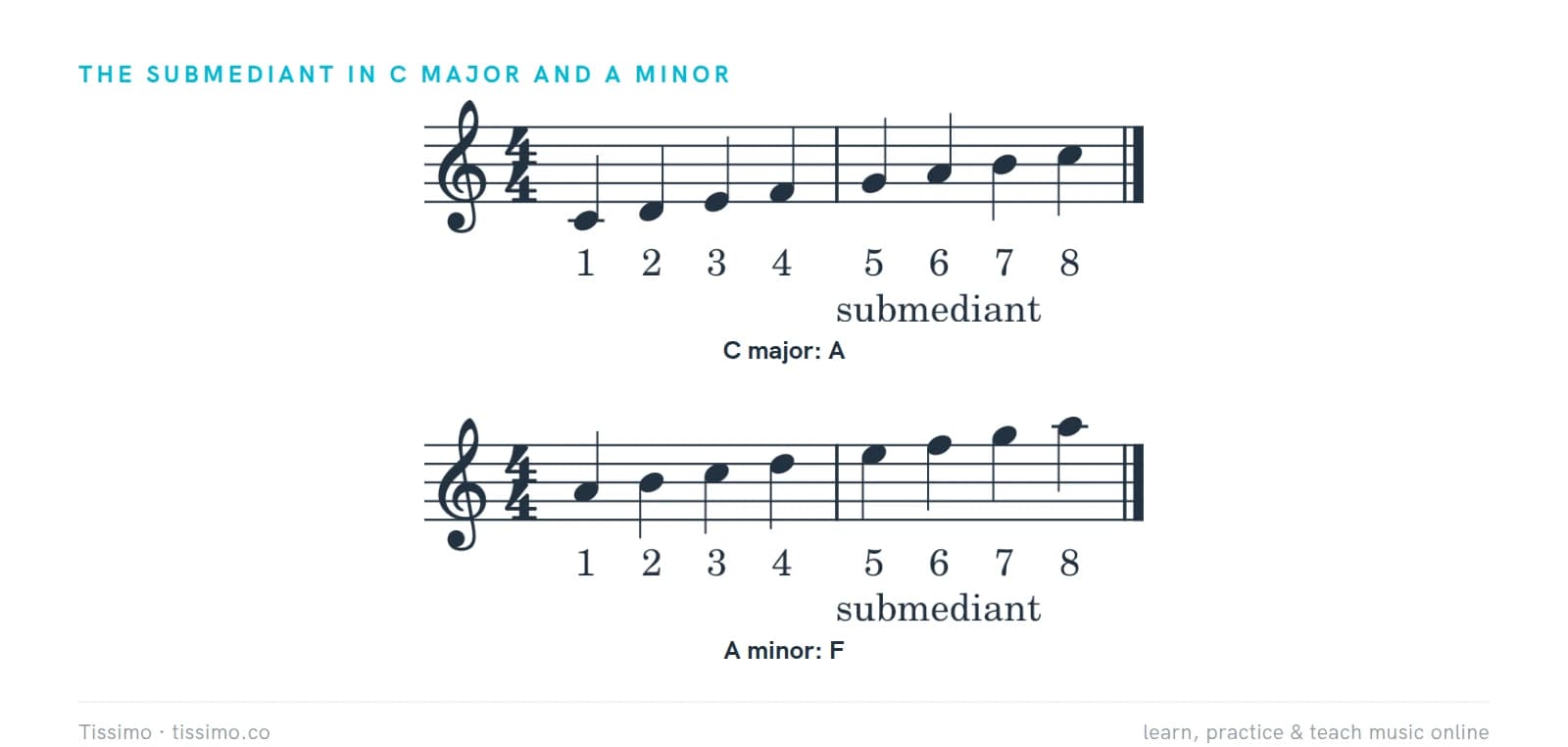
Where the name comes from
Like the subdominant, the name works downward from the tonic. The mediant is halfway up from the tonic to the dominant (C, E, G); the submediant is halfway down from the tonic to the subdominant (C, A, F). So A in C major is the "lower mediant", not the note under the mediant.
The submediant chord
In a major key the triad on degree 6 is minor: A C E in C major, written vi. It shares two notes with the tonic chord (C and E), so it can stand in for it, and it is the tonic chord of the relative minor, A minor. The progression I–vi–IV–V (C, Am, F, G) is one of the most familiar in pop music. In a minor key the submediant chord is major: F A C in A minor, written VI.
The deceptive cadence
The submediant chord's most famous job is to surprise. When a phrase reaches the dominant chord, your ear expects the tonic next. If vi arrives instead, V–vi, you get a deceptive cadence: the bass rises a step instead of falling a fifth, the leading tone still rises to the tonic, and the music carries on instead of ending.
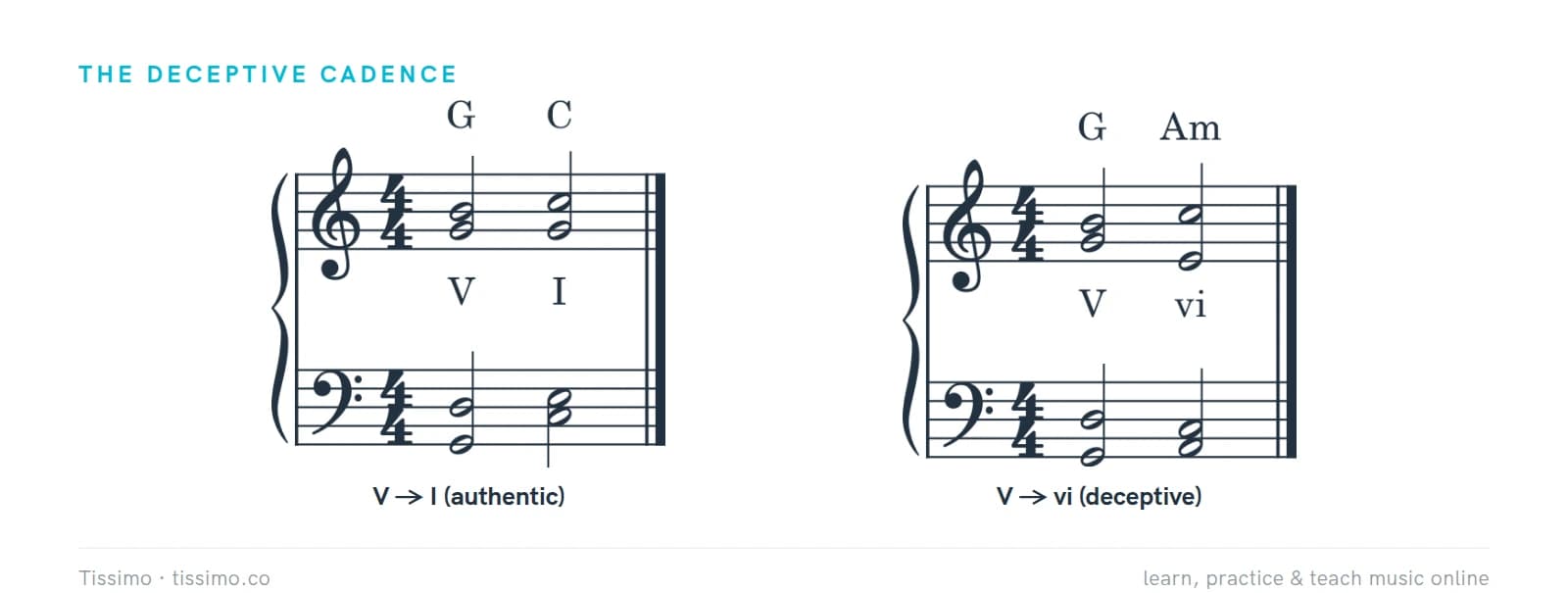
In minor keys
In minor, degree 6 is one of the notes that changes between the forms of the minor scale. Natural and harmonic minor keep it low (F in A minor), only a half step above the dominant, so it leans down onto degree 5. Melodic minor raises it (F♯) on the way up, to smooth the climb to the raised 7th. That half step between 6 and 5 in minor gives the submediant much of its dark, sighing quality.
Common questions
Why is the sixth degree called the submediant?
Because it lies halfway between the tonic and the subdominant below it (C, A, F in C major), mirroring the mediant, which lies halfway between the tonic and the dominant above it.
What is the submediant chord in a major key?
A minor triad on degree 6, written vi: A minor in C major. It is the tonic chord of the relative minor and the usual destination of a deceptive cadence.
Practice it: free worksheets
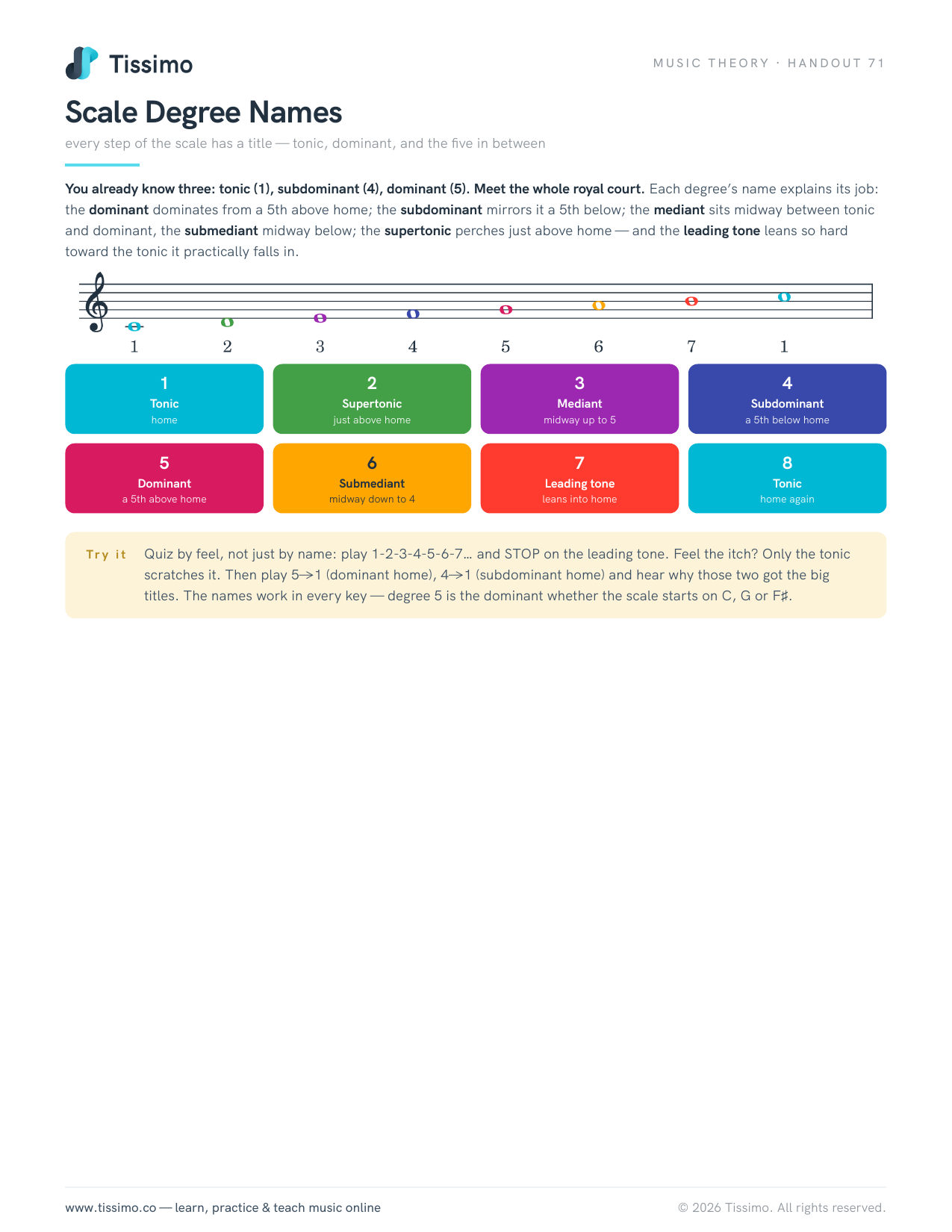 Scale Degree Namesevery step of the scale has a title — tonic, dominant, and the five in between
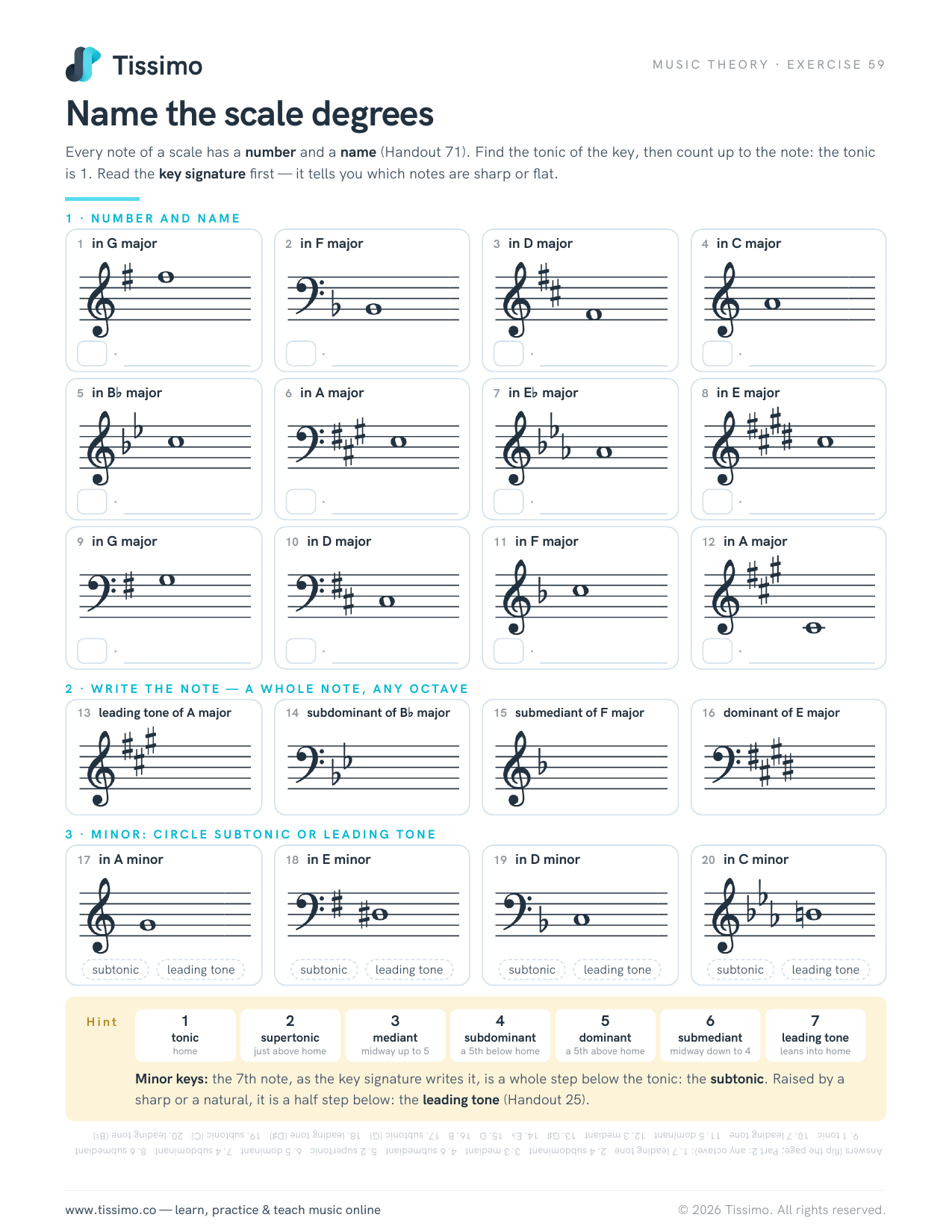 Name the scale degreesEvery note of a scale has a number and a name (Handout 71). Find the tonic of the key, then count up to the note: the tonic is 1. Read the key signature first — it tells you which notes are sharp or flat.
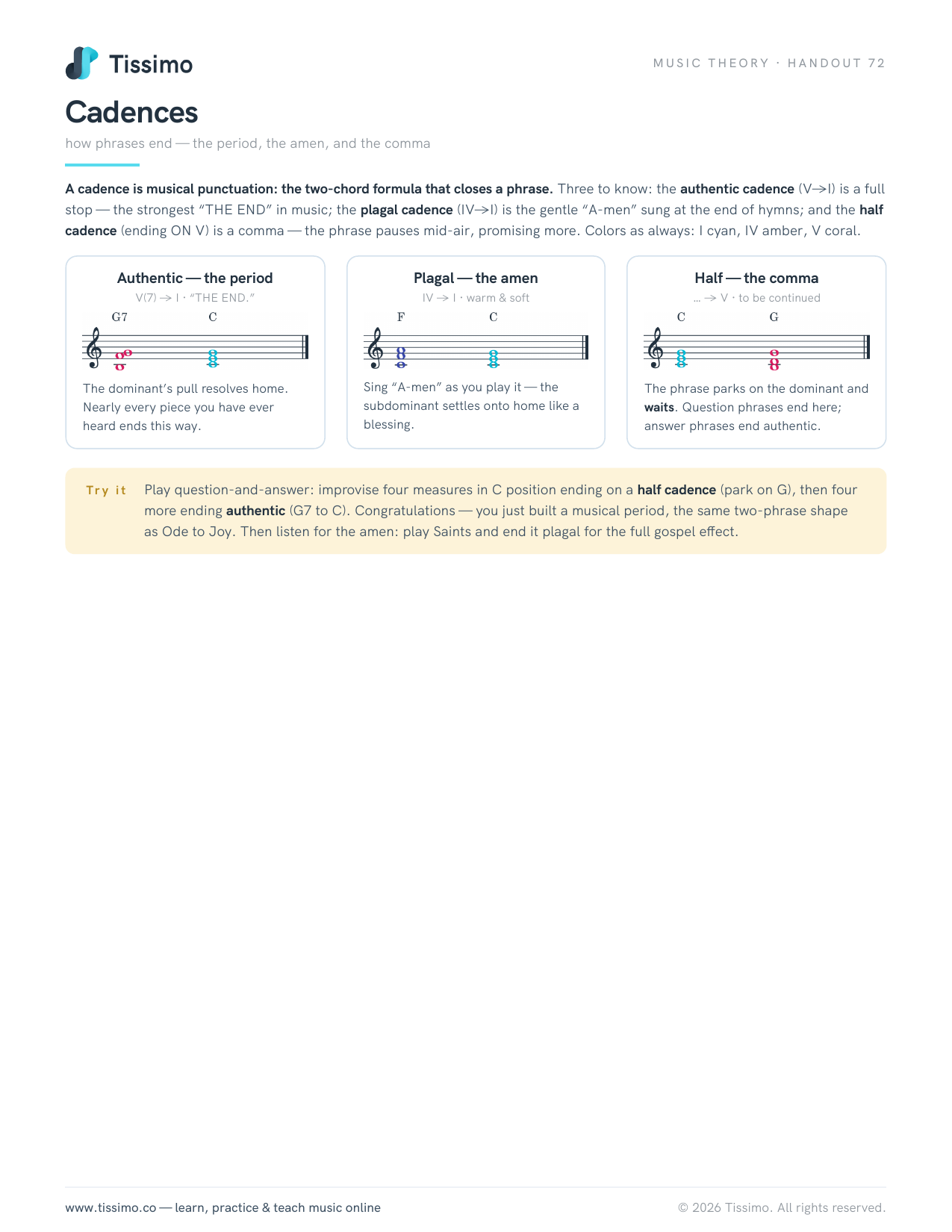 Cadenceshow phrases end — the period, the amen, and the comma
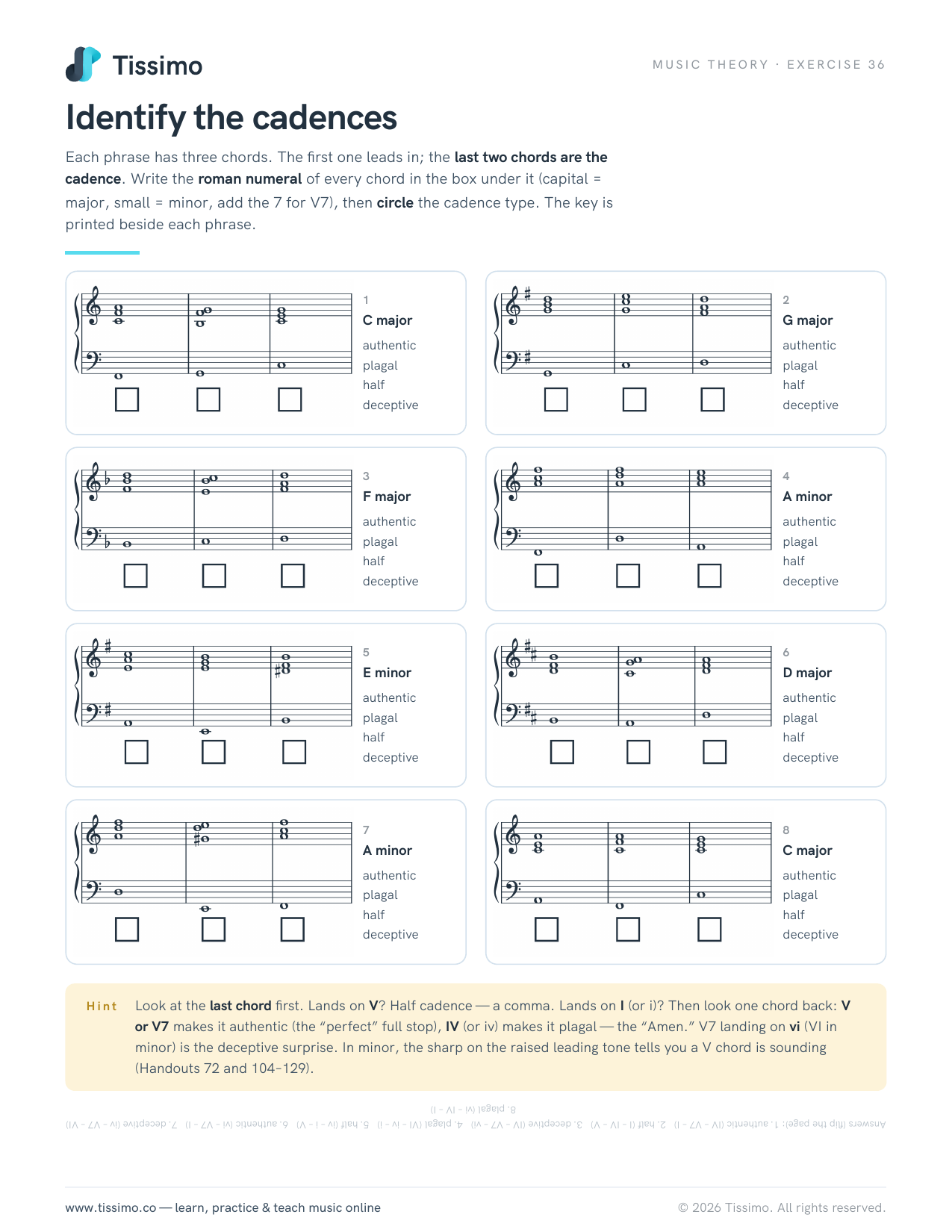 Identify the cadencesEach phrase has three chords. The first one leads in; the last two chords are the cadence. Write the roman numeral of every chord in the box under it (capital = major, small = minor, add the 7 for V7), then circle the cadence type. The key is printed beside each phrase.
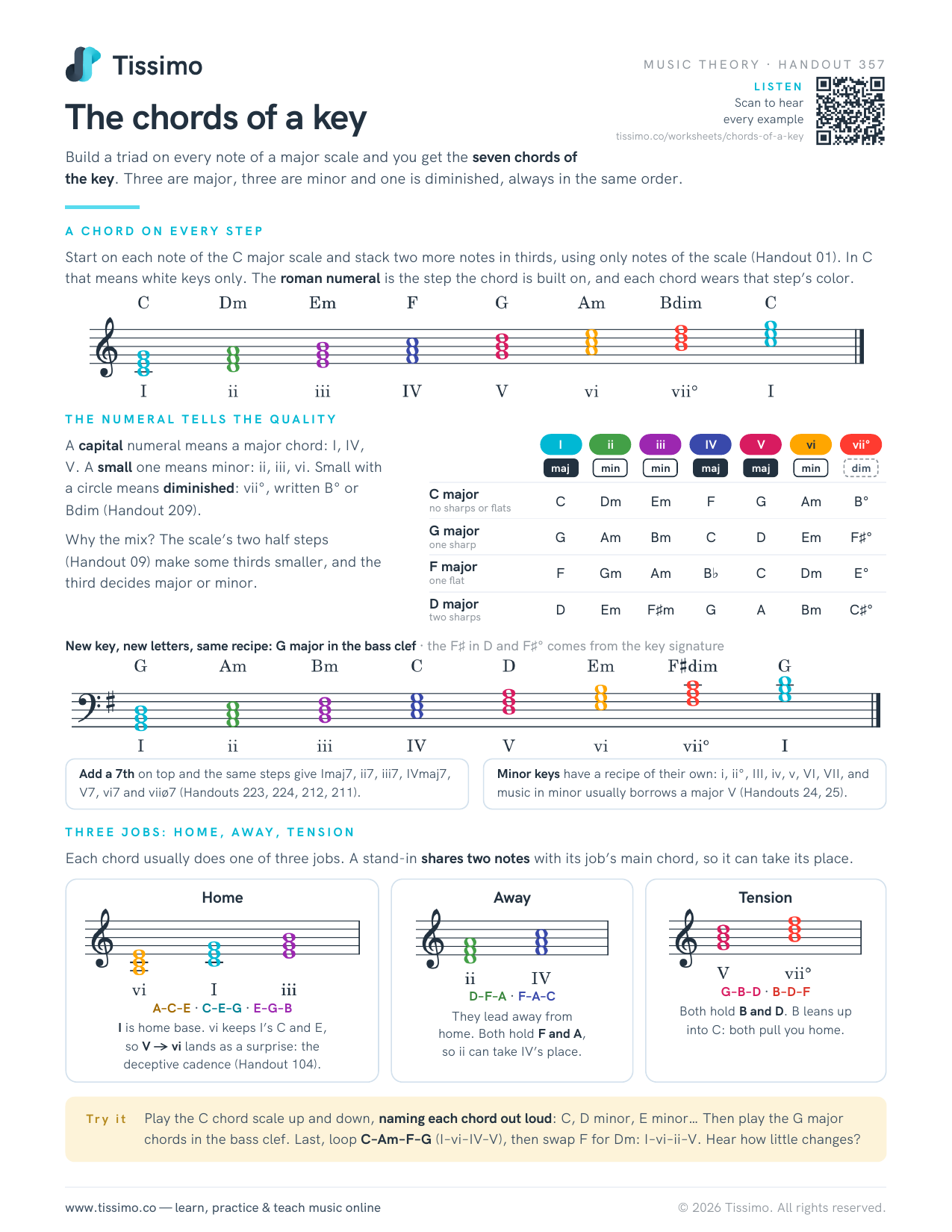 The chords of a keyBuild a triad on every note of a major scale and you get the seven chords of the key. Three are major, three are minor and one is diminished, always in the same order.