Scales, Keys & Modes
Mediant
Pronounced MEE-dee-unt
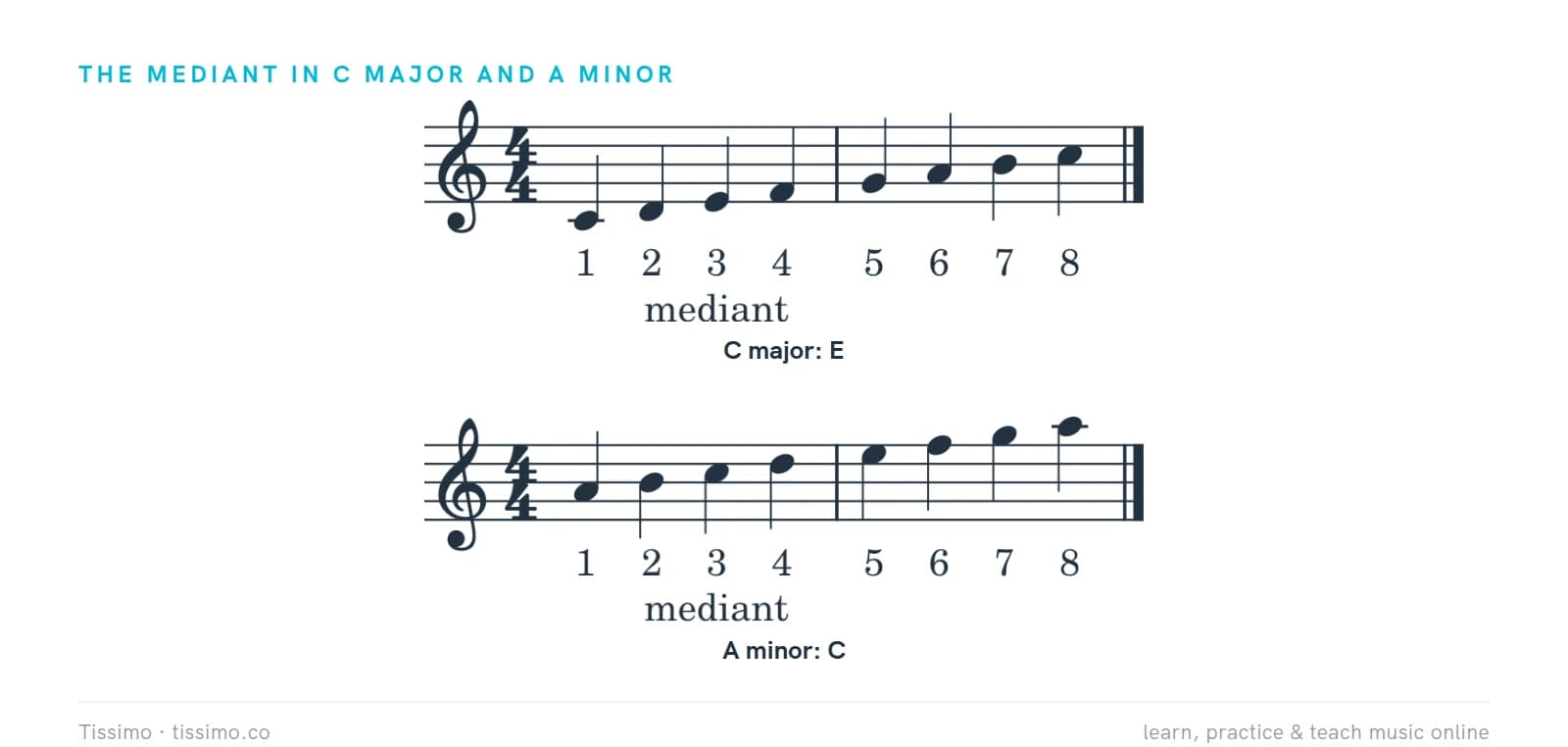
The mediant is the third degree of a scale, halfway between the tonic and the dominant: E in C major, C in A minor. It decides whether a key sounds major or minor.
The mediant is scale degree 3. Its name comes from its position: it lies in the middle, halfway between the tonic (degree 1) and the dominant (degree 5). In C major the mediant is E; in A minor it is C. In movable-do solfège it is mi in a major key.
The note that decides major or minor
Of all seven degrees, the mediant does the most to set a key's mood. In a major key it lies a major third above the tonic (C up to E, four half steps); in a minor key it lies a minor third above (C up to E♭, three half steps). Change that one note and a bright melody turns dark, or the reverse.
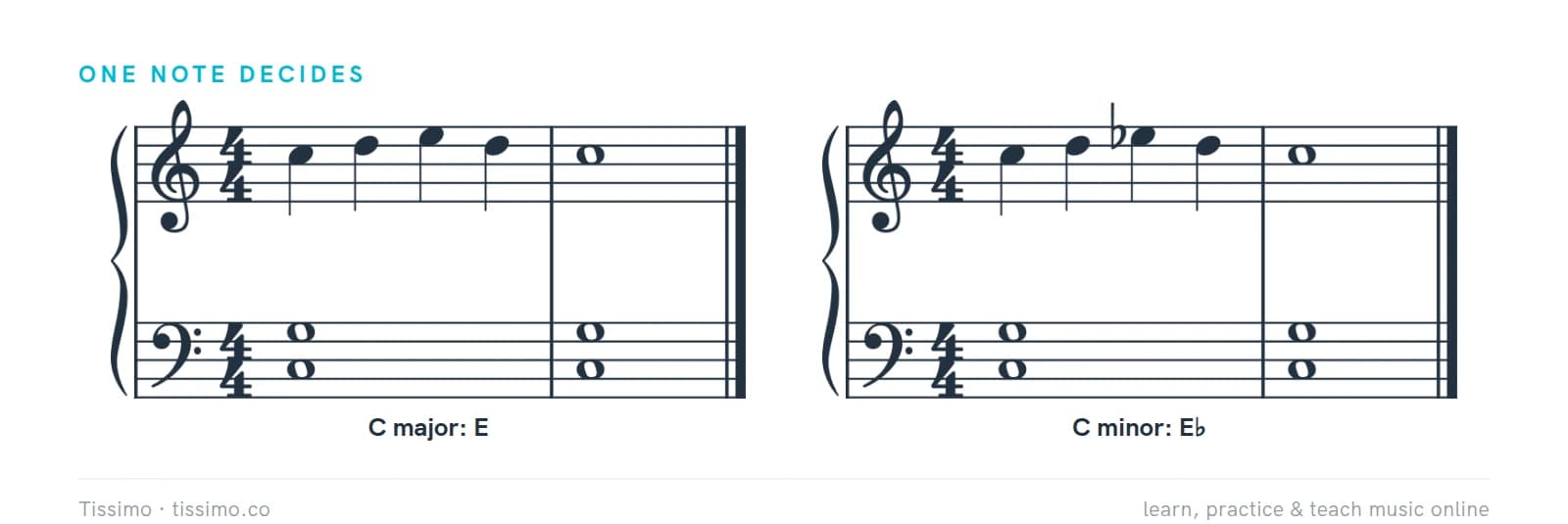
The same note decides the quality of a chord: the 3rd above a chord's root makes it major or minor. That is why a minor-key piece that ends on a major tonic chord, a device called a Picardy third, sounds suddenly bright.
The mediant chord
The triad on the mediant is minor in a major key (E G B in C major, written iii) and major in natural minor (C E G in A minor, written III). In a major key, iii is one of the less common chords; it shares two notes with both I and V and often moves to vi or IV. In a minor key, III is the tonic chord of the relative major, and moving there, A minor to C major, is one of the most common modulations in minor-key music.
Mediant relationships
From the 19th century on, composers grew fond of moving between chords whose roots are a third apart but which do not share a key, such as C major to E major or C major to A♭ major. These chromatic mediants keep one common note and shift the others, which gives a bright, unexpected, often magical effect. Film composers use them a great deal.
Common questions
Why is it called the mediant?
Because it lies in the middle, halfway between the tonic (degree 1) and the dominant (degree 5).
What is a chromatic mediant?
A chord whose root is a third away from the chord before it but which does not belong to the same key, such as E major or A♭ major after C major. It keeps one common note and shifts the others, which sounds bright and unexpected.
Practice it: free worksheets
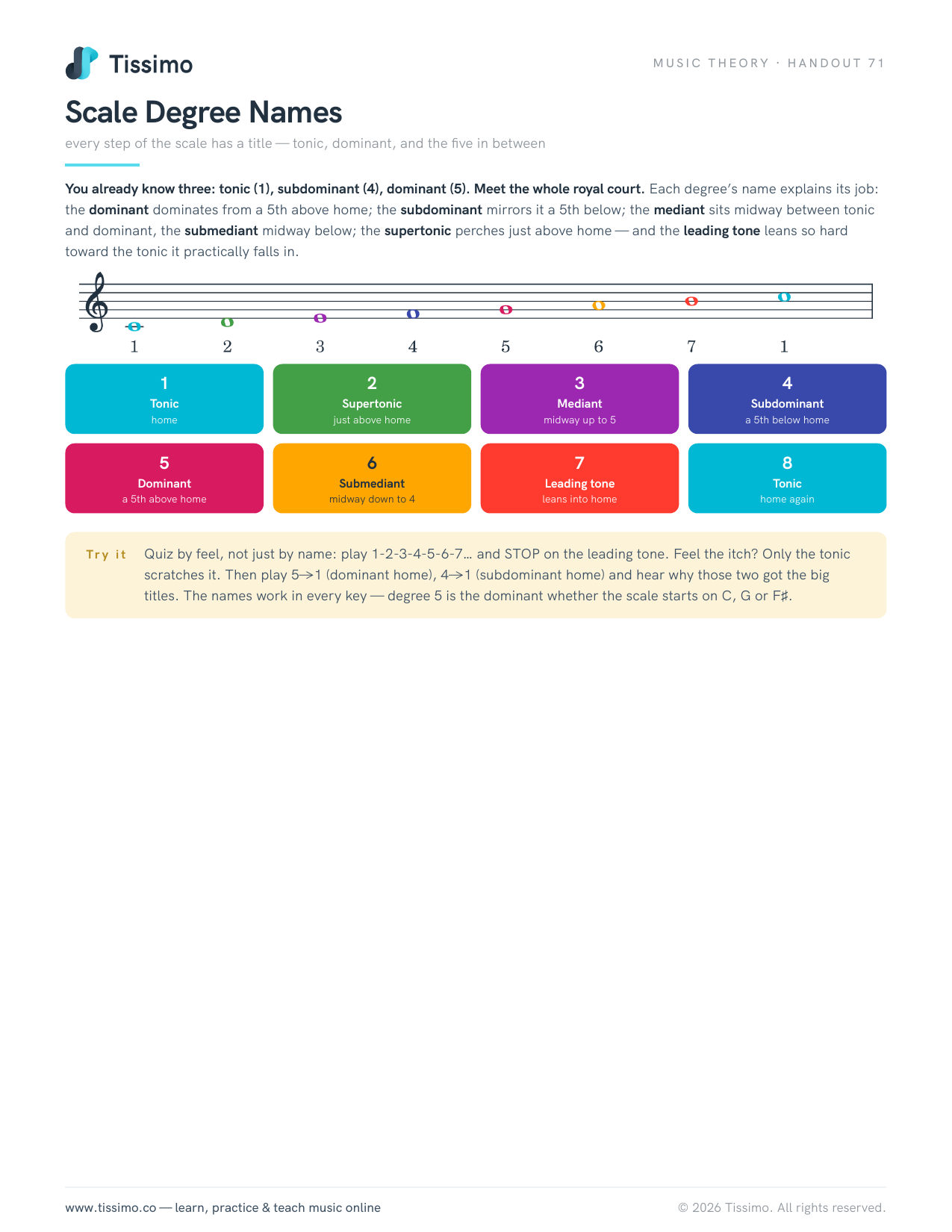 Scale Degree Namesevery step of the scale has a title — tonic, dominant, and the five in between
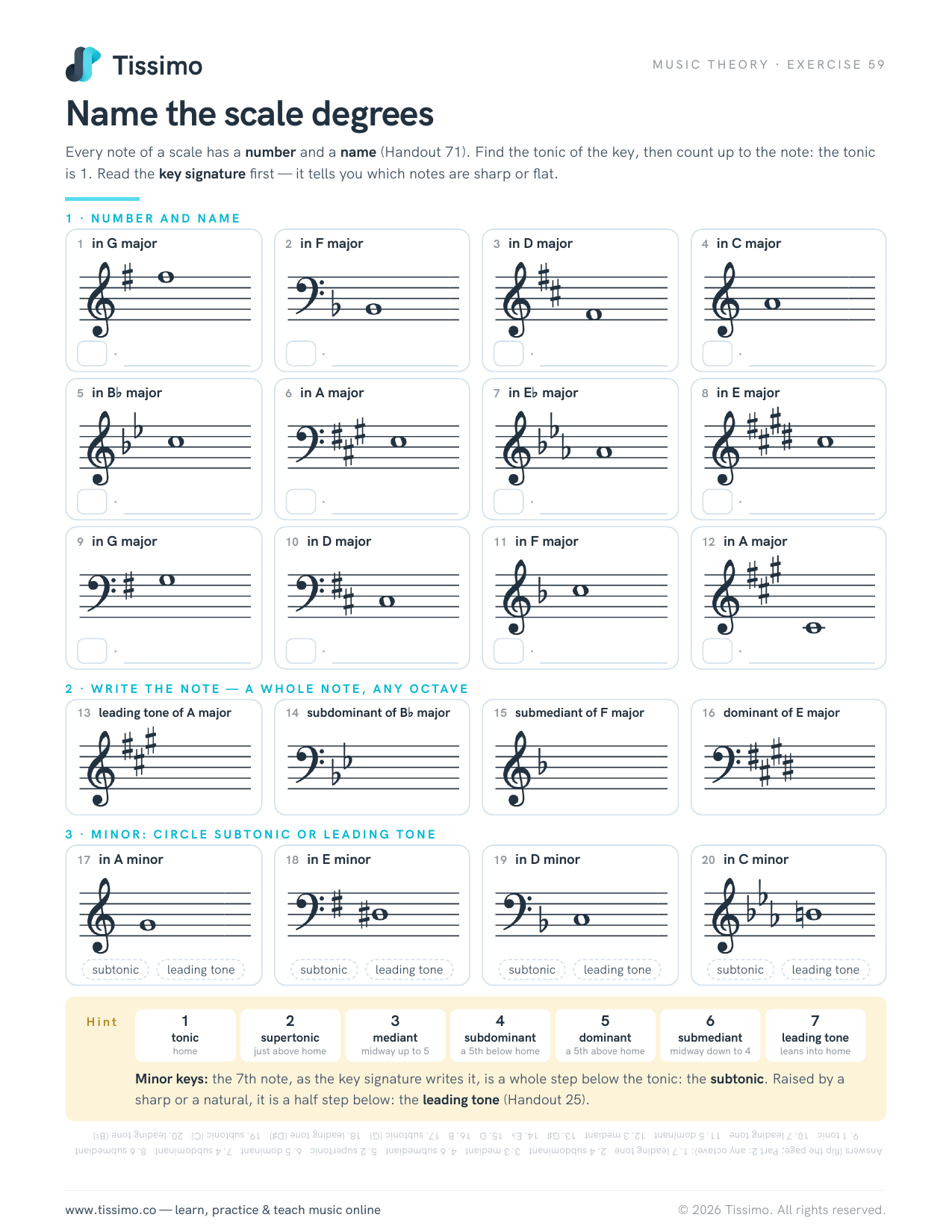 Name the scale degreesEvery note of a scale has a number and a name (Handout 71). Find the tonic of the key, then count up to the note: the tonic is 1. Read the key signature first — it tells you which notes are sharp or flat.
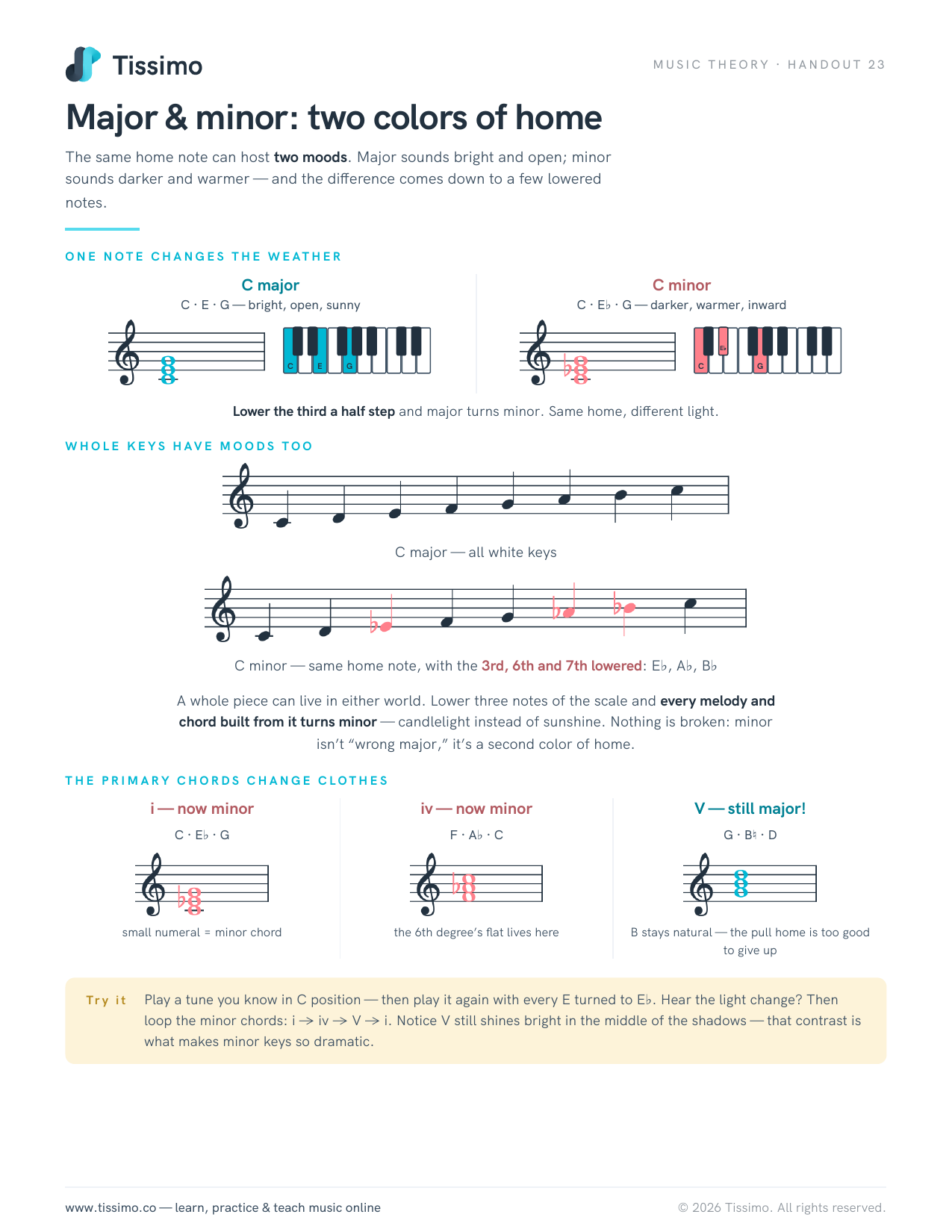 Major & minor: two colors of homeThe same home note can host two moods. Major sounds bright and open; minor sounds darker and warmer — and the difference comes down to a few lowered notes.
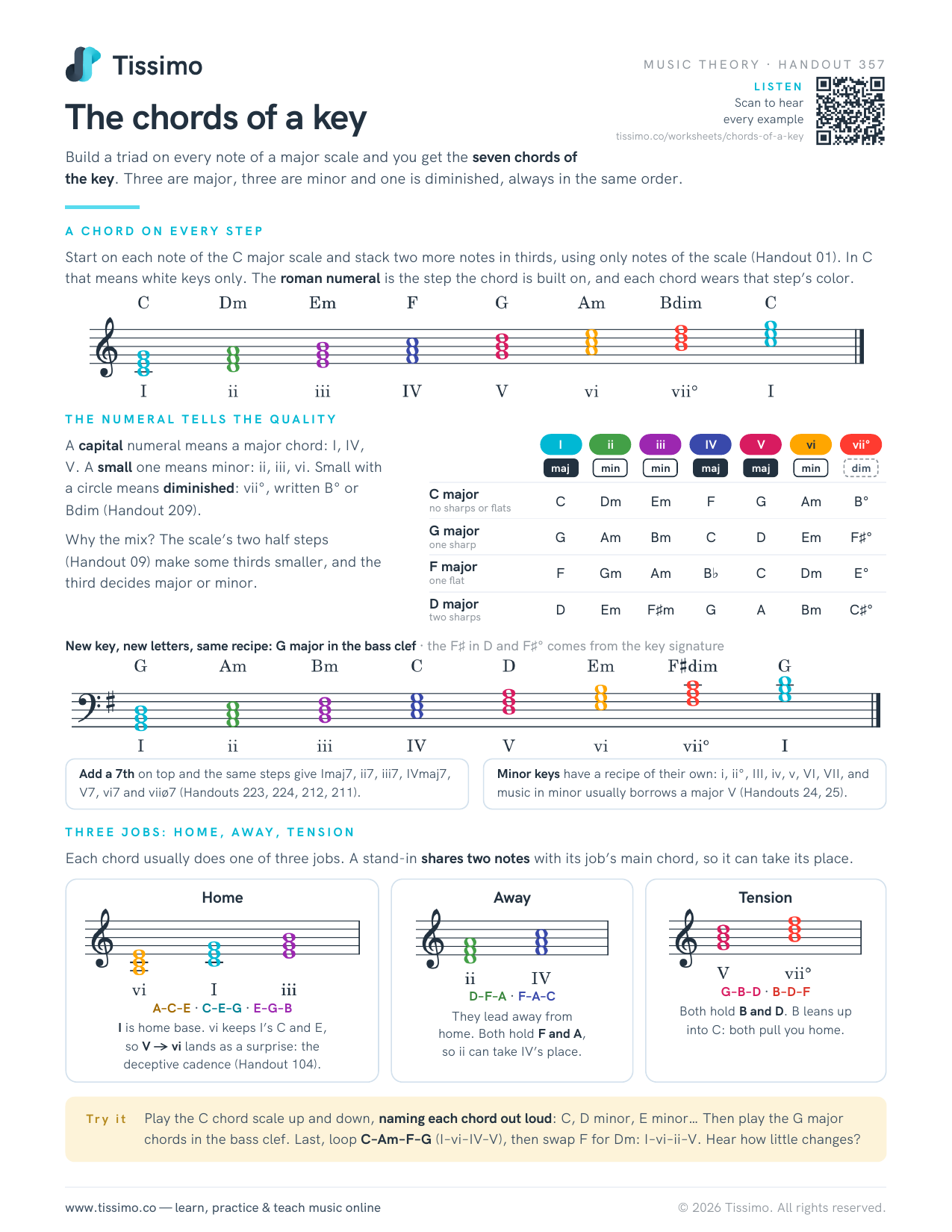 The chords of a keyBuild a triad on every note of a major scale and you get the seven chords of the key. Three are major, three are minor and one is diminished, always in the same order.