Notation & Symbols
Measure (Bar)
A measure, or bar, is a segment of music between two bar lines. It holds the number of beats set by the time signature, so in 4/4 time every full measure adds up to four quarter-note beats.
A measure is the stretch of music between two bar lines. American musicians usually say measure; British musicians say bar, and many Americans use both words. Every full measure lasts the same number of beats, set by the time signature: four quarter-note beats in 4/4, three in 3/4, two dotted-quarter beats in 6/8.
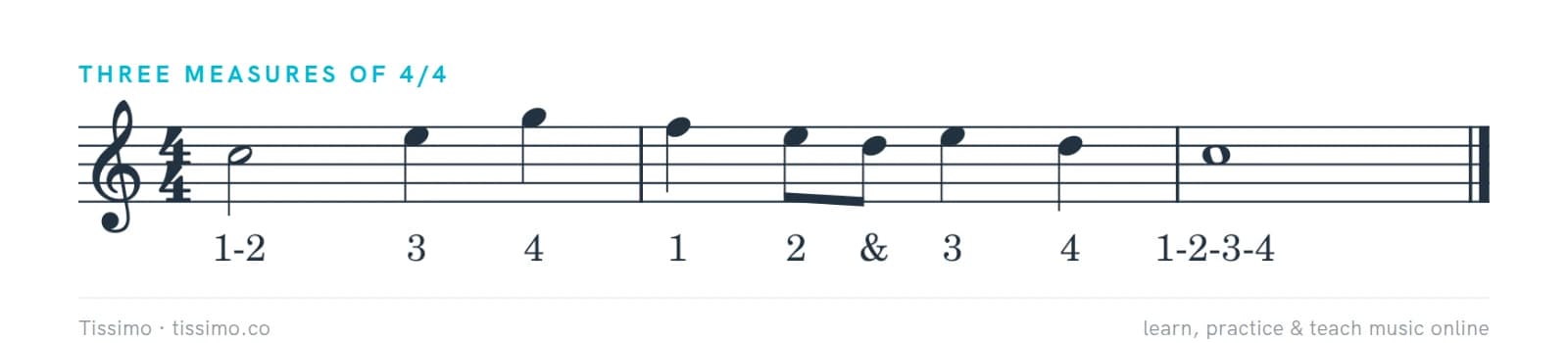
Every measure adds up
The notes and rests in a measure must add up exactly to what the time signature promises. In 4/4, a half note and two quarter notes fill a measure (2 + 1 + 1 = 4 beats), and so do eight eighth notes or a single whole note. When you write or check a rhythm, add up each bar: if the total comes out more or less than the time signature, a note or rest is missing or extra.
A whole rest centered in an otherwise empty measure means "rest for the whole bar", whatever the time signature.
Counting measures
Measures are numbered from the start of the piece, and many editions print the bar number at the beginning of each system. That is how musicians find their place: "let's start at bar 9". If a piece begins with an incomplete measure, a pickup or anacrusis, that bar is usually not counted, and the first full measure is bar 1.
Measures, beats and phrases
The first beat of each measure, the downbeat, normally carries the strongest accent, which is why bar lines help you feel the meter. Measures group into larger units too: many melodies fall into phrases of four or eight bars, and forms such as the twelve-bar blues are counted in measures.
The measure is also the unit for accidentals: a sharp, flat or natural lasts until the next bar line and then expires.
Practice with Complete the measure and Add the Barlines.
Common questions
Is a bar the same as a measure?
Yes. Measure is the usual American word and bar the British one; both mean the music between two bar lines.
How many beats are in a measure?
As many as the time signature says. In simple meters the top number is the count: 3/4 has three quarter-note beats per measure and 4/4 has four.
Practice it: free worksheets
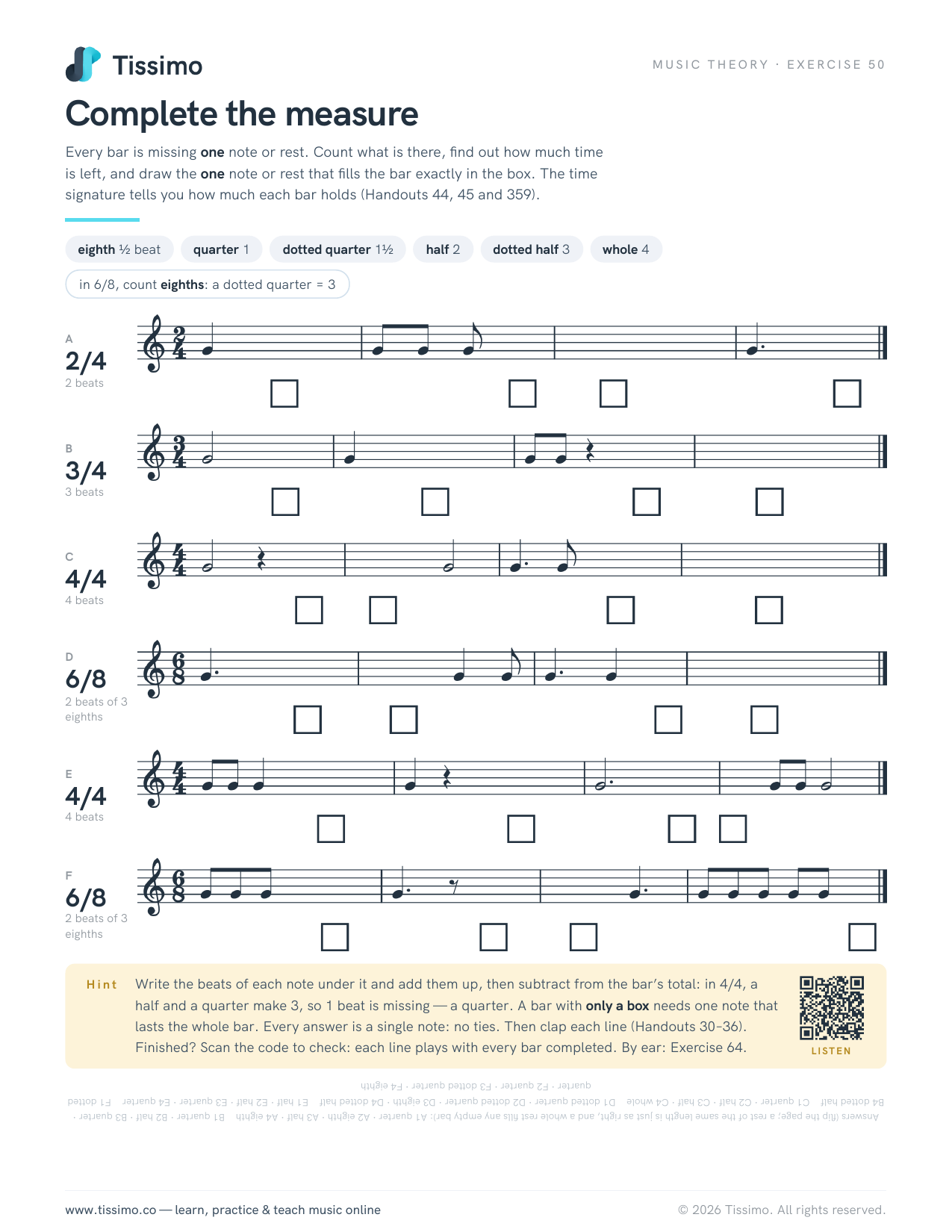 Complete the measureEvery bar is missing one note or rest. Count what is there, find out how much time is left, and draw the one note or rest that fills the bar exactly in the box. The time signature tells you how much each bar holds (Handouts 44, 45 and 359).
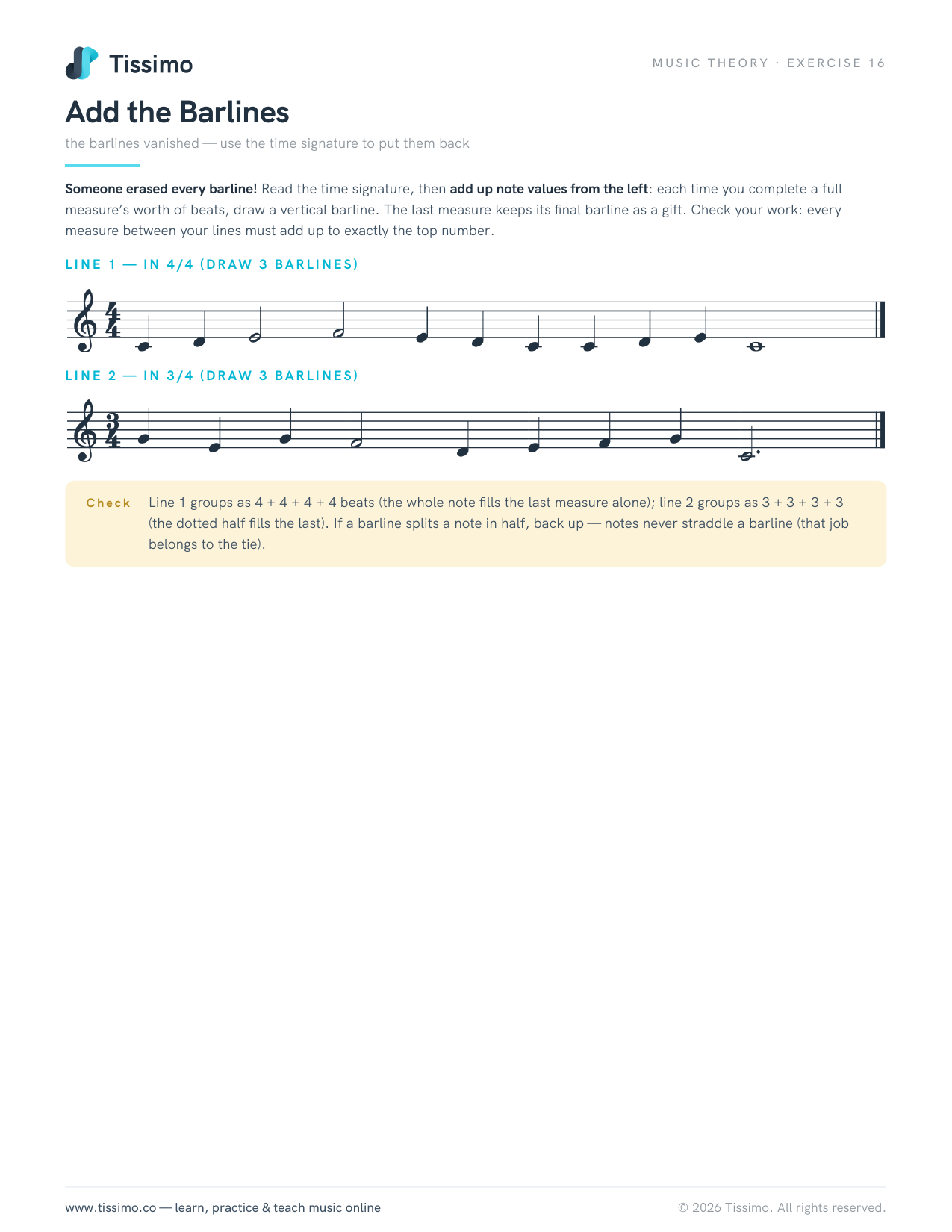 Add the Barlinesthe barlines vanished — use the time signature to put them back
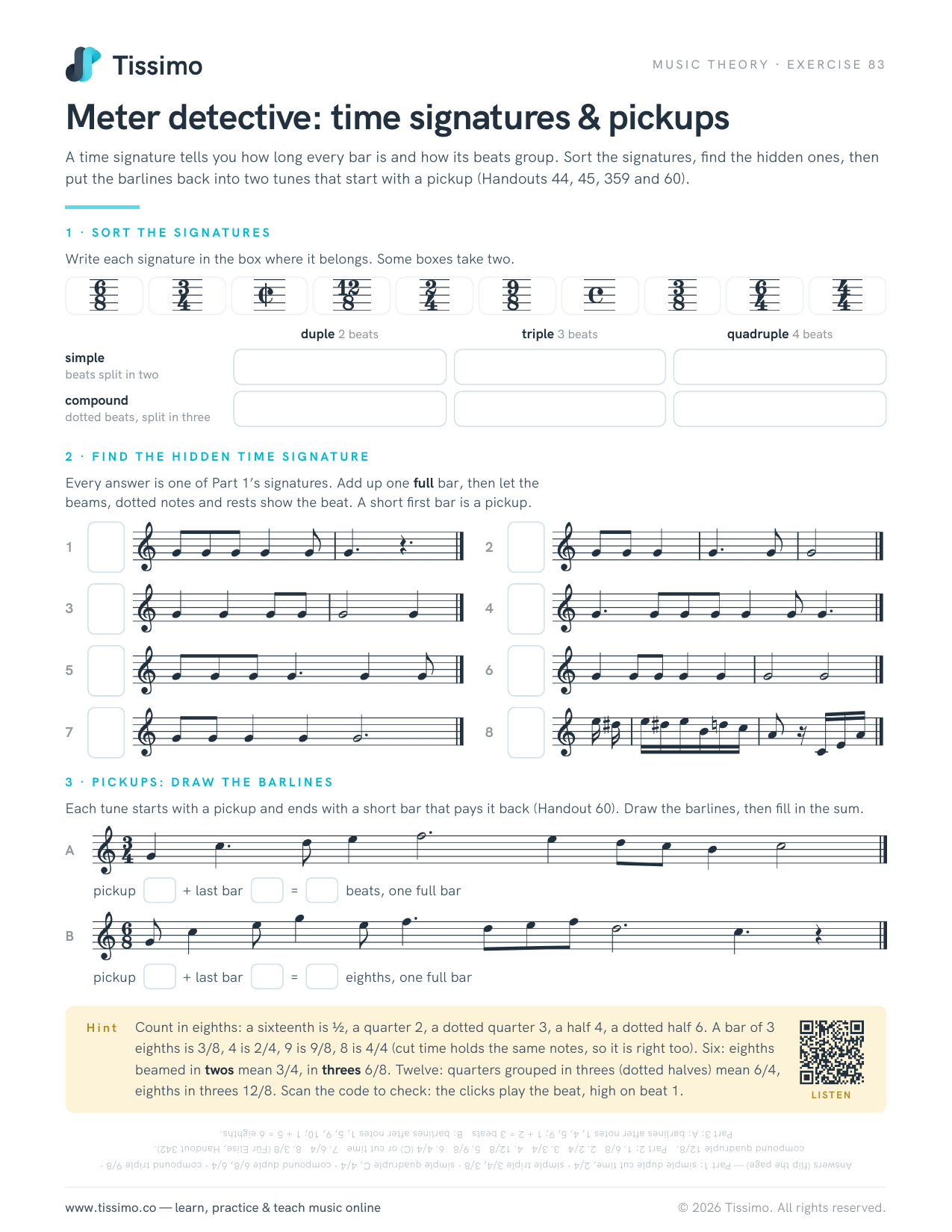 Meter detective: time signatures & pickupsA time signature tells you how long every bar is and how its beats group. Sort the signatures, find the hidden ones, then put the barlines back into two tunes that start with a pickup (Handouts 44, 45, 359 and 60).
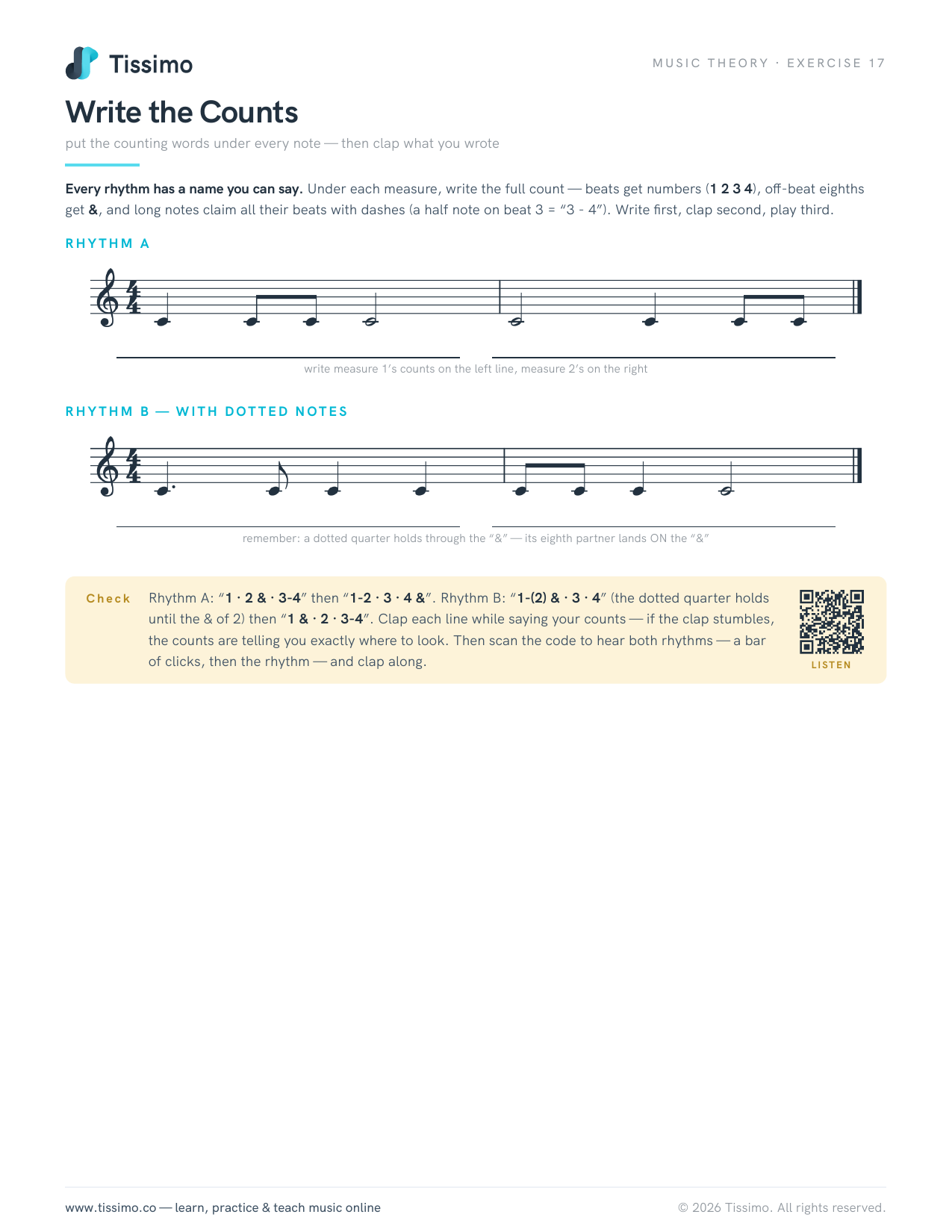 Write the Countsput the counting words under every note — then clap what you wrote
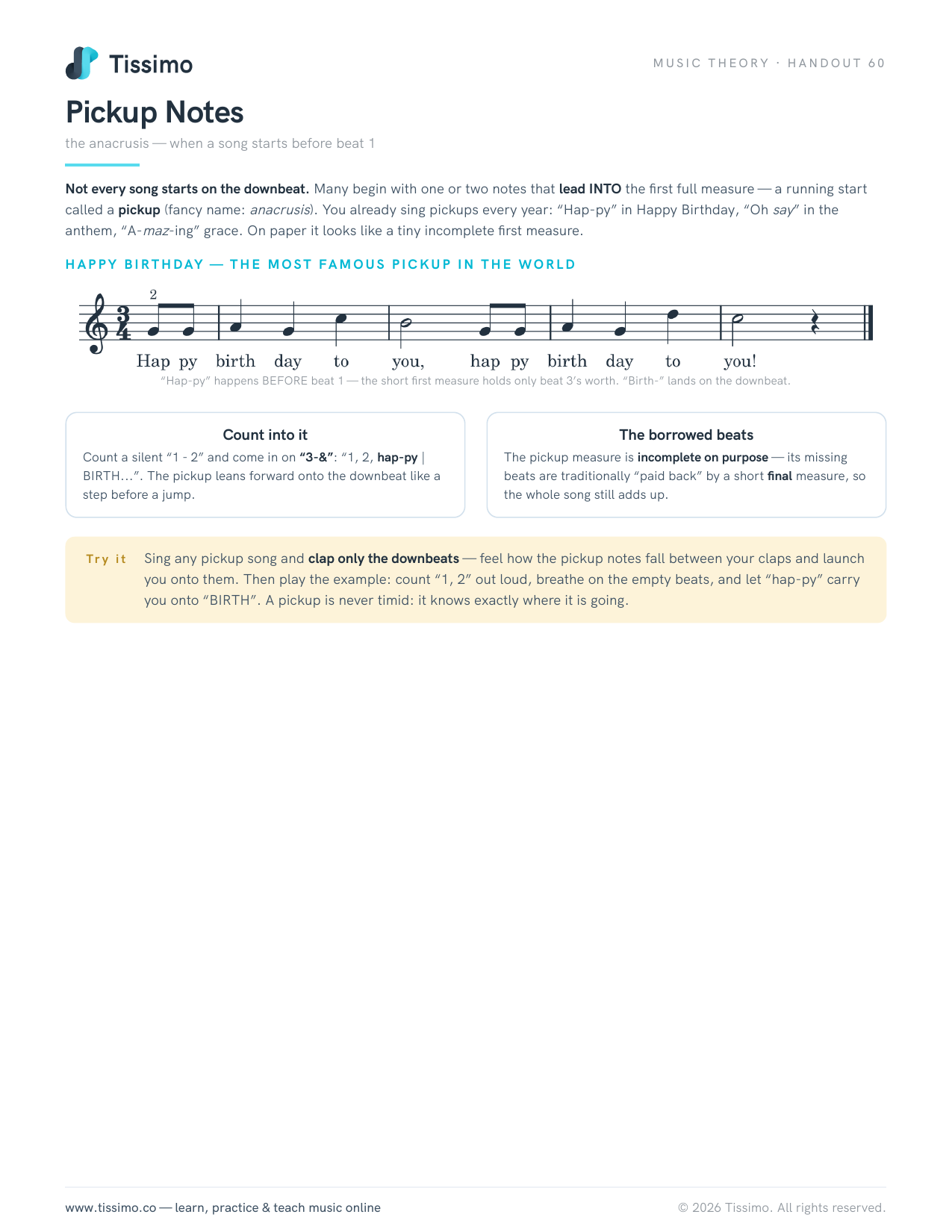 Pickup Notesthe anacrusis — when a song starts before beat 1