Notation & Symbols
Ledger Line
A ledger line is a short extra line drawn above or below the staff for a note that is too high or too low to fit on the five lines. Each one extends the staff by one line.
A ledger line (also spelled leger line) is a short horizontal line that extends the staff for a single note. It sits the same distance from the staff as the staff lines are from each other, so the pattern simply carries on: line, space, line, space, each position the next letter name.
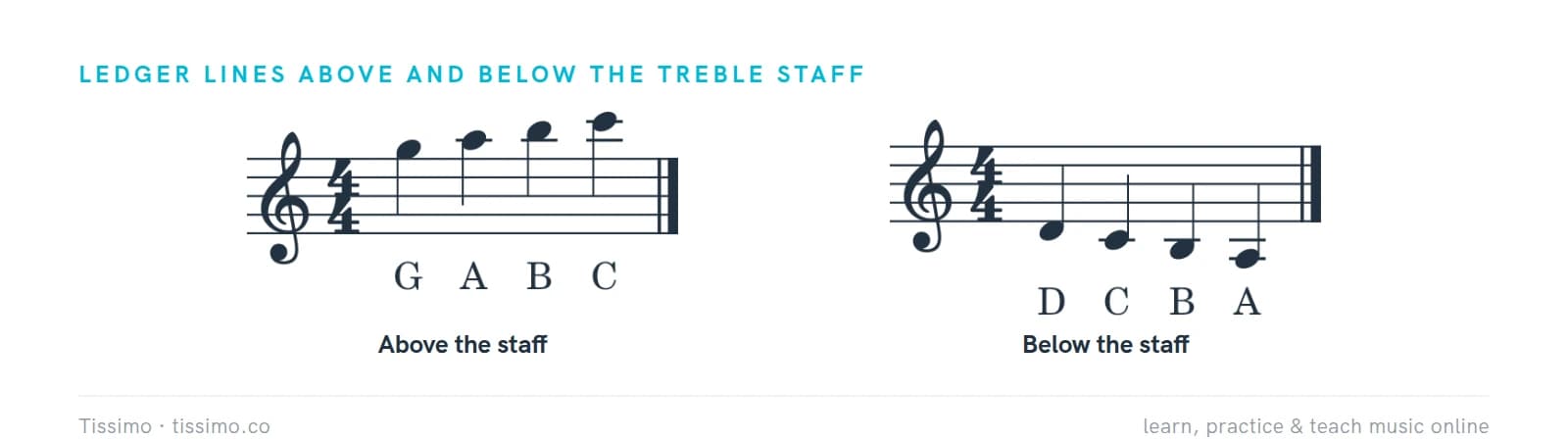
How to read ledger lines
Count from a staff line you already know. In the treble clef the top line is F, so the space just above it is G, the first ledger line above is A, the space above that is B, and the second ledger line is C. Going down, the bottom line is E, the space just below it is D, and the first ledger line below is middle C.
The bass clef works the same way. Its top line is A, so the first ledger line above it is middle C; its bottom line is G, so the first ledger line below is E and the second is C.
Rather than counting every time, learn a few landmark notes by sight:
- Middle C: one ledger line below the treble staff, or one above the bass staff.
- High C (C6): two ledger lines above the treble staff.
- Low C (C2): two ledger lines below the bass staff.
How ledger lines are drawn
- A ledger line is only a little wider than the notehead. It never runs across the whole staff.
- A note needs every ledger line between it and the staff. A note sitting just above the second ledger line still shows both lines beneath it.
- The space right next to the staff needs no ledger line at all. G just above the treble staff, or D just below it, simply touches the outer staff line.
When there are too many
Beyond three or four ledger lines, notes become slow to read. Composers then change clef, or write the passage an octave lower or higher under an ottava sign (8va or 8vb). In piano music, notes around middle C can often move to the other staff of the grand staff instead.
Practice with Ledger Lines and Name the notes: ledger lines.
Common questions
Is it ledger line or leger line?
Both spellings are in use and mean the same thing. Ledger is the more common spelling in American books; leger appears in many British ones.
How many ledger lines can a note have?
There is no fixed limit, but past three or four lines notes are hard to read at a glance, so composers usually change clef or use an ottava (8va or 8vb) sign instead.
Practice it: free worksheets
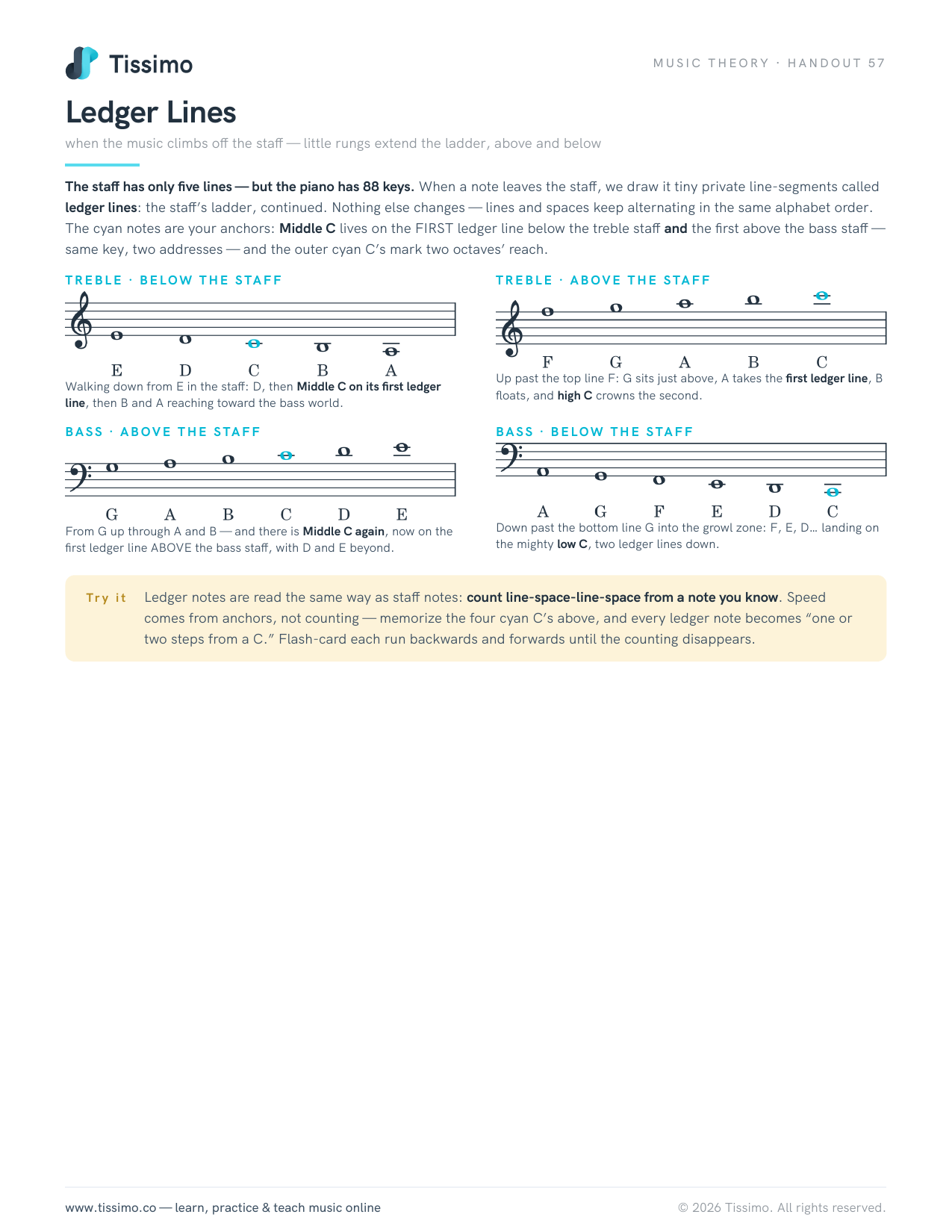 Ledger Lineswhen the music climbs off the staff — little rungs extend the ladder, above and below
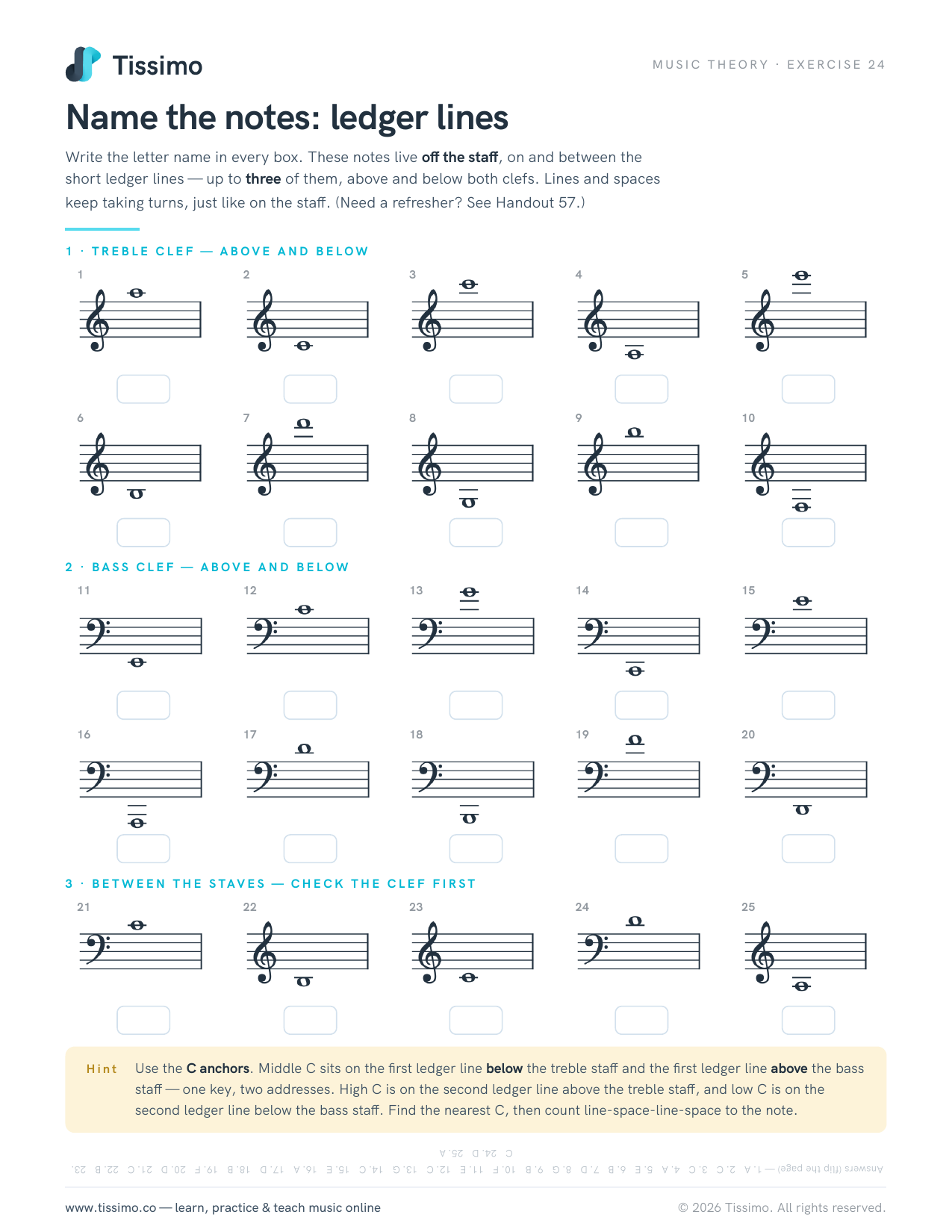 Name the notes: ledger linesWrite the letter name in every box. These notes live off the staff, on and between the short ledger lines — up to three of them, above and below both clefs. Lines and spaces keep taking turns, just like on the staff. (Need a refresher? See Handout 57.)
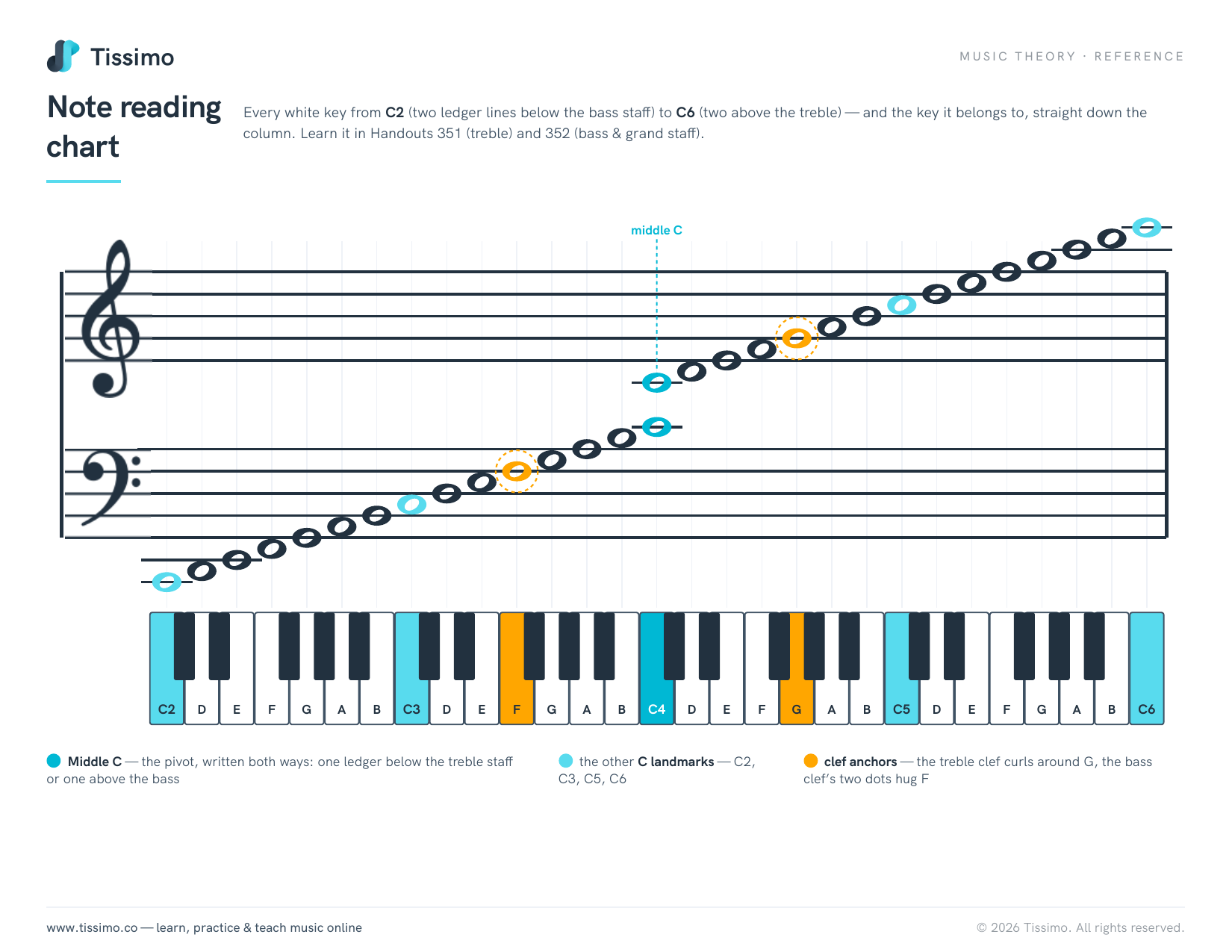 Note reading chartEvery white key from C2 (two ledger lines below the bass staff) to C6 (two above the treble) — and the key it belongs to, straight down the column. Learn it in Handouts 351 (treble) and 352 (bass & grand staff).
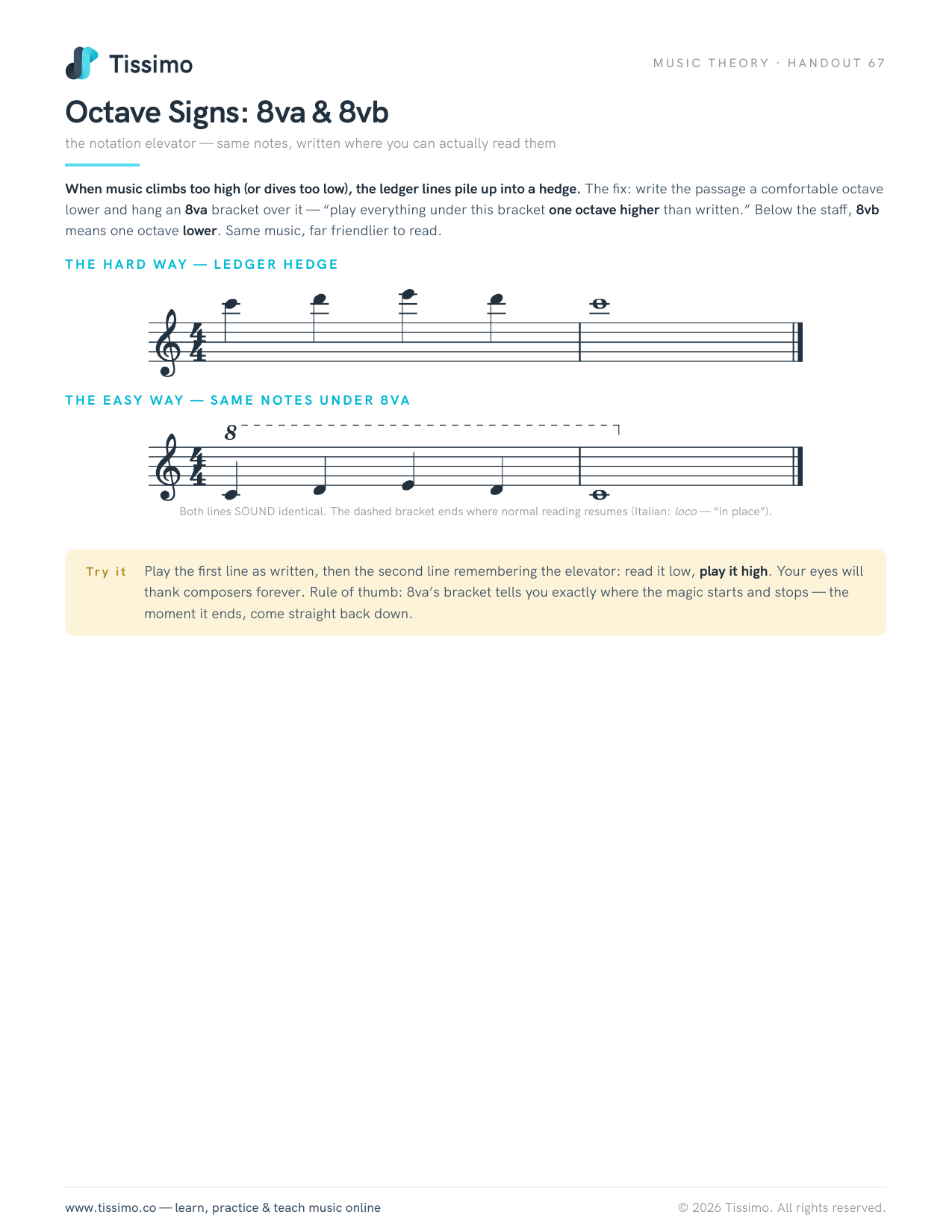 Octave Signs: 8va & 8vbthe notation elevator — same notes, written where you can actually read them