Notation & Symbols
Note
A note is a symbol for a musical sound: where it sits on the staff shows its pitch, and its shape shows how long it lasts. The word also means the sound itself, as in 'play that note again'.
A written note does two jobs at once. Its position on the staff tells you how high or low to play, its pitch. Its shape tells you how long to hold it, its note value. Read both every time: the right key held for the wrong length is still a wrong note.
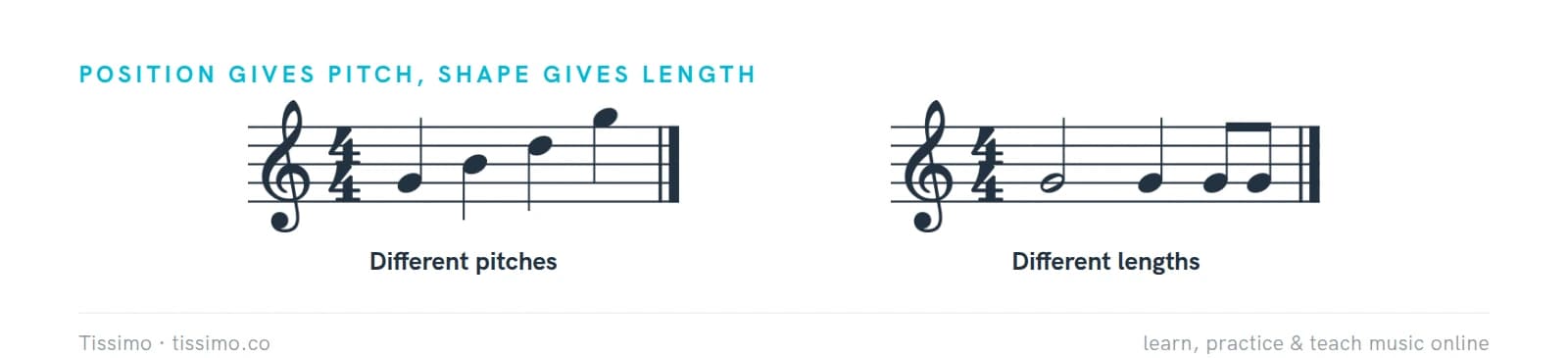
The parts of a note
- The notehead is the oval. It sits on a line or in a space, and it is either open (hollow) or filled in.
- The stem is the thin vertical line attached to the notehead. Of the common values, only the whole note has none.
- A flag is the curved tail on the stem of an eighth note or anything shorter. When several short notes come together, beams usually replace the flags.
- A dot after the notehead makes the note half as long again (see dotted note).
How long notes last
The common note values, from longest to shortest, are each half as long as the one before:
- Whole note: open notehead, no stem
- Half note: open notehead with a stem
- Quarter note: filled notehead with a stem
- Eighth note: filled notehead, stem and one flag
- Sixteenth note: filled notehead, stem and two flags
British musicians call the same symbols the semibreve, minim, crotchet, quaver and semiquaver.
How notes are named
Notes are named with the first seven letters of the alphabet, A to G, and then the pattern starts again in the next octave (see note names). The clef tells you which letter each line and space stands for. A sharp raises that letter's natural pitch by a half step, a flat lowers it by a half step, and a natural restores the unaltered pitch.
Note, tone and rest
In everyday use, "note" means both the written symbol and the sound it stands for. Some textbooks, especially American ones, keep the word "tone" for the sound, but most musicians say note for both. The silent partner of a note is the rest: a symbol for a measured silence, with lengths that match the note values.
Start with The quarter note for length and Name the notes: treble clef for pitch.
Common questions
What is the difference between a note and a pitch?
A pitch is how high or low a sound is. A note is the written symbol, or the played sound, that combines a pitch with a length.
Practice it: free worksheets
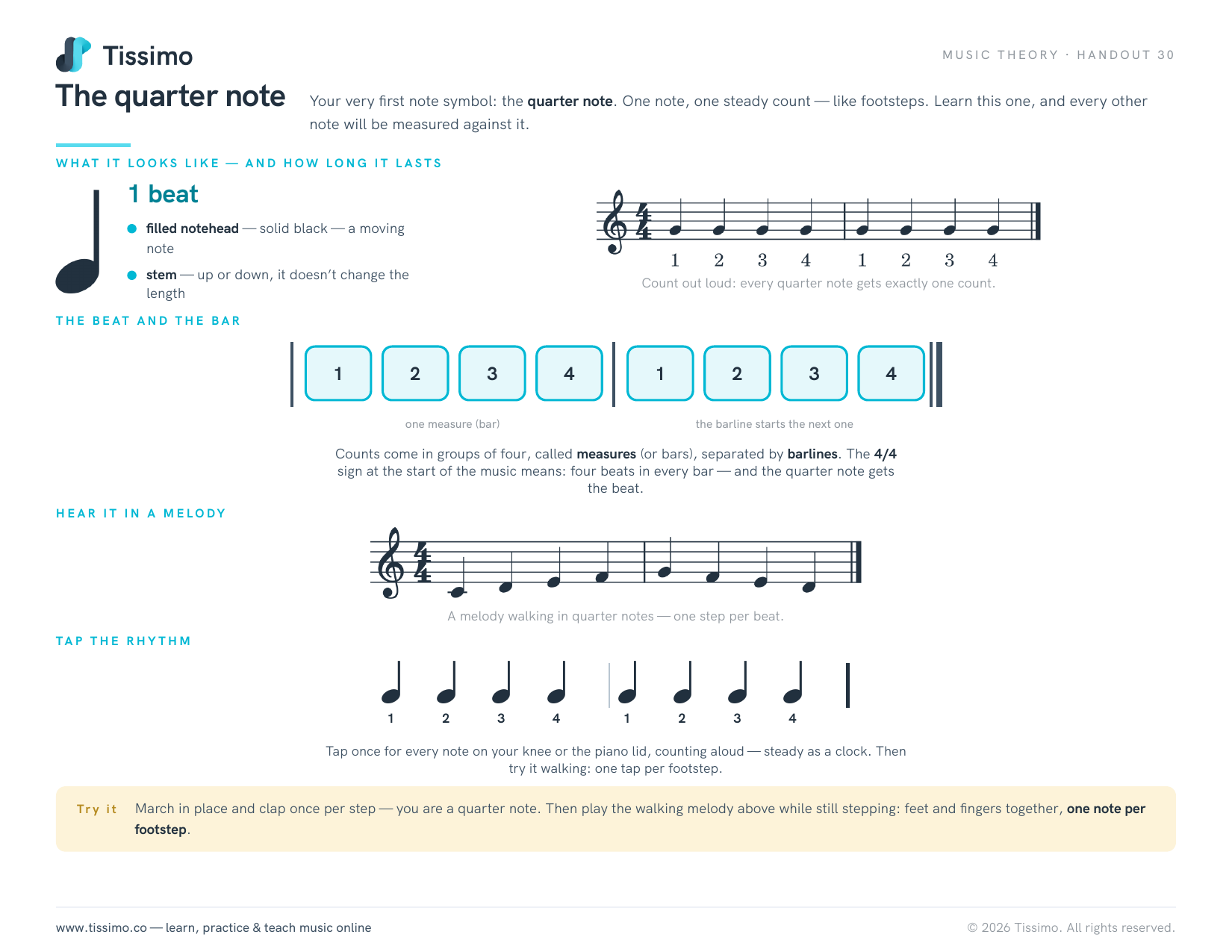 The quarter noteYour very first note symbol: the quarter note. One note, one steady count — like footsteps. Learn this one, and every other note will be measured against it.
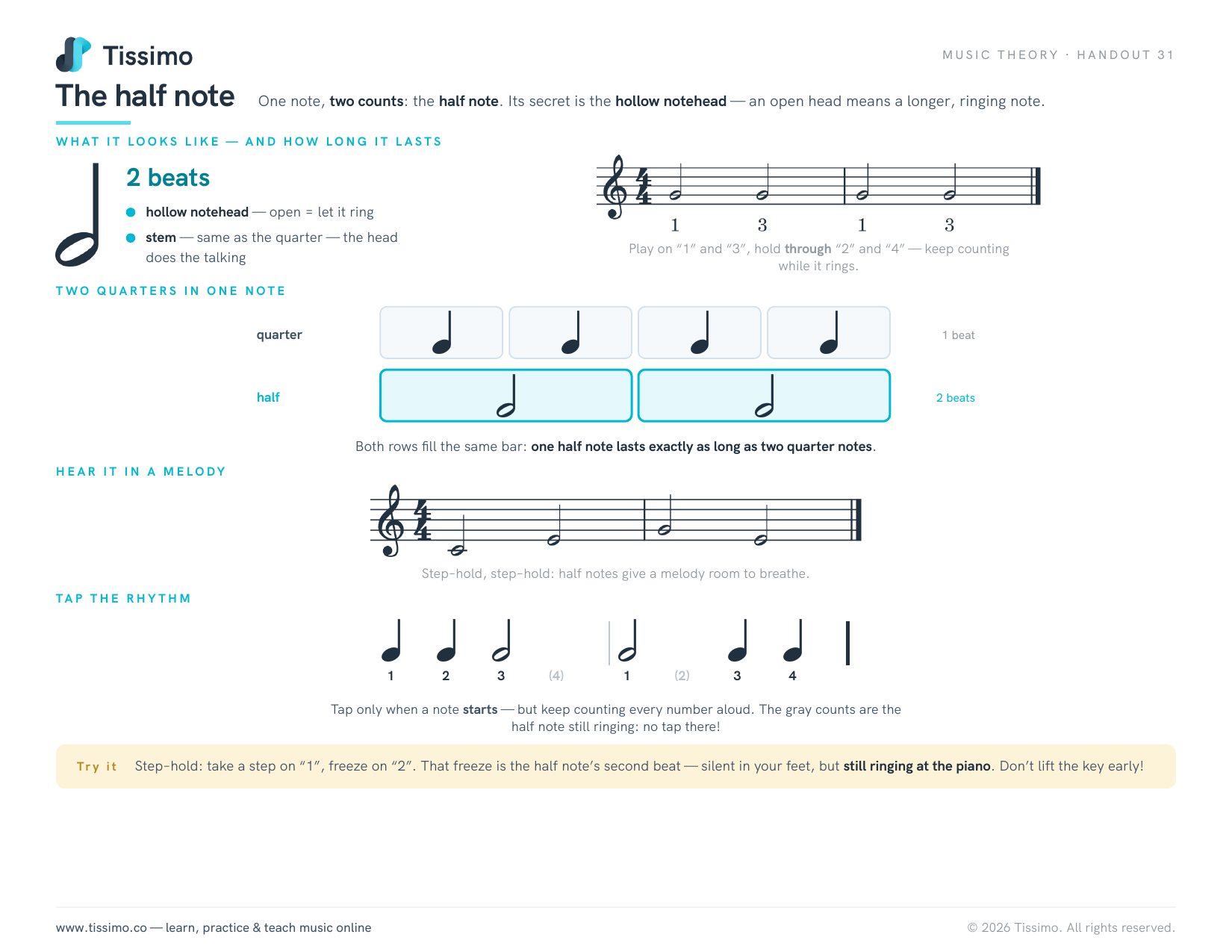 The half noteOne note, two counts: the half note. Its secret is the hollow notehead — an open head means a longer, ringing note.
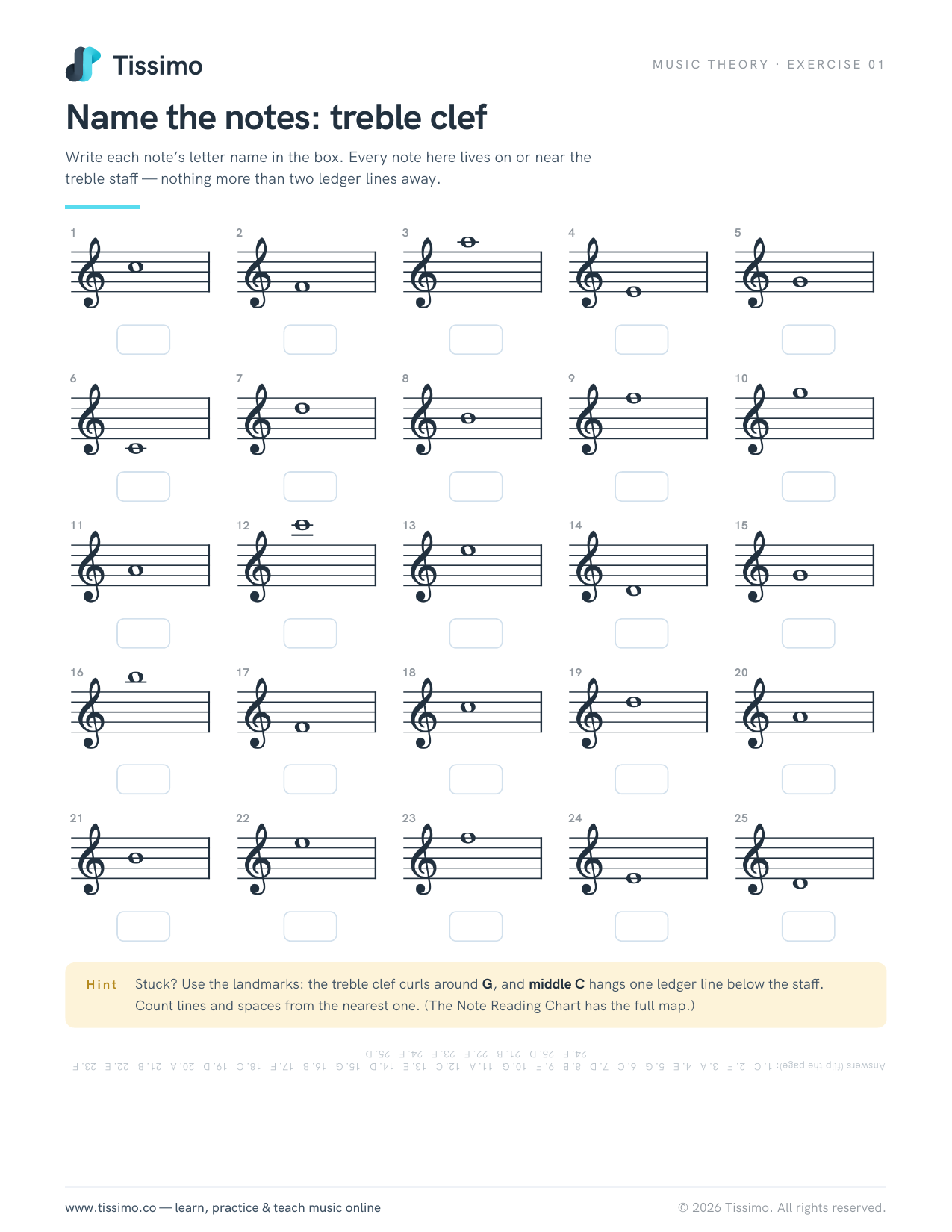 Name the notes: treble clefWrite each note’s letter name in the box. Every note here lives on or near the treble staff — nothing more than two ledger lines away.
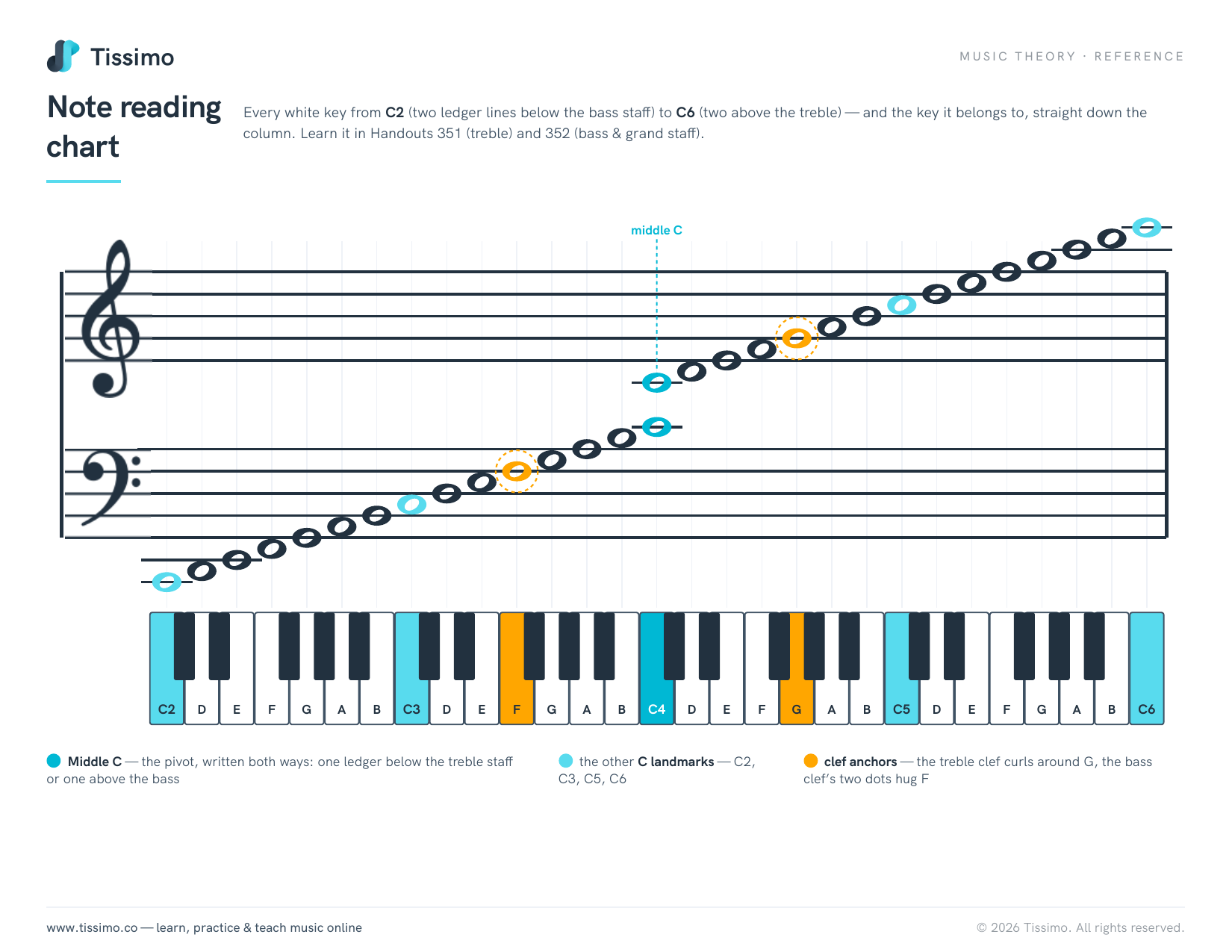 Note reading chartEvery white key from C2 (two ledger lines below the bass staff) to C6 (two above the treble) — and the key it belongs to, straight down the column. Learn it in Handouts 351 (treble) and 352 (bass & grand staff).