Notation & Symbols
Flag
A flag is the curved tail at the end of a note's stem. One flag makes an eighth note, two a sixteenth note and three a thirty-second note: each extra flag halves the note's length.
A flag is the small curved tail at the end of a stem. Flags mark notes shorter than a quarter note, and each flag halves the length.
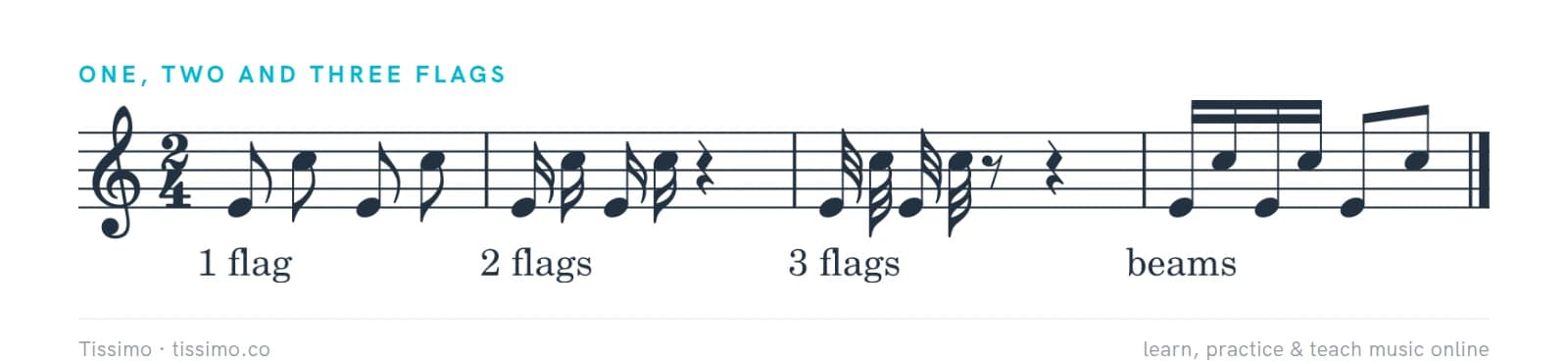
Counting flags
- One flag: eighth note, half a quarter-note beat
- Two flags: sixteenth note, a quarter of a beat
- Three flags: thirty-second note, an eighth of a beat
- Four flags: sixty-fourth note, a sixteenth of a beat
The matching rests follow the same pattern with little hooks: an eighth rest has one, a sixteenth rest two, and so on.
Which way does a flag face?
A flag always points to the right and curls back toward the notehead. On an up-stem it hangs down from the top of the stem; on a down-stem it rises from the bottom of the stem. Because a down-stem sits on the left of the notehead, its flag is still on the right-hand side of the stem.
Flags or beams?
When two or more flagged notes come in a row, they are usually joined by beams instead, one beam for each flag. Beams group the notes by beat, which makes rhythms much easier to read. Flags stay on single short notes, such as an eighth note between two quarter notes.
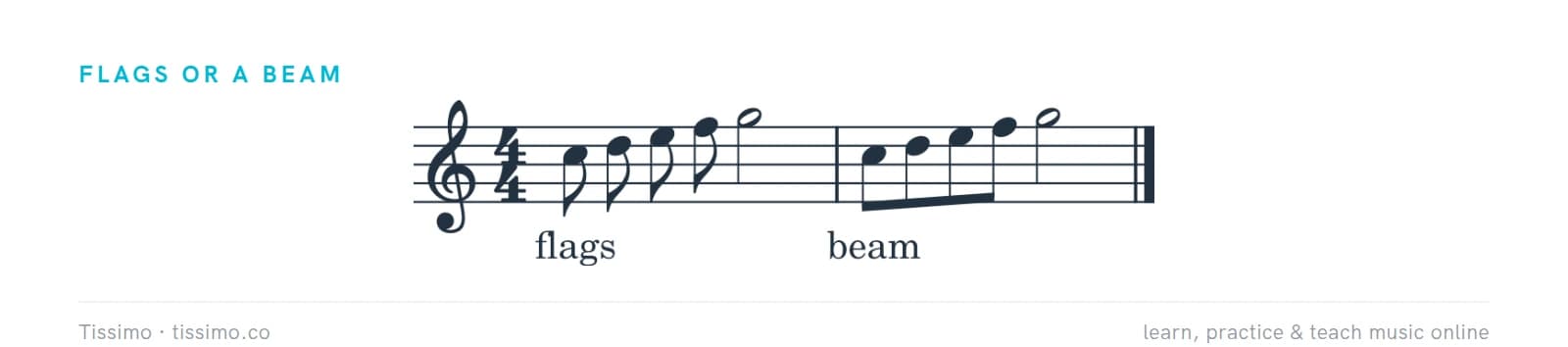
In older vocal music, and in some hymnals and choral editions today, each note sung to its own syllable keeps its own flag, and only notes sung to one syllable are beamed. Many modern vocal editions beam by the beat, as instrumental music does.
Learn the flagged values with The eighth note and The Sixteenth Note.
Common questions
How many flags does a sixteenth note have?
Two. An eighth note has one flag, a sixteenth note two and a thirty-second note three.
Why are some eighth notes flagged and others beamed?
Beams join short notes into groups that show the beat. A single eighth note with no neighbor in its beat keeps its flag.
Practice it: free worksheets
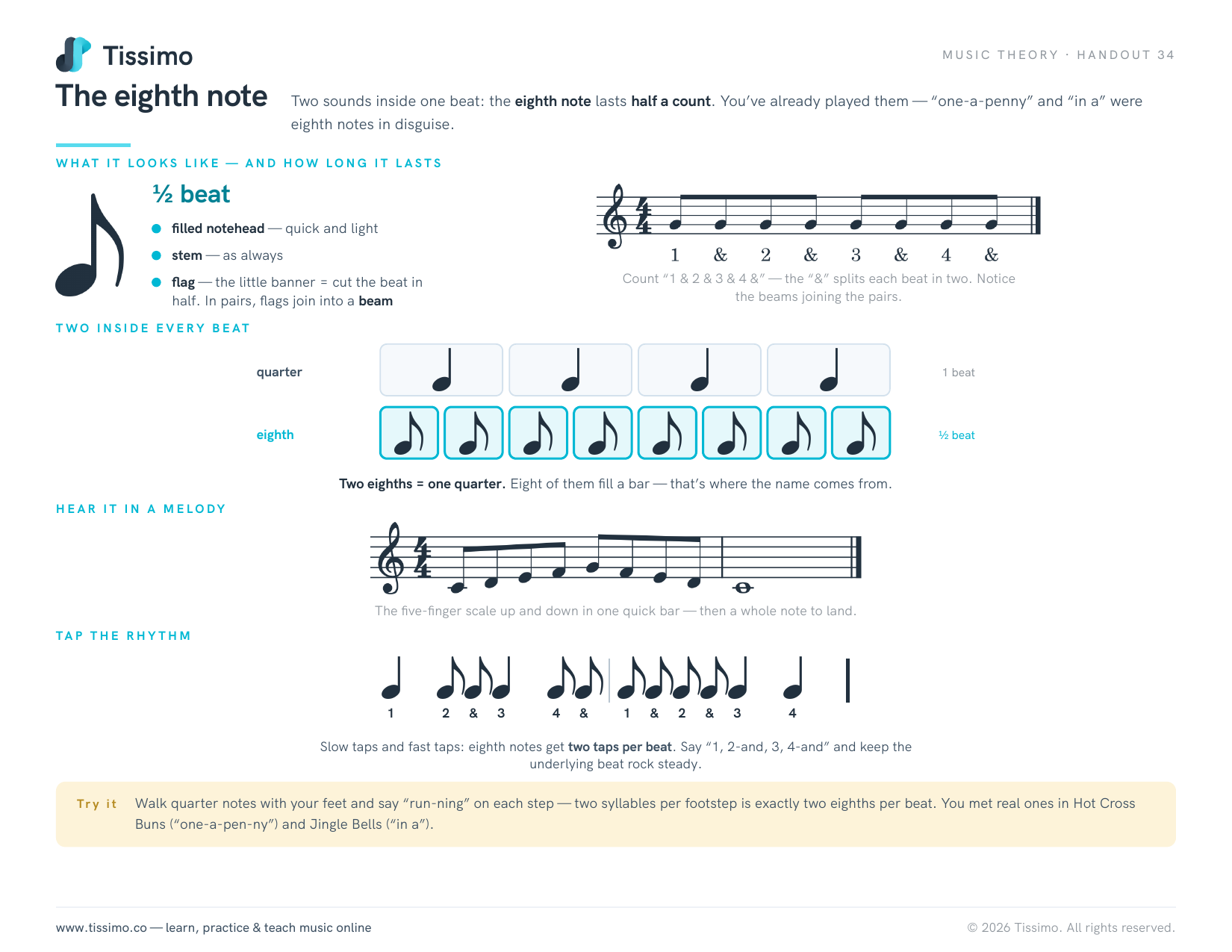 The eighth noteTwo sounds inside one beat: the eighth note lasts half a count. You’ve already played them — “one-a-penny” and “in a” were eighth notes in disguise.
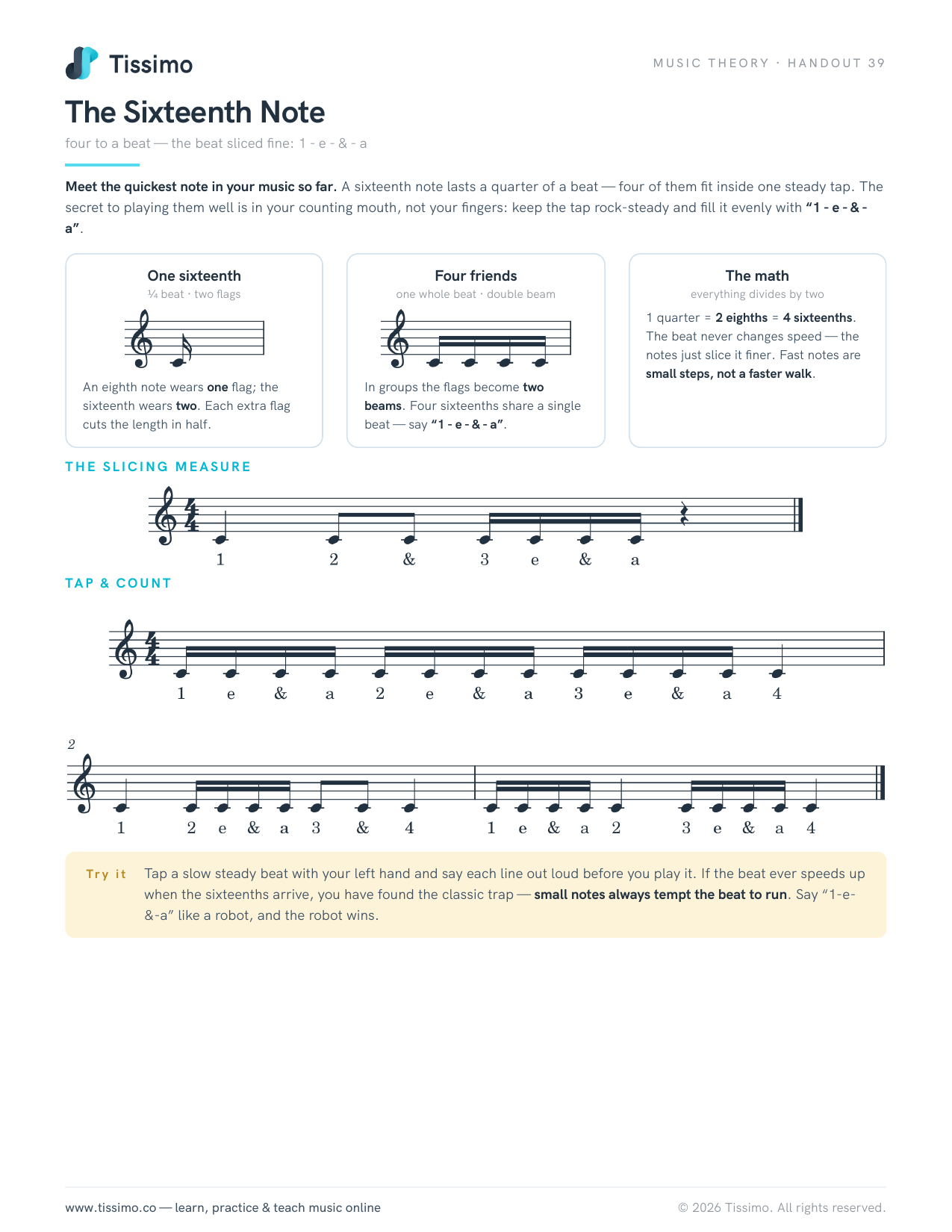 The Sixteenth Notefour to a beat — the beat sliced fine: 1 - e - & - a
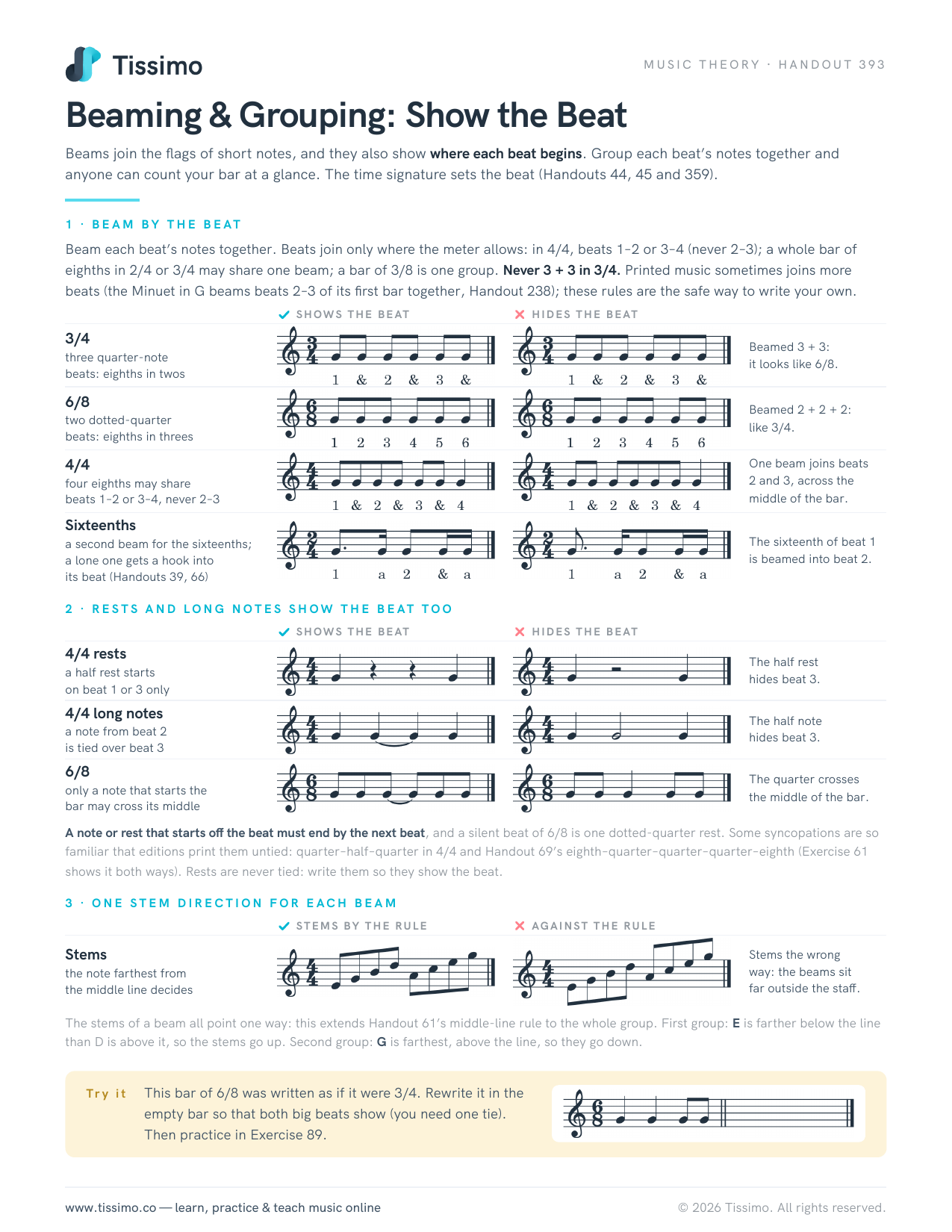 Beaming & Grouping: Show the BeatBeams join the flags of short notes, and they also show where each beat begins. Group each beat’s notes together and anyone can count your bar at a glance. The time signature sets the beat (Handouts 44, 45 and 359).