Notation & Symbols
Stem
A stem is the thin vertical line attached to a notehead. Every note shorter than a whole note has one; stems point up from notes below the staff's middle line and down from notes above it.
The stem is the thin vertical line joined to a notehead. Together with the notehead it shows a note's length: the whole note has no stem, the half note has a stem on an open notehead, and the quarter note has a stem on a filled notehead. Shorter notes add flags or beams at the end of the stem.
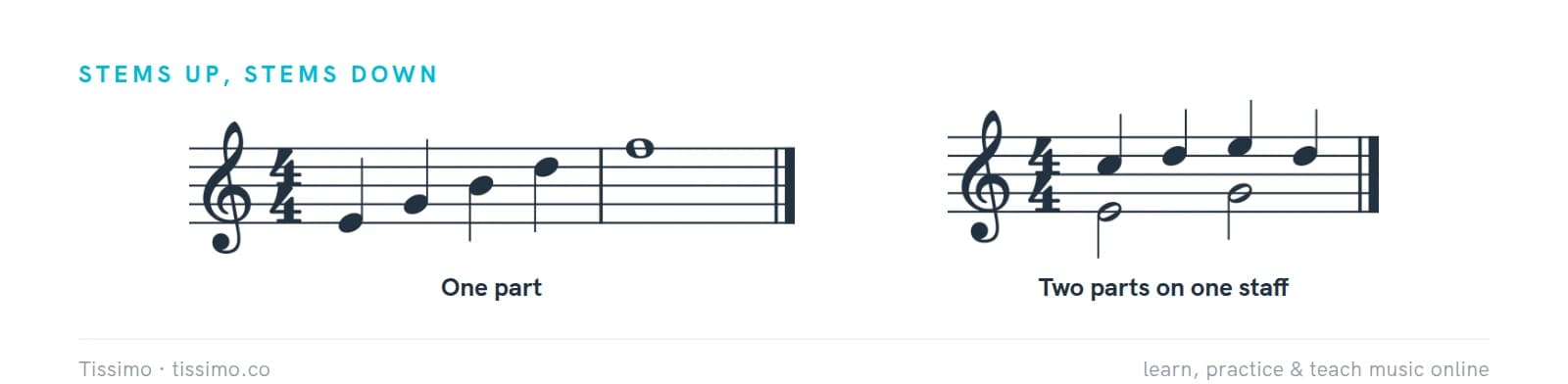
Which way does a stem point?
For a single line of music on one staff, the rule is about the middle line:
- Notes below the middle line: stem up, on the right side of the notehead.
- Notes above the middle line: stem down, on the left side of the notehead.
- Notes on the middle line: either direction is correct. Down is the more common choice, but engravers often match the stems of the neighboring notes.
The rule keeps stems inside the staff as much as possible, so the music stays compact and easy to read. A normal stem is about an octave long (three and a half spaces). Notes far above or below the staff get longer stems that reach back to the middle line.
Chords and beamed groups
A chord shares one stem. Its direction is decided by the note farthest from the middle line: if the lowest note is farther below the middle line than the highest note is above it, the stem goes up. All the notes under one beam also share a direction, decided the same way.
Two parts on one staff
When two parts share a staff, as in a hymn or a piano piece with an inner melody, stem direction shows which part a note belongs to. The upper part has stems up and the lower part stems down, wherever the notes sit on the staff. You see this constantly in four-part harmony, where soprano and alto share the treble staff.
A common question
Stem direction never changes the sound. Up or down, a quarter note is still a quarter note at the same pitch. When you write music by hand, though, getting the direction right makes your page much easier for someone else to read.
Practice with Stem Rules.
Common questions
Which side of the note does the stem go on?
An up-stem goes on the right side of the notehead and a down-stem on the left side.
Does stem direction change how a note sounds?
No. The pitch and length are the same either way. Stem direction only makes the page easier to read, or shows which part a note belongs to when two parts share a staff.
Practice it: free worksheets
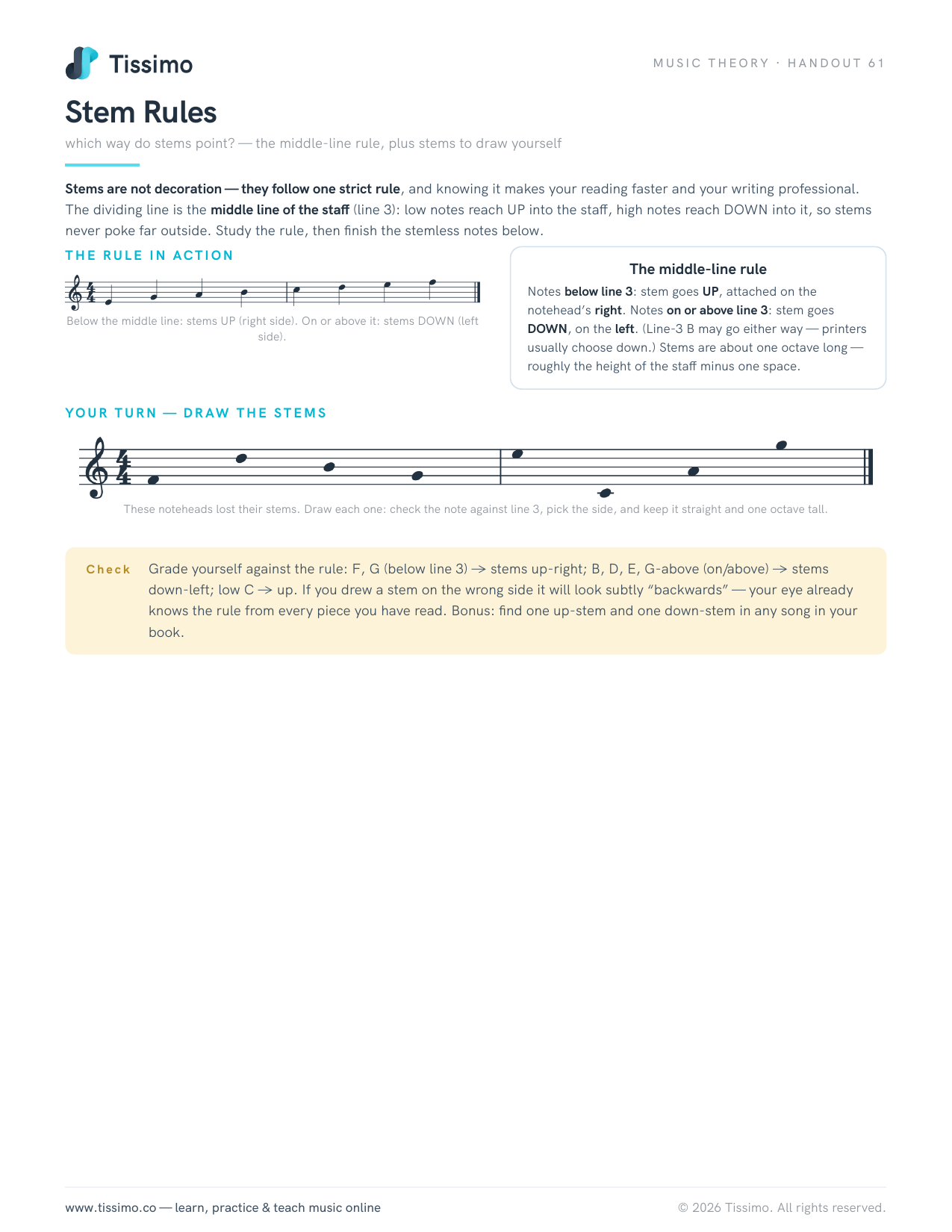 Stem Ruleswhich way do stems point? — the middle-line rule, plus stems to draw yourself
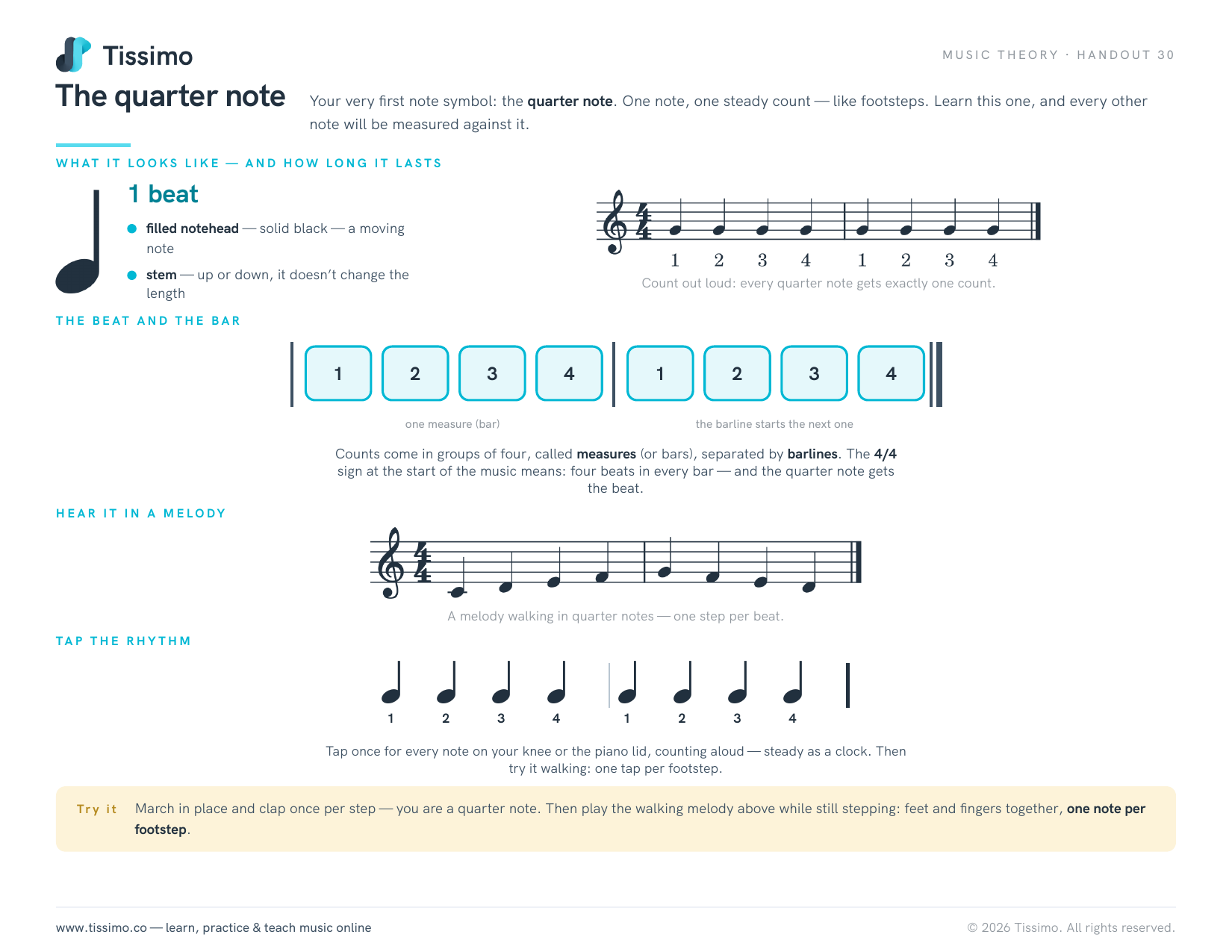 The quarter noteYour very first note symbol: the quarter note. One note, one steady count — like footsteps. Learn this one, and every other note will be measured against it.
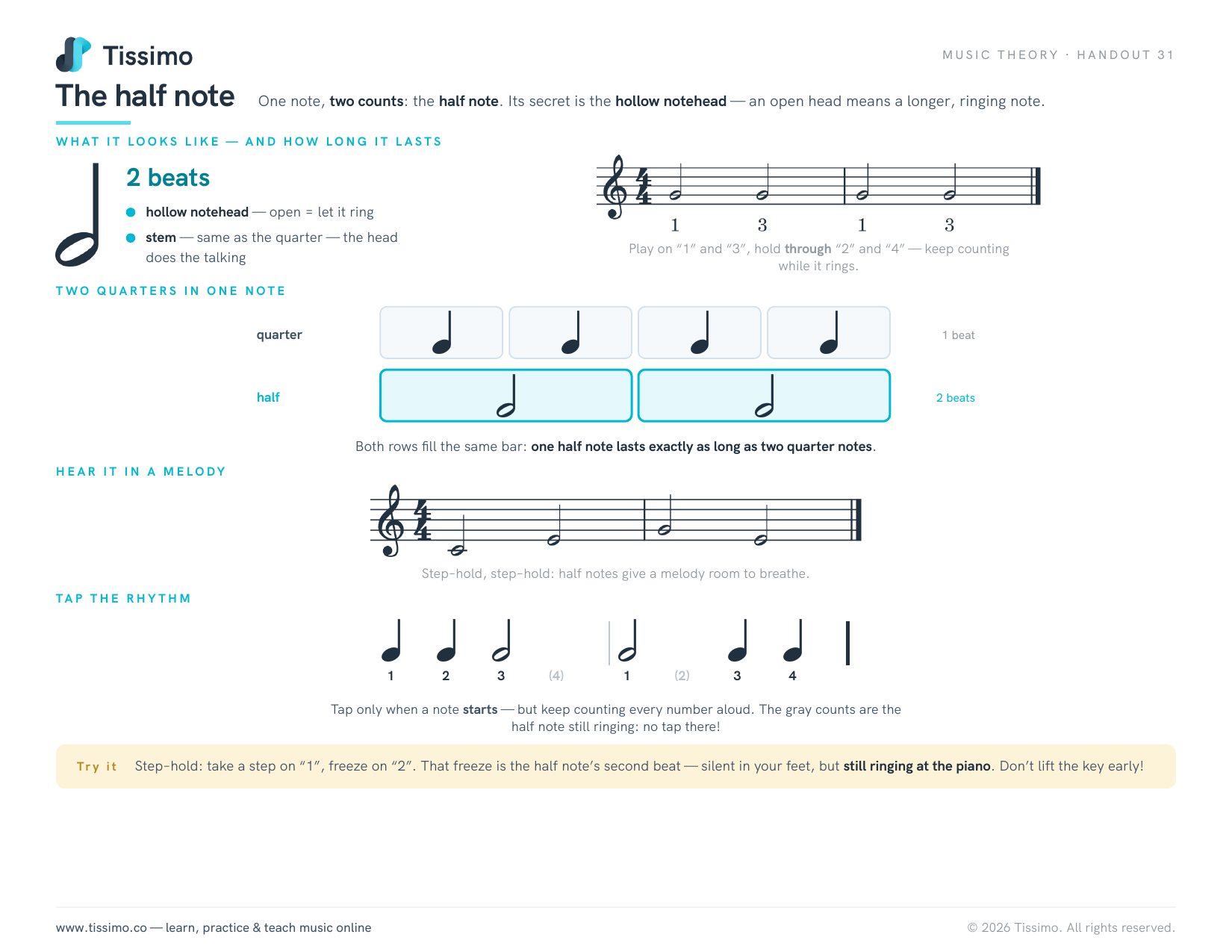 The half noteOne note, two counts: the half note. Its secret is the hollow notehead — an open head means a longer, ringing note.