Notation & Symbols
Notehead
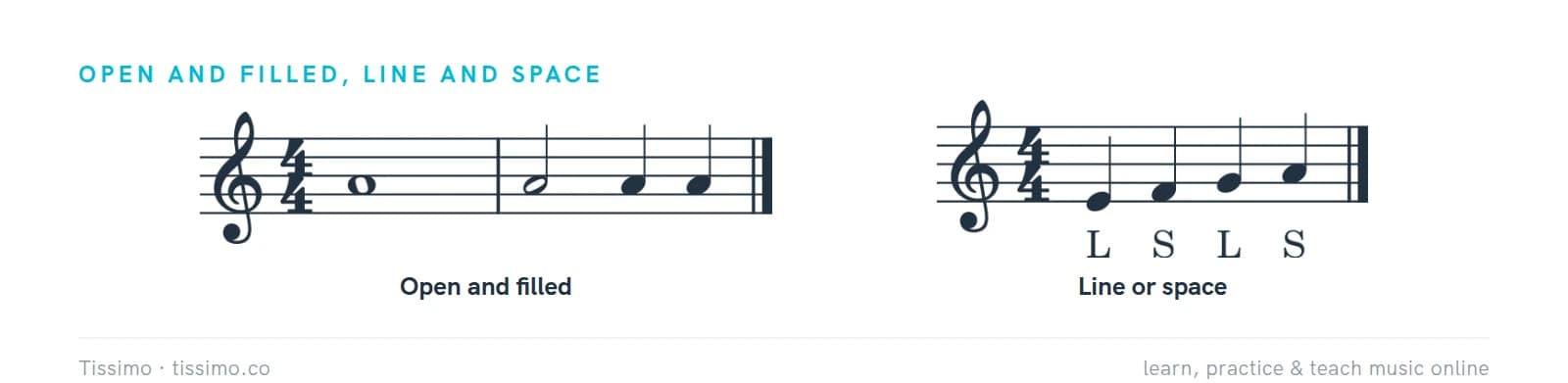
A notehead is the oval part of a written note. Its position on the staff shows the pitch, and whether it is open (hollow) or filled in helps show how long the note lasts.
The notehead is the part of a note you read first. It is a slightly tilted oval placed on a line or in a space of the staff, and everything else, the stem and any flag or beam, is attached to it.
What the notehead tells you
- Pitch. A notehead on a line has the line running through its middle. A notehead in a space fits between two lines and touches both. The clef decides which letter each position stands for.
- Length, together with the stem. An open (hollow) notehead with no stem is a whole note; an open notehead with a stem is a half note. A filled notehead with a stem is a quarter note, and flags or beams make it shorter still.
Line or space?
Most note-reading mistakes come from misjudging whether a notehead is on a line or in a space, especially around ledger lines. Look for the line through the middle: if a line cuts the notehead in half, it is a line note; if lines touch its top and bottom, it is a space note.
Noteheads in chords
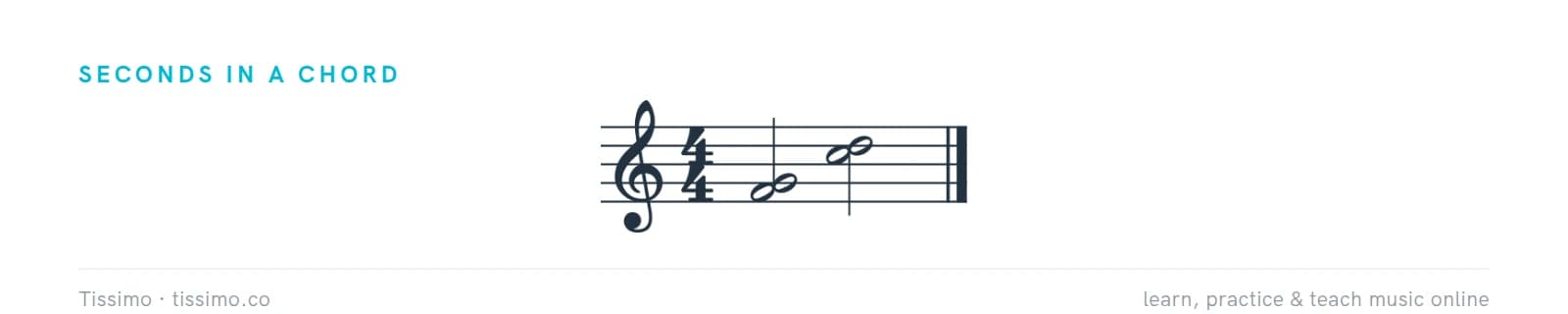
In a chord, the noteheads are stacked on one shared stem. Two notes a second apart are too close to sit exactly on top of each other, so one moves to the other side of the stem, and the higher of the two is the one on the right. They still sound together.
Other notehead shapes
Not every notehead is an oval:
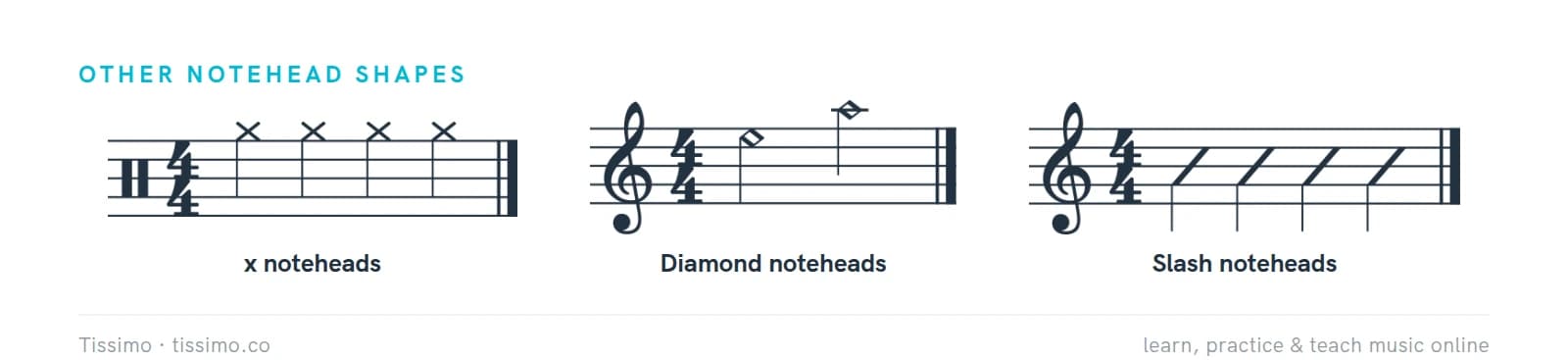
- x noteheads are common in drum kit parts for cymbals and the hi-hat. In guitar music they mark muted, percussive notes, and in vocal music they can mean spoken rather than sung words.
- Diamond noteheads often show harmonics on string instruments, or, in piano music, keys pressed down without sounding.
- Slash noteheads show rhythm without pitch. On a lead sheet or a rhythm-section part they mean "keep playing the chords in this rhythm".
Practice open and filled noteheads with The half note and The whole note.
Common questions
What is the difference between an open and a filled notehead?
An open (hollow) notehead belongs to a whole note or a half note. A filled notehead belongs to a quarter note or anything shorter.
What does an x notehead mean?
It depends on the instrument: a cymbal or hi-hat in drum music, a muted percussive note on guitar, or a spoken word in vocal music. The part usually explains it at the start.
Practice it: free worksheets
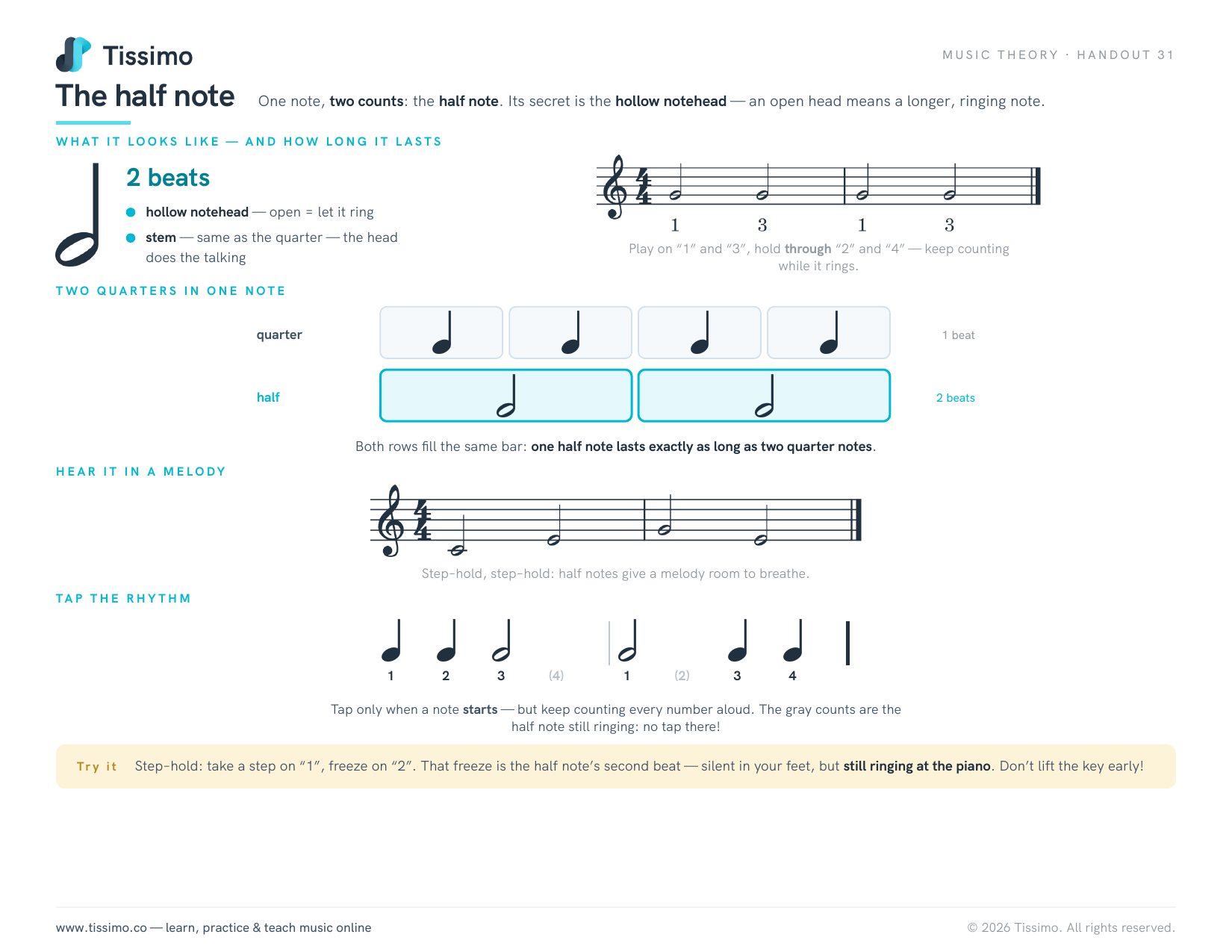 The half noteOne note, two counts: the half note. Its secret is the hollow notehead — an open head means a longer, ringing note.
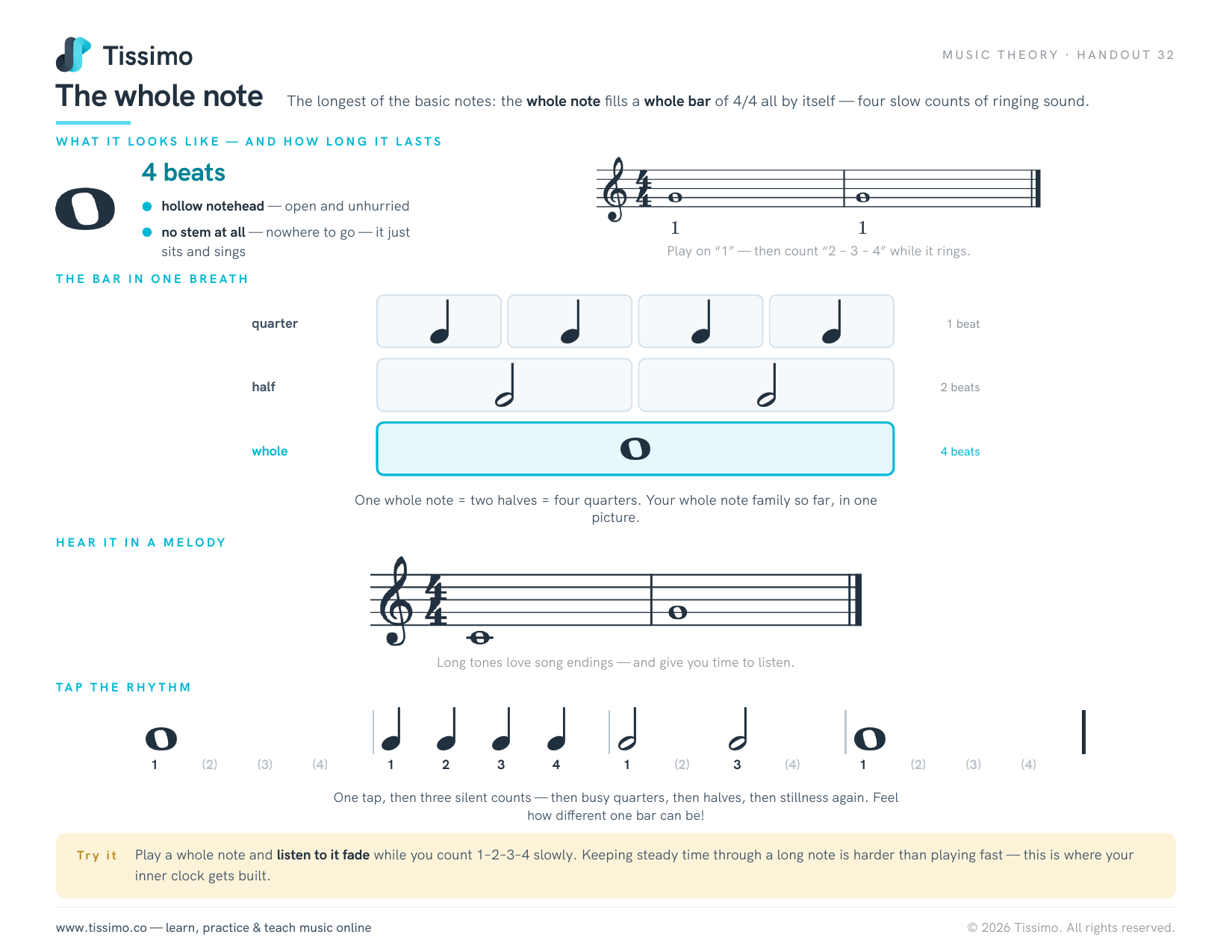 The whole noteThe longest of the basic notes: the whole note fills a whole bar of 4/4 all by itself — four slow counts of ringing sound.
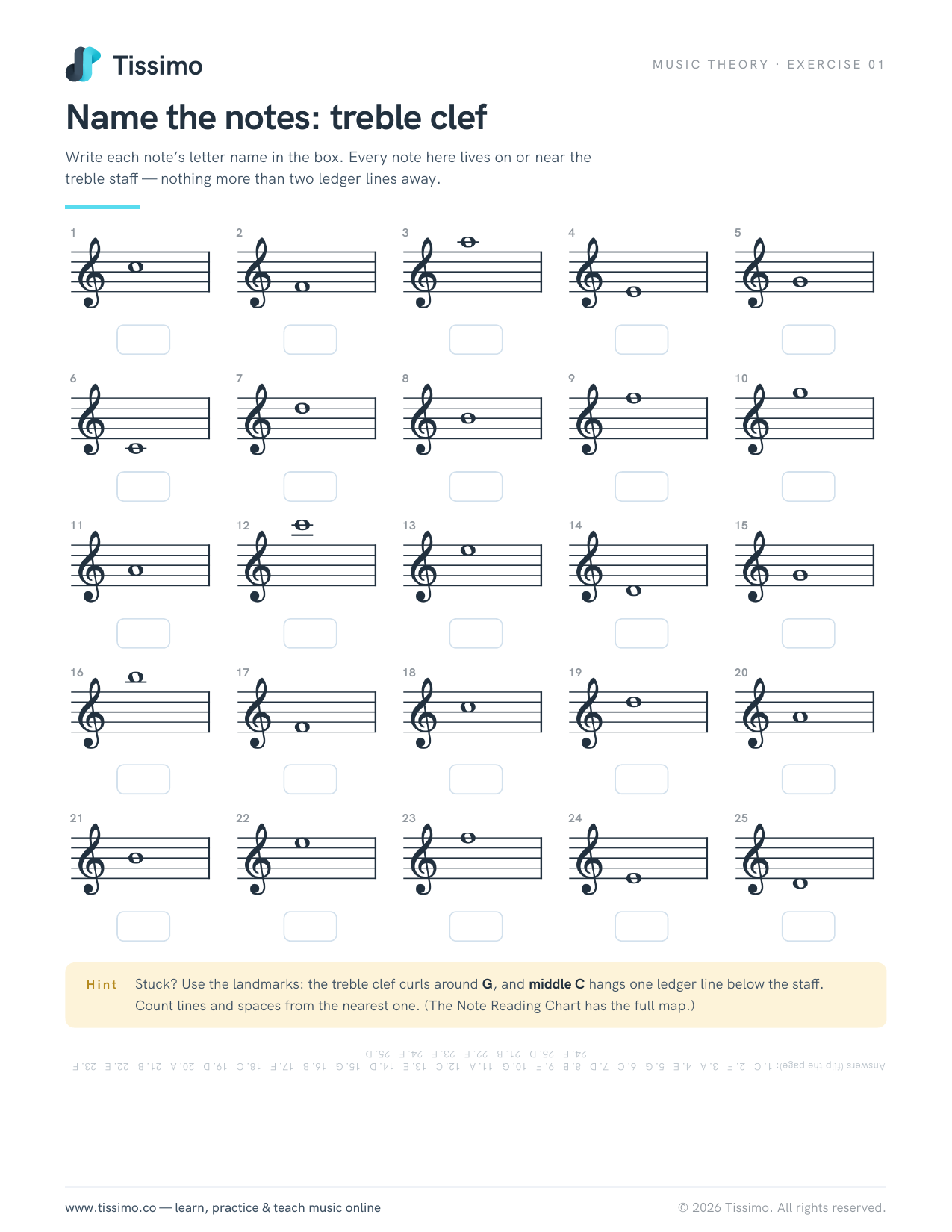 Name the notes: treble clefWrite each note’s letter name in the box. Every note here lives on or near the treble staff — nothing more than two ledger lines away.