Scales, Keys & Modes
Leading Tone
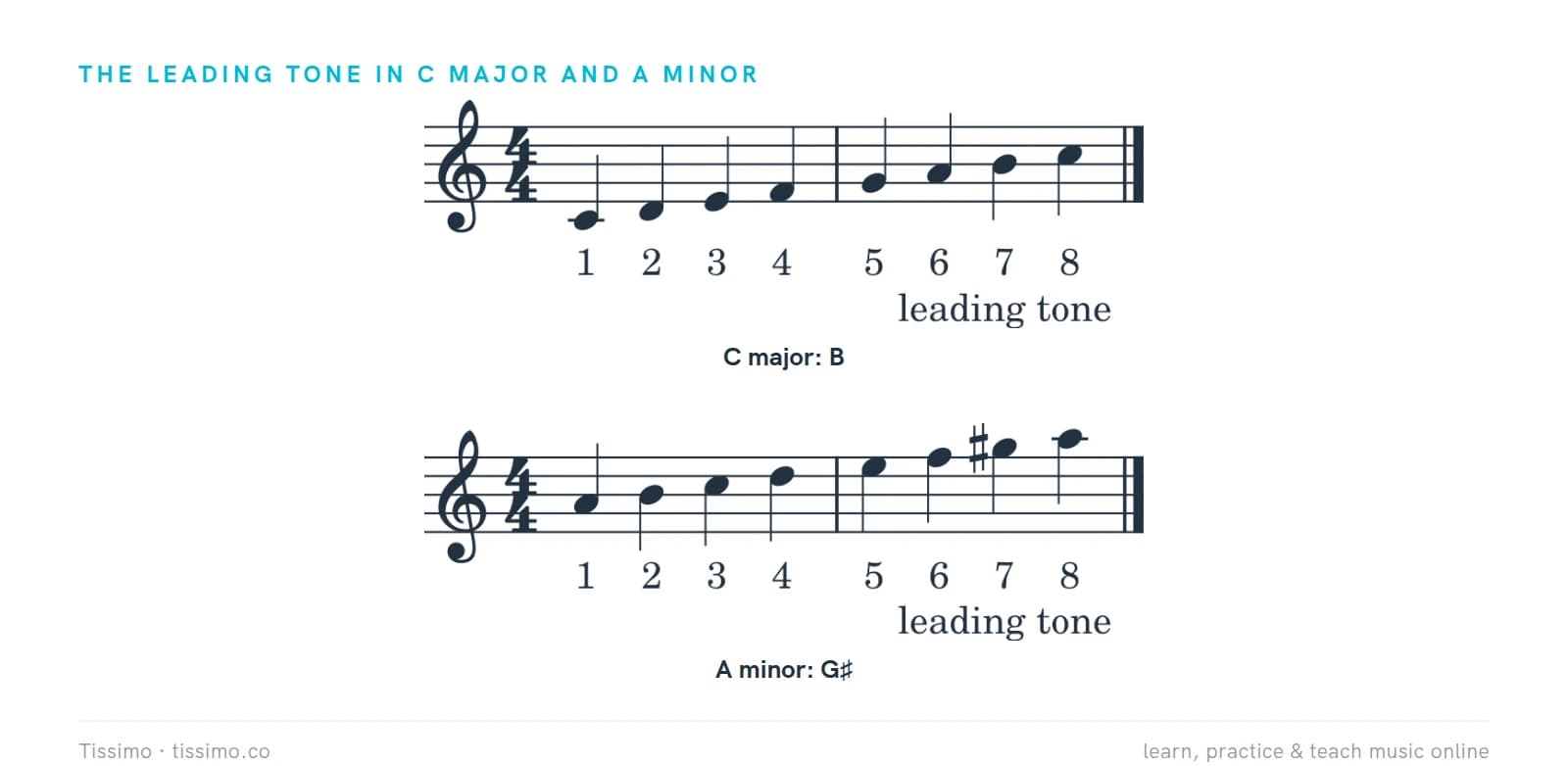
The leading tone is the seventh degree of a scale when it lies a half step below the tonic: B in C major, G♯ in A minor. Its strong pull upward makes the tonic feel like a destination.
The leading tone is scale degree 7 when it sits a half step below the tonic: B in C major, G♯ in A minor. British musicians usually call it the leading note. In major and do-based minor solfège it is ti; in la-based minor it is si.
Why it leads
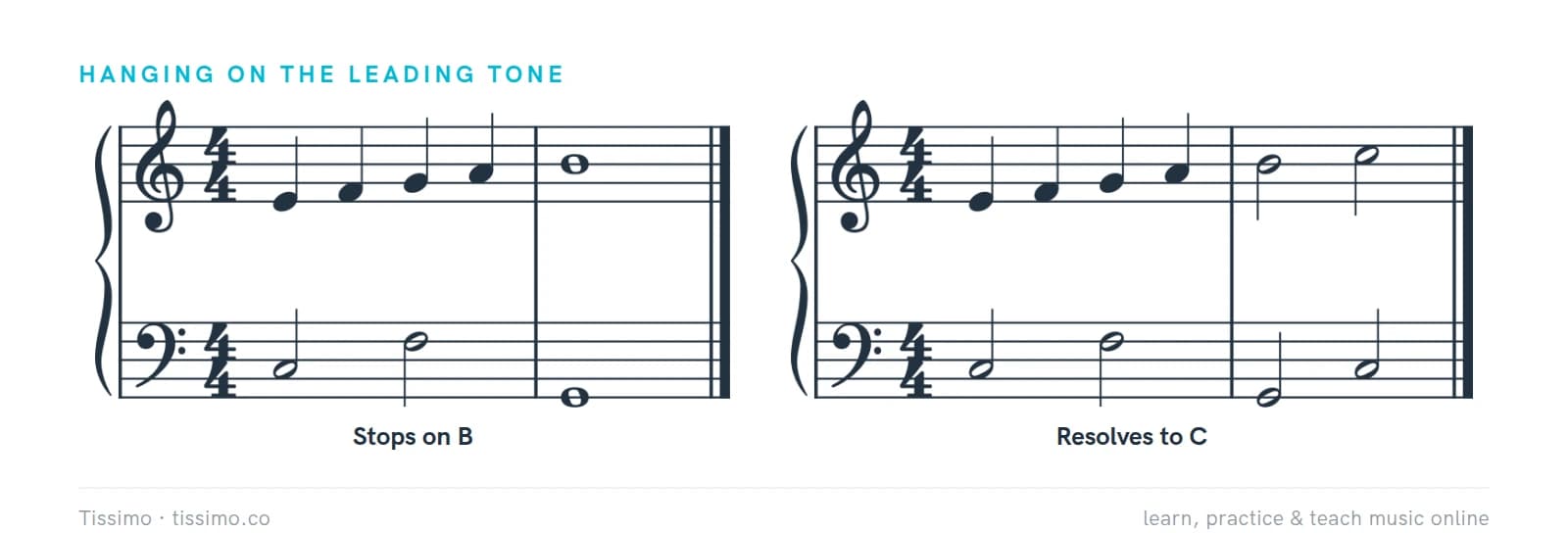
A note a half step away from a stable note tends to move to it, and the leading tone is a half step below the most stable note of all. Play C D E F G A B in C major and stop: the B hangs in the air until you play C. That pull is a large part of why a major key feels so clearly centered.
In major and minor keys
Every major scale has a leading tone. The natural minor scale does not: its 7th degree is a whole step below the tonic (G in A minor), and a 7th in that position is called the subtonic. To get a leading tone, minor keys raise the 7th with an accidental, G♯ in A minor, as the harmonic and melodic minor scales do. That accidental is one of the surest signs that a piece is in a minor key.
In chords
The leading tone is the 3rd of the dominant chord (G B D in C major) and the root of the diminished triad on degree 7 (B D F, written vii°). In a V7–I cadence it rises to the tonic while the chord's 7th falls, and in traditional voice leading a leading tone in the top or bottom voice is expected to resolve up. That is also why it is not doubled in four-part writing: two leading tones would both need to rise to the same note and make parallel octaves.
Leading tones elsewhere
Any note a half step below a target can act as a leading tone to it. A secondary dominant creates a temporary leading tone to a chord other than the tonic: in C major, the F♯ of D7 leads up to G. When a new leading tone appears and stays, the music has usually modulated; Hear the Raised Note Before Five trains you to hear one.
Common questions
What is the difference between a leading tone and a subtonic?
Both are the 7th degree. The leading tone is a half step below the tonic (B in C major, G♯ in A minor) and pulls up to it; the subtonic is a whole step below (G in A natural minor) and has much less pull.
Is it called leading tone or leading note?
Both. Leading tone is the usual American term and leading note the usual British one; they mean the same thing.
Practice it: free worksheets
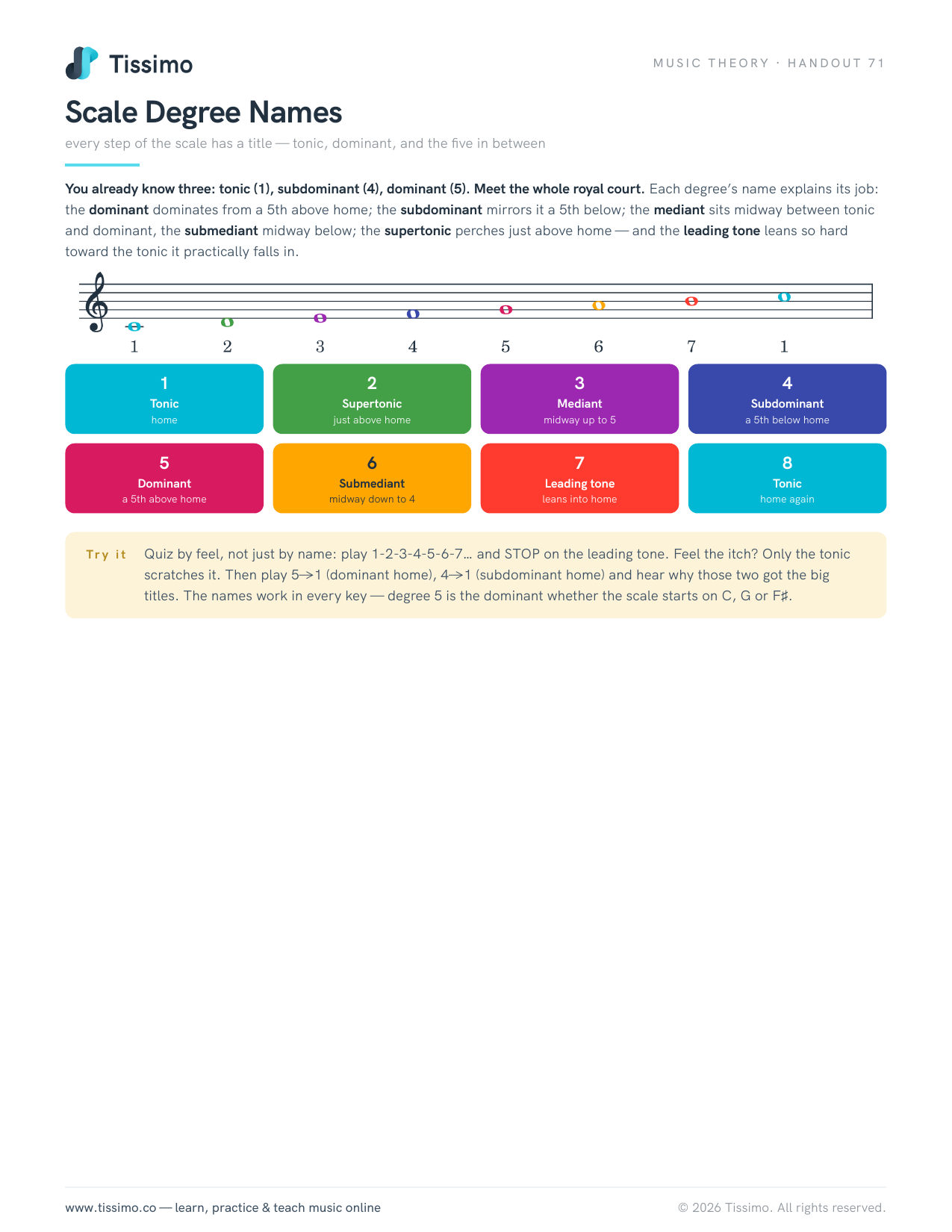 Scale Degree Namesevery step of the scale has a title — tonic, dominant, and the five in between
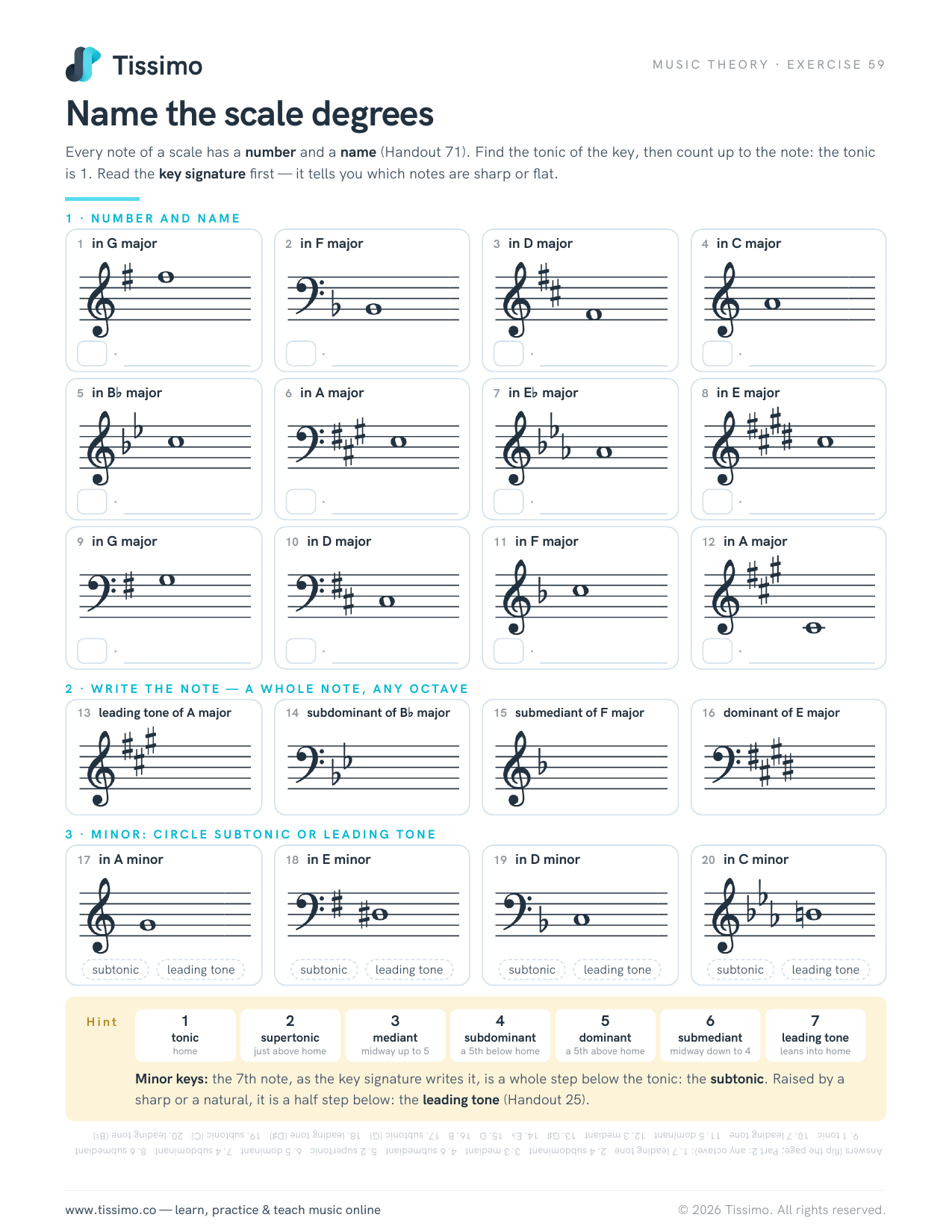 Name the scale degreesEvery note of a scale has a number and a name (Handout 71). Find the tonic of the key, then count up to the note: the tonic is 1. Read the key signature first — it tells you which notes are sharp or flat.
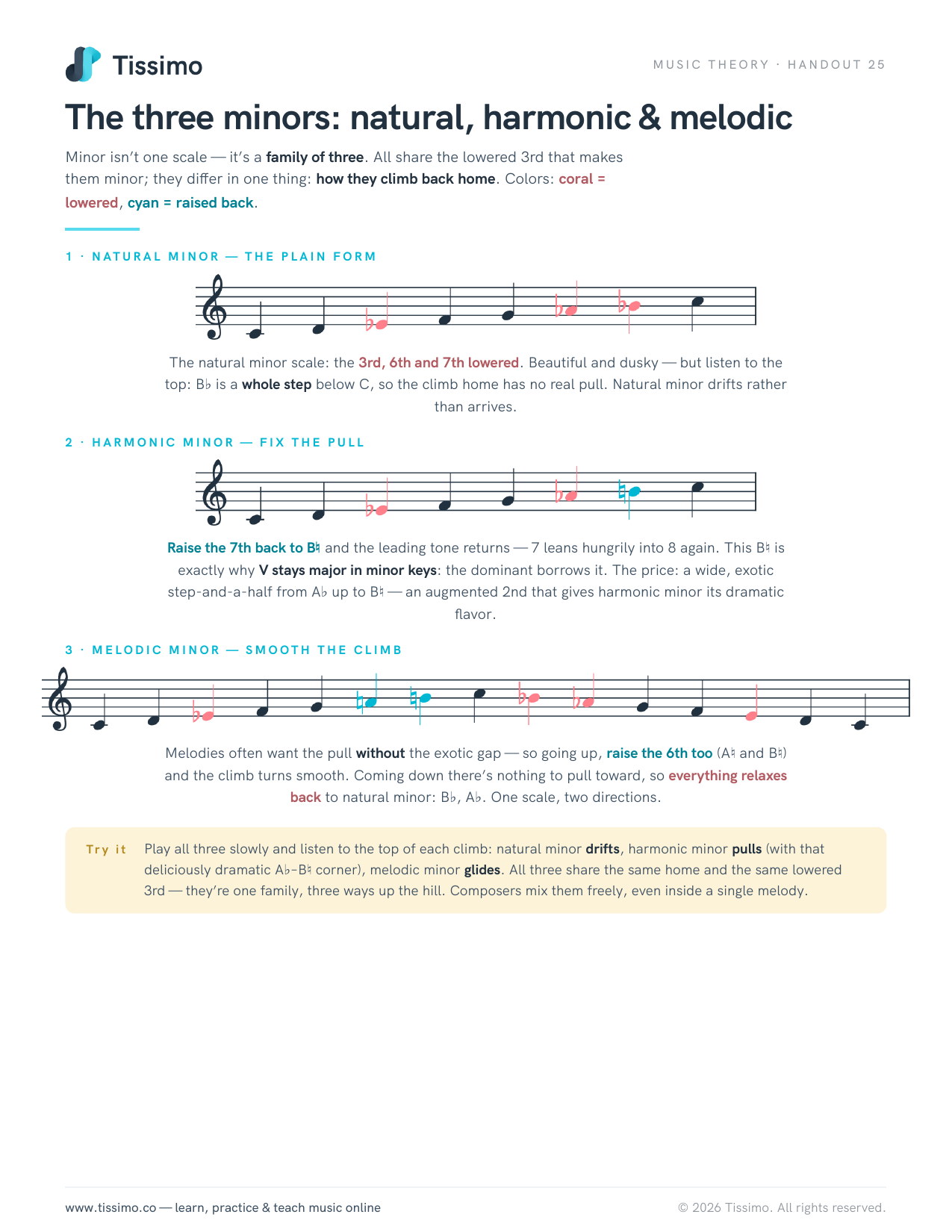 The three minors: natural, harmonic & melodicMinor isn’t one scale — it’s a family of three. All share the lowered 3rd that makes them minor; they differ in one thing: how they climb back home. Colors: coral = lowered, cyan = raised back.
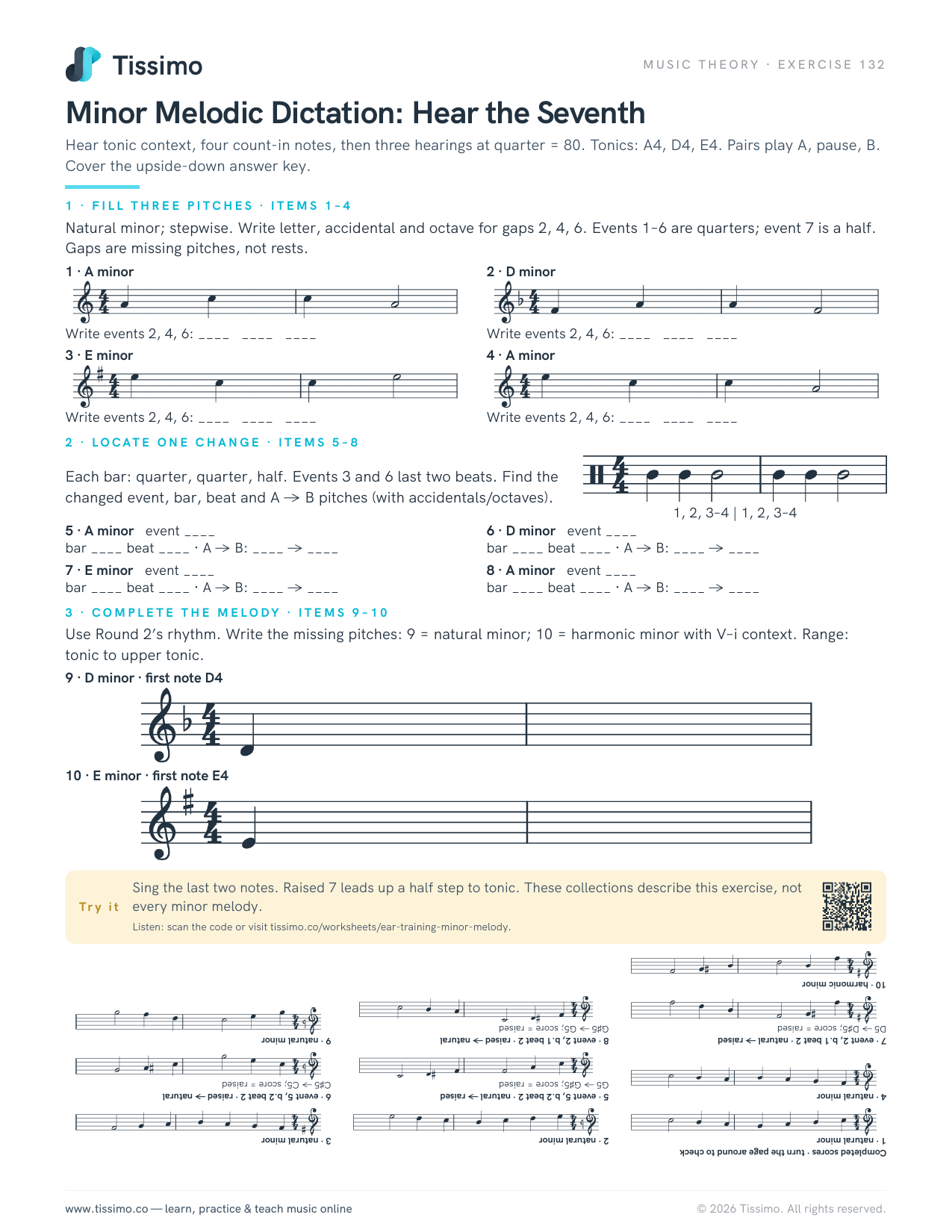 Minor Melodic Dictation: Hear the SeventhHear tonic context, four count-in notes, then three hearings at quarter = 80. Tonics: A4, D4, E4. Pairs play A, pause, B. Cover the upside-down answer key.
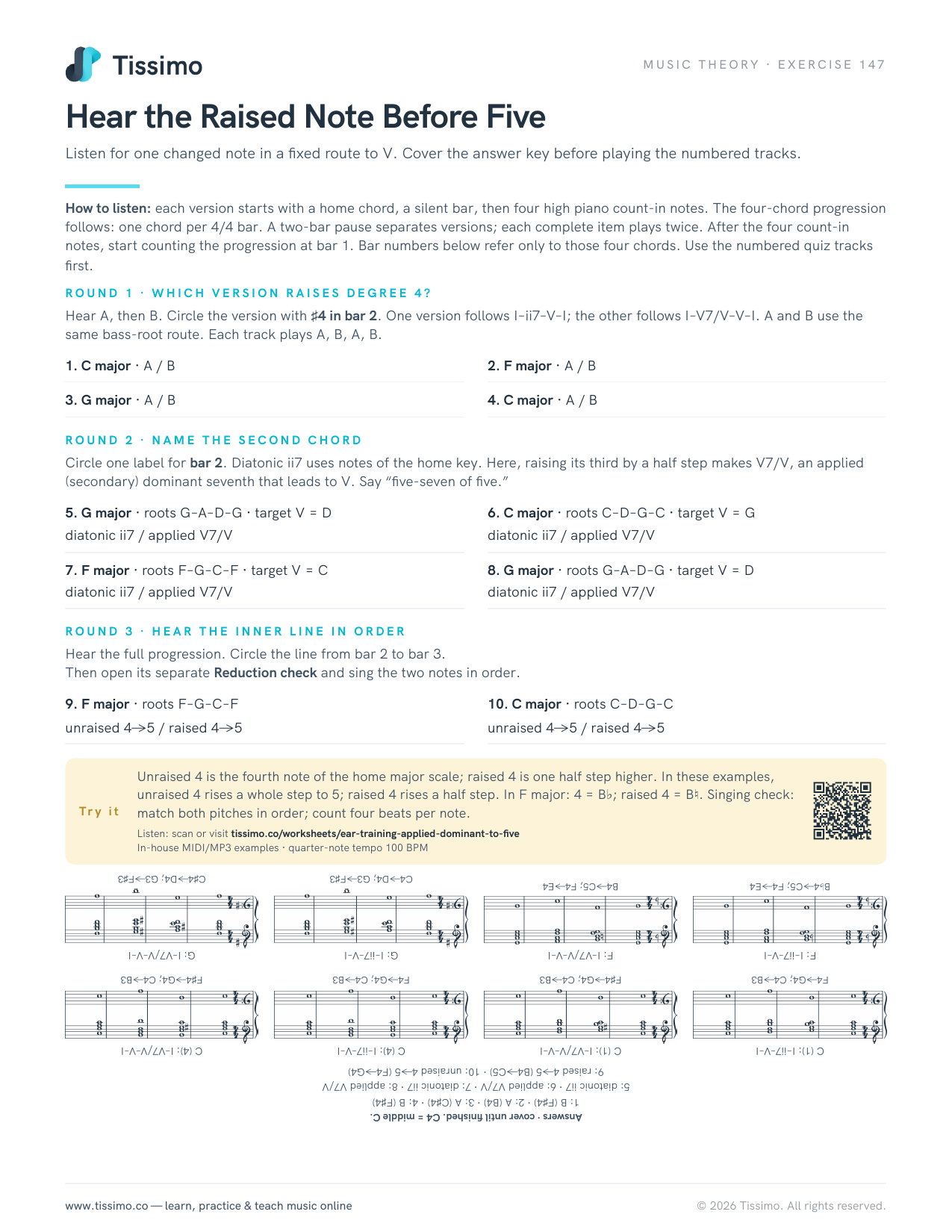 Hear the Raised Note Before FiveListen for one changed note in a fixed route to V. Cover the answer key before playing the numbered tracks.
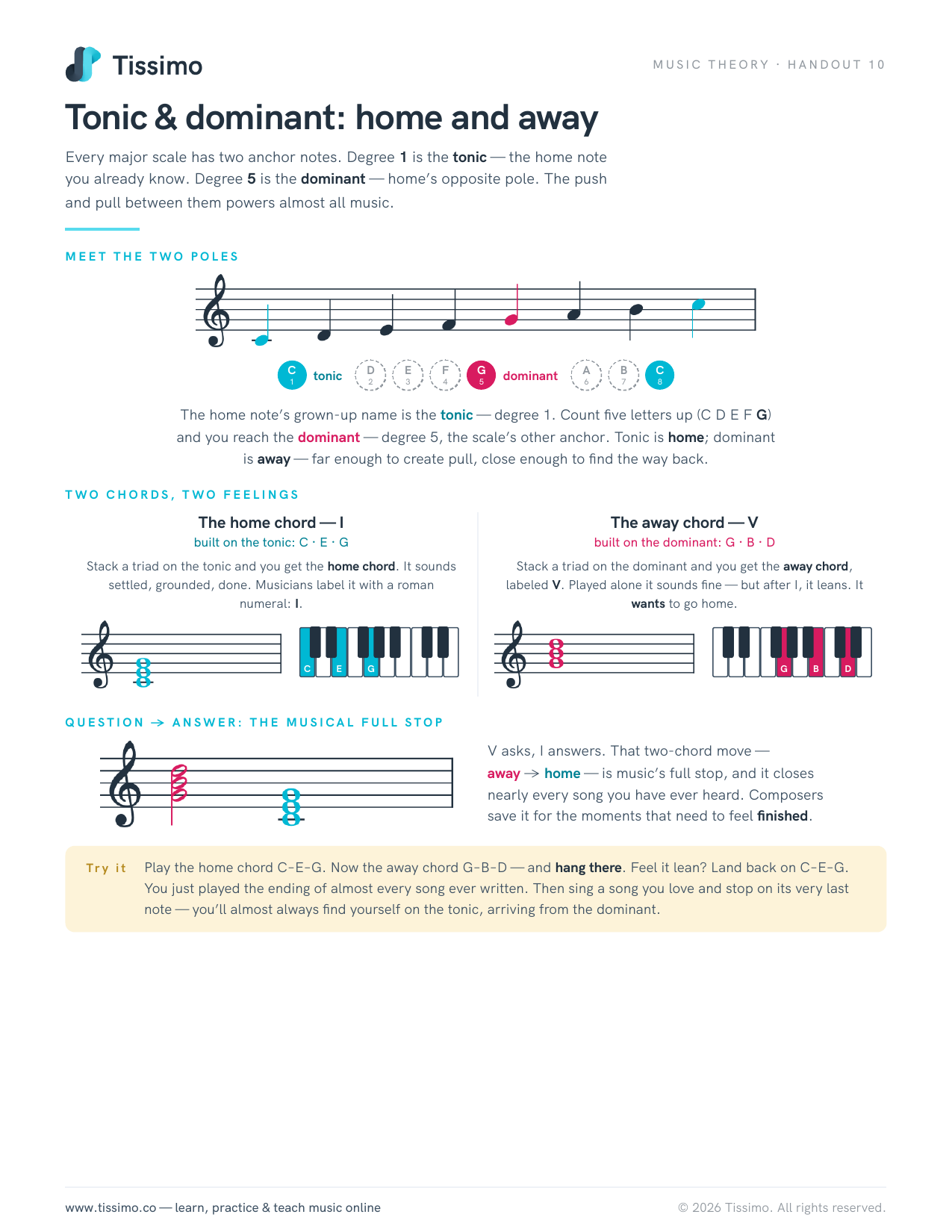 Tonic & dominant: home and awayEvery major scale has two anchor notes. Degree 1 is the tonic — the home note you already know. Degree 5 is the dominant — home’s opposite pole. The push and pull between them powers almost all music.