Chords & Harmony
Dominant Seventh Chord
A dominant seventh chord is a major triad plus a minor seventh, such as G–B–D–F (G7). Built on the fifth degree of a key, it is the V7 chord, and it pulls strongly toward the tonic.
A dominant seventh chord is a major triad with a minor seventh added above the root. On G it is G–B–D–F, written G7. Counting half steps from the bottom, it is 4 + 3 + 3. It is the most common seventh chord in tonal music, and the chord that most clearly says "home is next".
Why it is called "dominant"
In a major key, the dominant seventh occurs naturally in just one place: on the fifth degree, the dominant. That is G7 in C major and D7 in G major. In a minor key, V7 appears once the seventh degree is raised: E7 (E–G♯–B–D) in A minor. Roman numerals write it V7 in both cases. The chord symbol is simply the root plus 7: G7, D7, E7.
The tritone inside
Between its third and its seventh (B and F in G7) the chord holds a tritone, the most unstable interval in the key. Each of those two notes has a clear target. B is the leading tone and rises a half step to C; F, the seventh, falls a half step to E. The two notes move in opposite directions while the bass moves from G to C. That double pull is why V7 to I sounds so final.
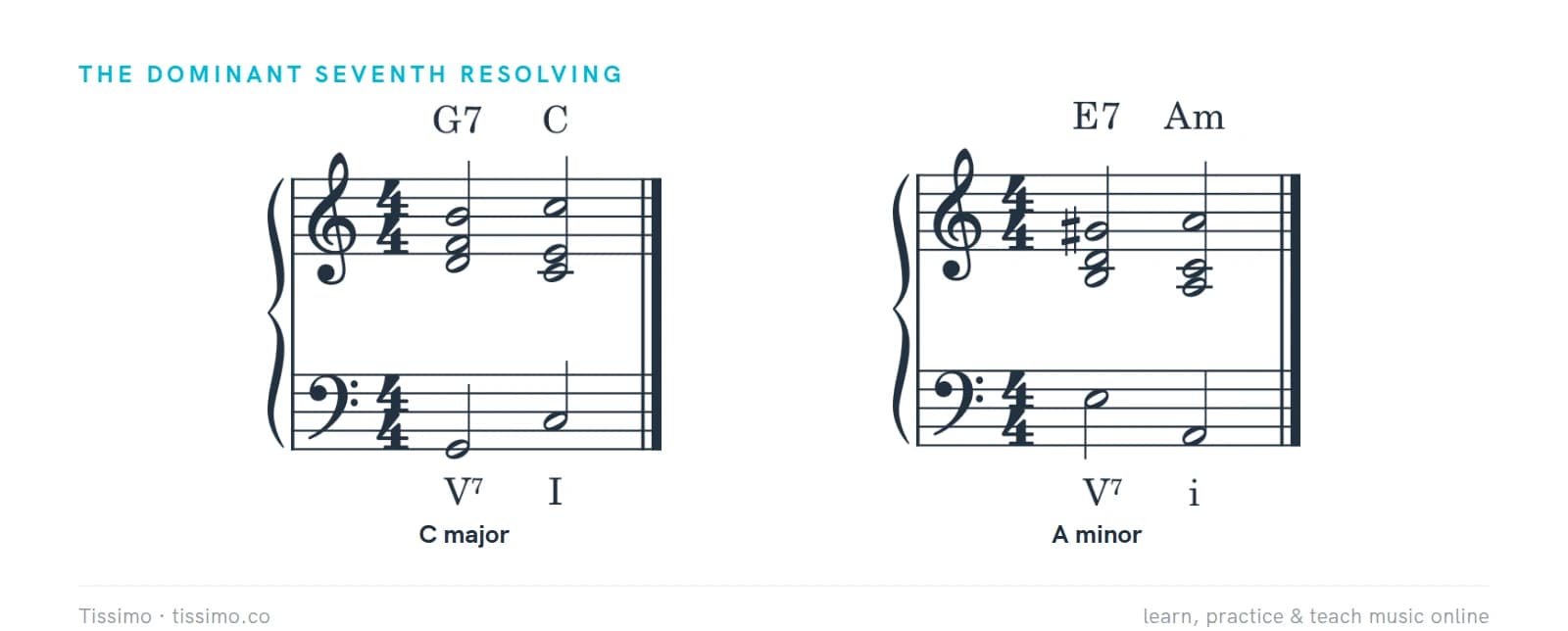
In both panels the dominant seventh is complete, so the tonic chord that follows has a tripled root and no fifth: three Cs in C major, three As in A minor. That is the standard result when every tendency tone resolves, and it still sounds full.
Inversions
G7 has three inversions: V6/5 with B in the bass, V4/3 with D, and V4/2 with F. The tendencies stay the same, so V4/2 usually moves to a first-inversion tonic (I6), because its bass, F, falls to E. See chord inversion.
Beyond V7
- A dominant seventh built on another degree, like D7 leading to G in C major, is a secondary dominant.
- In the twelve-bar blues, dominant sevenths on I, IV and V (C7, F7, G7) are colors in their own right and do not need to resolve.
- Jazz musicians add 9ths and 13ths to it (extended chord), and sometimes replace it with the dominant seventh a tritone away (tritone substitution).
Practice with The dominant 7th, Dominant 7th Arpeggios and Identify the dominant 7ths & inversions.
Common questions
What is the difference between a dominant seventh and a major seventh chord?
Both start with a major triad. The dominant seventh adds a minor seventh (G7: G–B–D–F); the major seventh chord adds a major seventh, one half step higher (Gmaj7: G–B–D–F♯). The first pulls toward a resolution; the second sounds settled.
Why does V7 resolve to I?
Its third is the leading tone, which rises a half step to the tonic, and its seventh usually falls a scale step to the tonic chord's third: a half step in major (F to E in G7–C), a whole step in minor (D to C in E7–Am). Those two notes form a tritone and resolve in opposite directions, while the bass moves from the dominant to the tonic.
Practice it: free worksheets
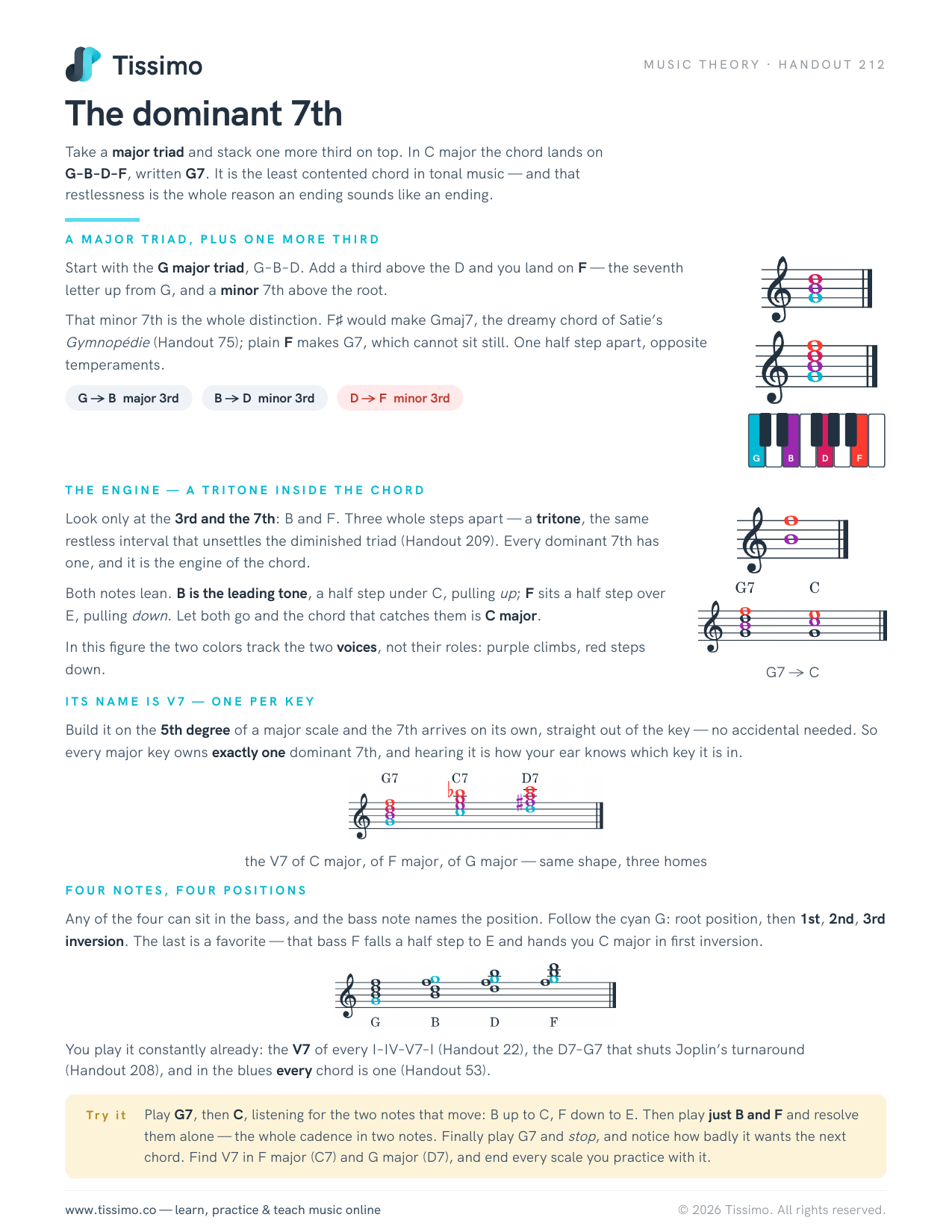 The dominant 7thTake a major triad and stack one more third on top. In C major the chord lands on G–B–D–F, written G7. It is the least contented chord in tonal music — and that restlessness is the whole reason an ending sounds like an ending.
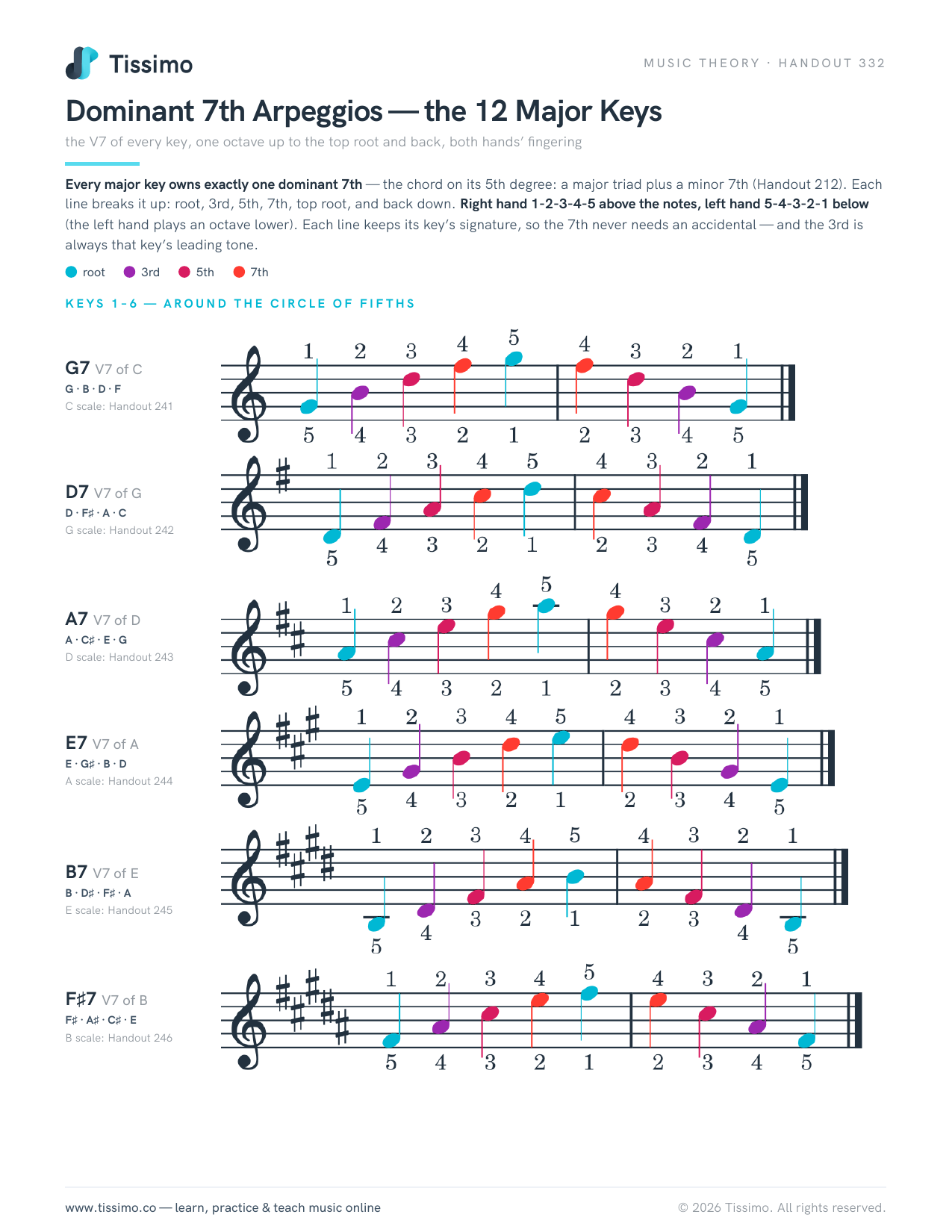 Dominant 7th Arpeggios — the 12 Major Keysthe V7 of every key, one octave up to the top root and back, both hands’ fingering
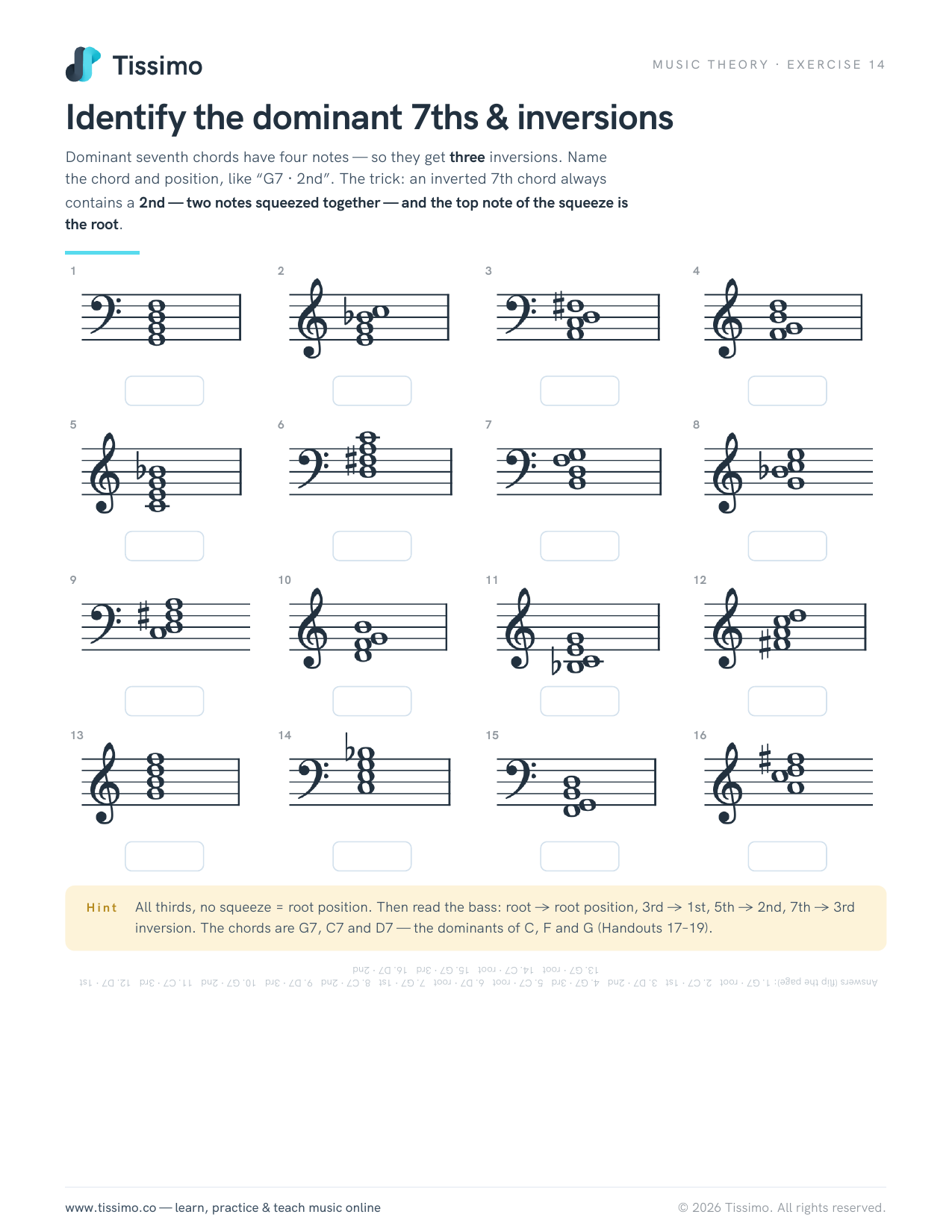 Identify the dominant 7ths & inversionsDominant seventh chords have four notes — so they get three inversions. Name the chord and position, like “G7 · 2nd”. The trick: an inverted 7th chord always contains a 2nd — two notes squeezed together — and the top note of the squeeze is the root.
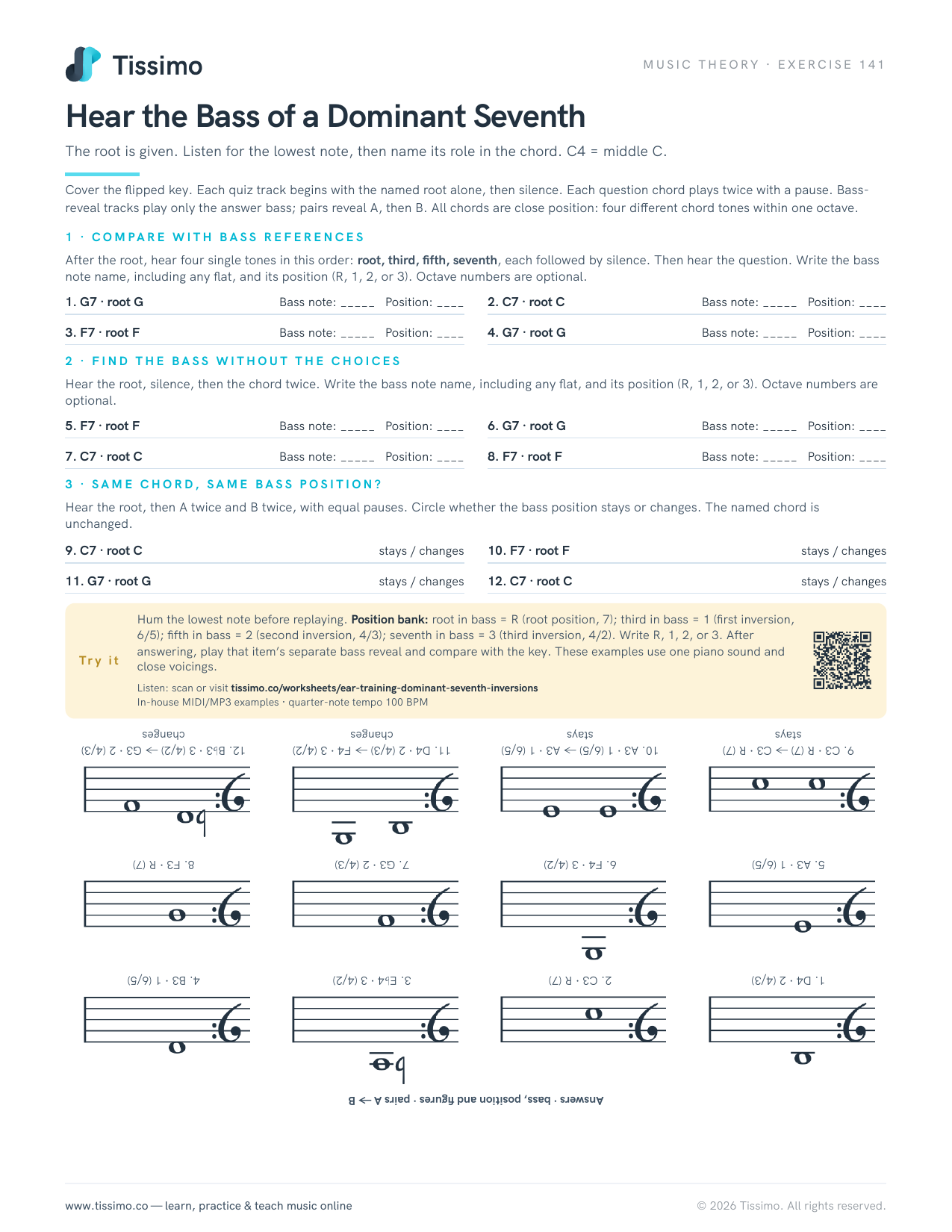 Hear the Bass of a Dominant SeventhThe root is given. Listen for the lowest note, then name its role in the chord. C4 = middle C.
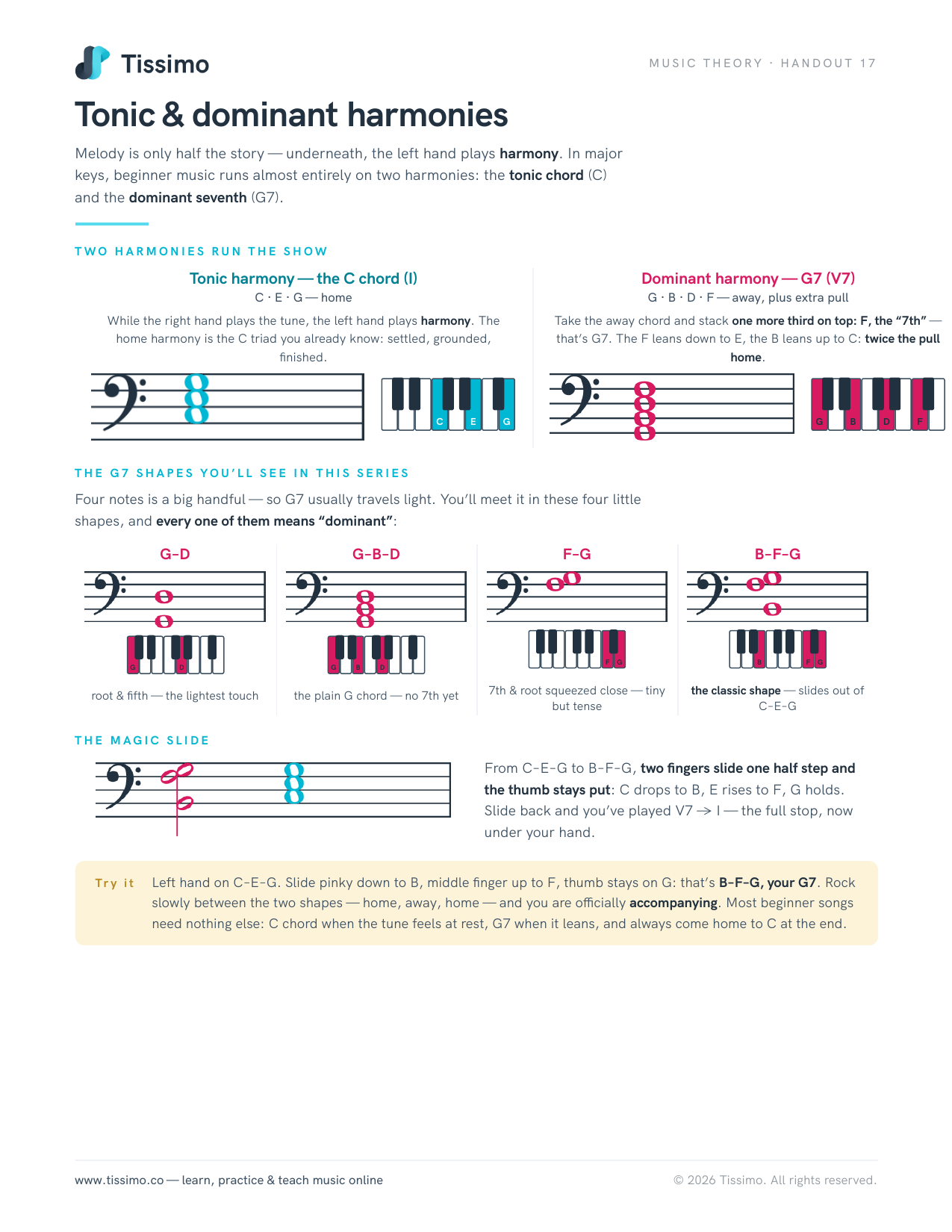 Tonic & dominant harmoniesMelody is only half the story — underneath, the left hand plays harmony. In major keys, beginner music runs almost entirely on two harmonies: the tonic chord (C) and the dominant seventh (G7).
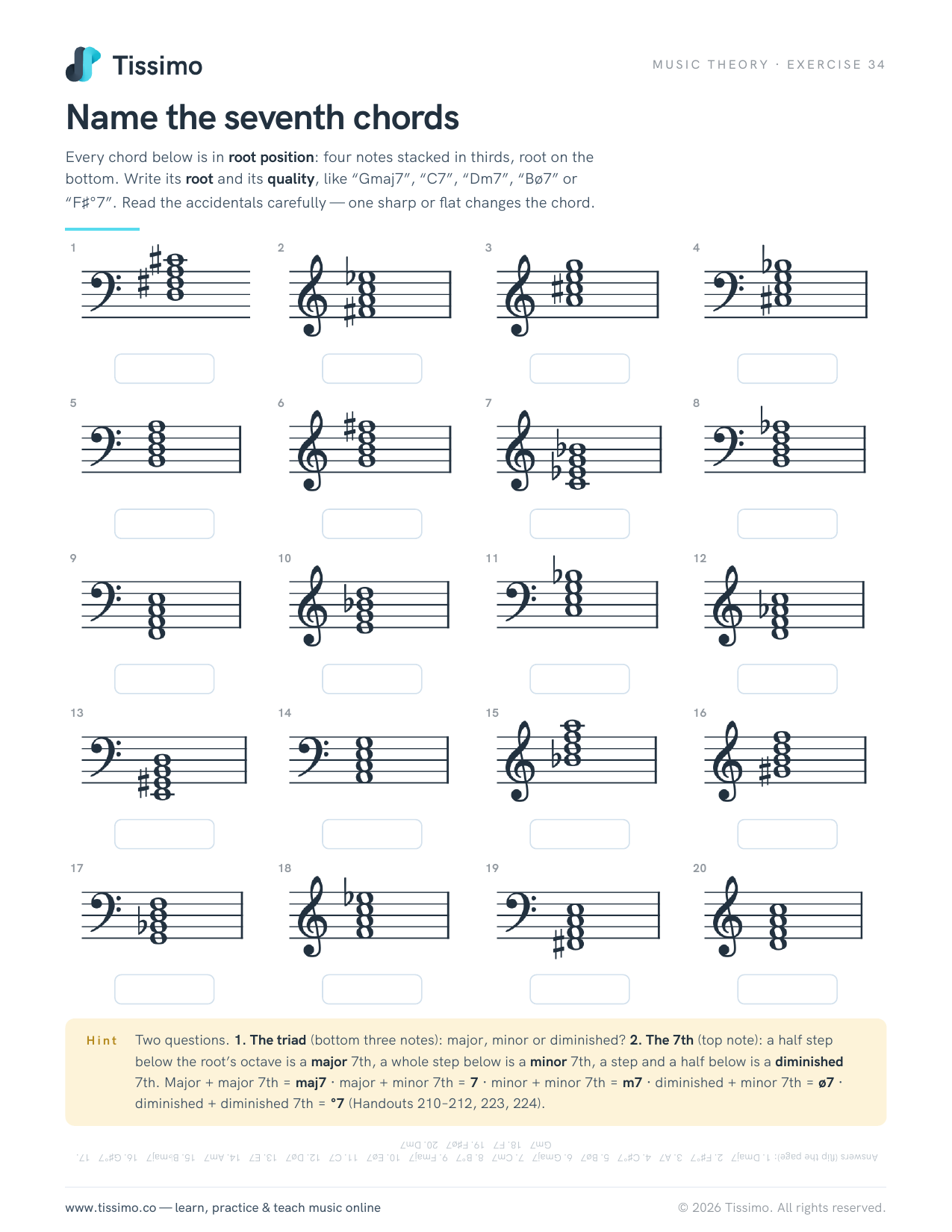 Name the seventh chordsEvery chord below is in root position: four notes stacked in thirds, root on the bottom. Write its root and its quality, like “Gmaj7”, “C7”, “Dm7”, “Bø7” or “F♯°7”. Read the accidentals carefully — one sharp or flat changes the chord.