Pitch & Intervals
Tritone
Pronounced TRY-tone
A tritone is an interval of six half steps, or three whole steps, such as F–B or C–F♯. Spelled as an augmented fourth or a diminished fifth, it splits the octave exactly in half and sounds tense.
A tritone is the interval of six half steps, or three whole steps, which is where the name comes from (Latin tritonus, "three tones"). F up to B is a tritone: F–G, G–A and A–B are three whole steps. So are C–F♯ and B–F. It measures 600 cents in equal temperament, exactly half an octave.
Augmented fourth or diminished fifth
"Tritone" names only a size, so theory spells it two ways, depending on the letters:
- Augmented fourth (A4): four letter names, as in F–B or C–F♯. It is a perfect fourth made a half step wider.
- Diminished fifth (d5): five letter names, as in B–F or C–G♭. It is a perfect fifth made a half step narrower.
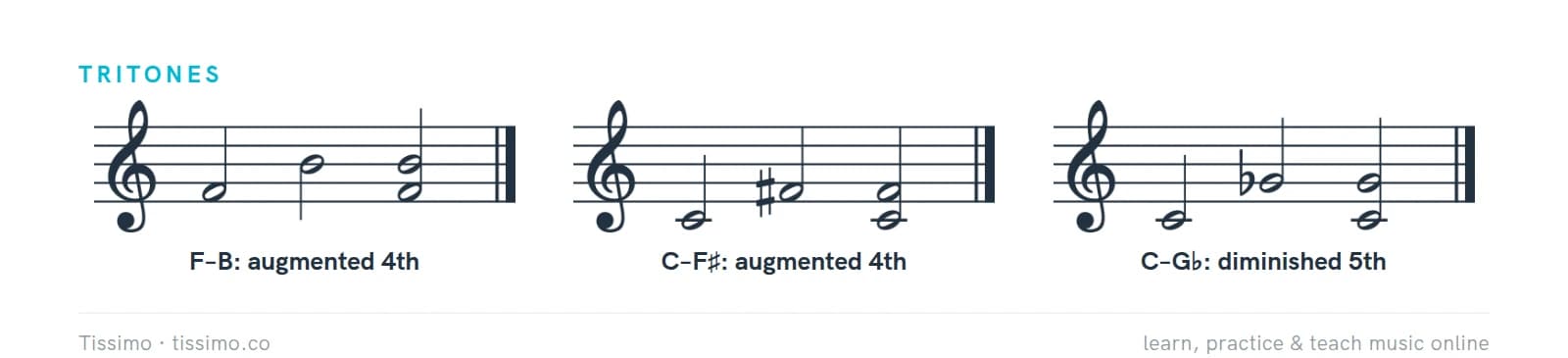
On the piano, C–F♯ and C–G♭ are the same two keys. The spelling tells you which way the notes want to move, as you will see below.
The tritone in the major scale
Each major scale contains exactly one tritone between its own notes: from the 4th degree up to the 7th (F–B in C major), or from the 7th up to the 4th (B–F). That tritone sits inside the dominant seventh chord: G7 is G–B–D–F, and B–F is its tritone. Much of the pull of a dominant chord toward its tonic comes from these two notes.
Resolving a tritone
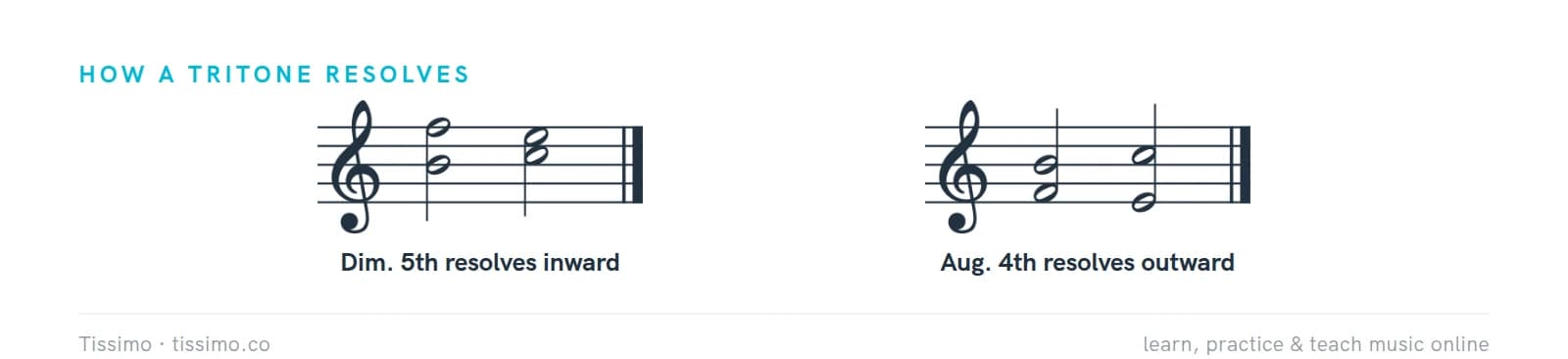
A tritone is a dissonance that wants to move, and the usual resolution moves both notes by a half step:
- A diminished fifth resolves inward, to a third: B–F moves to C–E.
- An augmented fourth resolves outward, to a sixth: F–B moves to E–C.
It inverts to itself
Turn a tritone upside down and you get another tritone (6 + 6 = 12): an augmented fourth inverts to a diminished fifth. No other interval divides the octave into two equal halves. Jazz musicians exploit this in tritone substitution, replacing a dominant chord with the dominant chord a tritone away, which contains the same tritone.
Its reputation
Singers were long taught to avoid the tritone in melodies, partly because it is awkward to sing in tune, and it picked up the Latin nickname diabolus in musica, "the devil in music". Composers have used its restless sound ever since: a rising tritone opens the song "Maria" from West Side Story, and the interval is common in film music, metal and jazz.
Practice spelling it with Name the intervals: the full toolkit, and compare it with its neighbors in Intervals: the 4th and Intervals: the 5th.
Common questions
How many half steps is a tritone?
Six, or three whole steps. That is exactly half an octave: 600 cents in equal temperament.
Is a tritone an augmented fourth or a diminished fifth?
Either, depending on the spelling. With four letter names (F–B, C–F♯) it is an augmented fourth; with five (B–F, C–G♭) it is a diminished fifth. On the piano they sound the same.
Why is the tritone called the devil's interval?
Its old Latin nickname, diabolus in musica, reflects how unstable it sounds and how hard it is to sing in tune. Stories that the medieval church banned it outright are probably exaggerated: theory books mainly taught singers to avoid it.
Practice it: free worksheets
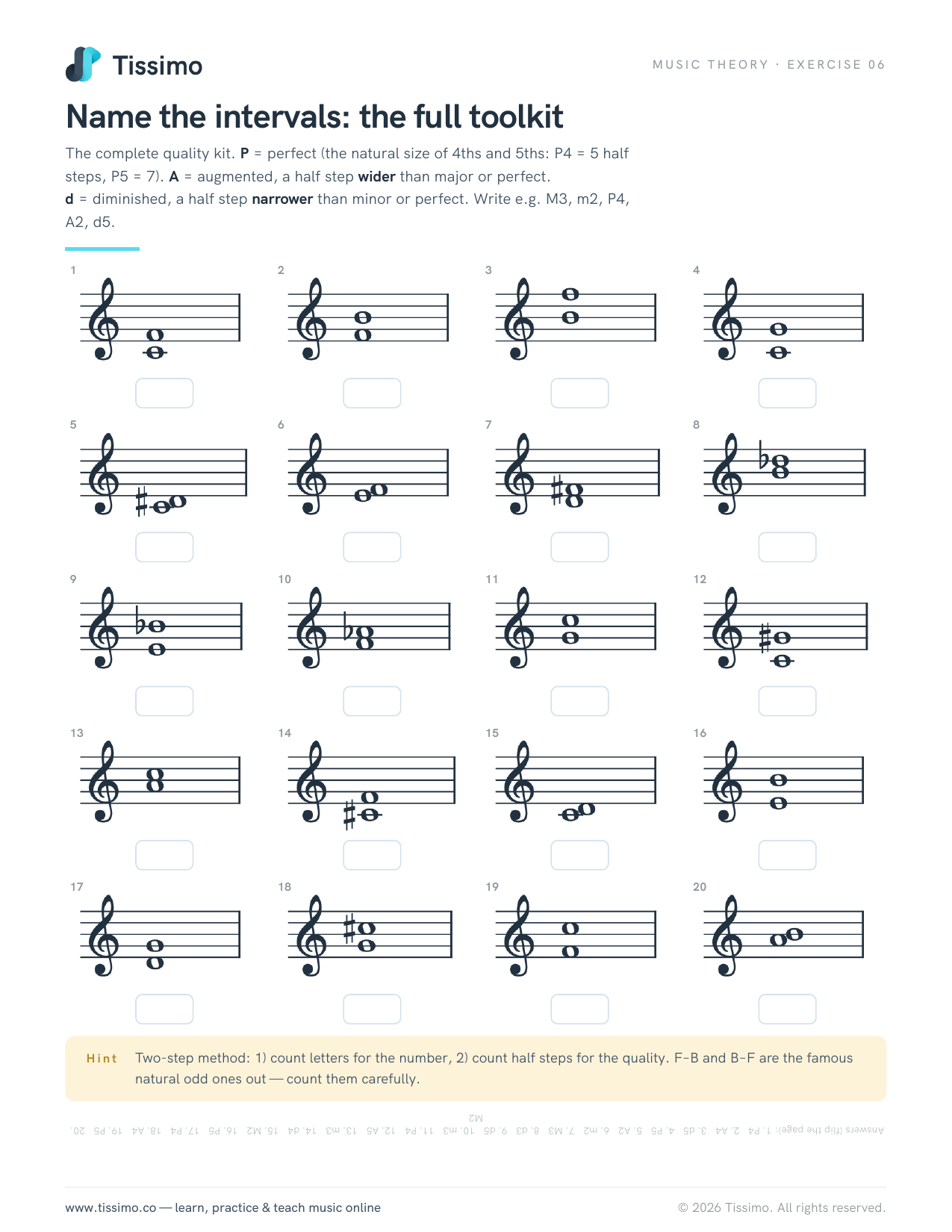 Name the intervals: the full toolkitThe complete quality kit. P = perfect (the natural size of 4ths and 5ths: P4 = 5 half steps, P5 = 7). A = augmented, a half step wider than major or perfect. d = diminished, a half step narrower than minor or perfect. Write e.g. M3, m2, P4, A2, d5.
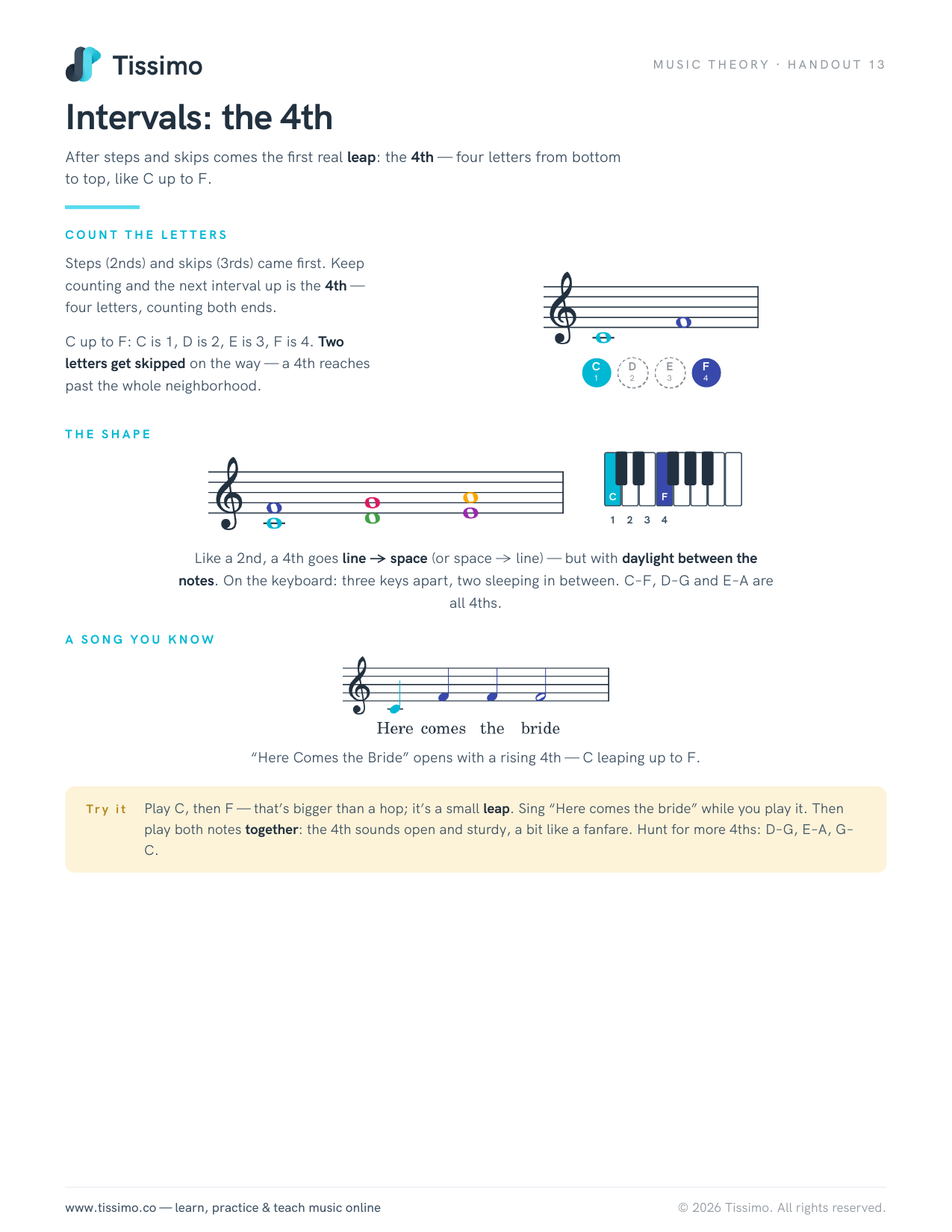 Intervals: the 4thAfter steps and skips comes the first real leap: the 4th — four letters from bottom to top, like C up to F.
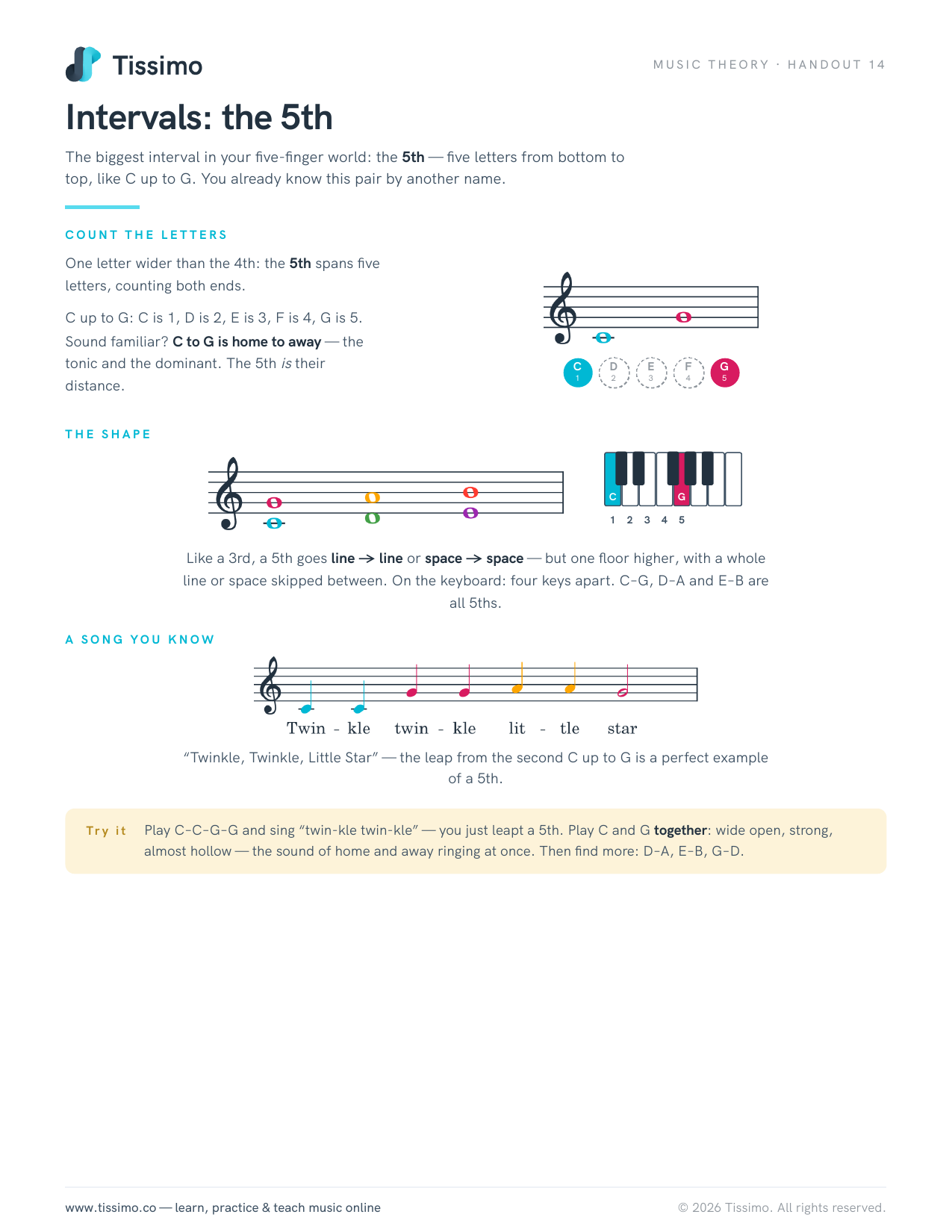 Intervals: the 5thThe biggest interval in your five-finger world: the 5th — five letters from bottom to top, like C up to G. You already know this pair by another name.
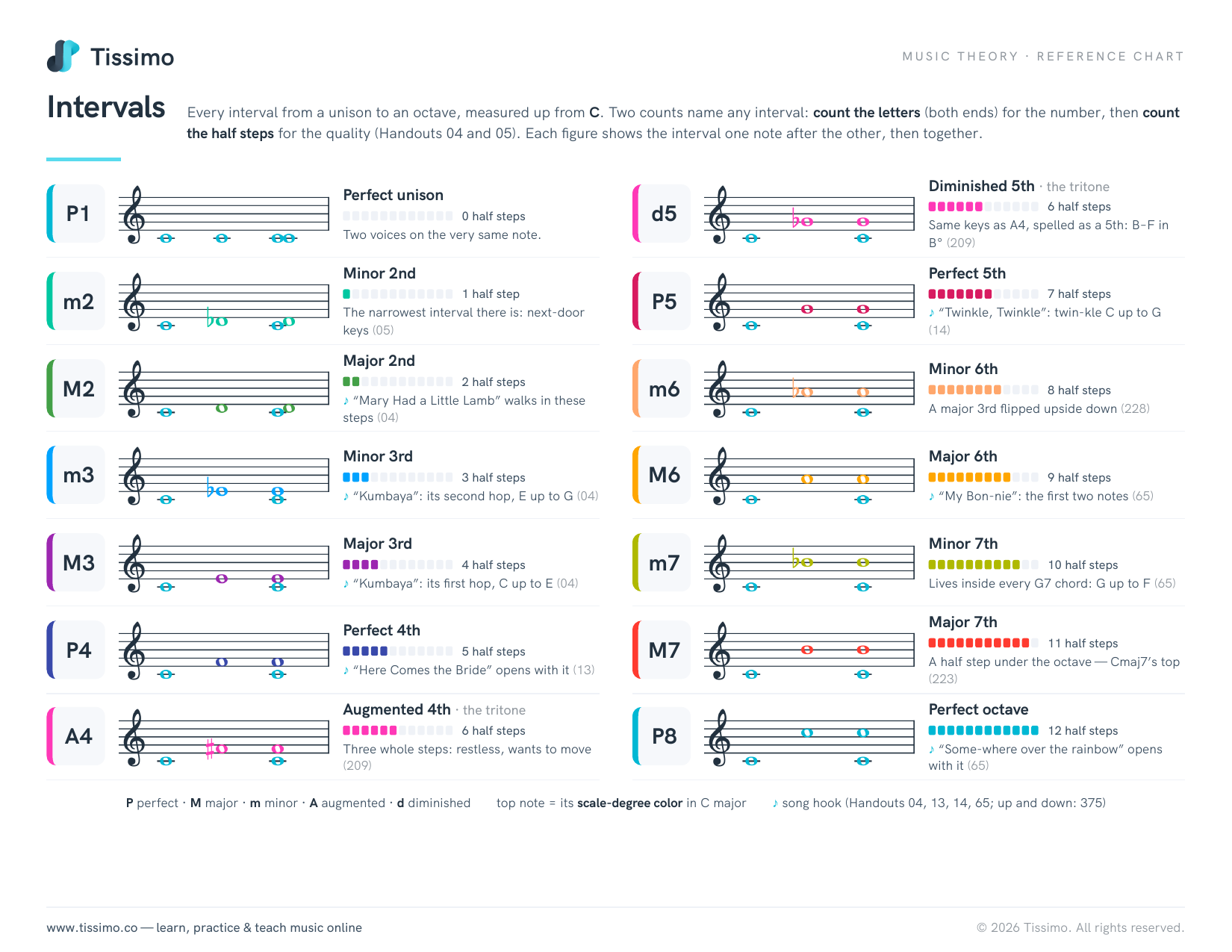 IntervalsEvery interval from a unison to an octave, measured up from C. Two counts name any interval: count the letters (both ends) for the number, then count the half steps for the quality (Handouts 04 and 05). Each figure shows the interval one note after the other, then together.
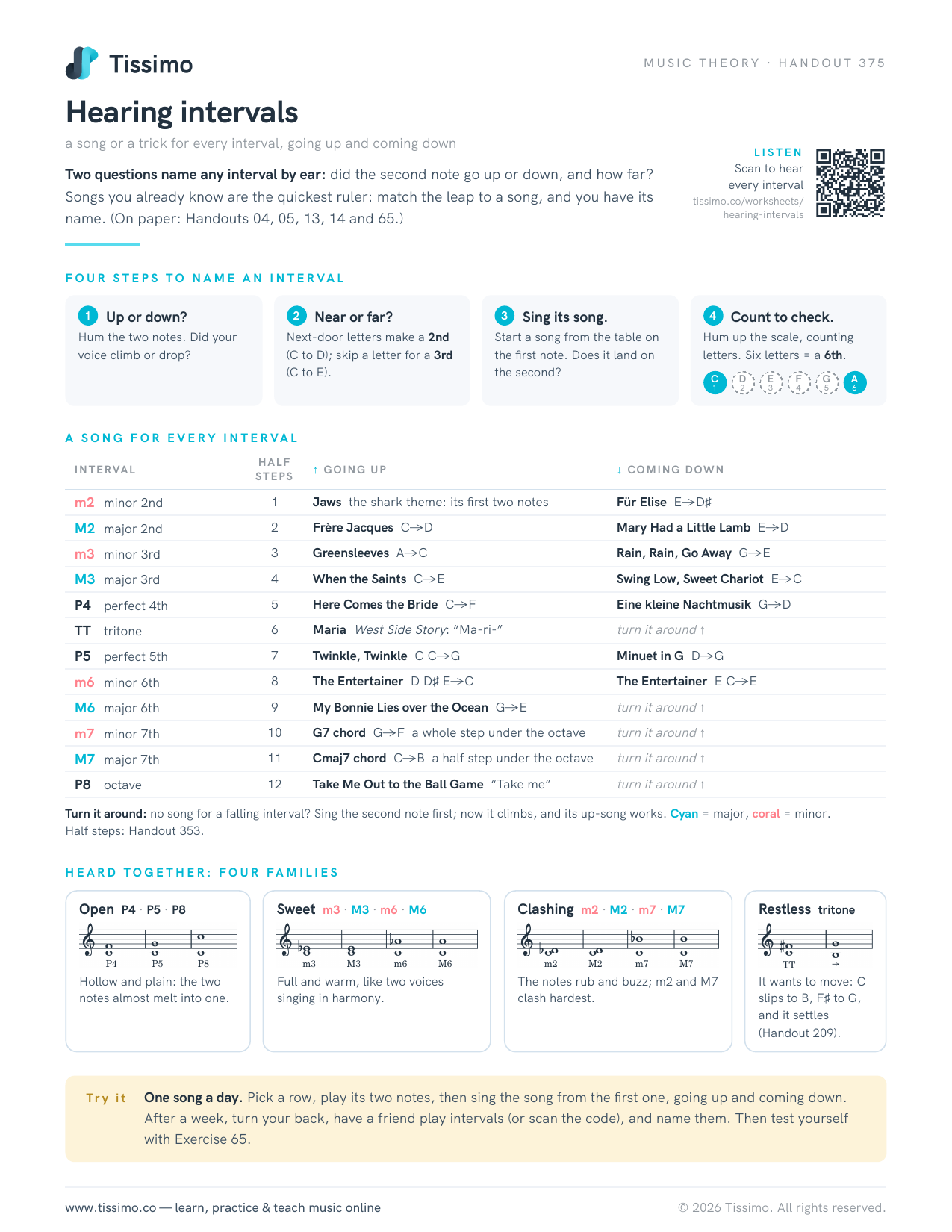 Hearing intervalsa song or a trick for every interval, going up and coming down