Pitch & Intervals
Unison
Written as P1
A unison is two or more notes, voices or instruments sounding the same pitch. As an interval it is the perfect unison (P1), a distance of zero half steps.
A unison is the "interval" between two notes of exactly the same pitch: two singers on the same G, or a violin and a flute playing the same A. Its full name is the perfect unison, written P1, and it measures zero half steps. Some older books call it the prime.
Unison on the page
When two voices share one staff and meet on the same note with the same length, the note is usually written once with two stems, one up and one down. When the two notes have different lengths, they are written side by side.

When each player reads a separate part, both parts simply show the same note. In orchestral string parts, unis. (unisono) tells players who had been split into two lines (divisi) to play one line together again.
Singing and playing in unison
"In unison" also describes a whole passage in which everyone plays or sings the same melody. Strictly, that means the same pitches. In everyday use it includes doubling at the octave: when a mixed choir sings a melody "in unison", the men usually sing an octave below the women. Plainchant (Gregorian chant) is sung in unison, and many bands play a unison riff, guitar and bass on the same line, for extra weight.
Why a unison is hard to play in tune
Two notes in unison have a frequency ratio of 1:1. If they are even slightly apart, you hear beating: a slow pulse or wobble in the sound. As the two pitches move together, the beats slow down and finally disappear. String players, guitarists and choirs use this to tune, and it is why a unison passage exposes every intonation problem.
Augmented unison
Raise or lower one of the two notes by a half step while keeping its letter, as in G–G♯, and the interval becomes an augmented unison: one half step, the same distance as a minor second but spelled with a single letter name.
The Intervals chart starts with the unison, and Hear the Pulse Between Two Tones lets you hear two almost-unison tones beating.
Common questions
Is a unison an interval?
Yes. It is the interval of zero half steps between two notes of the same pitch, called the perfect unison (P1). It matters in harmony and counterpoint, where two voices can meet on one note.
What does it mean to sing in unison?
Everyone sings the same melody at the same time. In mixed groups the men usually sing an octave below the women, which most people still call singing in unison.
Practice it: free worksheets
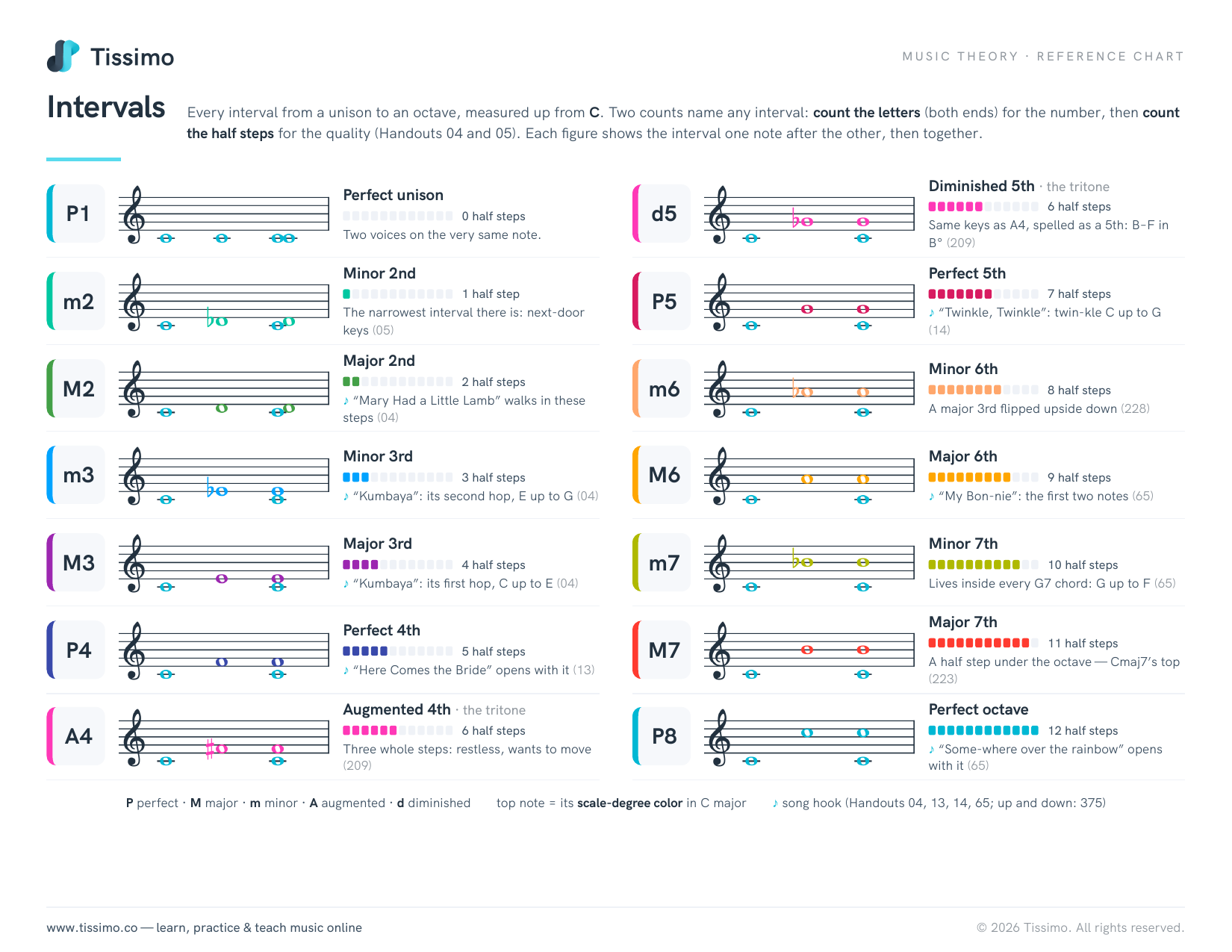 IntervalsEvery interval from a unison to an octave, measured up from C. Two counts name any interval: count the letters (both ends) for the number, then count the half steps for the quality (Handouts 04 and 05). Each figure shows the interval one note after the other, then together.
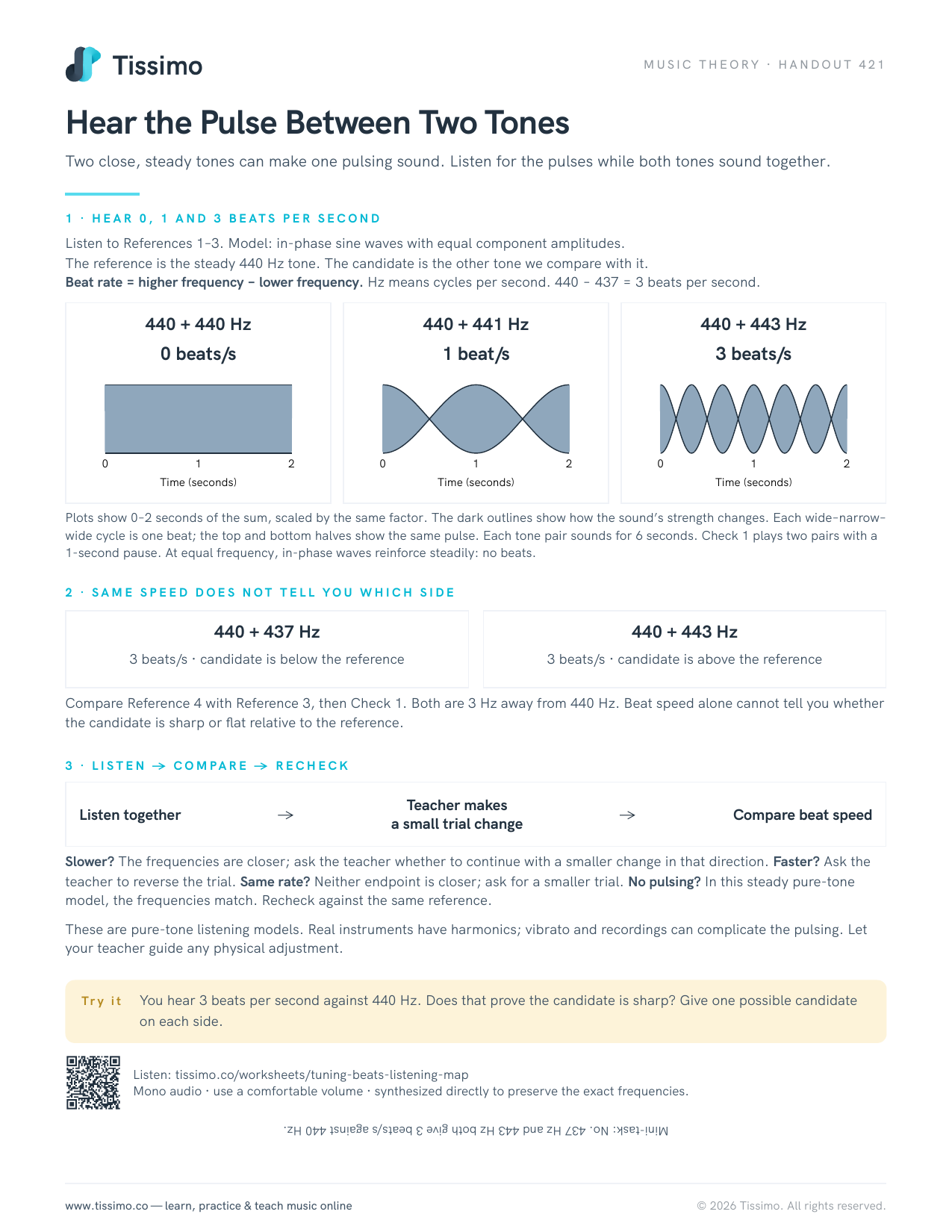 Hear the Pulse Between Two TonesTwo close, steady tones can make one pulsing sound. Listen for the pulses while both tones sound together.
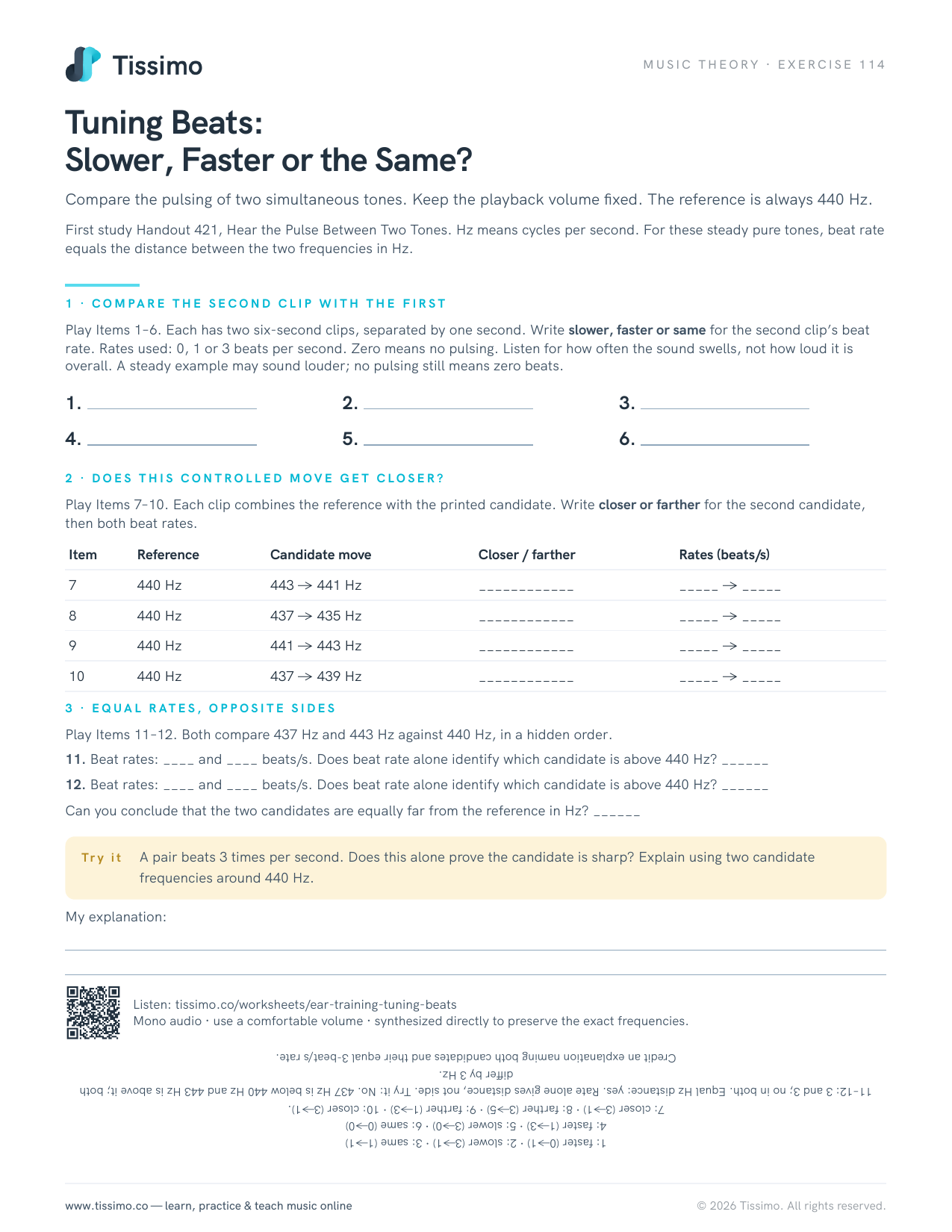 Tuning Beats: Slower, Faster or the Same?Compare the pulsing of two simultaneous tones. Keep the playback volume fixed. The reference is always 440 Hz.