Chords & Harmony
Authentic Cadence
An authentic cadence is a phrase ending in which the dominant chord (V or V7) resolves to the tonic (I). It is the strongest, most final-sounding cadence in tonal music, a musical full stop.
An authentic cadence ends a phrase with the dominant chord moving to the tonic: V–I, or V7–I. In C major that is G (or G7) to C. Two strong pulls arrive at once: the leading tone B rises to the tonic C, and the bass moves from G to C. The result sounds final, like a full stop at the end of a sentence, which is why so many tonal pieces end with one.
Perfect and imperfect
Theorists divide authentic cadences by how final they sound.
- A perfect authentic cadence (PAC) has both chords in root position and the tonic note in the highest voice of the final chord. It is the strongest ending tonal music has.
- An imperfect authentic cadence (IAC) is a weaker version: the melody ends on the third or fifth of the tonic chord, or one of the chords is inverted (V6/5–I, V–I6). Many textbooks also count vii°6–I as an imperfect authentic cadence.
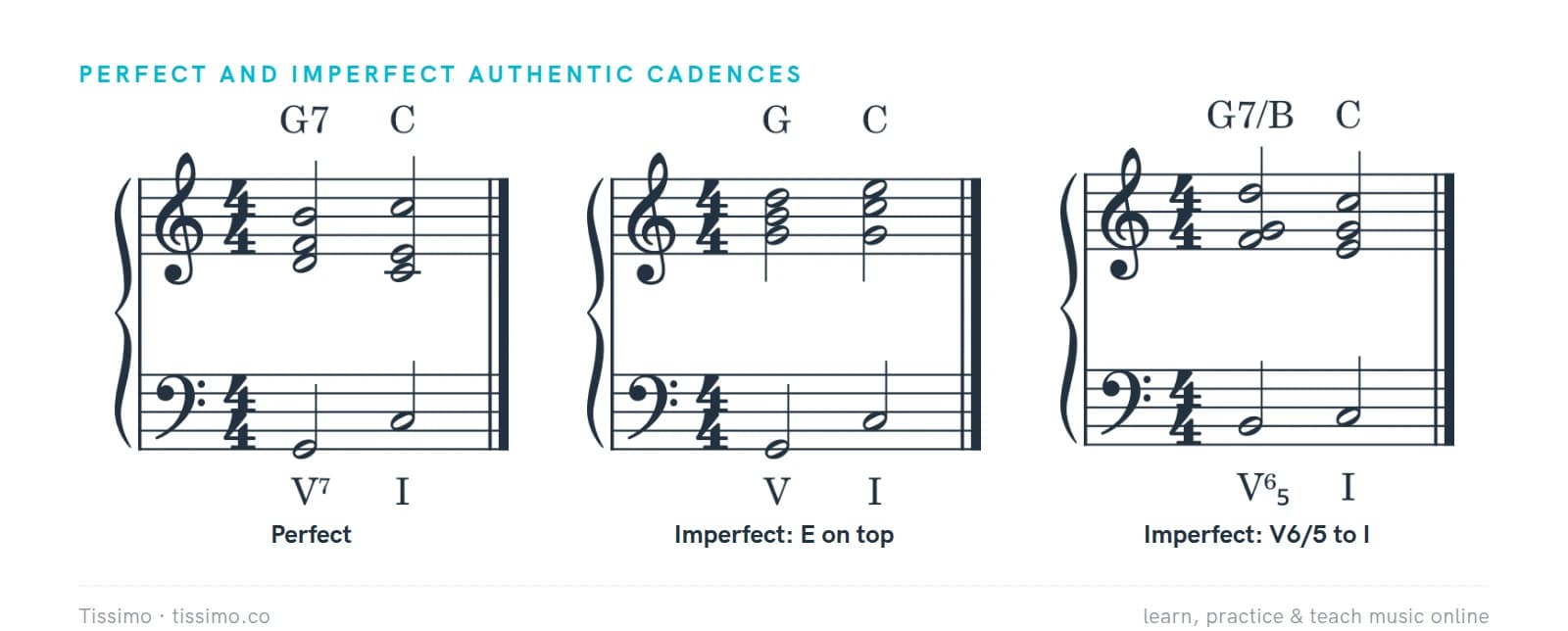
How it is built
- The bass moves from the fifth degree to the first (G to C).
- The leading tone rises a half step to the tonic.
- If the dominant has a seventh, the seventh falls a step to the third of the tonic chord (F to E).
- V is often approached from a predominant chord, such as IV or ii6, or decorated by a cadential six-four chord (I6/4) just before it, which makes the arrival on V even stronger.
Where you find it
Authentic cadences close sections, movements and whole pieces. In a period, the first phrase usually ends with a half cadence and the second with an authentic cadence, the answer to the question. Composers often make the first authentic cadence of a passage imperfect and save the perfect one for the very end.
Practice with Cadences, Cadences in Every Key and Identify the cadences.
Common questions
What is the difference between a perfect and an imperfect authentic cadence?
In a perfect authentic cadence both V and I are in root position and the melody ends on the tonic. If the melody ends on another note of the chord, or either chord is inverted, the cadence is imperfect.
Is every V–I an authentic cadence?
Only when it ends a phrase. V–I in the middle of a phrase is simply a progression.
Practice it: free worksheets
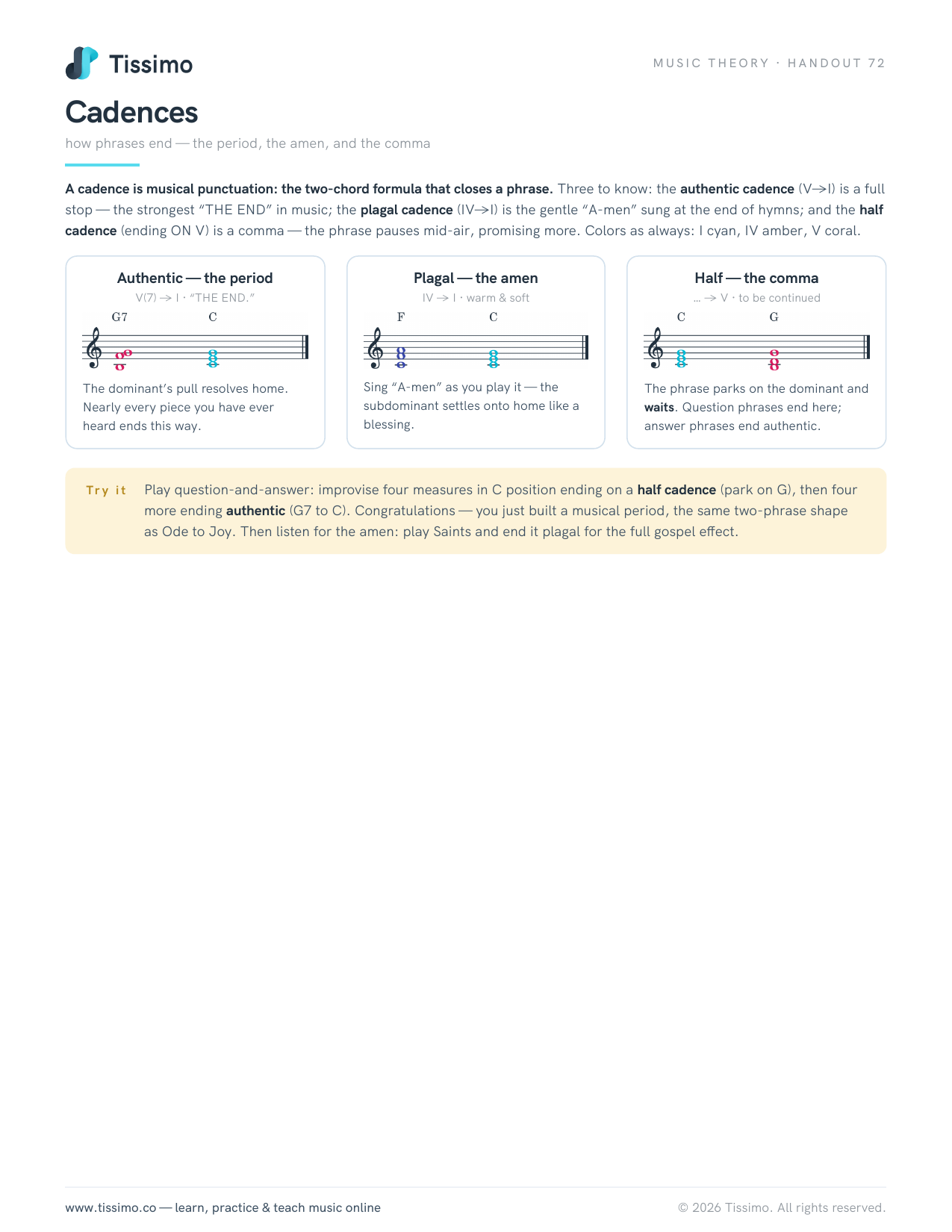 Cadenceshow phrases end — the period, the amen, and the comma
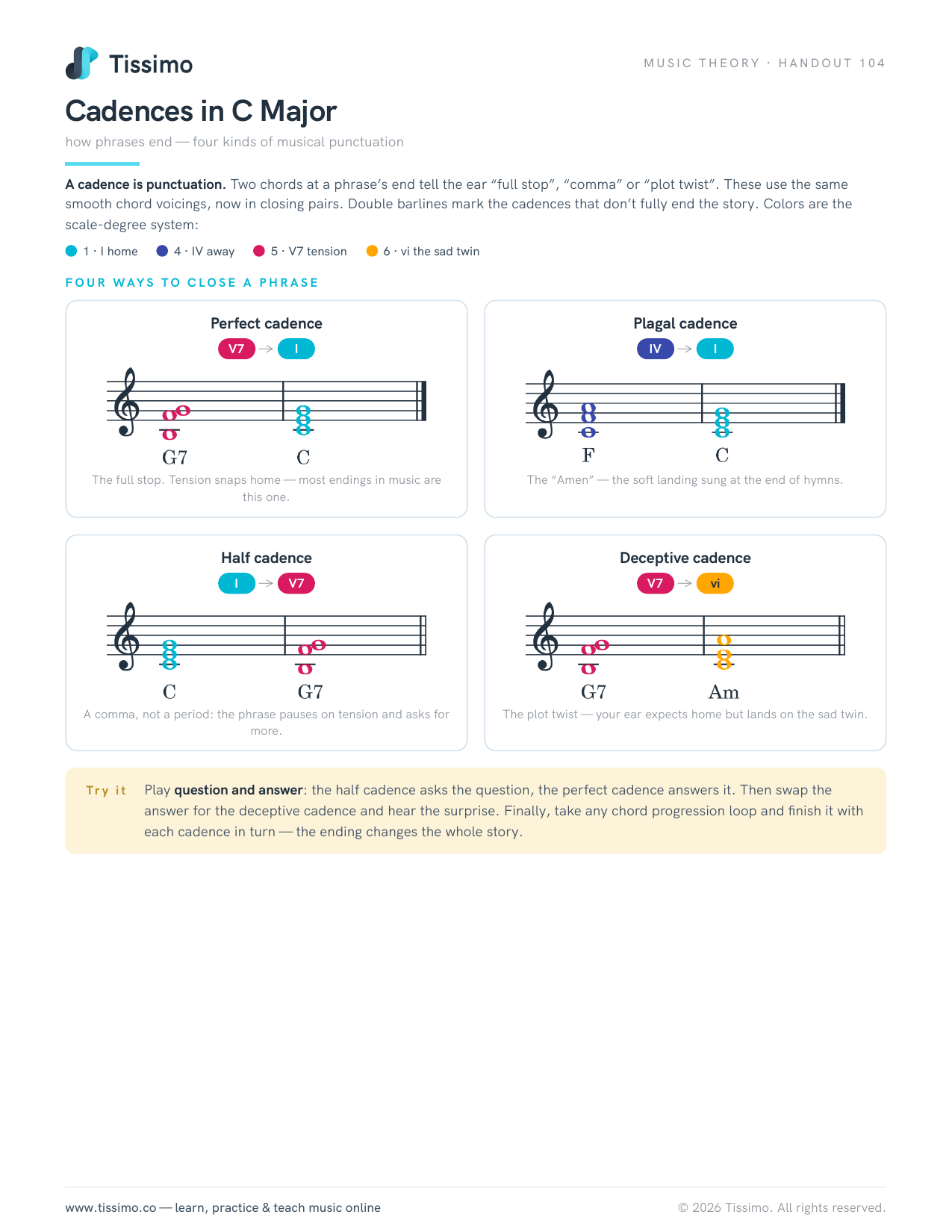 Cadences in Every KeyHow phrases end — the four kinds of musical punctuation, written out in all 24 keys.
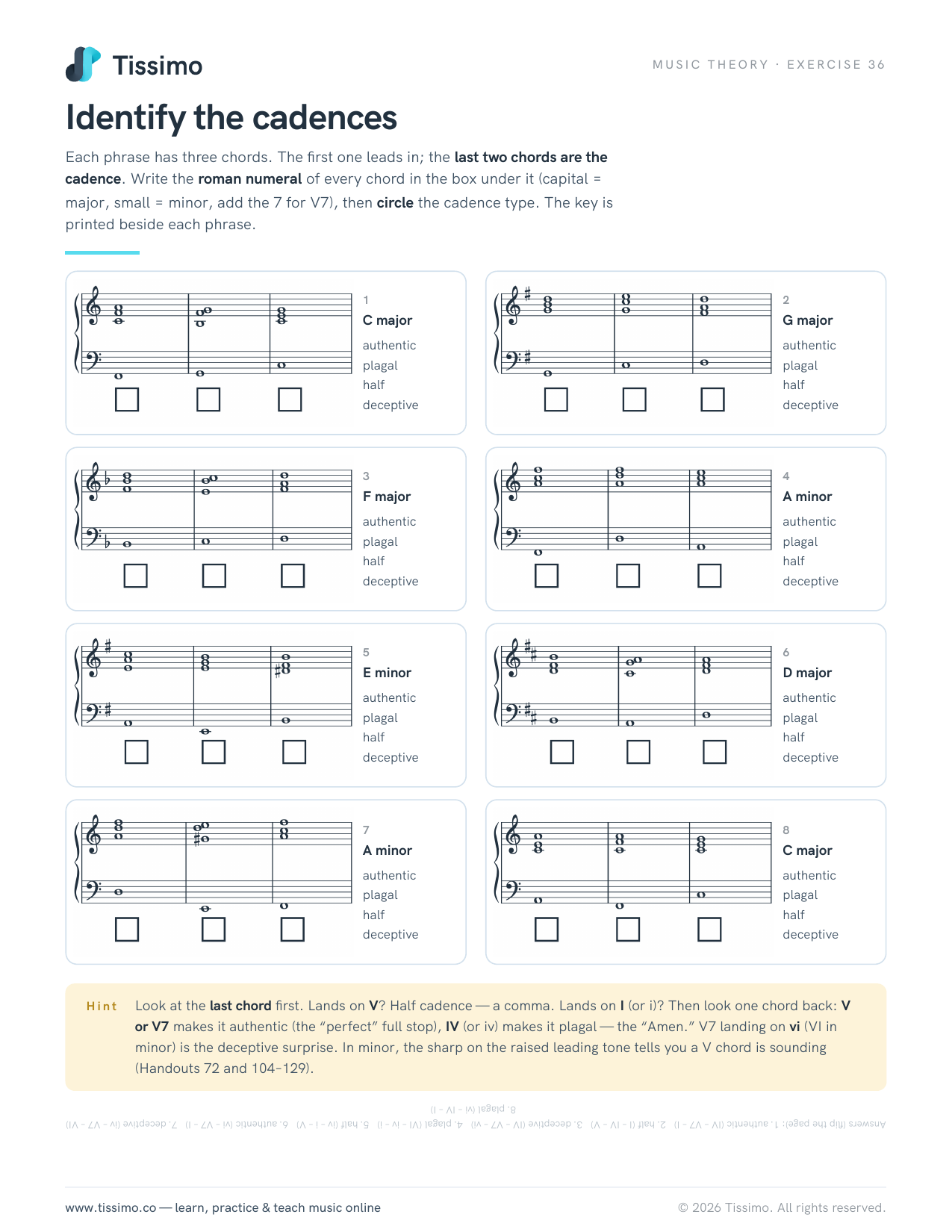 Identify the cadencesEach phrase has three chords. The first one leads in; the last two chords are the cadence. Write the roman numeral of every chord in the box under it (capital = major, small = minor, add the 7 for V7), then circle the cadence type. The key is printed beside each phrase.
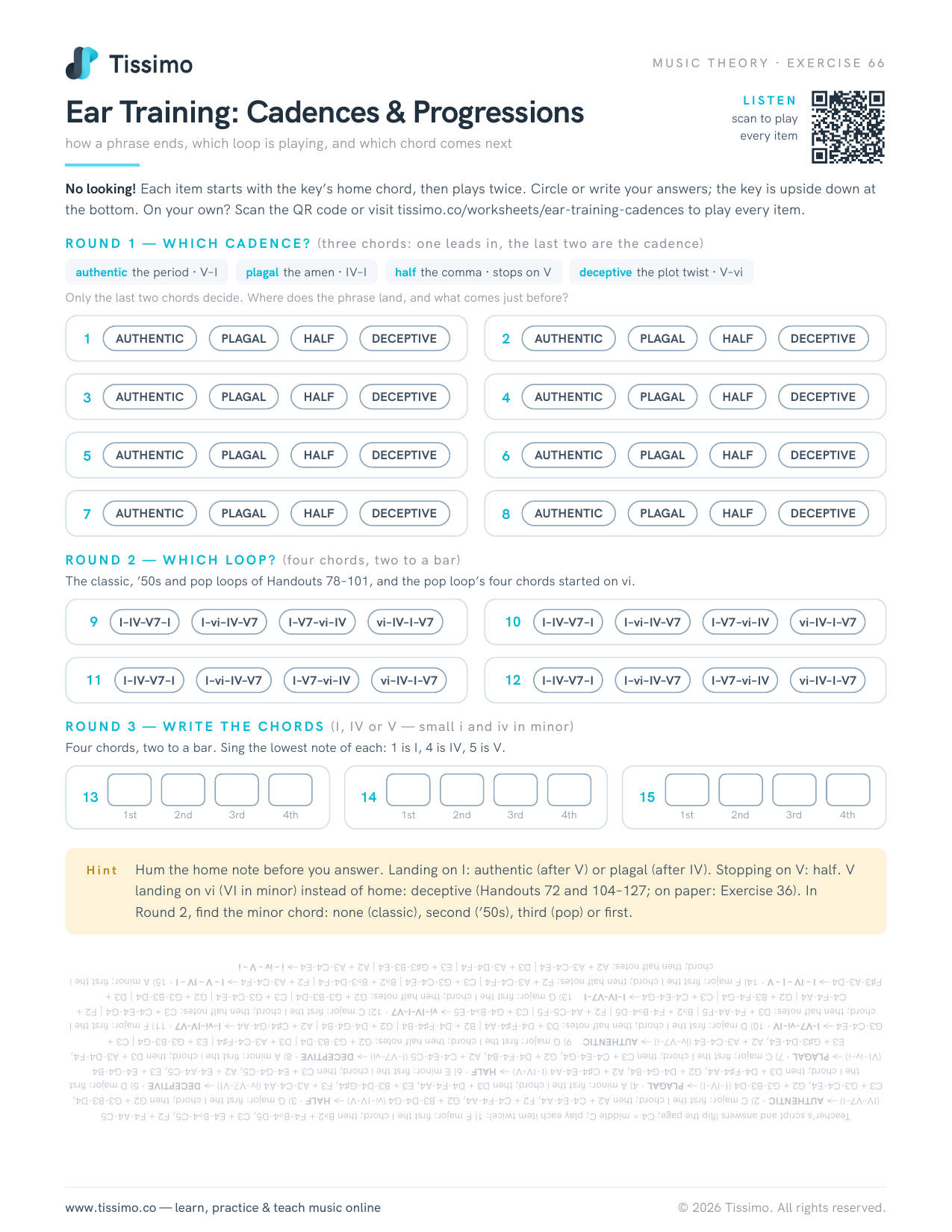 Ear Training: Cadences & Progressionshow a phrase ends, which loop is playing, and which chord comes next
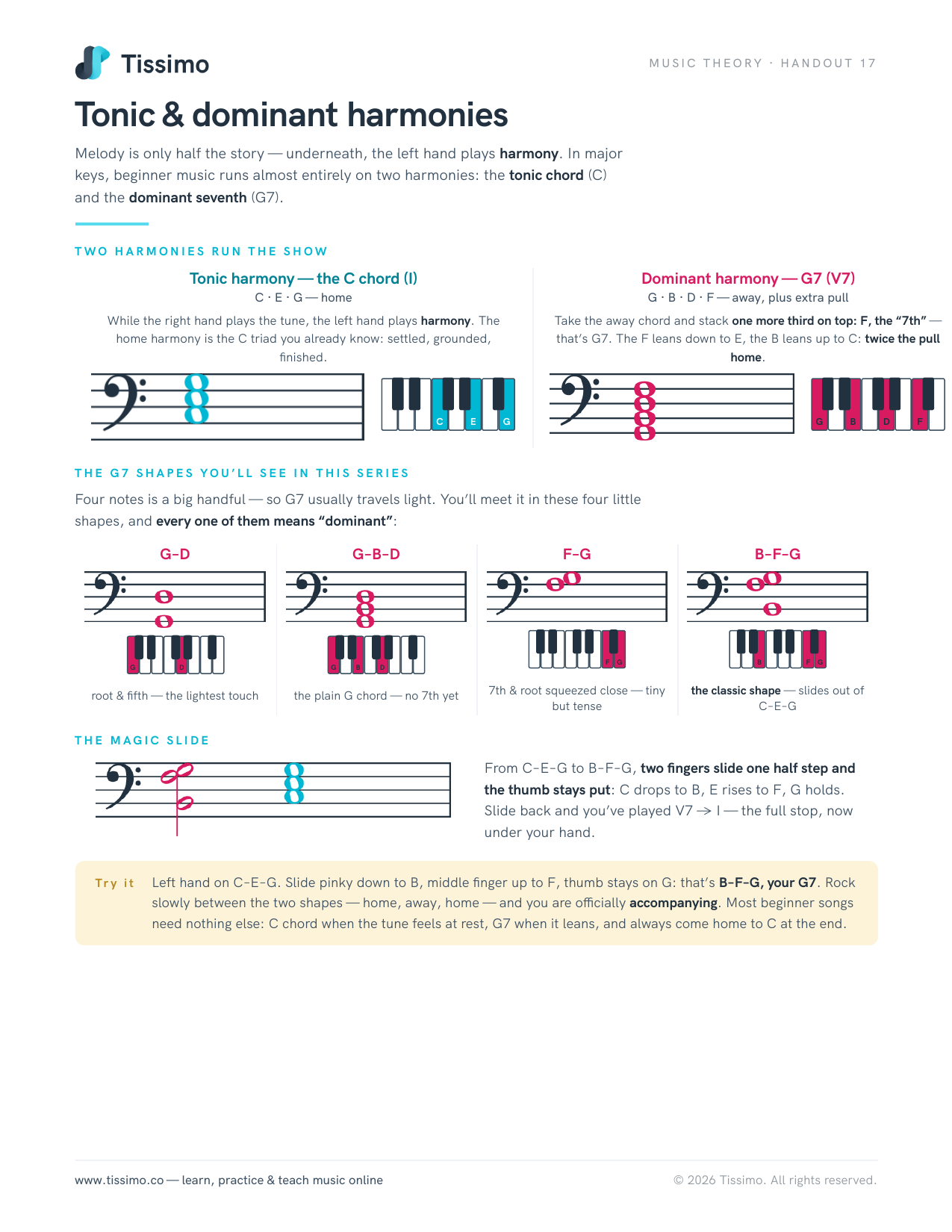 Tonic & dominant harmoniesMelody is only half the story — underneath, the left hand plays harmony. In major keys, beginner music runs almost entirely on two harmonies: the tonic chord (C) and the dominant seventh (G7).