Chords & Harmony
Plagal Cadence
A plagal cadence is a phrase ending in which the subdominant chord (IV) moves to the tonic (I), as in F–C in C major. Its soft, settled sound is often called the Amen cadence.
A plagal cadence ends a phrase with the subdominant chord moving to the tonic: IV–I, or F to C in C major. It is gentler than an authentic cadence, because the leading tone, the note that pulls hardest toward home, is missing. The top voice often stays on the tonic while the other notes slide down by step (A to G, F to E), a soft and settled sound.
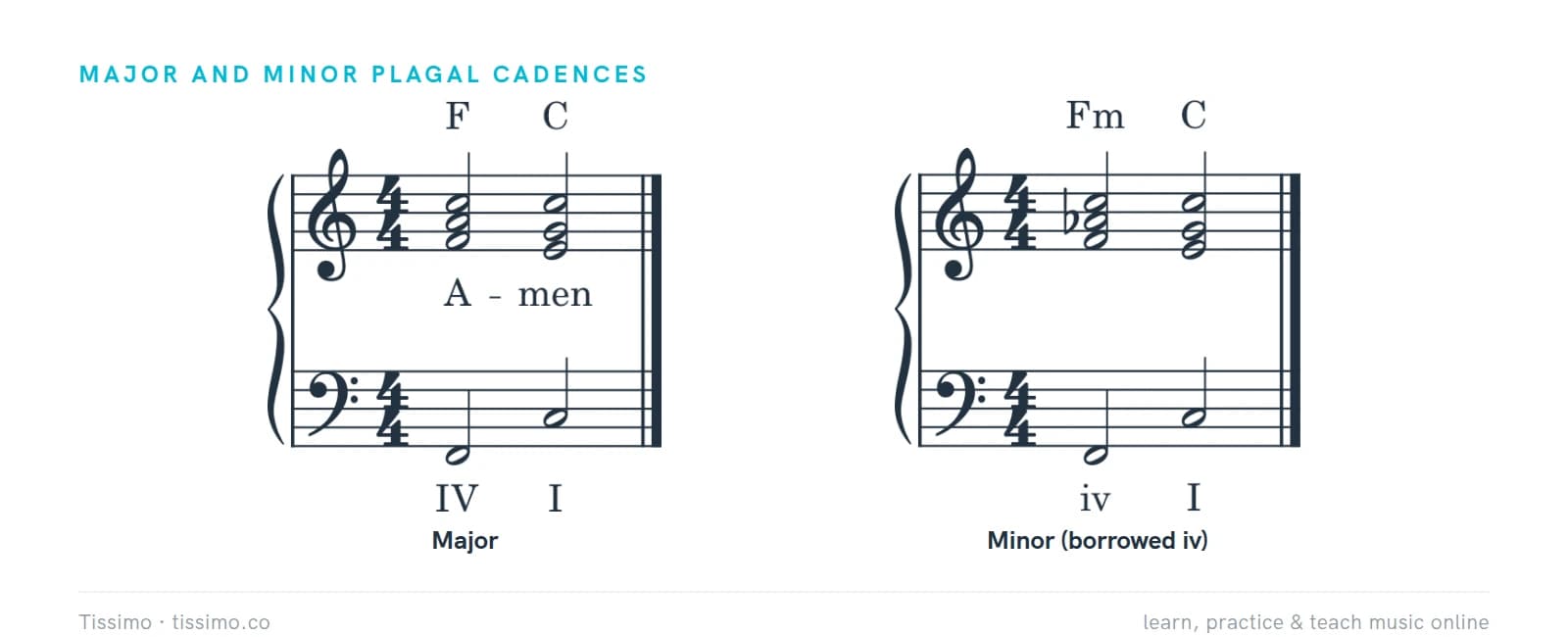
The "Amen" cadence
Many traditional hymns set their final "Amen" to IV–I, so the plagal cadence is often called the Amen cadence. In that setting it usually comes after an authentic cadence has already ended the hymn, as a quiet postscript. Composers use it the same way elsewhere: a final V–I, then a closing IV–I.
The minor plagal cadence
Borrow the minor iv chord from the parallel minor (F minor in C major) and you get iv–I, in which A♭ sinks a half step to G. It is common in Romantic music and in pop ballads, and it sounds more wistful than the plain IV–I. See borrowed chord.
Plagal cadences in popular music
IV–I is everywhere in rock, folk and gospel music, where it often replaces V–I altogether and gives endings a broad, open feel. Gospel pianists decorate it with passing chords and suspensions, but the basic motion from IV to I is the same.
How to recognize one
Listen to the bass at the end of the phrase. If it moves from the fourth degree to the first (F to C) and the music sounds finished but soft, the cadence is probably plagal. The tonic note held in the top voice is another clue.
Practice with Cadences, Cadences in Every Key and Identify the cadences.
Common questions
Why is the plagal cadence called the Amen cadence?
Because many traditional hymns set the closing word "Amen" to IV–I.
Is a plagal cadence weaker than an authentic cadence?
It usually sounds softer, because the dominant's leading tone is missing. That is why it often follows an authentic cadence as a closing postscript rather than replacing it.
Practice it: free worksheets
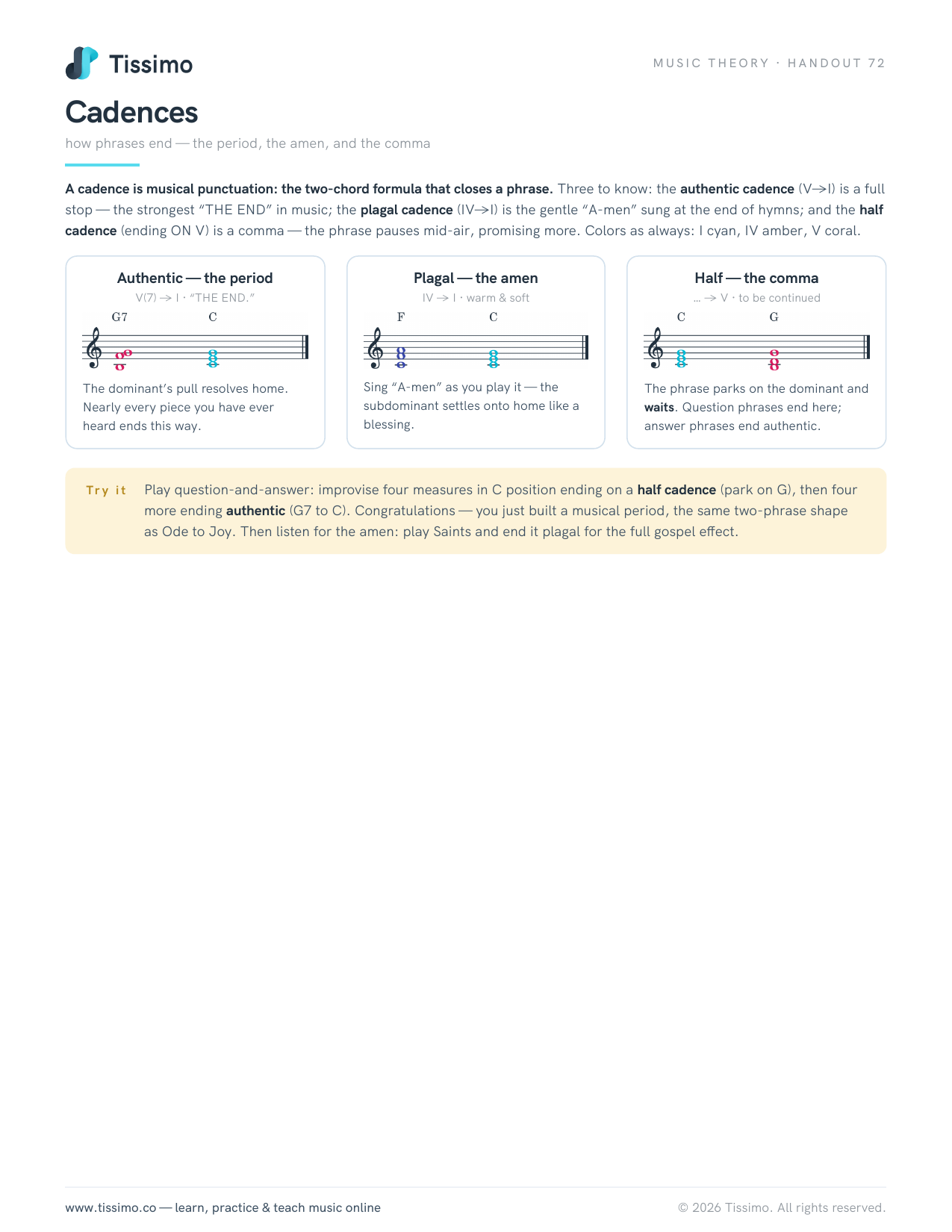 Cadenceshow phrases end — the period, the amen, and the comma
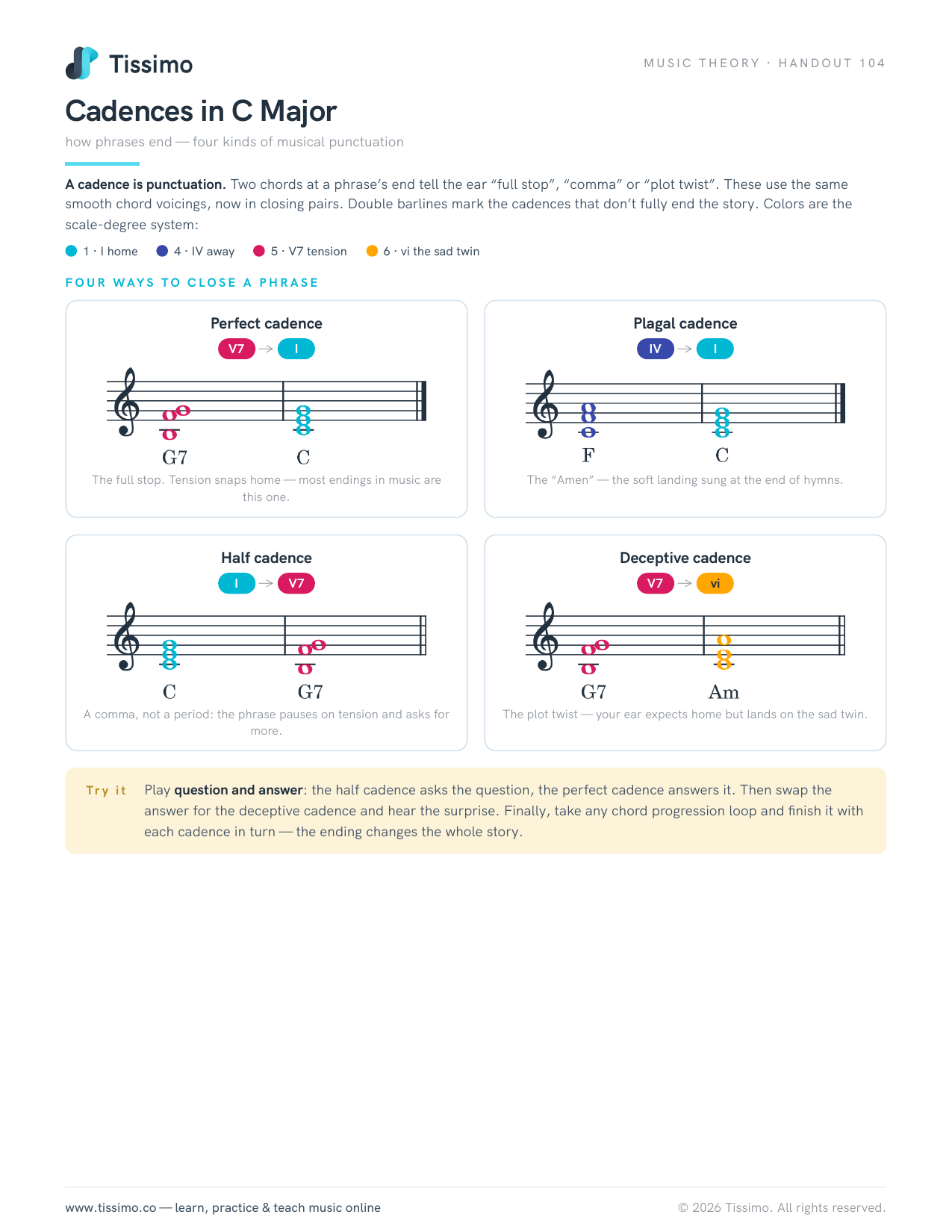 Cadences in Every KeyHow phrases end — the four kinds of musical punctuation, written out in all 24 keys.
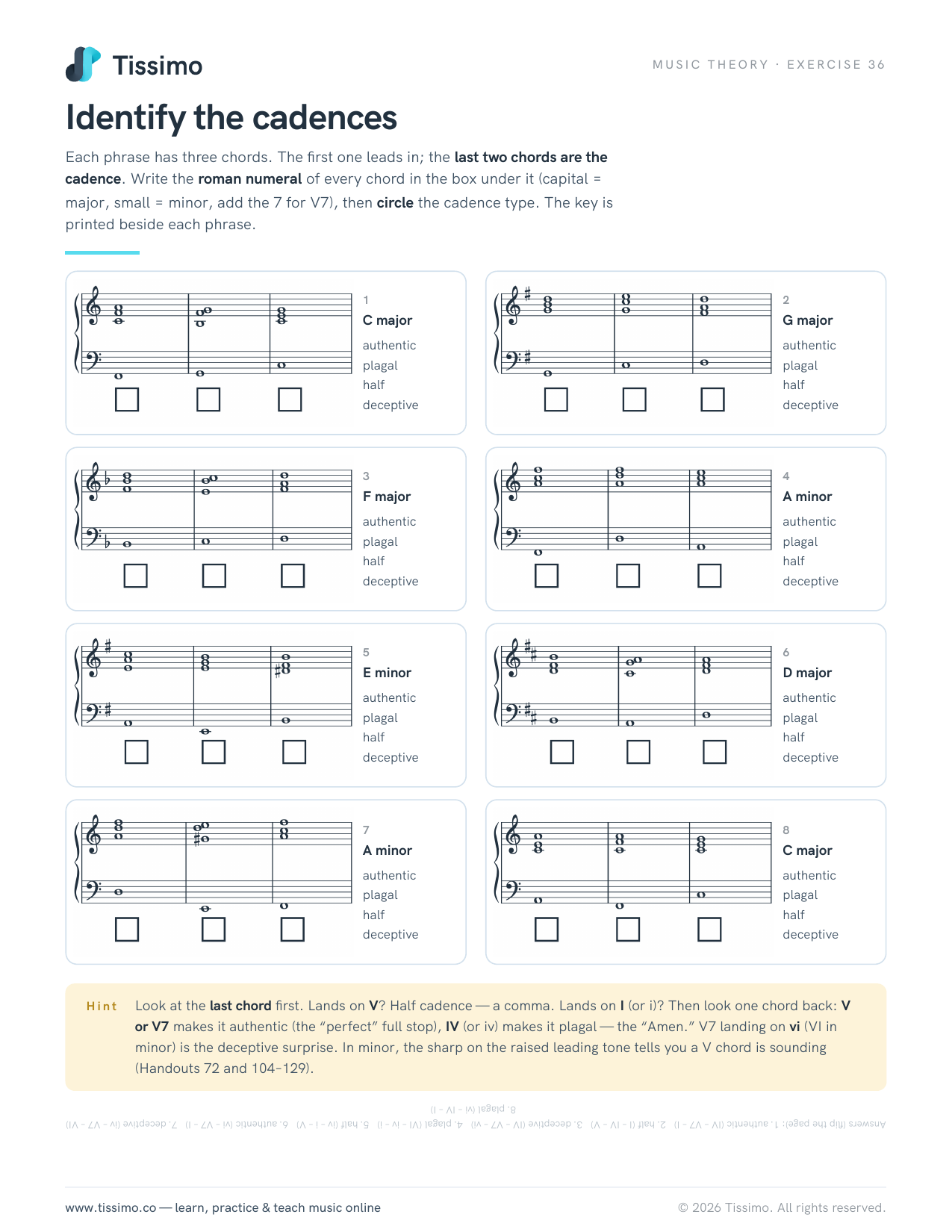 Identify the cadencesEach phrase has three chords. The first one leads in; the last two chords are the cadence. Write the roman numeral of every chord in the box under it (capital = major, small = minor, add the 7 for V7), then circle the cadence type. The key is printed beside each phrase.
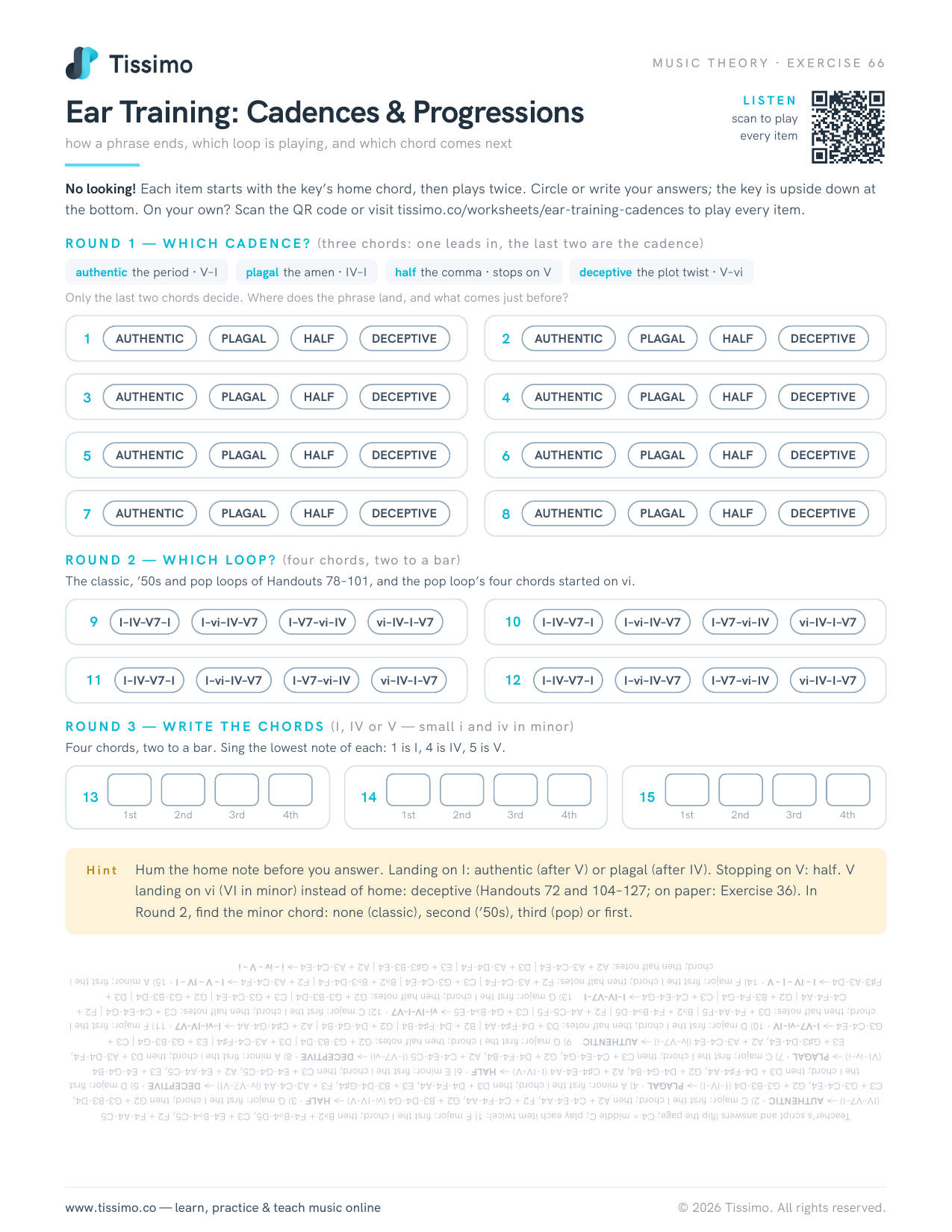 Ear Training: Cadences & Progressionshow a phrase ends, which loop is playing, and which chord comes next
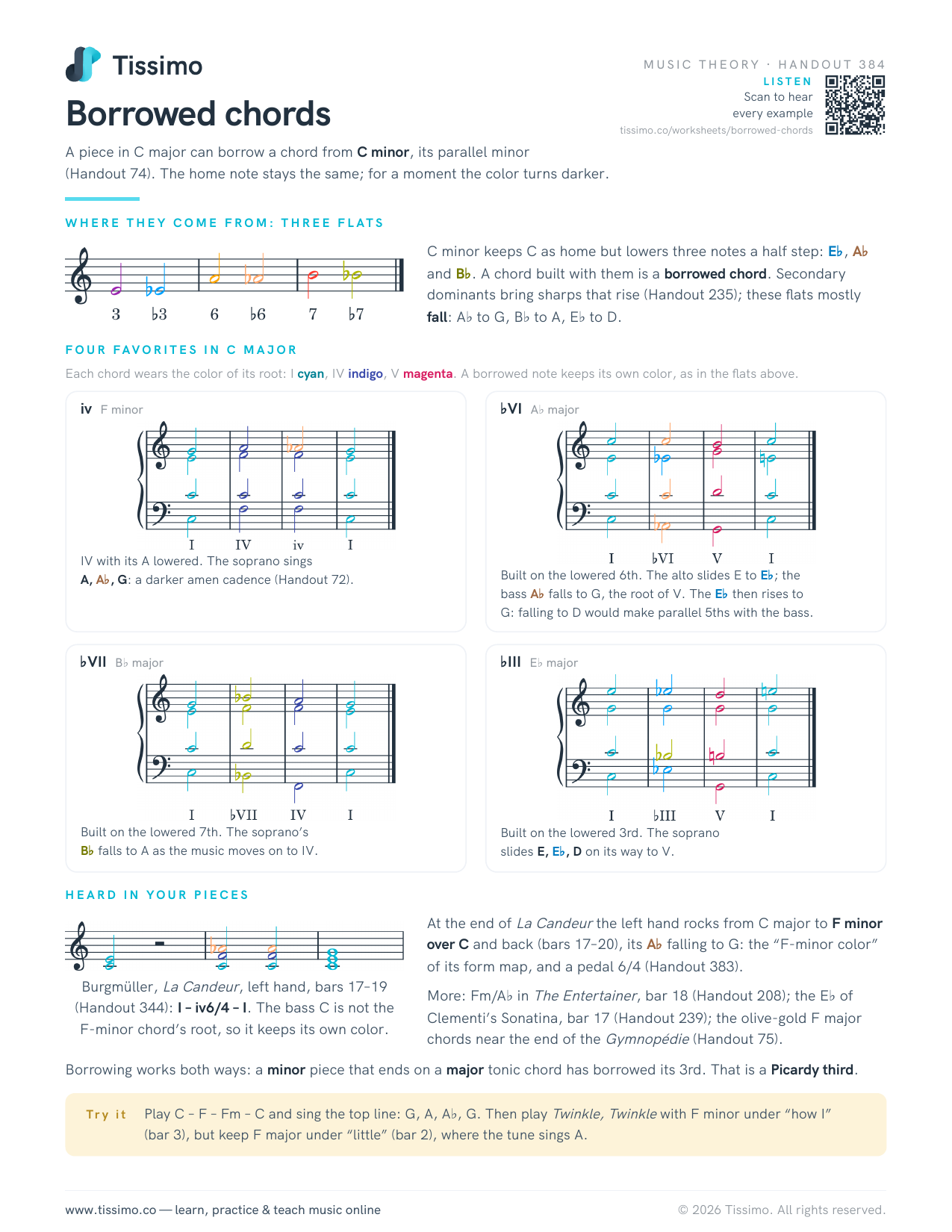 Borrowed chordsA piece in C major can borrow a chord from C minor, its parallel minor (Handout 74). The home note stays the same; for a moment the color turns darker.