Technique & Performance
Playing by Ear
Playing by ear means playing music you have heard, or imagine, without reading it from notation, by working out the notes and chords with your listening skills.
Some musicians hear a song once or twice and can pick out the melody, find the chords and play along. That is playing by ear. It is not a mysterious gift but a set of listening habits that improve with practice, and it grows naturally out of ear training. Many traditions, from folk music to blues and gospel, have been passed on largely by ear.
Start with the melody
- Sing it first. If you can sing a tune, you can learn to play it. If you can't sing it yet, listen more.
- Find the first note. Try notes on your instrument until one matches the first note you sing.
- Follow the shape. Does the next note go up or down? By a step or a leap? Try the nearest notes first.
- Work in short pieces. A few notes at a time, then join them. Loop a short section of the recording if you need to hear it again.
Then find the home note and the chords
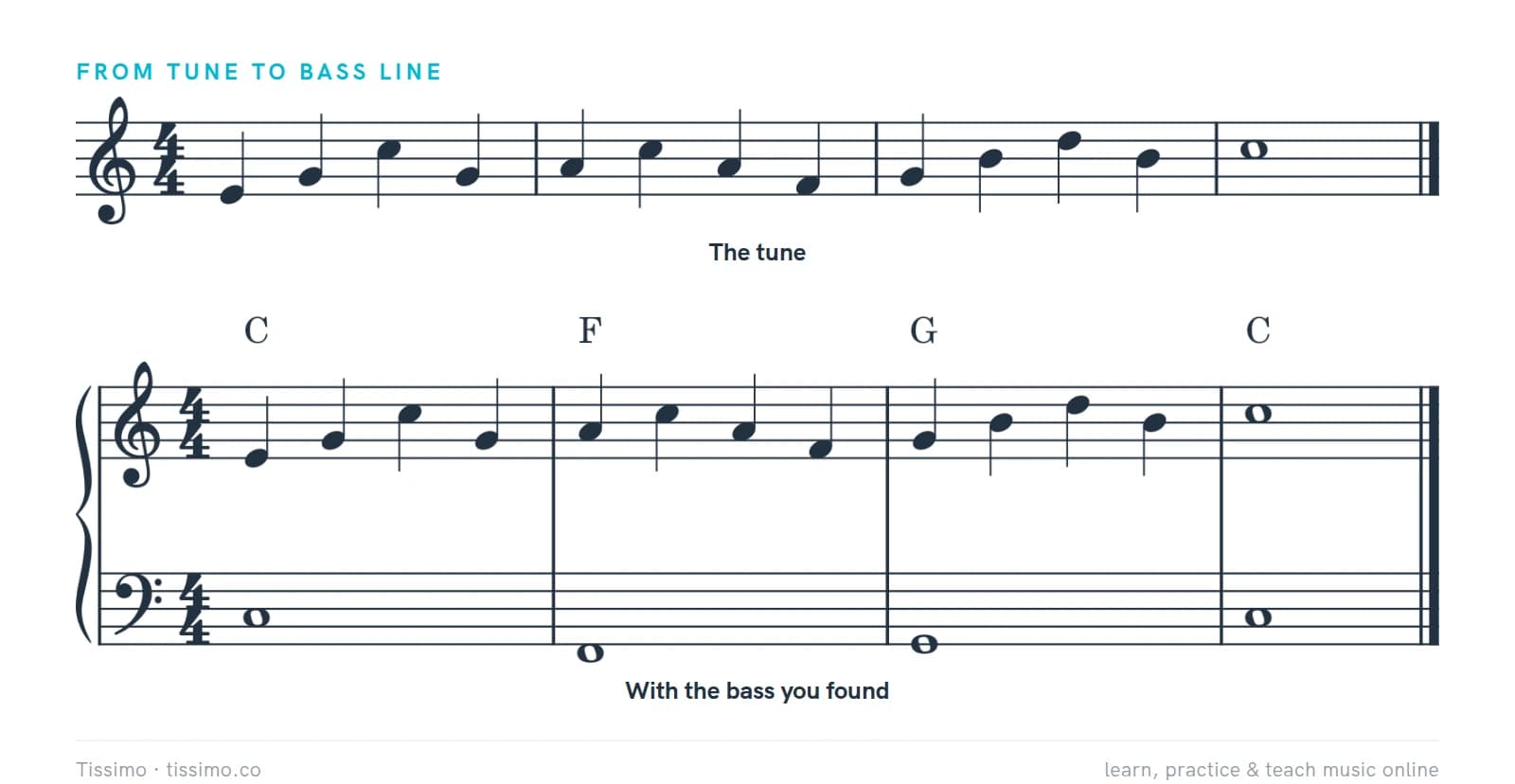
Most songs settle on a home note, the tonic: it sounds finished, like the end of a sentence. The tonic is a starting point, but you also need to hear the mode or chord quality: C major and C minor share the same tonic. With that context, the chords become much easier to work out. In a major key, many folk and pop songs rely mainly on the three primary chords, I, IV and V (in C major: C, F and G).
Listen to the lowest notes, the bass. When the bass moves, the chord usually changes. Try I, IV and V under each bar and keep the one that fits. Melody notes on strong beats are often members of the chord, as in the example.
Practice ideas for this week
- Pick out a simple tune you know well, such as a children's song, starting on C. Then play it again starting on G, which trains transposition.
- Play just the bass note of each chord along with a recording.
- Learn to hear the difference between I, IV and V; Ear Training: Cadences & Progressions helps.
- Play a short phrase and improvise an answer to it, a game of call and response.
Ear and eye together
Reading music and playing by ear support each other. Reading gives you the exact notes of written music; your ear lets you learn music that was never written down, catch your own mistakes and recover when you slip. If you want guidance on building both, a teacher can help in lessons.
Common questions
Is playing by ear a talent or a skill?
Mostly a skill. Some people pick it up faster, but the habits behind it, singing the tune, finding the home note and hearing the chord changes, improve with regular practice.
Should I learn to read music or play by ear?
Both, if you can. Reading gives you access to written music; your ear lets you learn songs that were never written down. Each makes the other easier.
Practice it: free worksheets
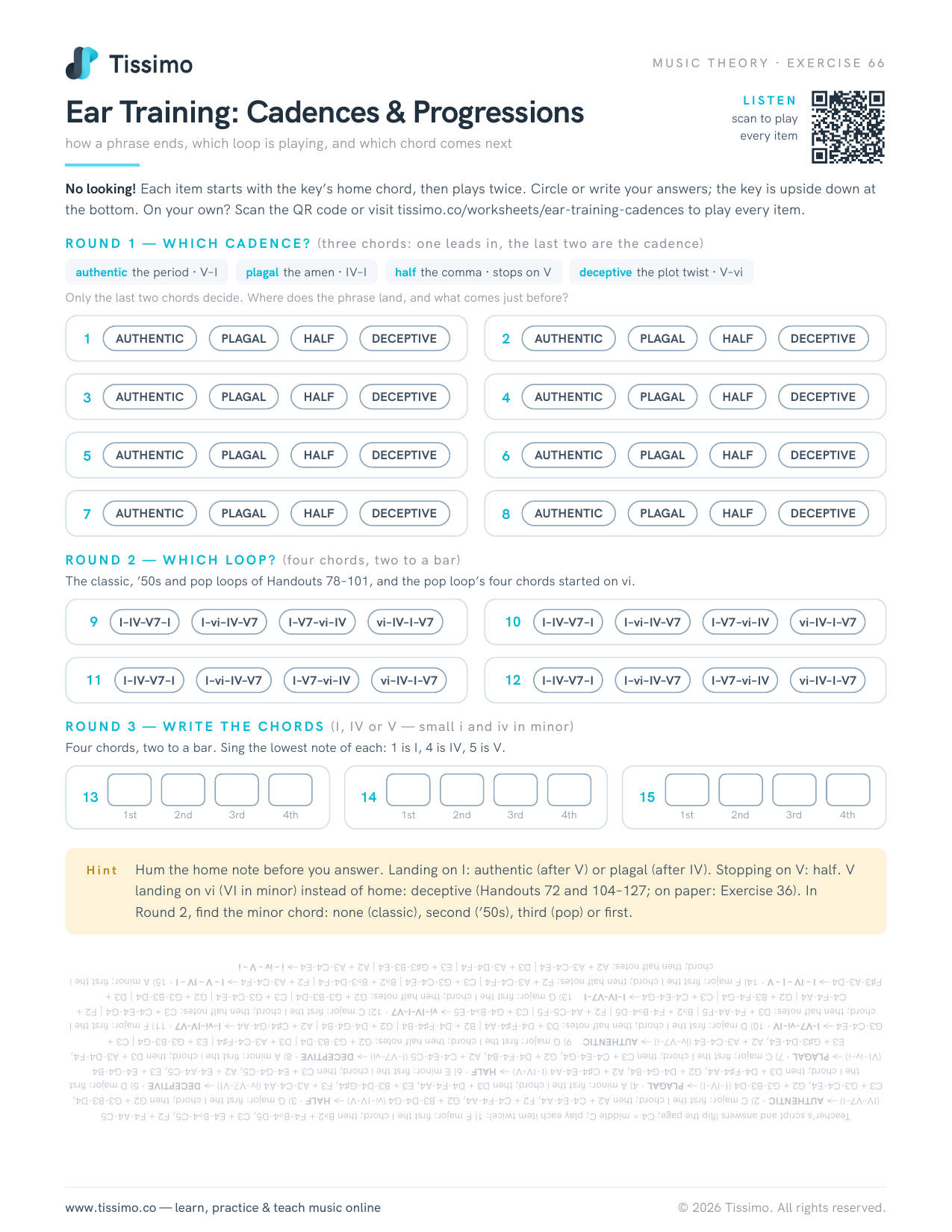 Ear Training: Cadences & Progressionshow a phrase ends, which loop is playing, and which chord comes next
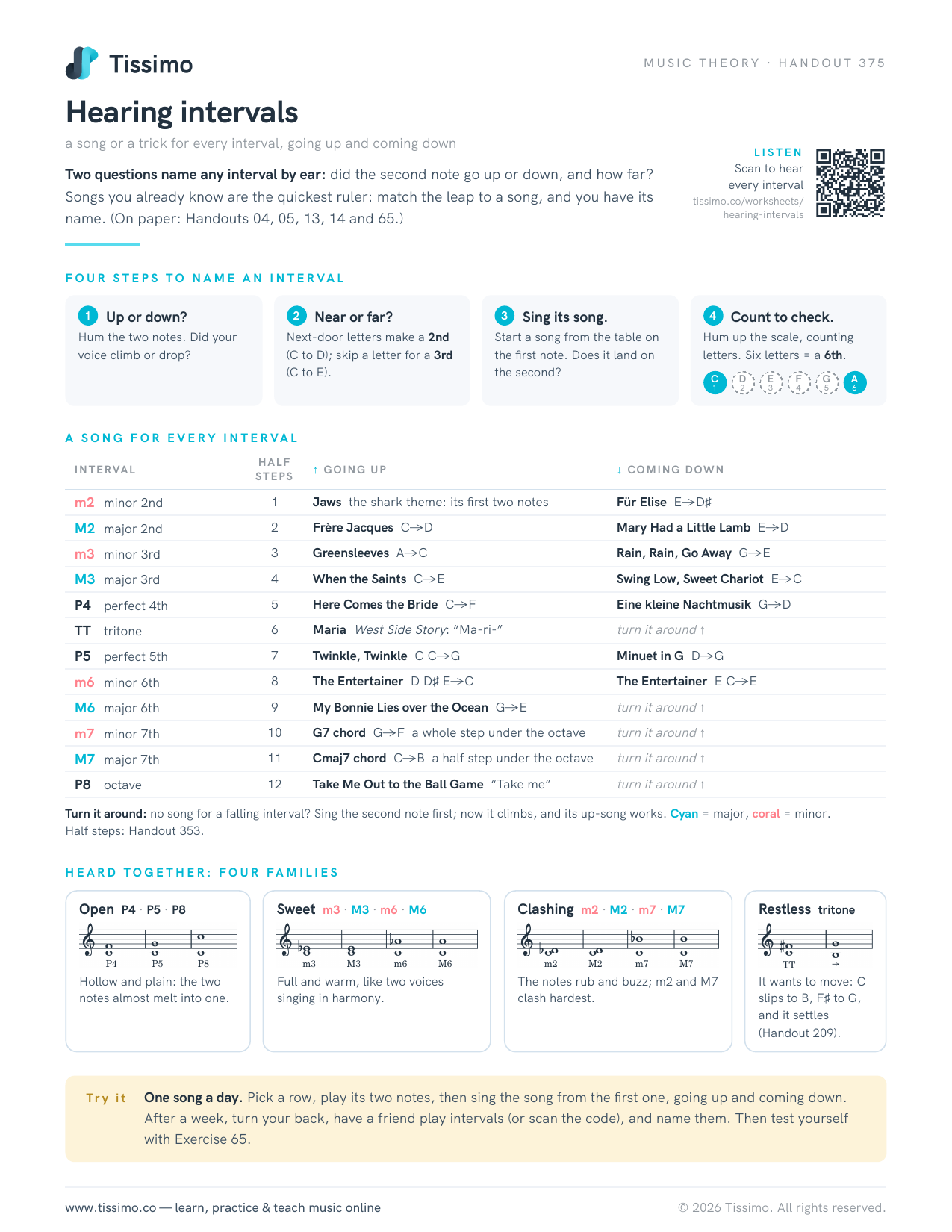 Hearing intervalsa song or a trick for every interval, going up and coming down
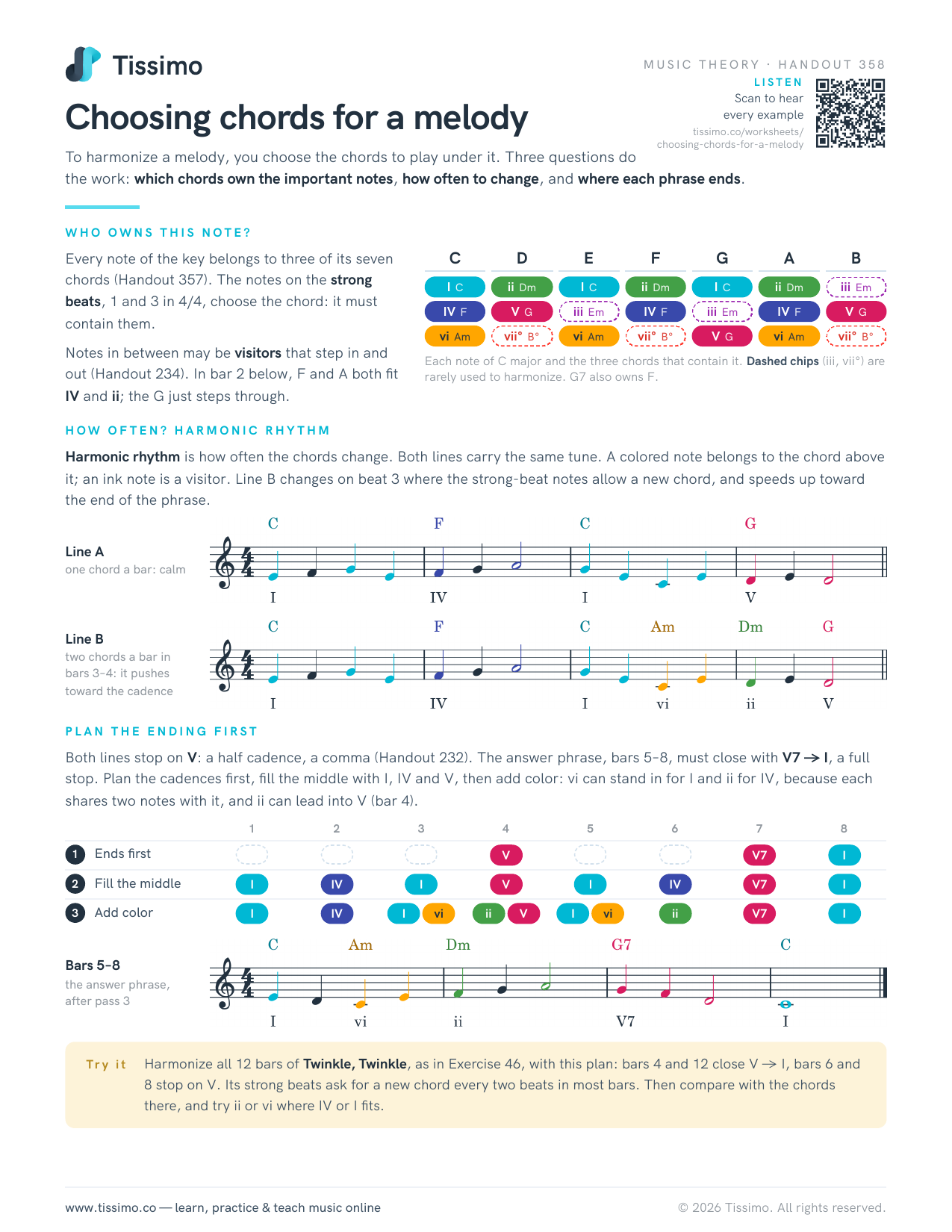 Choosing chords for a melodyTo harmonize a melody, you choose the chords to play under it. Three questions do the work: which chords own the important notes, how often to change, and where each phrase ends.
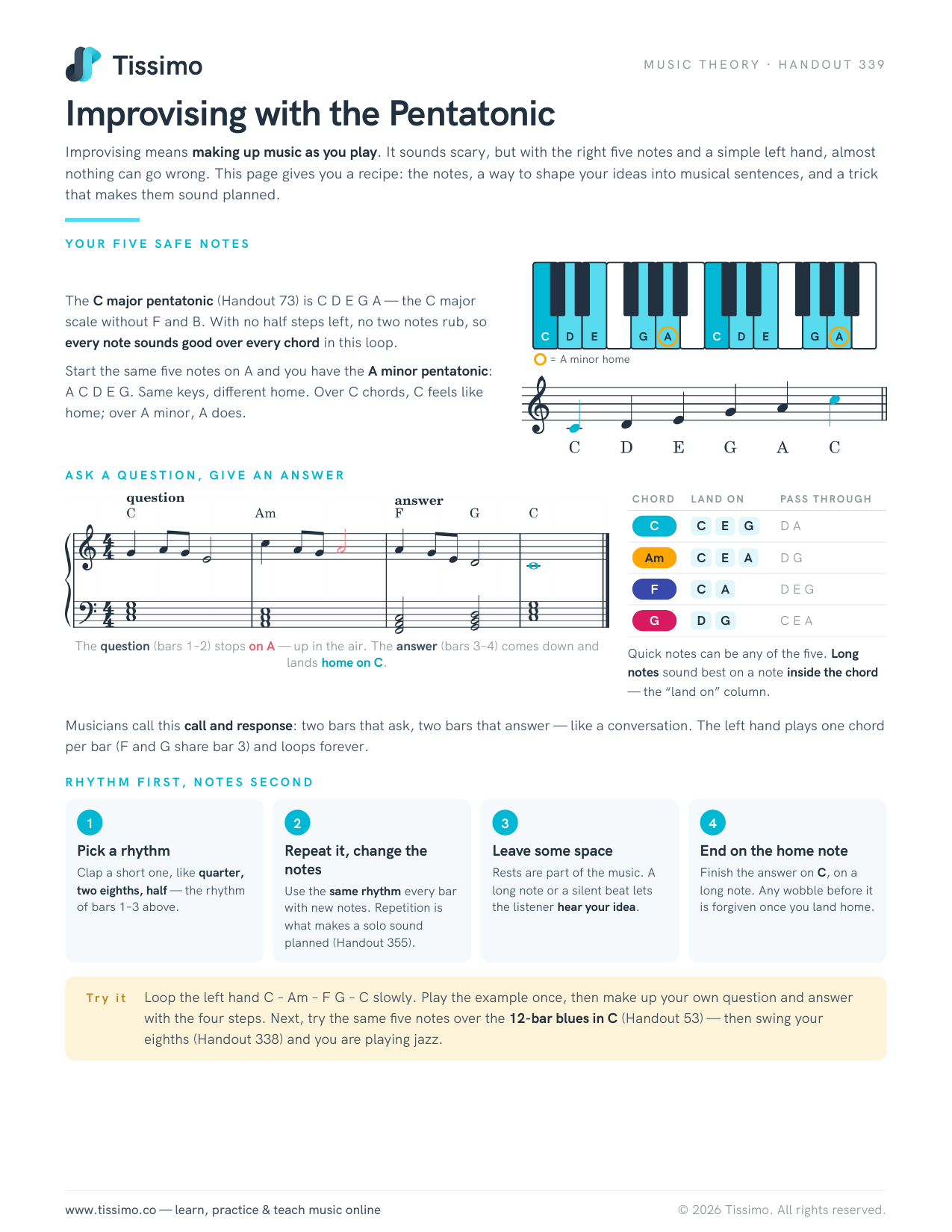 Improvising with the PentatonicImprovising means making up music as you play. It sounds scary, but with the right five notes and a simple left hand, almost nothing can go wrong. This page gives you a recipe: the notes, a way to shape your ideas into musical sentences, and a trick that makes them sound planned.
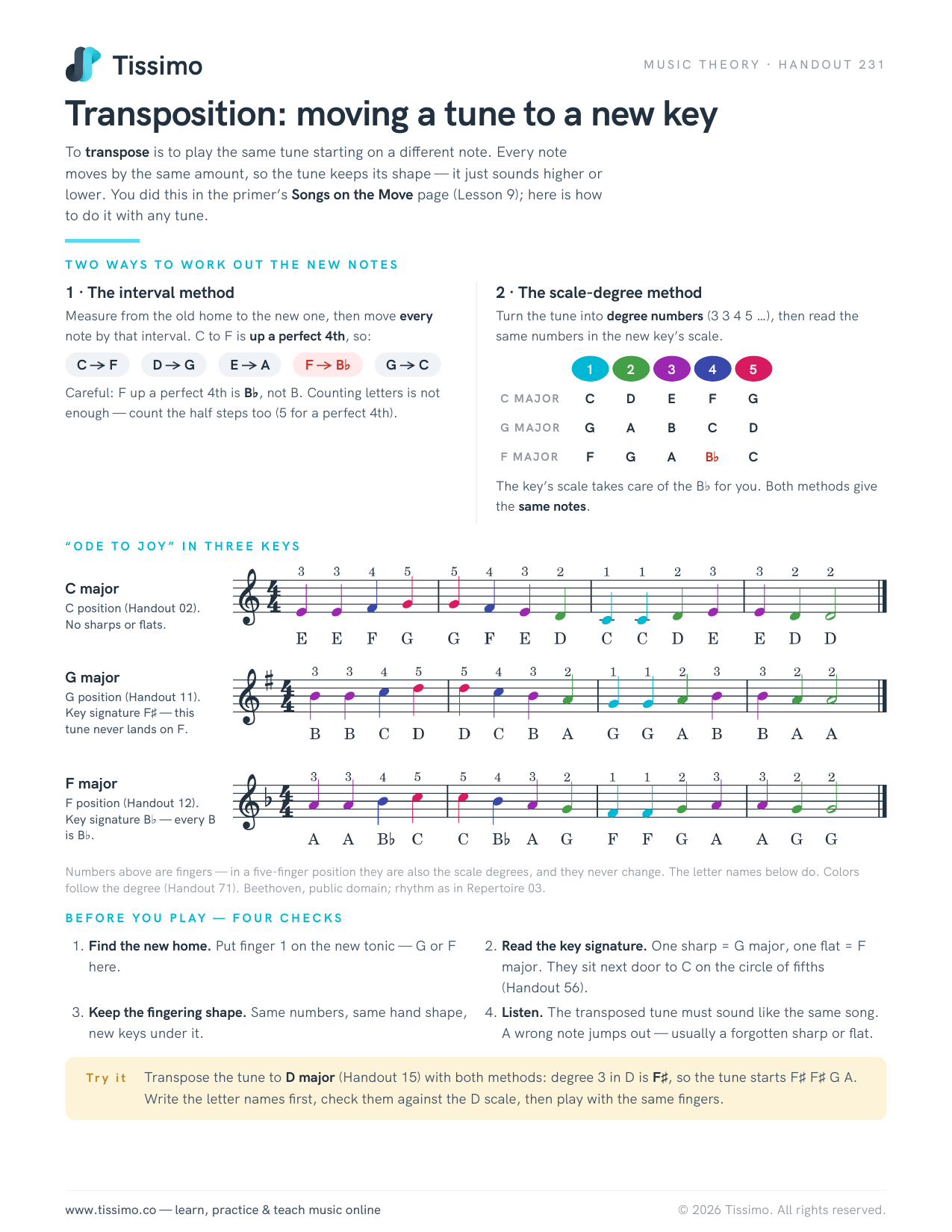 Transposition: moving a tune to a new keyTo transpose is to play the same tune starting on a different note. Every note moves by the same amount, so the tune keeps its shape — it just sounds higher or lower. Here is how to do it with any tune.