Technique & Performance
Relative Pitch
Relative pitch is the ability to identify or sing a note by its relationship to another note, such as hearing that two notes are a fifth apart, or naming notes once you know a reference pitch.
With relative pitch you hear music as distances and relationships. Given a starting note, you can tell that the next one is a major third higher, sing a melody from any starting pitch, or recognize that a chord is the dominant of the key. It is the kind of hearing almost every trained musician relies on daily, and it can be learned.
Relative pitch and perfect pitch
Perfect pitch (absolute pitch) names a note with no reference at all. Relative pitch needs a reference, a starting note or a key, and works out everything else from there. For most musical work it is the more useful of the two: a melody played in a different key still sounds like the same melody, which is how most listeners experience music anyway. Many fine performers, arrangers and composers work mainly with relative pitch.
What it lets you do
- Sing or play a tune back in any key.
- Recognize intervals, chord qualities and progressions.
- Write down melodies (transcription) and play by ear.
- Hear whether you are in tune with other musicians (intonation).
- Sight-sing using solfège or scale-degree numbers.
How to develop it
- Think in scale degrees. Sing do–re–mi, or 1–2–3, in a key and notice how each degree feels against the tonic: the leading tone (7) leans up to 8, and 4 leans down to 3.
- Learn intervals a pair at a time. Start with two that sound very different, such as a perfect fifth and a major third. Add another only when you can tell them apart without guessing.
- Hear each interval three ways: going up, going down, and played together.
- Use reference songs if they help, but move toward hearing the interval's own color.
- Practice a few minutes every day. Tissimo's free ear trainer quizzes intervals and chords, and Hearing intervals gives a song or a trick for each interval.
Common questions
Can relative pitch be learned?
Yes. Unlike perfect pitch, it is a skill most people can develop at any age with regular practice, starting with singing and a few simple intervals.
Is relative pitch as good as perfect pitch?
For most musical tasks it is what musicians actually use. Perfect pitch names notes without a reference; relative pitch hears how notes relate, which is what makes melodies and harmonies recognizable in any key.
Practice it: free worksheets
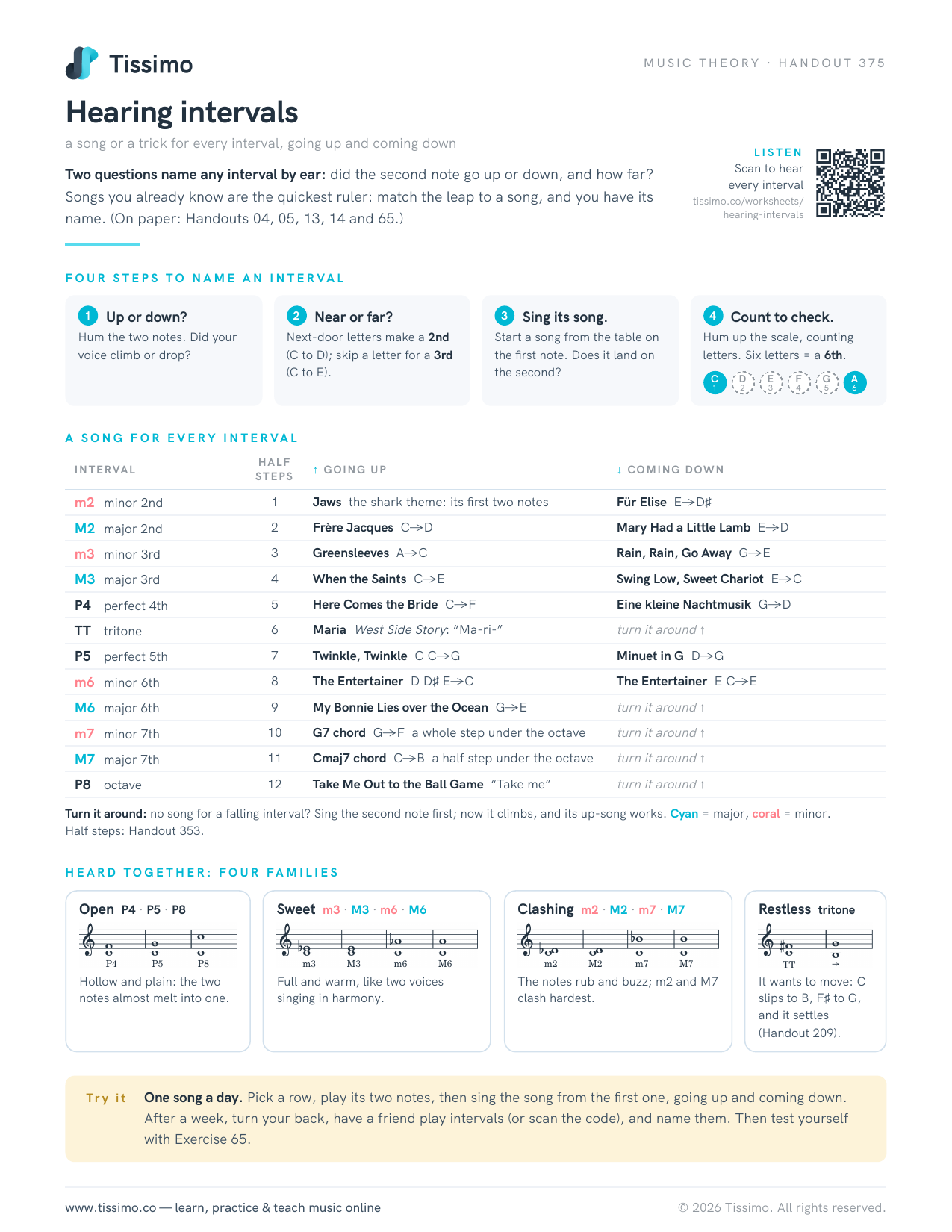 Hearing intervalsa song or a trick for every interval, going up and coming down
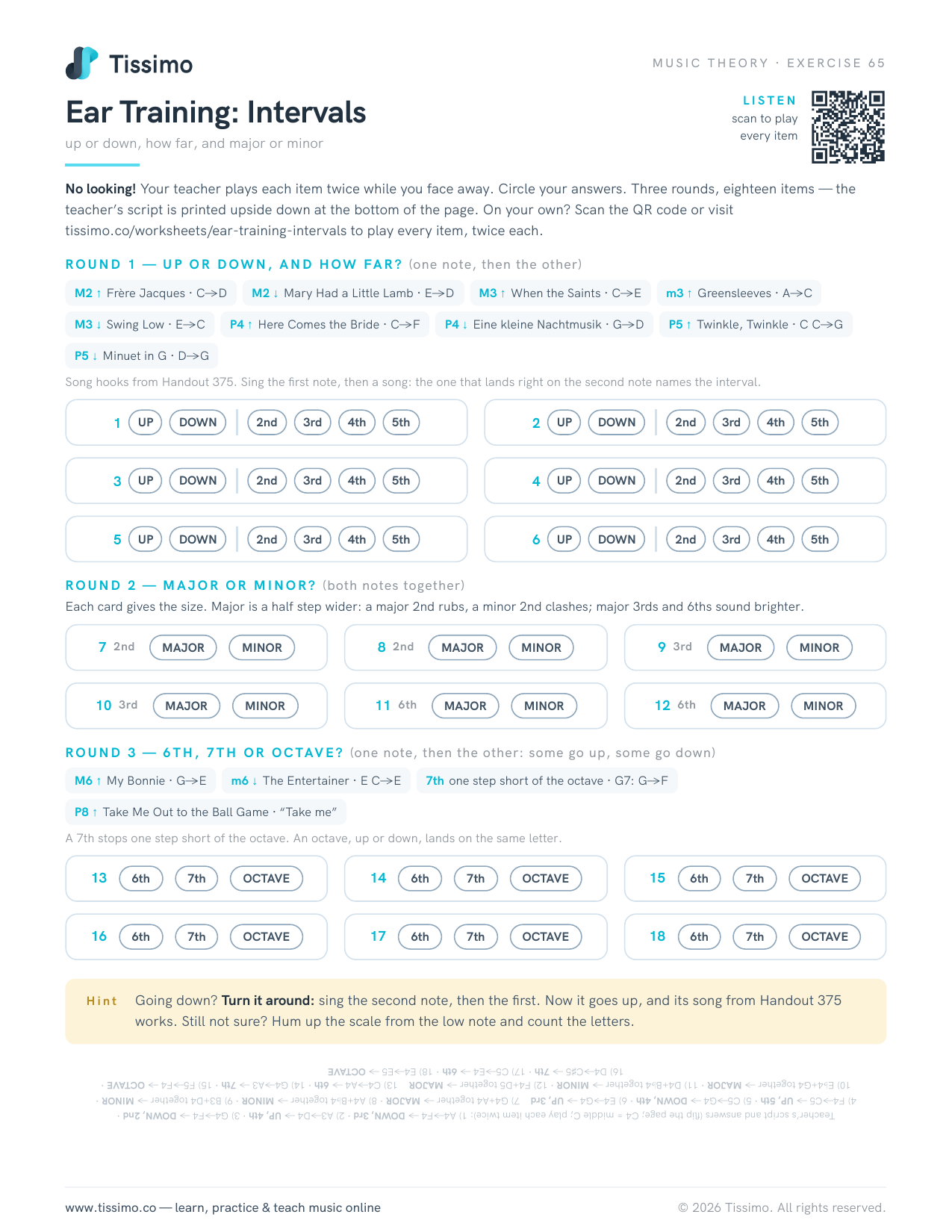 Ear Training: Intervalsup or down, how far, and major or minor
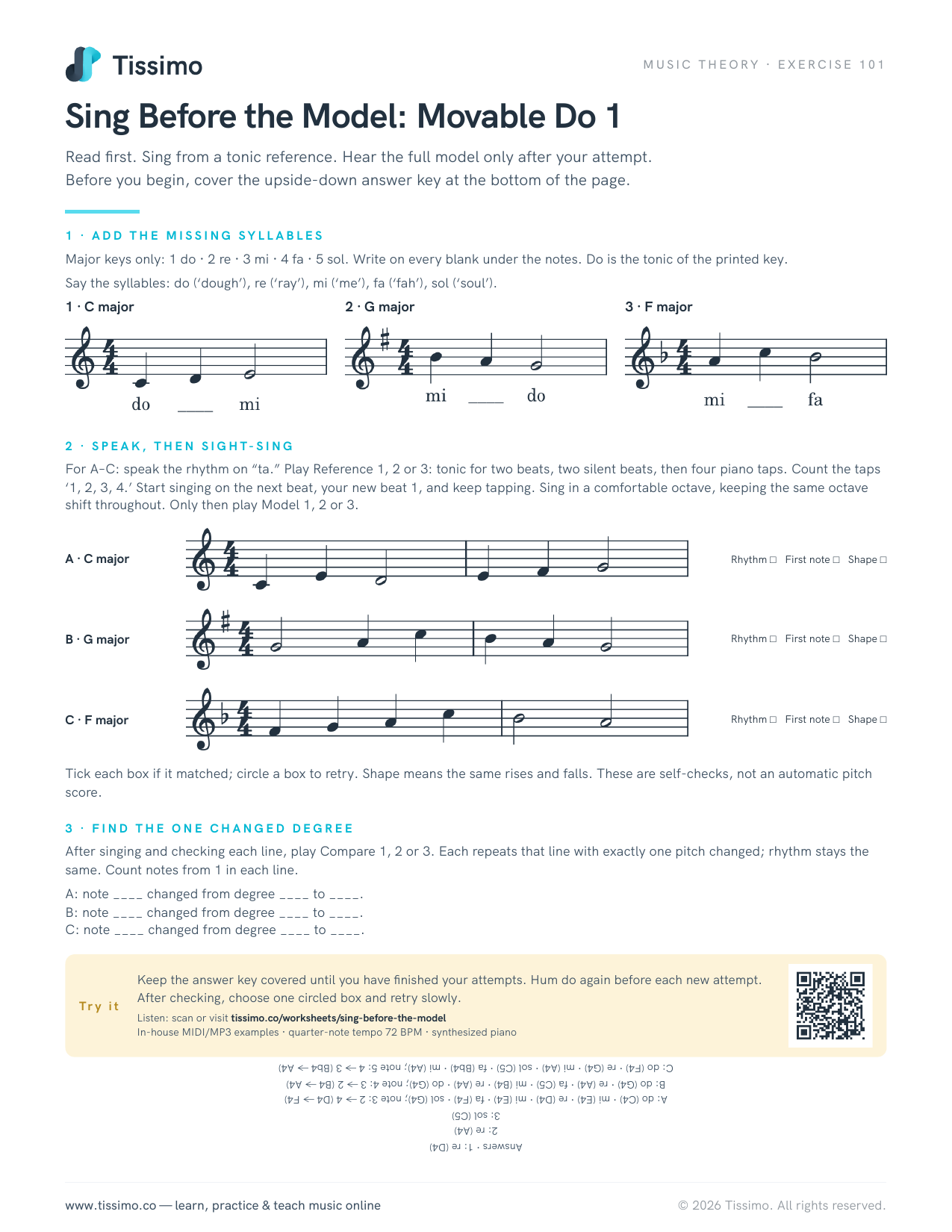 Sing Before the Model: Movable Do 1Read first. Sing from a tonic reference. Hear the full model only after your attempt. Before you begin, cover the upside-down answer key at the bottom of the page.
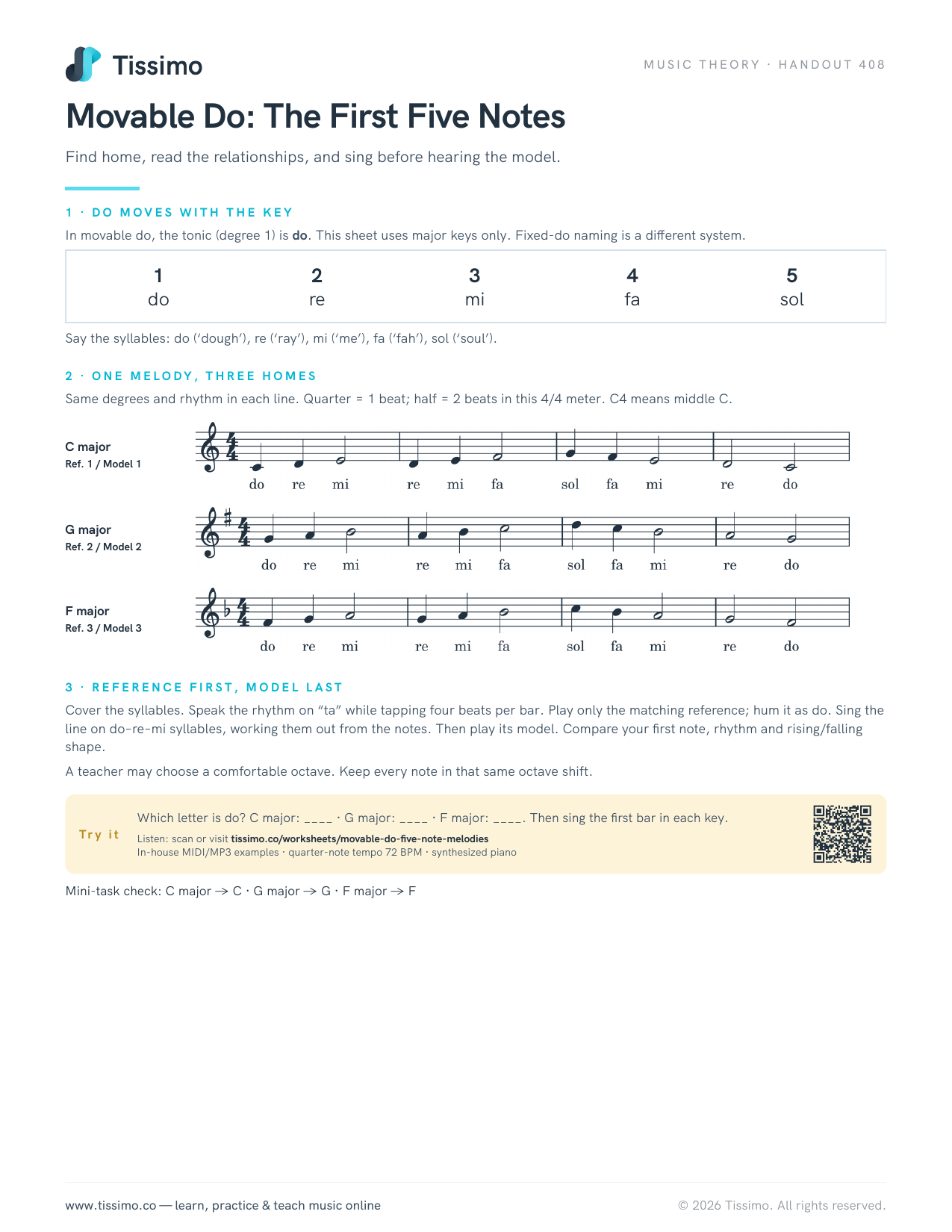 Movable Do: The First Five NotesFind home, read the relationships, and sing before hearing the model.