Technique & Performance
Perfect Pitch (Absolute Pitch)
Perfect pitch, or absolute pitch, is the rare ability to name or sing a musical note without hearing any reference note first, for example naming a note played on a piano without seeing the keys.
A person with perfect pitch, more precisely called absolute pitch, hears a note and knows its name, much as most people see a color and know it is red. Ask them to sing an A and they can, with no tuning fork or piano to start from. The ability is uncommon, even among professional musicians.
How it differs from relative pitch
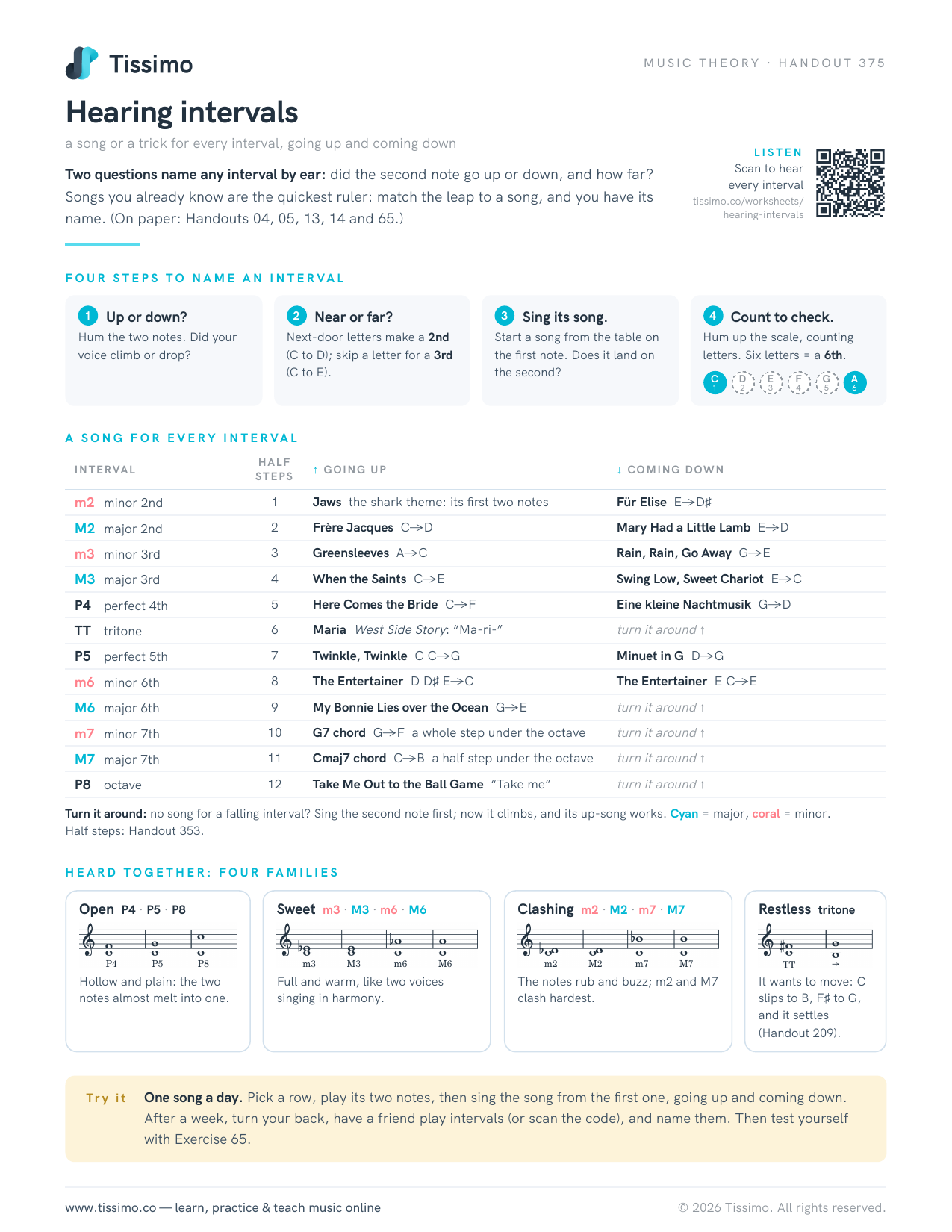
Most musicians use relative pitch: they need one reference note and then work out the rest from the distances between notes. Absolute pitch skips the reference. The two abilities are separate, and someone with absolute pitch still needs relative pitch to make sense of intervals, chords and melodies in context.
Where it comes from
Absolute pitch has been studied for a long time, and its causes are still debated. It seems to be more common in people who began musical training in early childhood, which suggests an early window for learning it, and inherited factors may also play a part. Adults can improve their memory for particular pitches with practice, but reliably acquiring full absolute pitch as an adult appears to be rare.
Is it an advantage?
It can be useful: people with absolute pitch can often write down music quickly and notice at once when a piece is played in a different key. But it is not required for any kind of musical career, and it has drawbacks. Some people with absolute pitch find it uncomfortable when music is transposed or played at a different tuning standard, because what they hear clashes with what they expect. Ensembles also adjust their tuning together as they play, which depends on relative listening.
What to practice instead
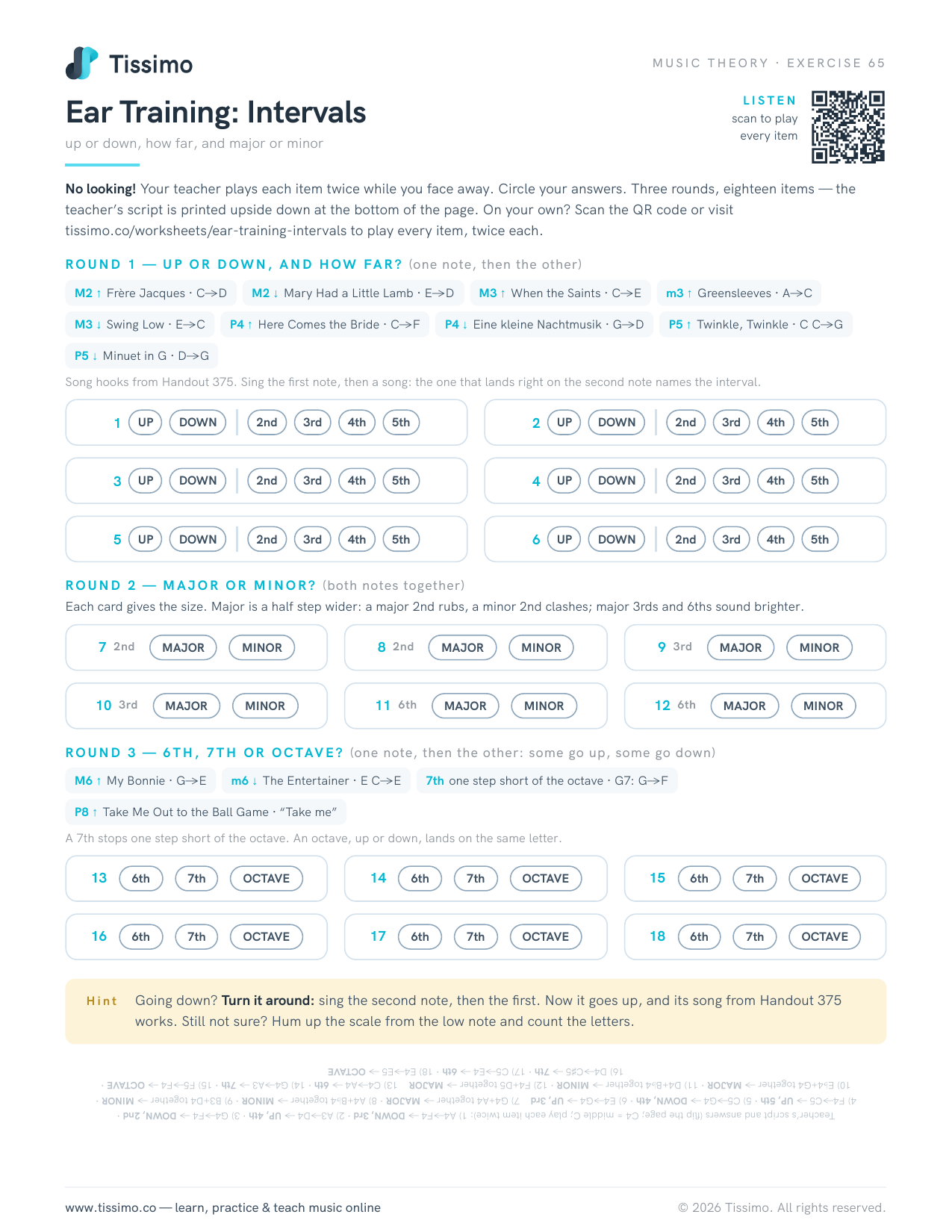
If you don't have perfect pitch, you are in the majority and you lose nothing essential. Spend your time on ear training: intervals, chord qualities, singing in tune and melodic dictation. Many musicians also build a useful pitch memory for a few notes, such as the A they tune to every day or the first note of a piece they know well, by singing it from memory and checking it against a keyboard or Tissimo's virtual piano.
Common questions
How rare is perfect pitch?
Rare. It is uncommon in the general population and somewhat more common among musicians, especially those who started lessons very young. Published estimates vary widely, so treat any single figure with care.
Can you learn perfect pitch as an adult?
You can improve your memory for particular pitches, but developing full absolute pitch as an adult appears to be rare. Relative pitch, which can be learned at any age, matters more for most musicians.
Do you need perfect pitch to be a good musician?
No. Most professional musicians do not have it, and they rely on well-trained relative pitch instead.