Sound & Acoustics
A440
A440 is the standard tuning pitch: the A above middle C (A4) set to 440 hertz. Orchestras, bands, electronic tuners and digital instruments tune every other note from it.
A440 is the agreed reference for tuning: the A above middle C, called A4, vibrates at exactly 440 hertz. Every other note is tuned from it. In equal temperament, middle C then lands at about 261.63 Hz and the lowest A on the piano at 27.5 Hz.
Why a standard is needed
Instruments can only play together if they agree on where the notes are. For most of musical history there was no single standard: pitch varied from city to city and from church organ to opera house, and drifted over the centuries, at times by more than a half step. As orchestras toured and instruments were mass-produced, a common reference became necessary. An international conference in London in 1939 recommended A = 440 Hz, and the International Organization for Standardization confirmed it as the standard ISO 16 in 1975.
A440 in practice
- An orchestra tunes to an A, traditionally given by the oboe. Many orchestras today tune slightly higher, to 442 or 443 Hz, for a brighter sound.
- Electronic tuners and tuning apps default to A = 440 Hz, and most let you change the reference.
- Ensembles playing Baroque music on period instruments often tune to A = 415 Hz, close to a half step below modern pitch. That is a modern convention: real Baroque pitch varied widely.
- A tuning fork stamped "A 440" gives the reference without electricity.
A note on "432 Hz"
You may come across claims that A = 432 Hz is more natural or healthier than A = 440 Hz. There is no acoustic or scientific basis for treating any reference pitch as special. A reference is simply an agreement, and music sounds in tune at any reference as long as everyone shares it.
A440 and concert pitch
A440 fixes how high the notes are. Concert pitch is a different idea: the sounding pitch, as opposed to the written pitch of a transposing instrument. A clarinetist and a pianist both tune to A440, but the clarinetist reads a different written note to sound that A.
Tune against a fixed 440 Hz reference in Tuning Beats: Slower, Faster or the Same?, and see how every other note follows from it in MIDI Notes, Octaves and Frequency.
Common questions
Why is A tuned to 440 Hz?
For agreement rather than any acoustic reason. Pitch standards varied widely for centuries; 440 Hz was recommended internationally in 1939 and adopted as the ISO standard in 1975, so instruments made and tuned anywhere can play together.
Do orchestras tune to 440 or 442?
Both are common. A440 is the official standard, but many orchestras tune to 442 or 443 Hz. The choice is a matter of tradition and of the brightness of sound an ensemble prefers.
Practice it: free worksheets
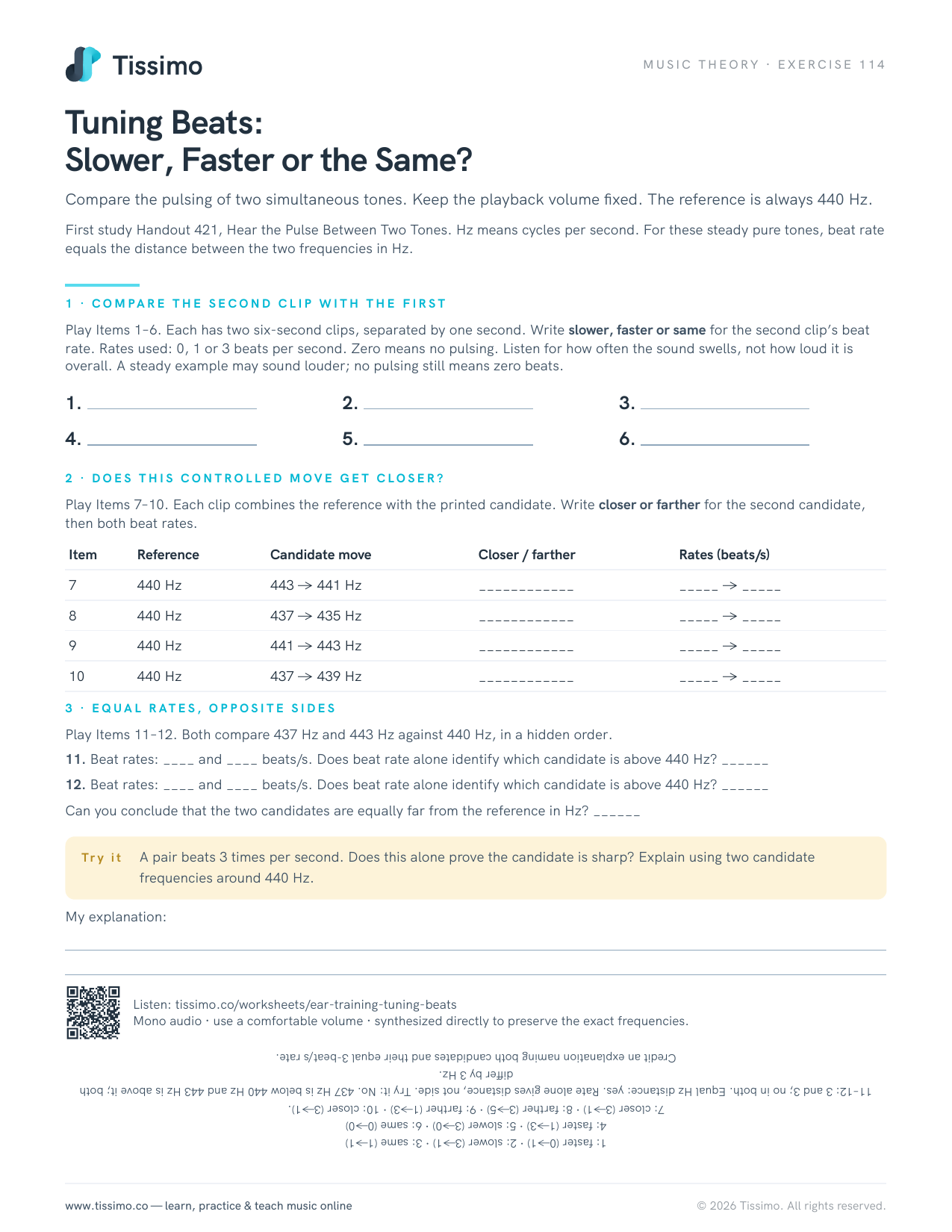 Tuning Beats: Slower, Faster or the Same?Compare the pulsing of two simultaneous tones. Keep the playback volume fixed. The reference is always 440 Hz.
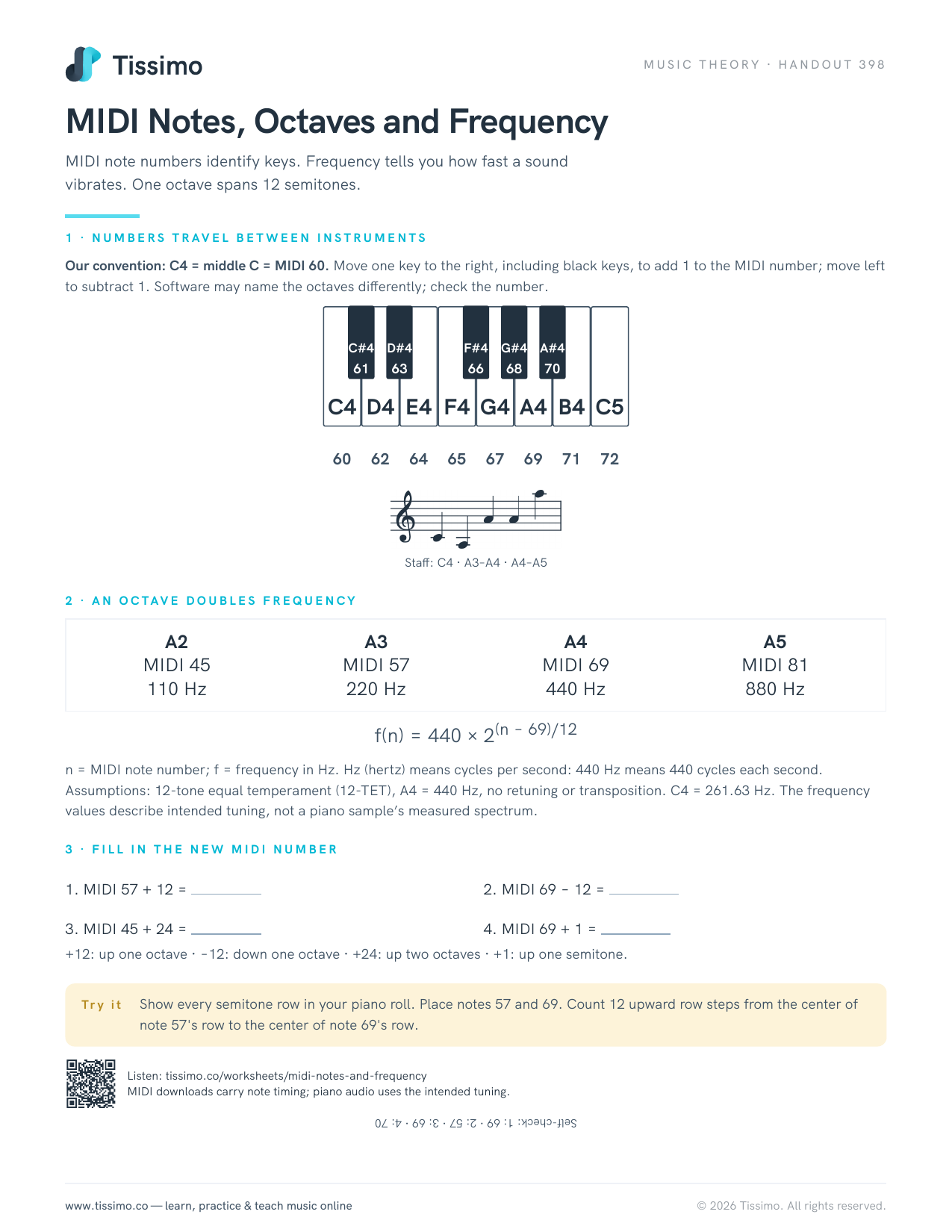 MIDI Notes, Octaves and FrequencyMIDI note numbers identify keys. Frequency tells you how fast a sound vibrates. One octave spans 12 semitones.
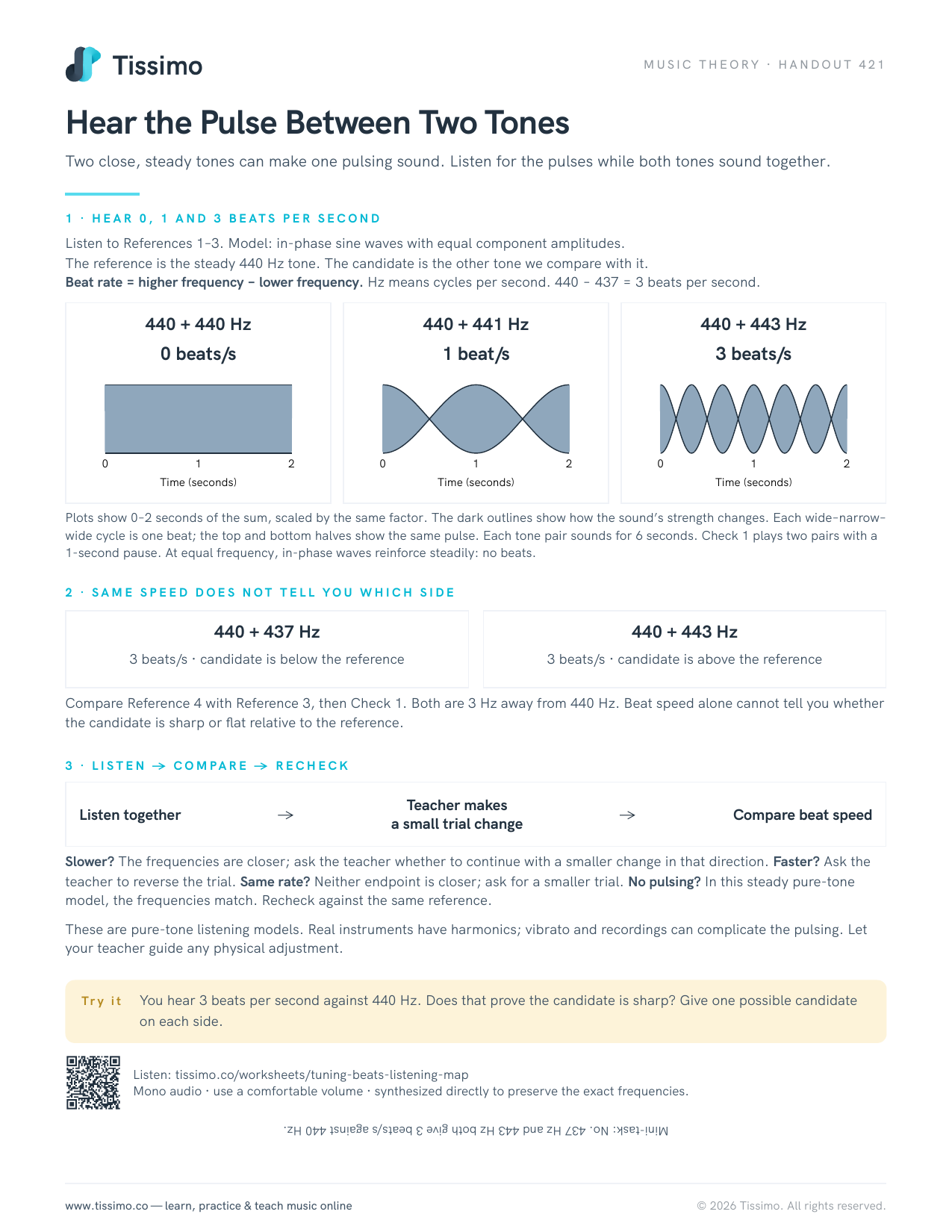 Hear the Pulse Between Two TonesTwo close, steady tones can make one pulsing sound. Listen for the pulses while both tones sound together.