Sound & Acoustics
Overtone
An overtone is any frequency that sounds above the fundamental of a note. Together the overtones shape the note's tone color. In a complete harmonic series, the first overtone is the 2nd harmonic.
Most musical tones contain several frequency components. The fundamental is the base frequency of a harmonic tone, even when its component is weak or absent. Components above it are overtones; together they help shape the tone's timbre, the difference between a clarinet and a cello on the same pitch. You usually hear these components as one combined tone rather than separate notes.
Overtones and harmonics count from different places
For an ideal harmonic tone, the overtones lie at whole-number multiples of the fundamental: the harmonic series. Many strings, winds and voices approximate this pattern, though real spectra can omit components or depart from exact multiples. The two words then point at the same frequencies, but they are numbered differently:
- Harmonics count the fundamental as number 1, so the 2nd harmonic is twice the fundamental's frequency.
- Overtones start counting above the fundamental, so the 1st overtone is that same frequency, twice the fundamental.
When the harmonic series is complete, overtone number = harmonic number − 1. This is not a rule for inharmonic spectra or for numbering only the components actually present. The figure shows both counts on a low C.
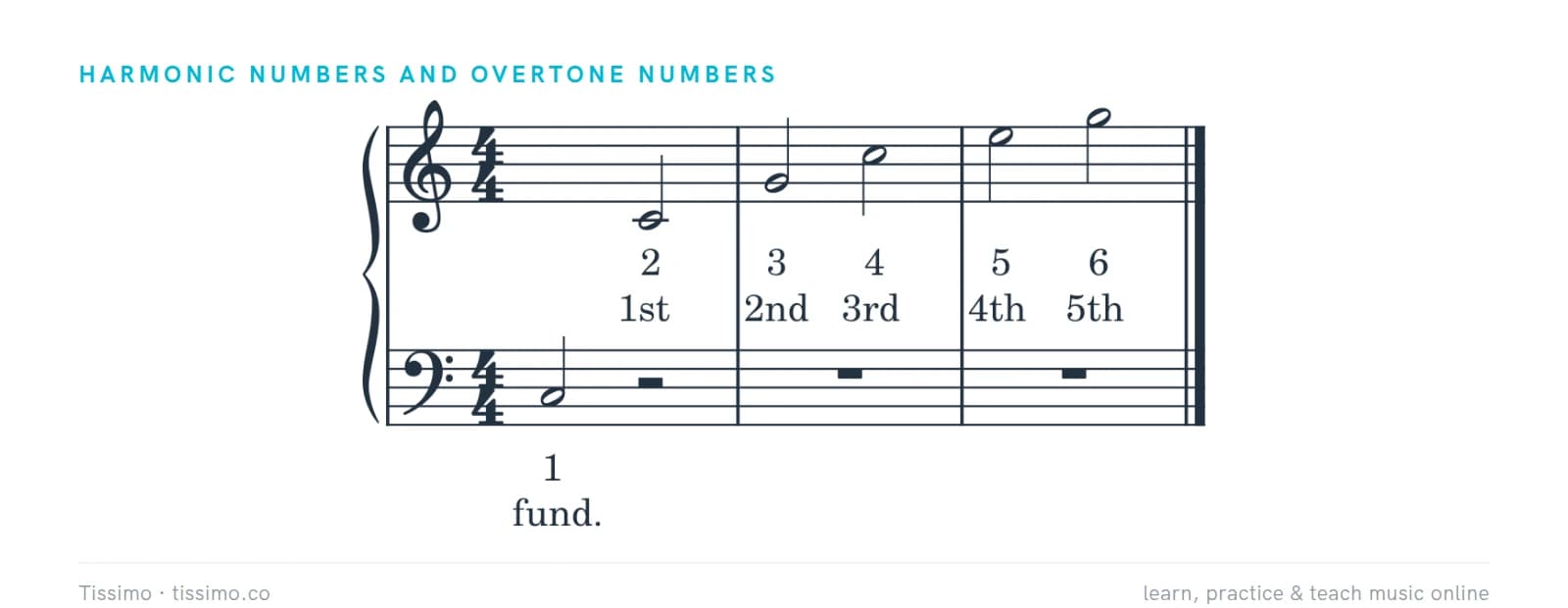
When you read about acoustics, check which system a text uses. "The third harmonic" and "the third overtone" are different notes: above C3 they are G4 and C5.
Partials and inharmonic overtones
A third word, partial, means any single frequency component of a sound, the fundamental included. Not every instrument has harmonic overtones. A bell, a cymbal or a drumhead vibrates in patterns whose frequencies are not whole-number multiples, so its overtones are inharmonic. That is why a cymbal has no clear pitch, and why a large bell can seem to sound several notes at once.
Even piano strings are slightly inharmonic. Steel strings are stiff, so their overtones run a little sharp of the exact multiples. Piano tuners compensate by tuning octaves very slightly wide, a practice called stretch tuning.
Hearing overtones
You can learn to hear them. On a piano, hold down the sustain pedal and strike a low note firmly; as it fades, listen for the octave and the twelfth above it. In overtone singing, practiced in Tuvan and Mongolian traditions among others, a singer shapes the mouth so precisely that single overtones ring out like a whistled melody above a held drone.
Hear how changing the overtone mix changes a sound in Synth Waveforms and Their Harmonics.
Common questions
Is the first overtone the same as the second harmonic?
In a complete harmonic series, yes: harmonic 1 is the fundamental and harmonic 2 is the first overtone. But an inharmonic overtone need not be a harmonic at all, and a spectrum may omit individual harmonics.
Do all instruments have overtones?
Most instrument tones have overtones. Many strings, winds and voices are approximately harmonic; bells and other percussion often have inharmonic partials, and some still have a clear pitch. An ideal sine tone has no overtones.
Practice it: free worksheets
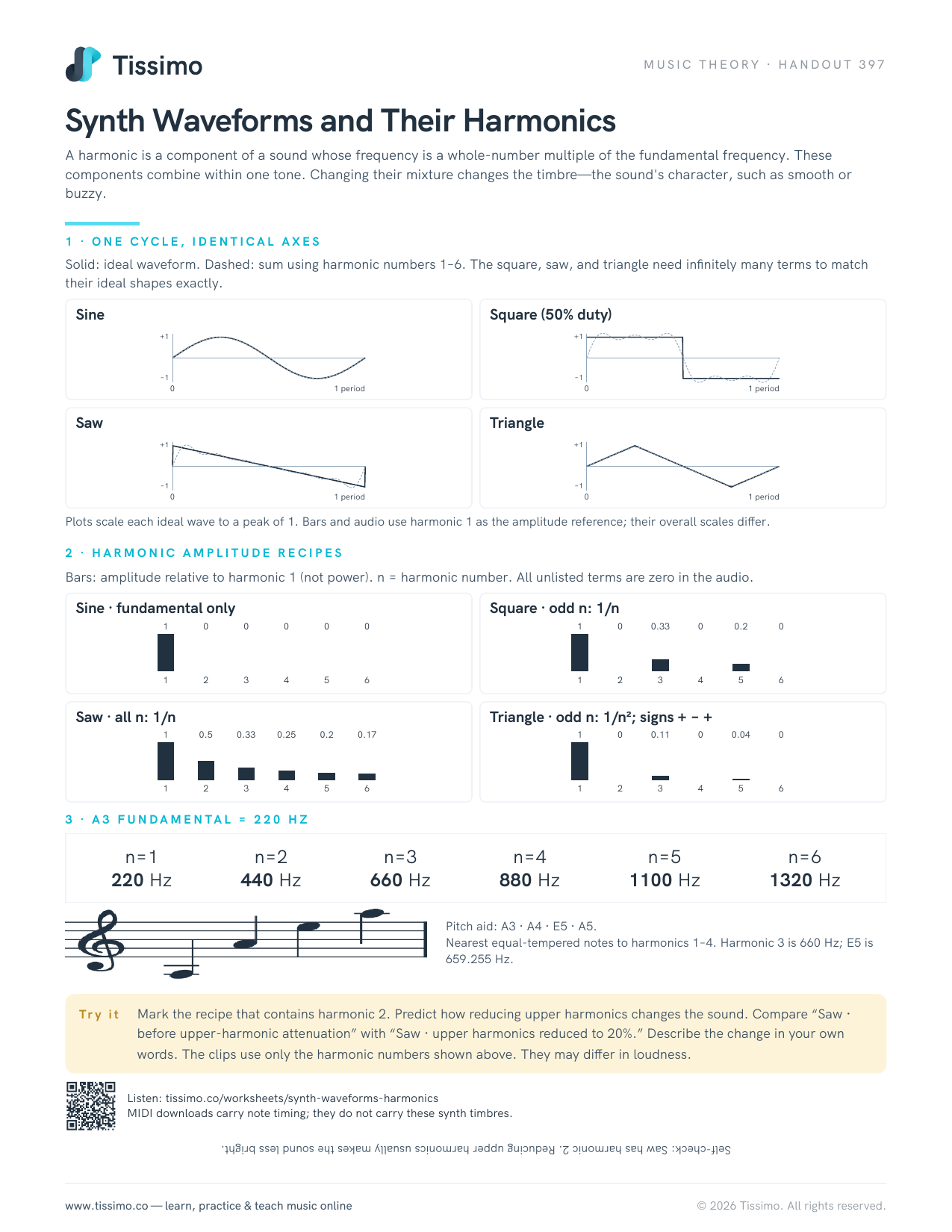 Synth Waveforms and Their HarmonicsA harmonic is a component of a sound whose frequency is a whole-number multiple of the fundamental frequency. These components combine within one tone. Changing their mixture changes the timbre—the sound's character, such as smooth or buzzy.
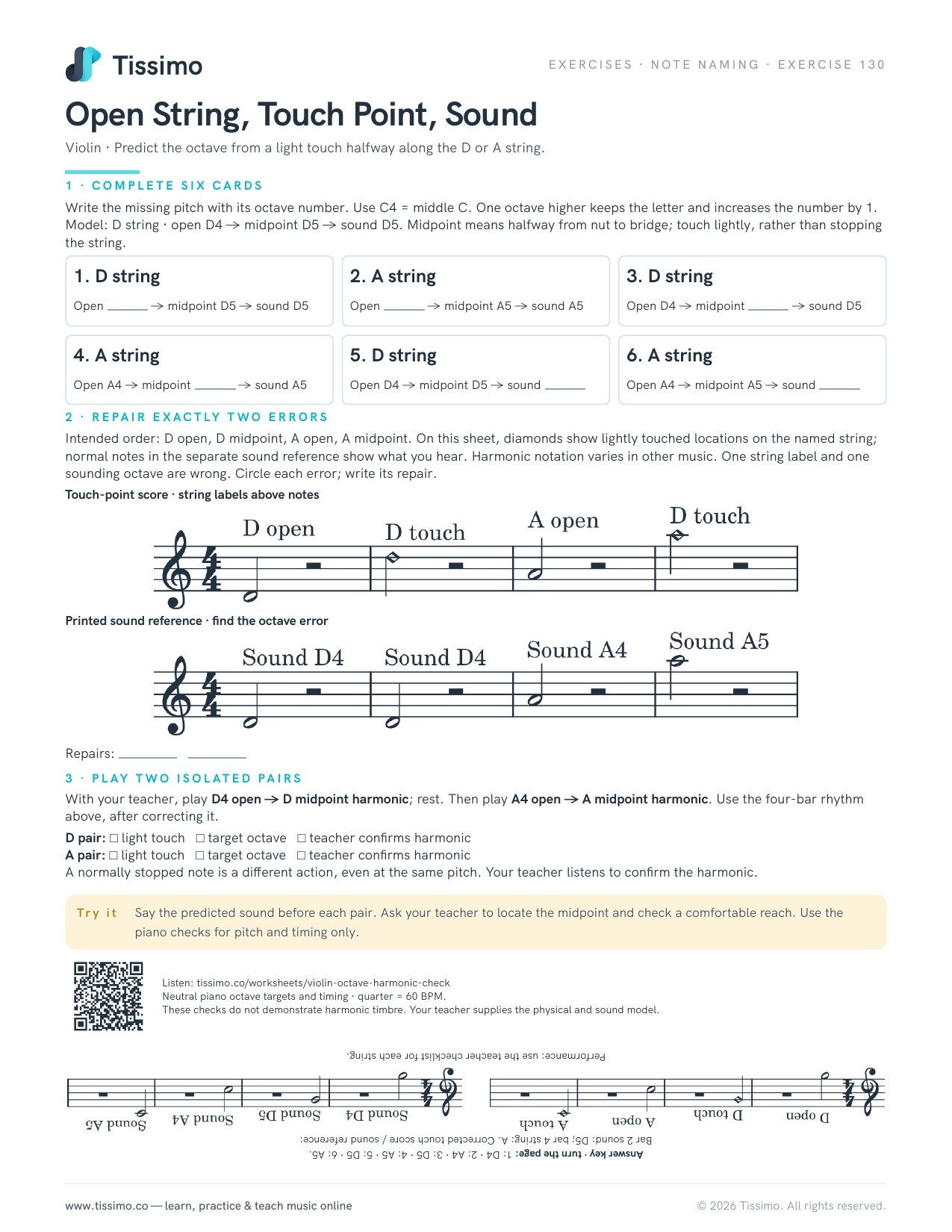 Open String, Touch Point, SoundViolin · Predict the octave from a light touch halfway along the D or A string.