Sound & Acoustics
Temperament
A temperament is a tuning system that adjusts some intervals slightly away from pure ratios so a keyboard or fretted instrument can play in many keys. Equal temperament is today's standard; meantone and well temperaments came before it.
A temperament is a deliberate compromise in tuning. Pure intervals, the simple ratios of just intonation, are beautiful on their own, but a keyboard with 12 keys per octave cannot make them all pure at once. Tempering means narrowing or widening some intervals slightly so that the whole system fits together. Each temperament decides differently which intervals to keep pure and where to hide the leftovers.
The problem every temperament solves
Two small mismatches cause all the trouble:
- The Pythagorean comma. Twelve pure fifths (3:2) should bring you from C back to a C seven octaves higher. They overshoot it by about 23.5 cents.
- The syntonic comma. Four pure fifths up from C reach an E about 21.5 cents higher than a pure major third (5:4) above C, two octaves lower.
You cannot have pure fifths, pure thirds and a closed circle of keys all at once. Something has to give.
The main families
- Pythagorean tuning keeps the fifths pure. Its major thirds (81:64, about 408 cents) are very wide, and the leftover comma lands in one unusable "wolf" fifth. It suited medieval music, which treated thirds as unstable anyway.
- Meantone temperaments, common in the Renaissance and much of the Baroque era, narrow the fifths so that the thirds come out pure or nearly pure. In quarter-comma meantone, the major thirds of the commonly used keys are a pure 5:4 and the fifths are about 5.4 cents narrow. Keys with many sharps or flats are unusable, and one fifth, often G♯–E♭, is a howling wolf. Enharmonic notes really differ here: C♯ is noticeably lower than D♭.
- Well temperaments, developed in the late 17th and the 18th centuries by theorists such as Andreas Werckmeister, spread the comma unevenly, so every key is usable but each has its own color: the common keys have sweeter thirds, the remote keys brighter, sharper ones.
- Equal temperament spreads the comma evenly into twelve identical half steps of 100 cents. Every key sounds alike, every fifth is 2 cents narrow and every major third about 14 cents wide.
Temperament today
Modern pianos use equal temperament, and electronic instruments default to it. Harpsichordists and organists playing early music often choose a historical temperament to suit the repertoire, and many digital pianos and tuning apps offer meantone and well temperaments at the press of a button. Singers and string players, whose pitch is not fixed, temper constantly by ear as part of their intonation.
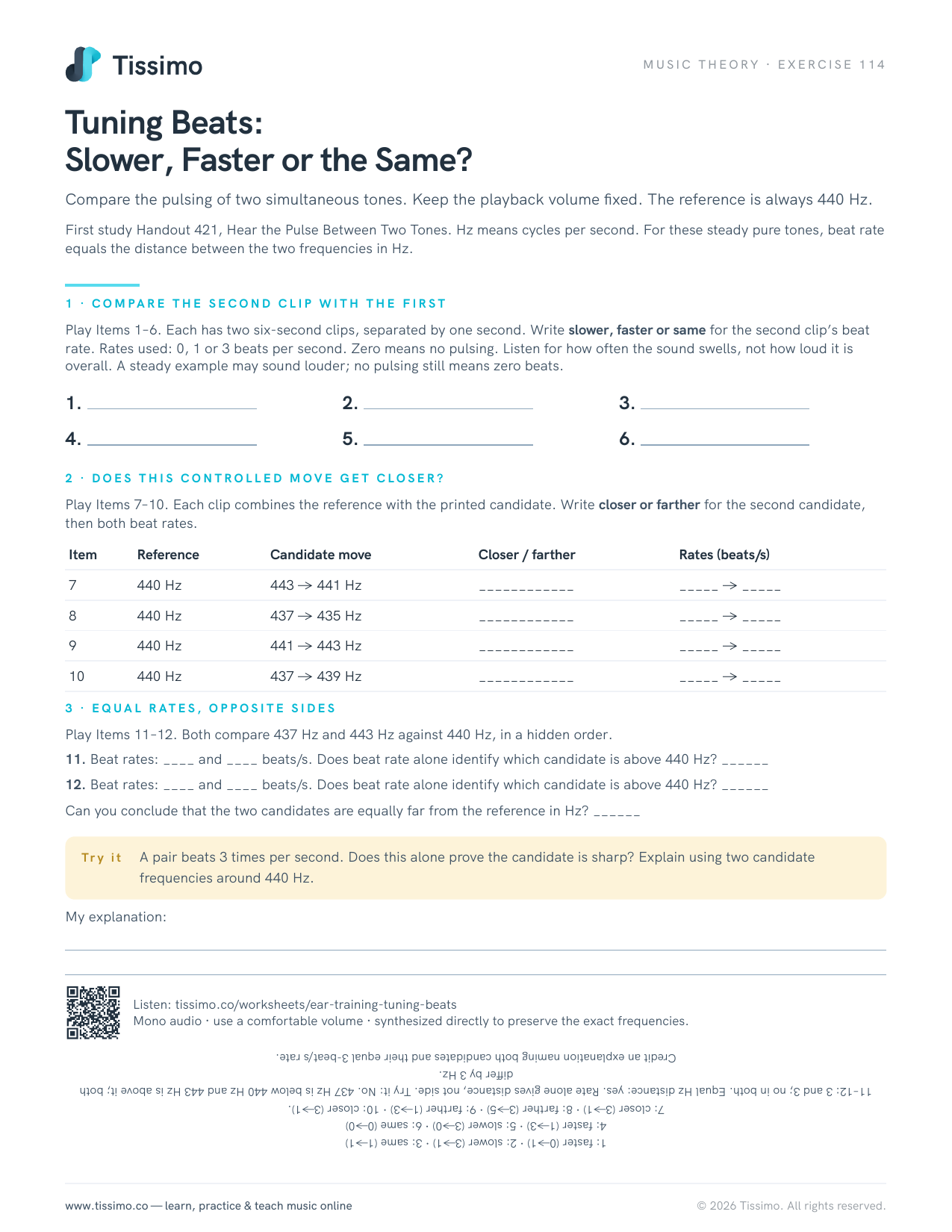
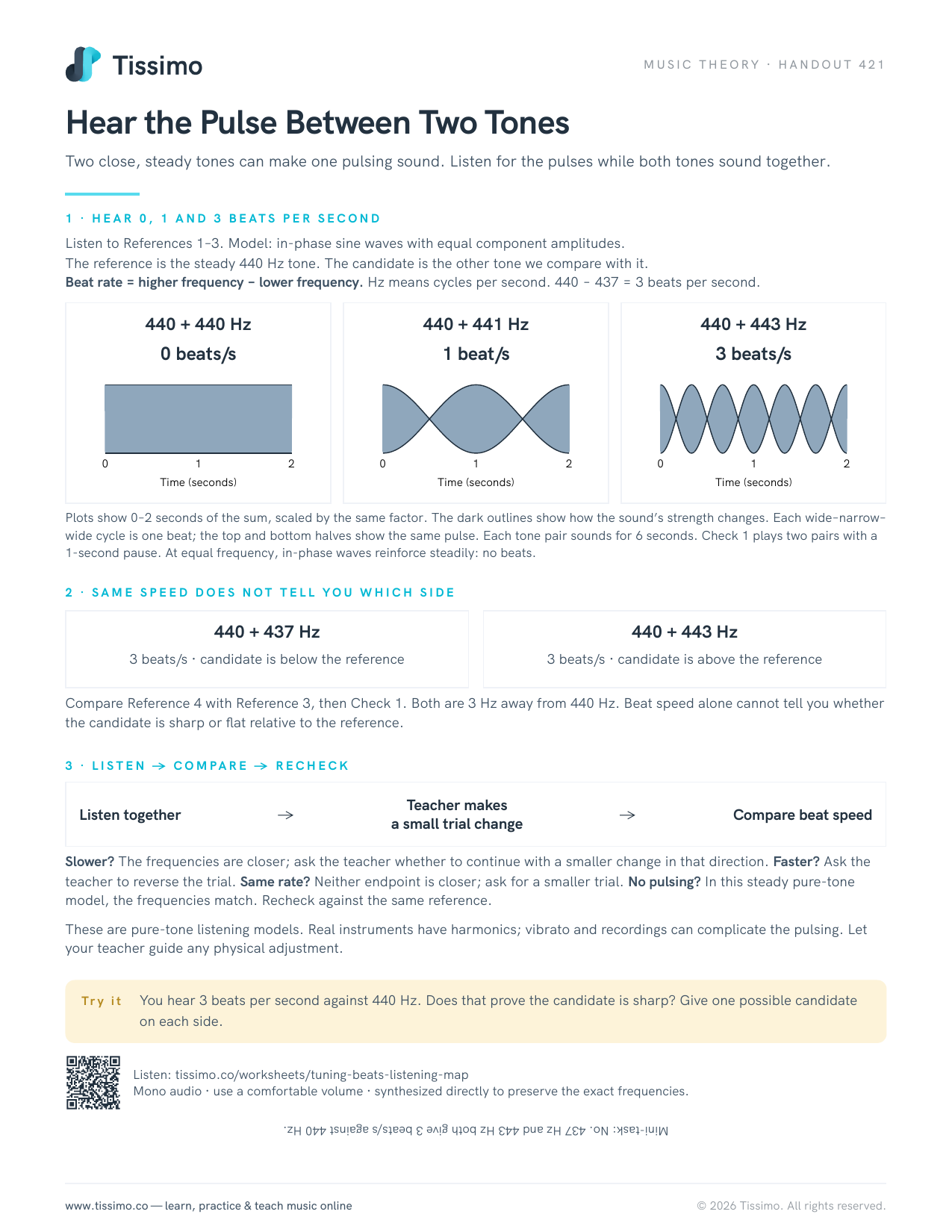
Train your ear for the small differences involved with Tuning Beats: Slower, Faster or the Same?. For the separate question of the reference pitch a tuning starts from, see A440.
Common questions
What is the difference between tuning and temperament?
Tuning is the general act, or system, of setting pitches. A temperament is a particular kind of tuning system that adjusts some intervals away from pure ratios so an instrument can play in many keys. Every temperament is a tuning, but not every tuning is tempered: just intonation keeps its intervals pure.
What temperament did Bach use?
Nobody knows for sure. His Well-Tempered Clavier shows that all 24 keys could be played on one keyboard, and many scholars think he used a well temperament, with slightly different colors in each key, rather than strict equal temperament. Several reconstructions have been proposed.