Pitch & Intervals
Enharmonic Equivalent
Pronounced en-har-MON-ik
Enharmonic equivalents are two names for the same pitch, such as C♯ and D♭ or E and F♭. On a piano they are the same key; which name is correct depends on the key and the harmony.
Enharmonic equivalents are notes that sound the same but are written differently. The black key between C and D is both C♯ and D♭; the white key F can also be written E♯; and B can be written C♭. On a piano, or on any instrument tuned in equal temperament, each pair is one and the same pitch.
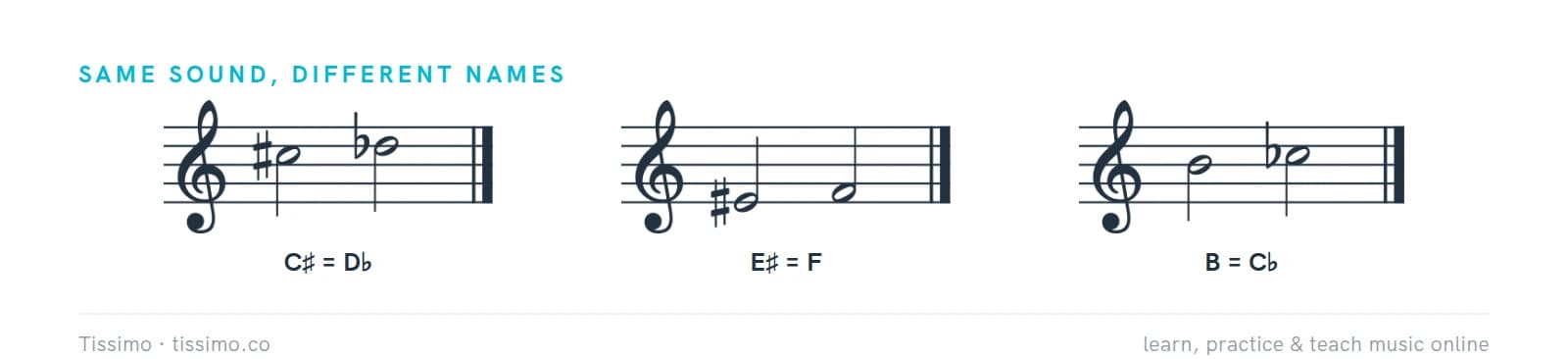
Why one pitch needs two names
Notes are named for the job they do, not only for how they sound. A major or minor scale uses each letter name once, so the spelling follows the key:
- The D major scale is D E F♯ G A B C♯. Writing G♭ instead of F♯ would skip F and use G twice.
- The third of an A major chord is C♯ (A–C♯–E). The third of a D♭ major chord is F (D♭–F–A♭).
- A line that rises usually takes sharps (C–C♯–D), and one that falls takes flats (D–D♭–C), because each altered note leans toward the next letter.
Correct spelling makes music faster to read: interval names, chord shapes and the key signature all line up.
Enharmonic intervals, chords and keys
The idea reaches beyond single notes:
- Intervals: C–E♭ (a minor 3rd) and C–D♯ (an augmented 2nd) use the same keys.
- Chords: a diminished seventh chord can be respelled to belong to four different keys, which is why composers use it to modulate.
- Keys: F♯ major (six sharps) and G♭ major (six flats) sound the same. Composers choose whichever reads more easily in context.
Some spellings need a double sharp or double flat: F𝄪 is the same key as G, and B𝄫 the same key as A.
Not always identical
In equal temperament, enharmonic notes are exactly the same pitch. In other tuning systems they are not. In the meantone tunings common in the Renaissance and Baroque, for example, C♯ is noticeably lower than D♭, and some keyboards of that time had split black keys to offer both (see temperament). Singers and string players, who can adjust pitch freely, may also shade enharmonic notes differently depending on where the music is going.
Practice spelling with The sharp: one half step up, The flat: one half step down and Double sharps and double flats.
Common questions
What does enharmonic mean?
Two notes are enharmonic when they sound the same but are spelled differently, such as G♯ and A♭. The word also applies to intervals, chords and keys that sound alike but are written differently.
Is C♯ the same as D♭?
On a piano and in equal temperament, yes: same key, same pitch. They are written differently because they do different jobs. C♯ belongs to keys such as D major and A major, D♭ to keys such as A♭ major and D♭ major.
Practice it: free worksheets
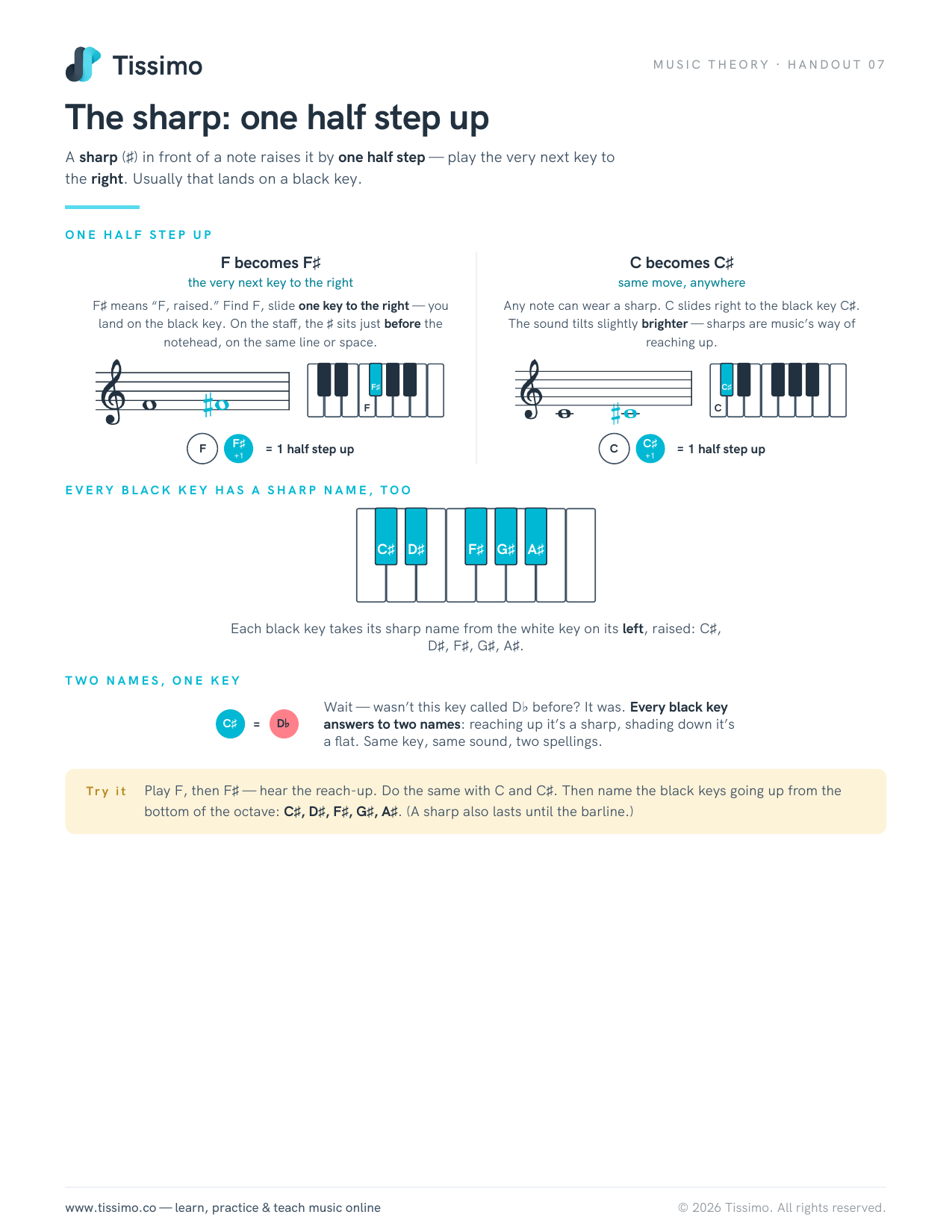 The sharp: one half step upA sharp (♯) in front of a note raises it by one half step (Handout 353) — play the very next key to the right. Usually that lands on a black key.
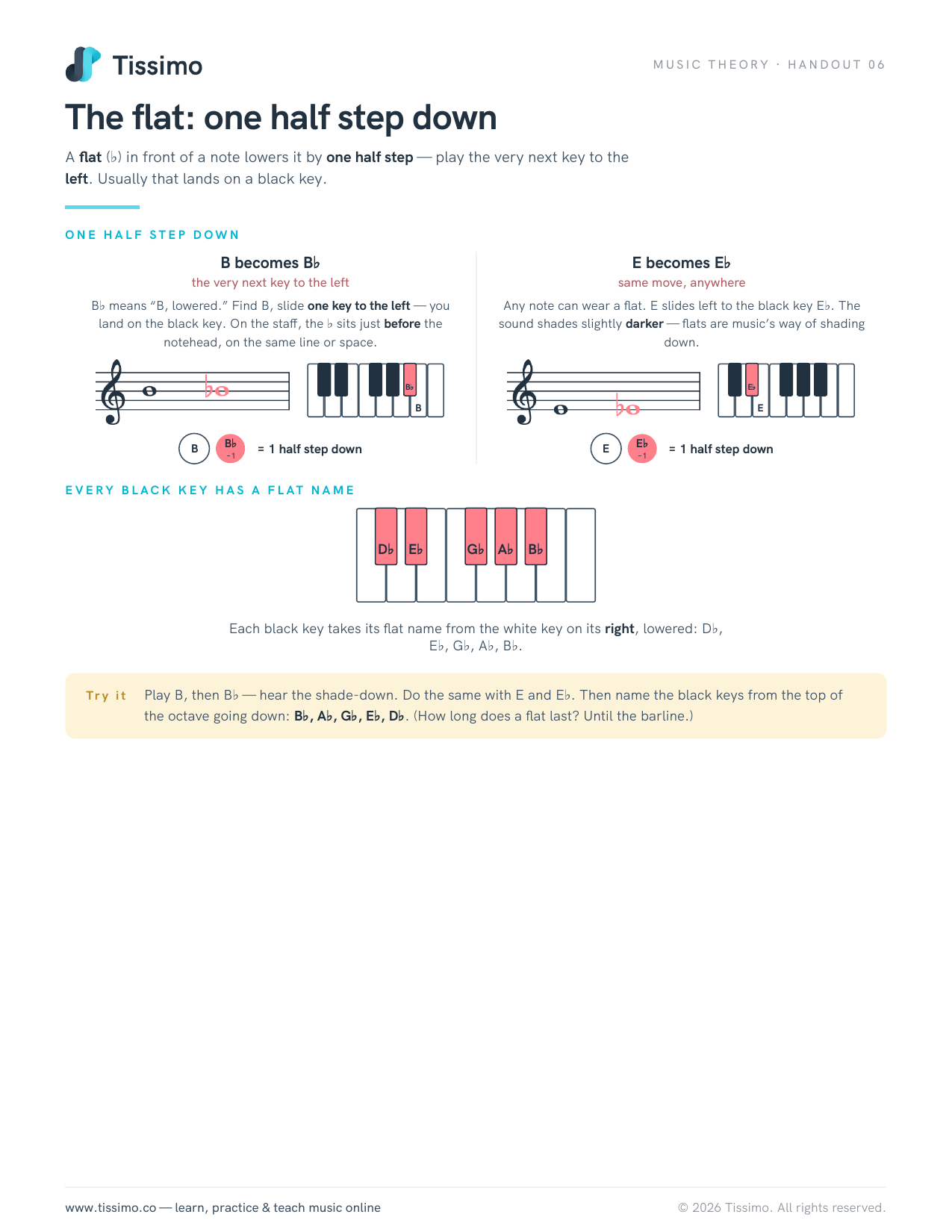 The flat: one half step downA flat (♭) in front of a note lowers it by one half step (Handout 353) — play the very next key to the left. Usually that lands on a black key.
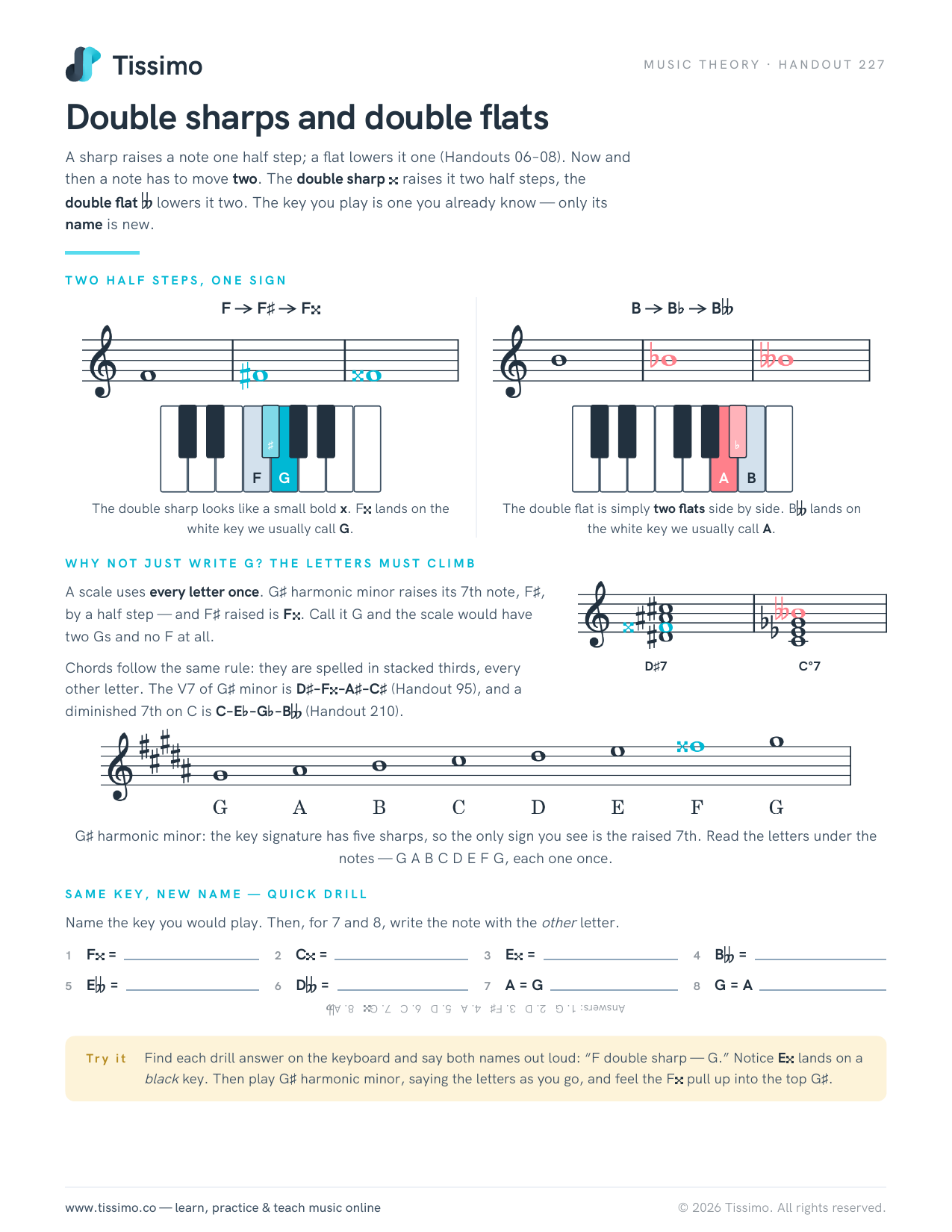 Double sharps and double flatsA sharp raises a note one half step; a flat lowers it one (Handouts 06–08). Now and then a note has to move two. The double sharp raises it two half steps, the double flat lowers it two. The key you play is one you already know — only its name is new.
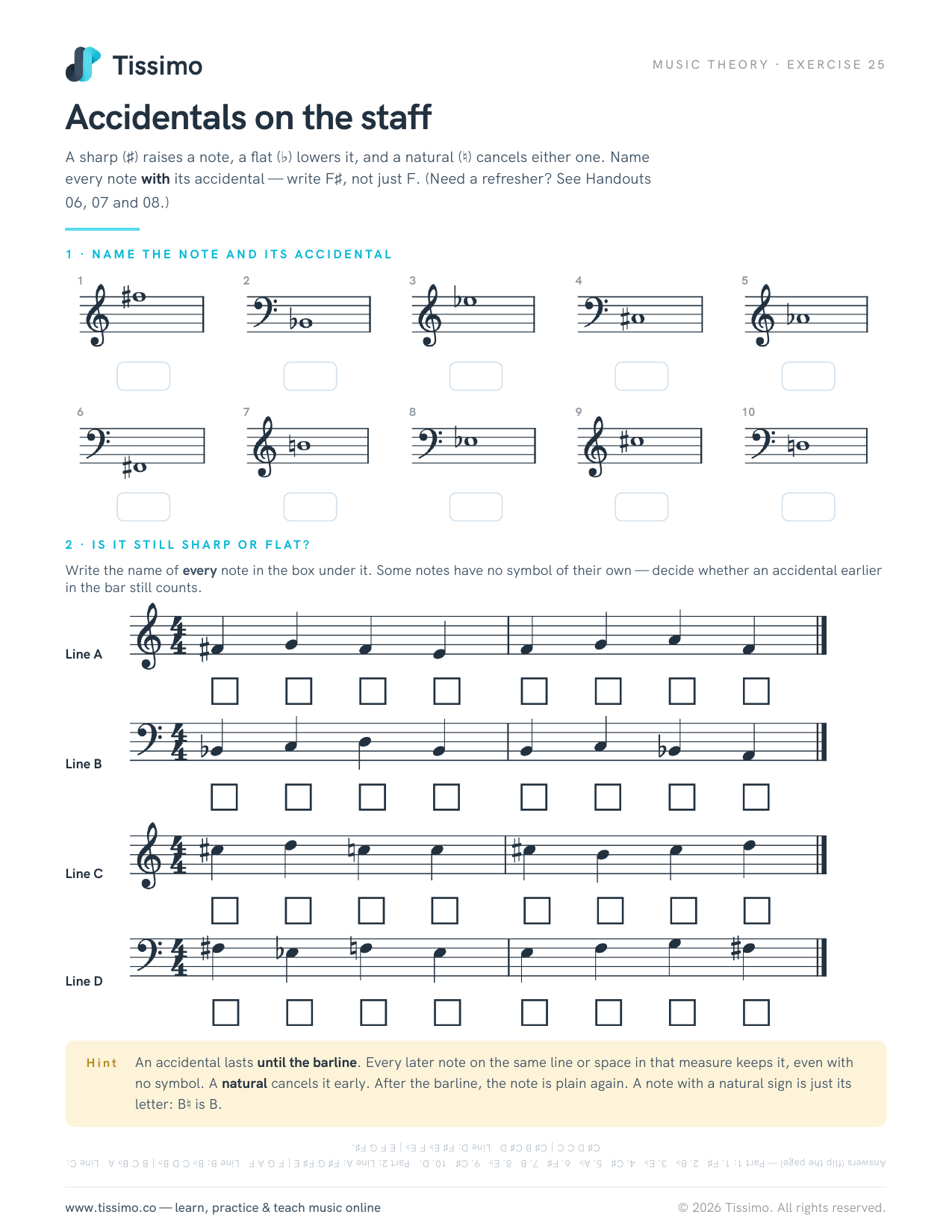 Accidentals on the staffA sharp (♯) raises a note, a flat (♭) lowers it, and a natural (♮) cancels either one. Name every note with its accidental — write F♯, not just F. (Need a refresher? See Handouts 06, 07 and 08.)
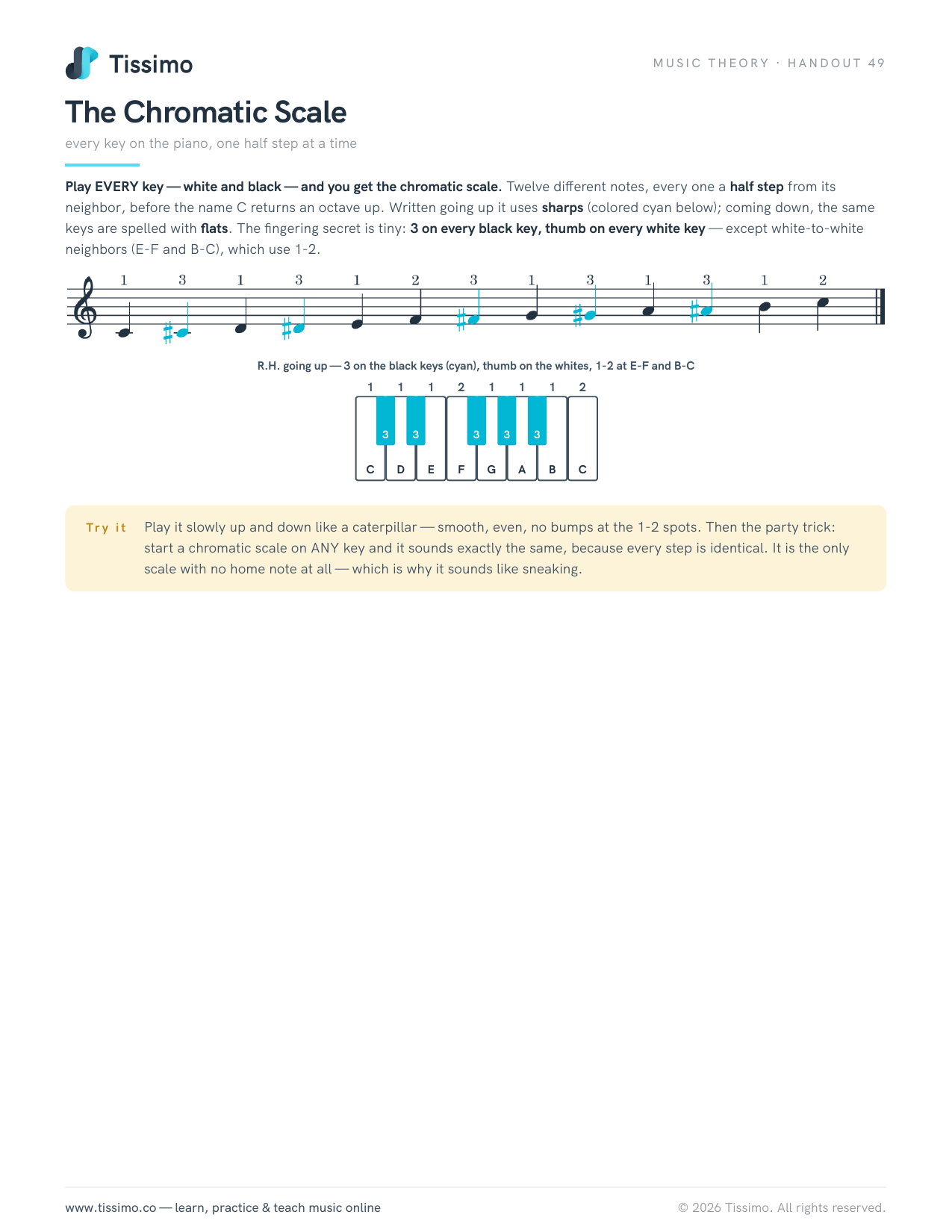 The Chromatic Scaleevery key on the piano, one half step at a time
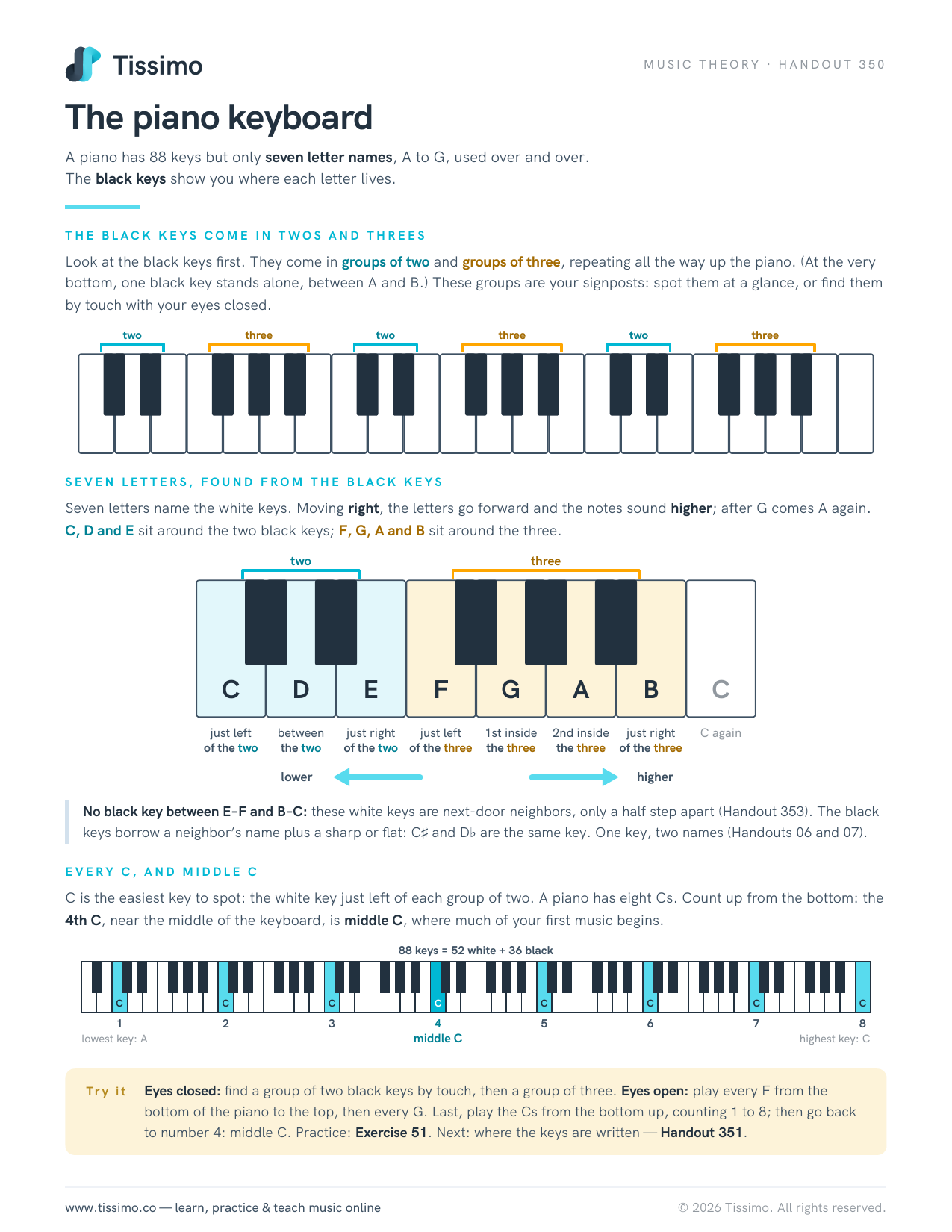 The piano keyboardA piano has 88 keys but only seven letter names, A to G, used over and over. The black keys show you where each letter lives.