Sound & Acoustics
Amplitude
Amplitude is the size of a sound wave's vibration: how far the air pressure swings above and below normal. A larger amplitude sounds louder; it does not change the pitch.
Amplitude is how big a vibration is. A guitar string plucked hard swings farther from its resting position than one plucked gently, and the air pressure it creates swings further above and below normal. That size of swing is the amplitude, and you hear it as loudness: the bigger the amplitude, the louder the sound.
Amplitude is not pitch
Amplitude and frequency are independent. Frequency is how often the wave repeats, which you hear as pitch. Amplitude is how big each swing is, which you hear as loudness. A soft A4 and a loud A4 both vibrate 440 times a second; only the size of the vibration changes.

Beginners sometimes mix the two up because everyday speech says "turn it up" for louder. In music, high and low describe pitch, and loud and soft describe amplitude, which the score marks with dynamics such as p and f.
Measuring amplitude
Engineers rarely quote amplitude in raw pressure units. They use decibels (dB), a logarithmic scale that suits the ear's enormous range. Two figures are worth knowing: doubling the amplitude raises the level by about 6 dB, and ten times the amplitude adds 20 dB. In a recording program, the waveform you see is a picture of amplitude over time: tall where the music is loud, thin where it is quiet.
Amplitude over time
A note's amplitude usually changes while it sounds. A piano note is loudest just after the hammer strikes and then fades; an organ note stays level for as long as you hold the key. The shape of those changes is the note's envelope, and it is a large part of what makes instruments sound different.
Loudness is more than amplitude
How loud a sound seems also depends on its frequency. The ear is most sensitive roughly between 2,000 and 5,000 Hz, so a very low or very high tone needs more amplitude to sound as loud as one in that middle region. That is partly why bass amplifiers need so much power.
Practice controlling loudness on purpose with The Dynamic Ladder, and learn to hear the difference between a change in pitch and a change in loudness in Move, Then Find the Reference.
Common questions
Does amplitude affect pitch?
No. Amplitude decides how loud a sound is; frequency decides its pitch. A note played louder vibrates with bigger swings but the same number of swings per second, so it stays on the same pitch.
What is the difference between amplitude and volume?
Amplitude is the physical size of the sound wave. Volume, or loudness, is how loud you hear it. More amplitude means more loudness, but the ear's sensitivity also depends on frequency, so equal amplitudes do not always sound equally loud.
Practice it: free worksheets
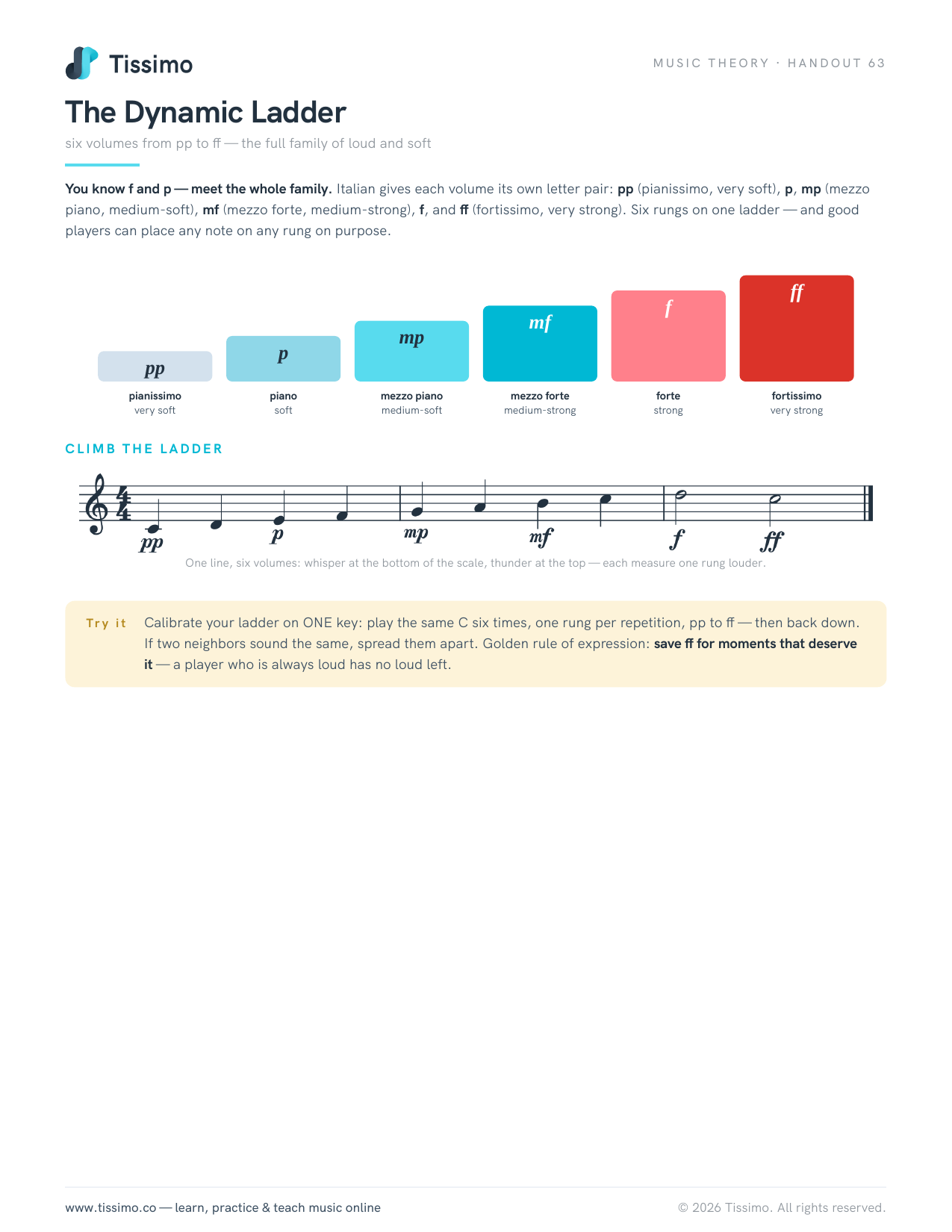 The Dynamic Laddersix volumes from pp to ff — the full family of loud and soft
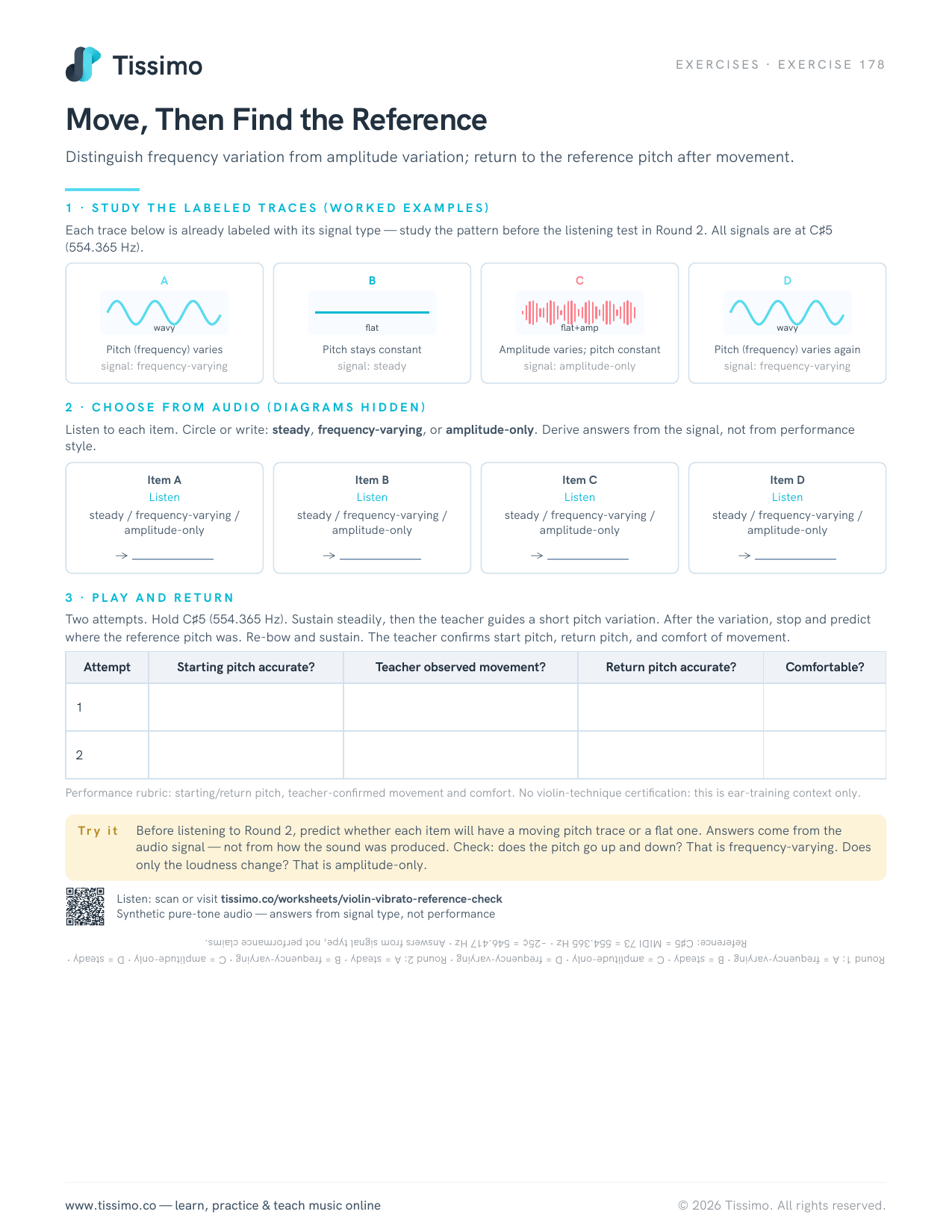 Move, Then Find the ReferenceDistinguish frequency variation from amplitude variation; return to the reference pitch after movement.
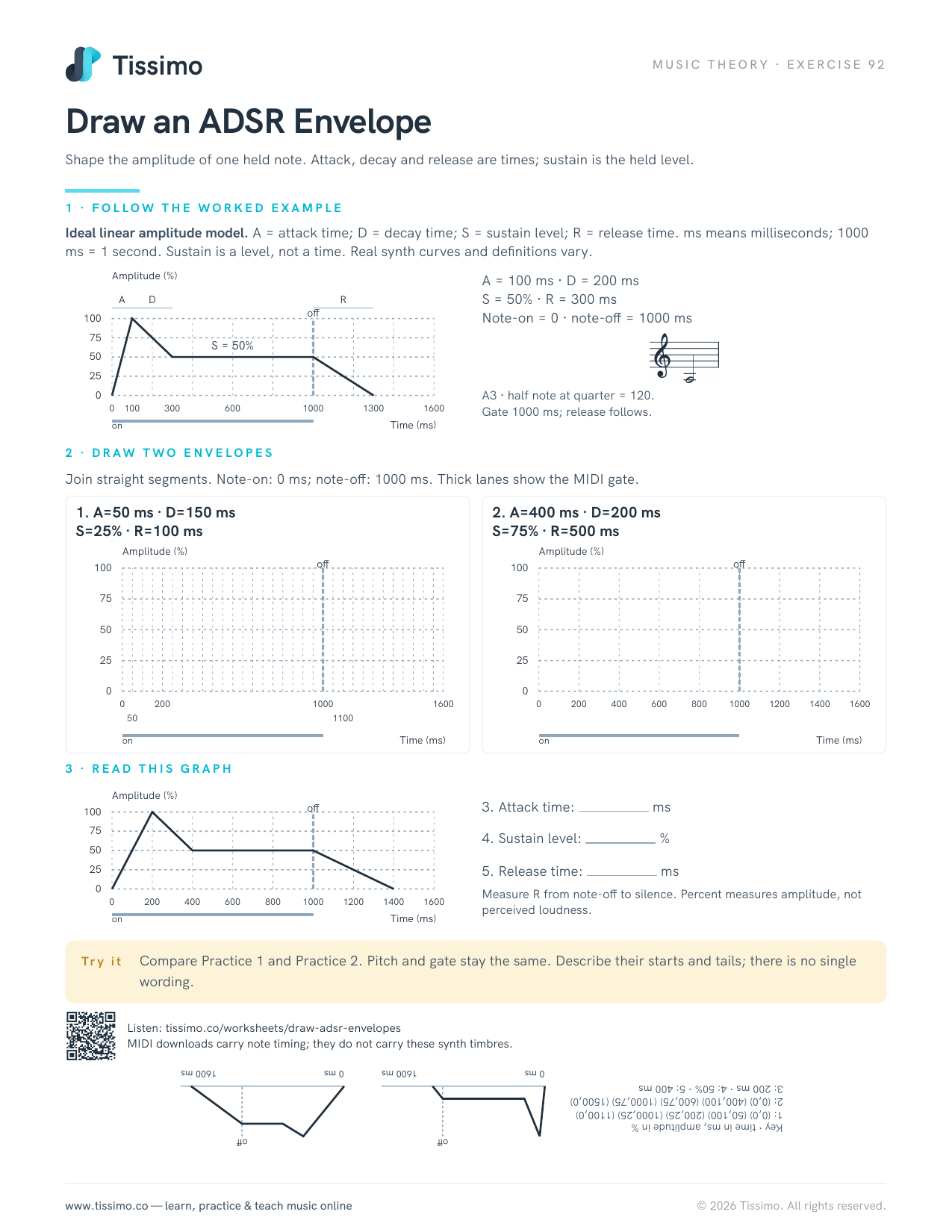 Draw an ADSR EnvelopeShape the amplitude of one held note. Attack, decay and release are times; sustain is the held level.