Sound & Acoustics
Hertz (Hz)
Written as Hz
The hertz (Hz) is the unit of frequency: one hertz is one cycle per second. In music it measures how fast a sound vibrates; the tuning note A4 is 440 Hz.
The hertz, written Hz, is the unit of frequency: how many times something repeats per second. One hertz is one cycle per second, so a string vibrating 440 times a second sounds at 440 Hz. The unit is named after the German physicist Heinrich Hertz, who demonstrated electromagnetic waves in the 1880s. One thousand hertz make a kilohertz (kHz).
Hertz and the notes you play
Every note has a frequency in hertz. With the A above middle C tuned to 440 Hz (A440) in equal temperament, the white keys from middle C up sound at about:
- C4 (middle C): 261.63 Hz
- D4: 293.66 Hz
- E4: 329.63 Hz
- F4: 349.23 Hz
- G4: 392.00 Hz
- A4: 440.00 Hz
- B4: 493.88 Hz
- C5: 523.25 Hz
C5 is exactly twice C4: an octave doubles the frequency. Each half step multiplies it by about 1.0595, so the gaps in hertz grow as you go up, even though every half step sounds the same size.
Useful numbers
- The piano runs from 27.5 Hz (A0, its lowest key) to about 4,186 Hz (C8, its highest).
- Young listeners hear roughly from 20 Hz to 20,000 Hz (20 kHz); the top end falls with age.
- Digital audio at a 44.1 kHz sample rate and bit depth can capture frequencies up to 22.05 kHz, just above the limit of hearing.
- Mains electricity alternates at 50 Hz or 60 Hz depending on the country, which is why a faulty cable can add a low hum to a recording.
Hertz or cents?
Hertz tell you how fast something vibrates, but they are awkward for comparing pitches, because the ear hears ratios: 220 to 440 Hz and 440 to 880 Hz are both one octave. For small tuning differences, musicians use cents instead. When a tuner reads "+5", it almost always means 5 cents sharp, not 5 Hz.
Practice moving between note names, MIDI numbers and hertz in MIDI Notes, Octaves and Frequency.
Common questions
What does Hz mean in music?
Hz stands for hertz, cycles per second. In music it tells you how fast a note vibrates: A4 at 440 Hz vibrates 440 times every second. Higher numbers mean higher notes.
What is the difference between Hz and kHz?
A kilohertz (kHz) is 1,000 hertz. Audio specifications often use kHz: young ears hear up to about 20 kHz, and CD audio uses a sample rate of 44.1 kHz.
Practice it: free worksheets
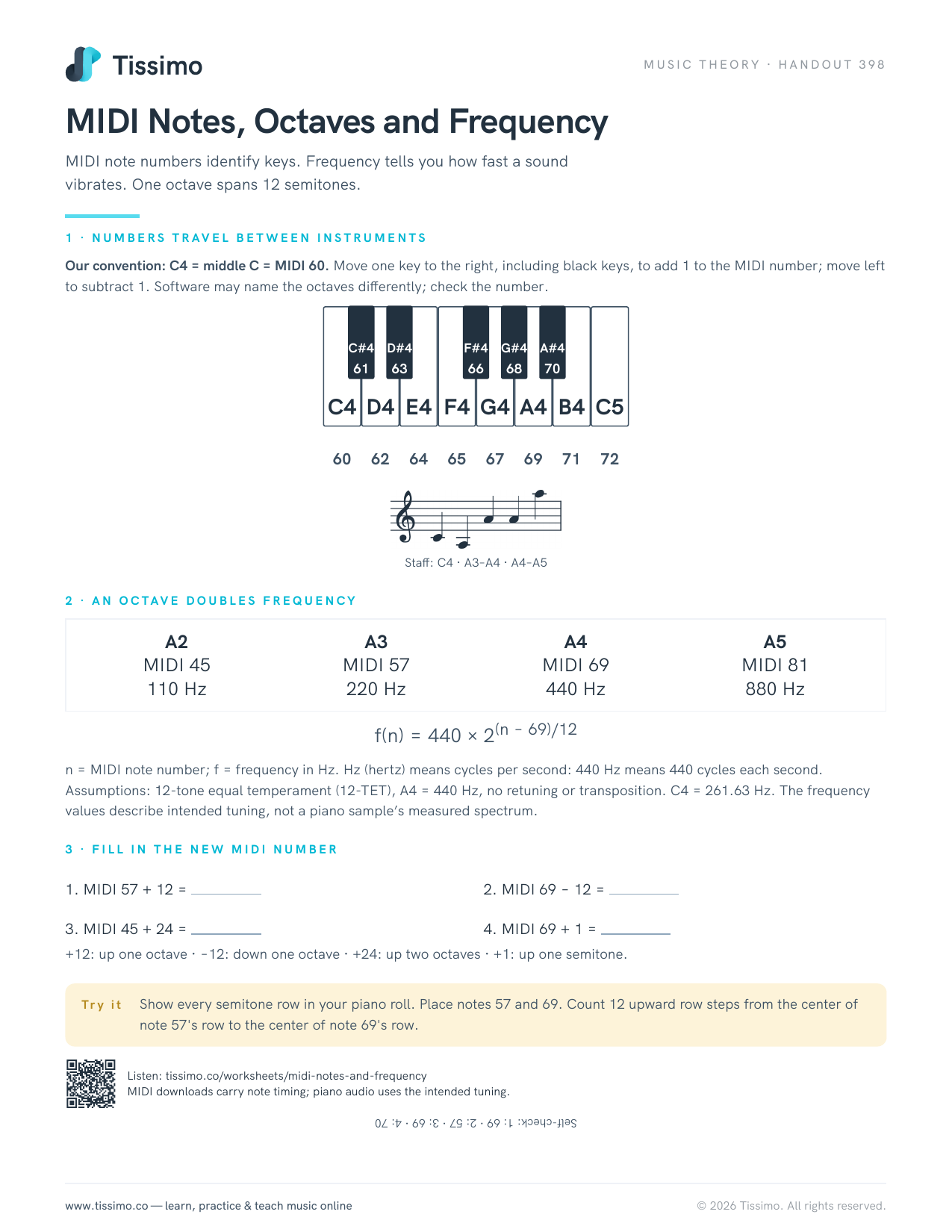 MIDI Notes, Octaves and FrequencyMIDI note numbers identify keys. Frequency tells you how fast a sound vibrates. One octave spans 12 semitones.
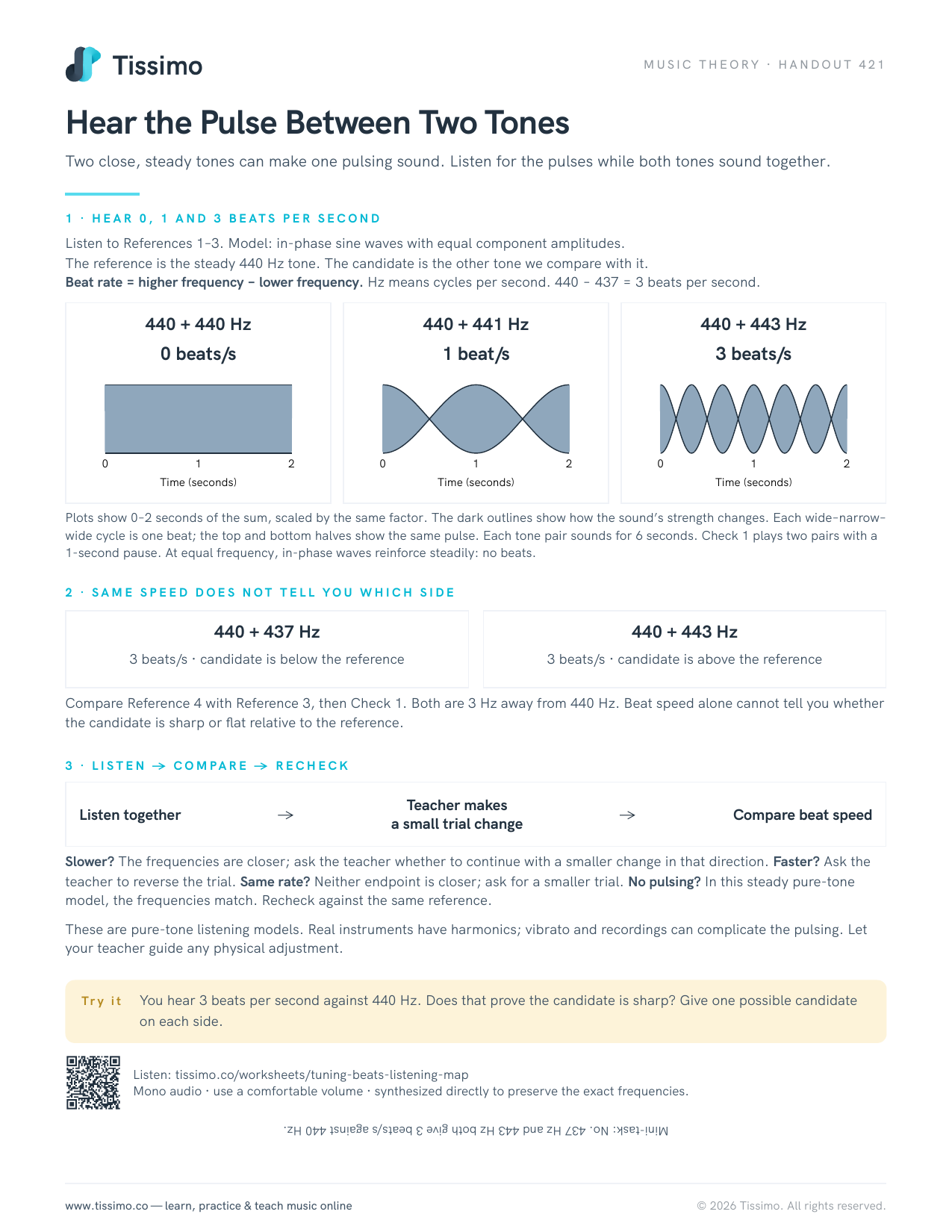 Hear the Pulse Between Two TonesTwo close, steady tones can make one pulsing sound. Listen for the pulses while both tones sound together.
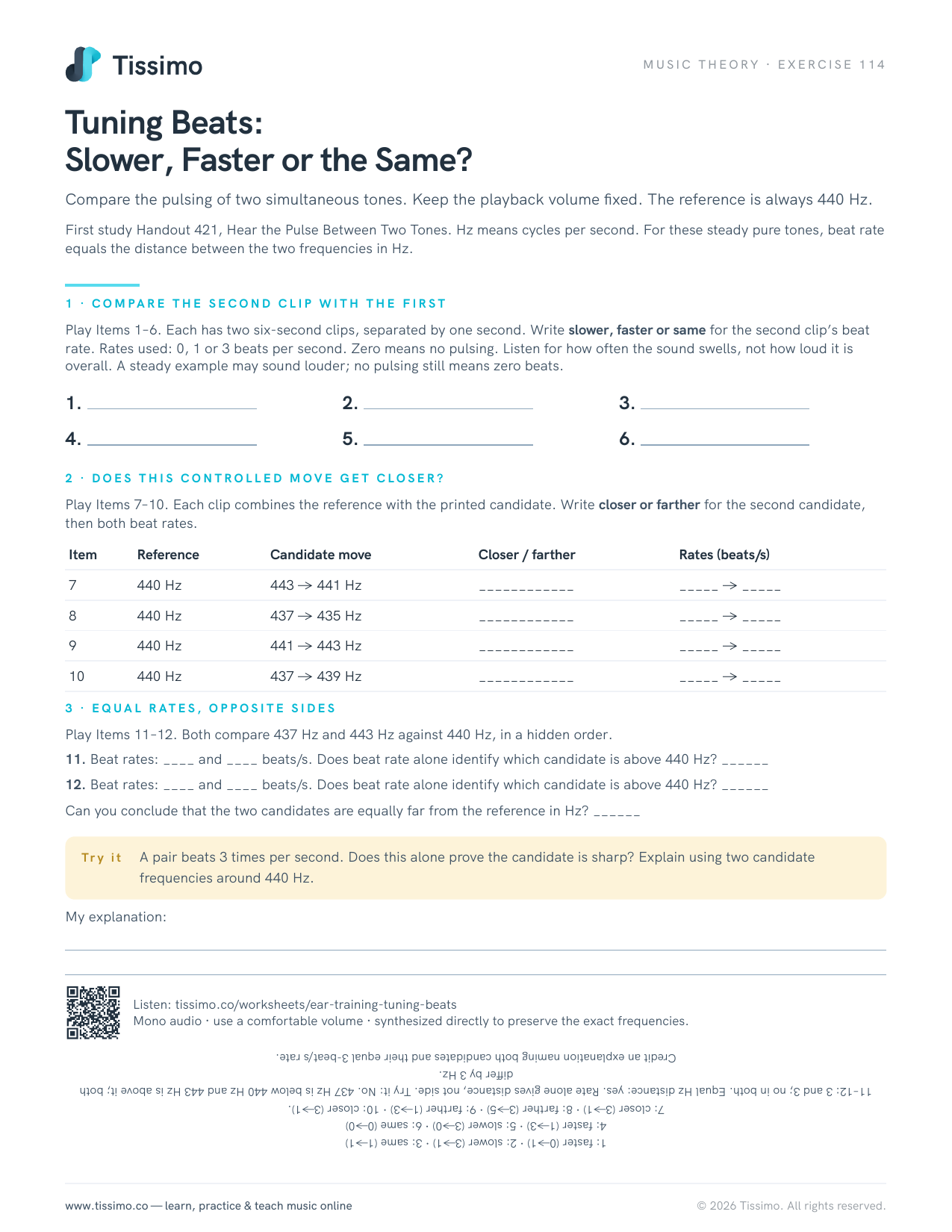 Tuning Beats: Slower, Faster or the Same?Compare the pulsing of two simultaneous tones. Keep the playback volume fixed. The reference is always 440 Hz.