Dynamics & Expression
Piano (p)
Pronounced PYAH-nohWritten as p
Piano, written p, is the dynamic marking for soft. It sits between pianissimo (pp) and mezzo piano (mp), and it gave the instrument its name: the pianoforte could play soft as well as loud.
Piano is Italian for "soft" or "quiet". In a score its sign is a bold italic p, printed below the staff. It is the basic soft level: softer than mezzo piano (mp) and louder than pianissimo (pp).
Piano, the instrument
The instrument's full name is pianoforte, "soft-loud", because it could do what the harpsichord could not: play soft or loud depending on how the keys were struck. Over time the name was shortened to "piano", which is why the word now has two meanings. In this dictionary the instrument is piano, and the dynamic is this entry.
Soft, but still alive
A good p has a clear, singing tone. It is quieter, not weaker. Two problems are common: notes that drop out because the key moved too slowly to sound, and a p that creeps louder through a long passage. Practice the passage at p with firm fingertips and small motions, and listen for an even line.
Echoes and contrast
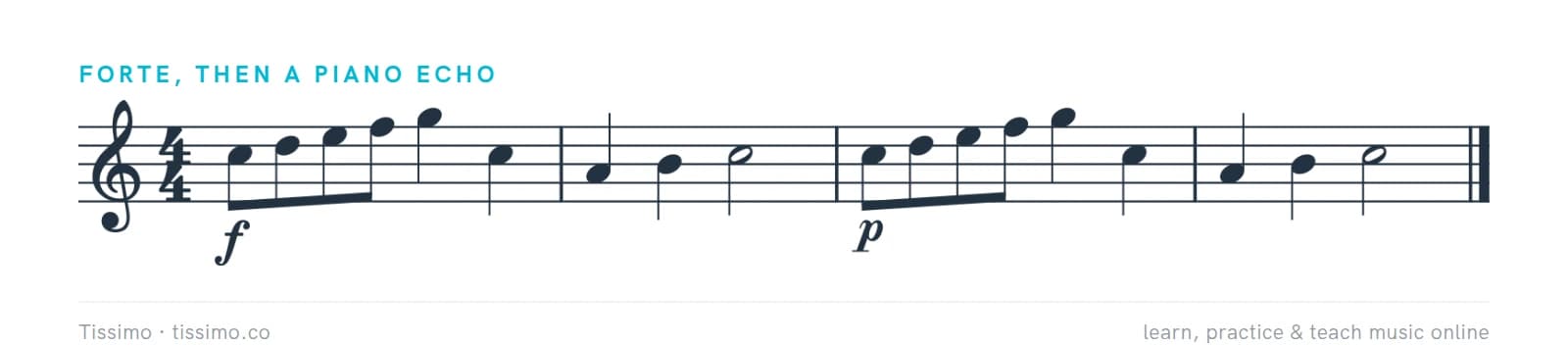
Composers often set p against forte to create contrast: a phrase played loudly, then echoed softly. This echo effect was a favorite in Baroque keyboard music, where a harpsichordist could move from one keyboard to a second, quieter one, and it is still one of the clearest ways to hear the difference between the two levels. Our Match the terms sheet and the Dynamic Ladder handout practice p and f side by side.
Put p in order with the other levels in Dynamics & Tempo Ladders, look it up on the Musical terms & signs chart, and find it in the Music word search.
Common questions
What does p mean in music?
p stands for piano, "soft". It is the basic soft dynamic, one step louder than pp and one step softer than mp.
Why is the piano called a piano?
It is short for pianoforte, "soft-loud": the instrument was named for its ability to play both softly and loudly, depending on touch.
Practice it: free worksheets
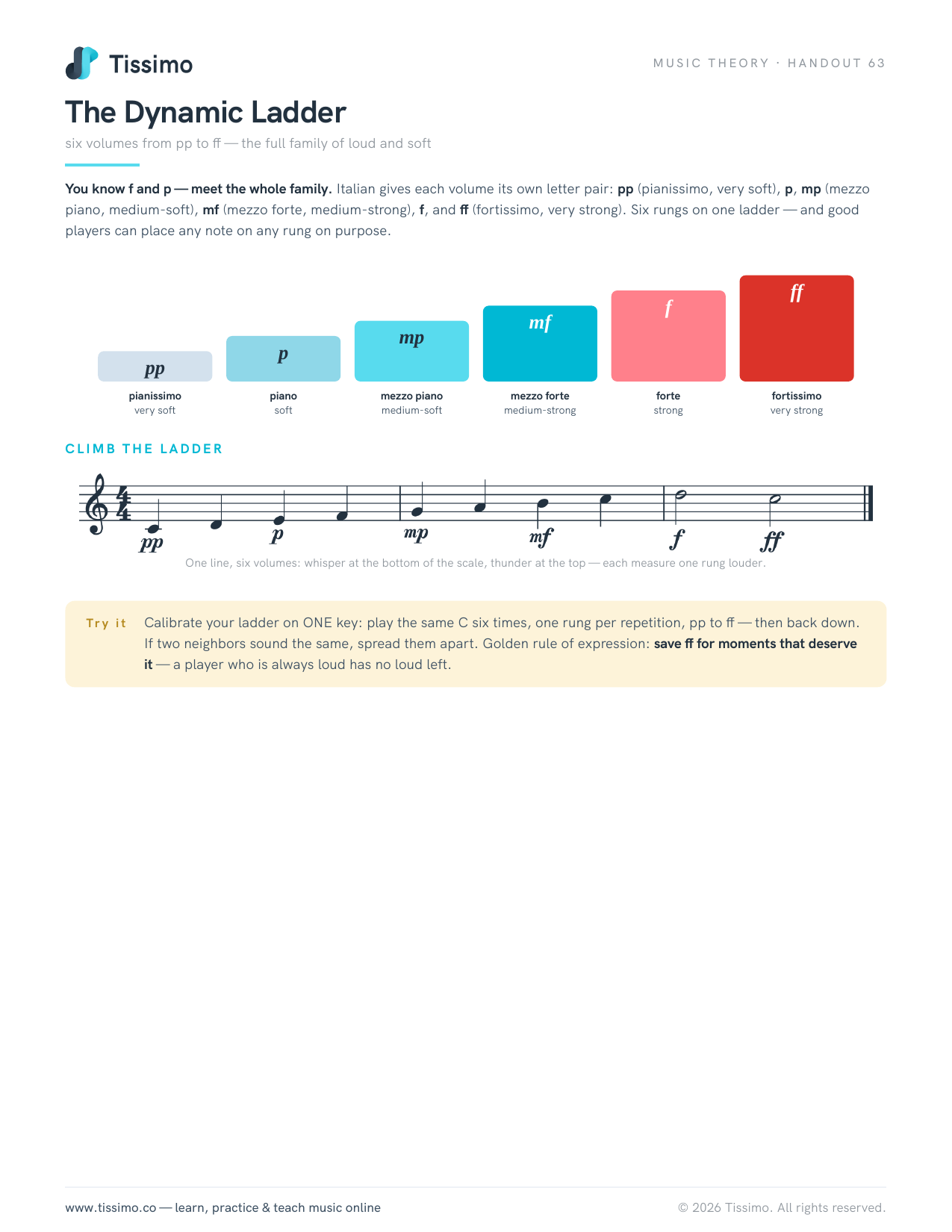 The Dynamic Laddersix volumes from pp to ff — the full family of loud and soft
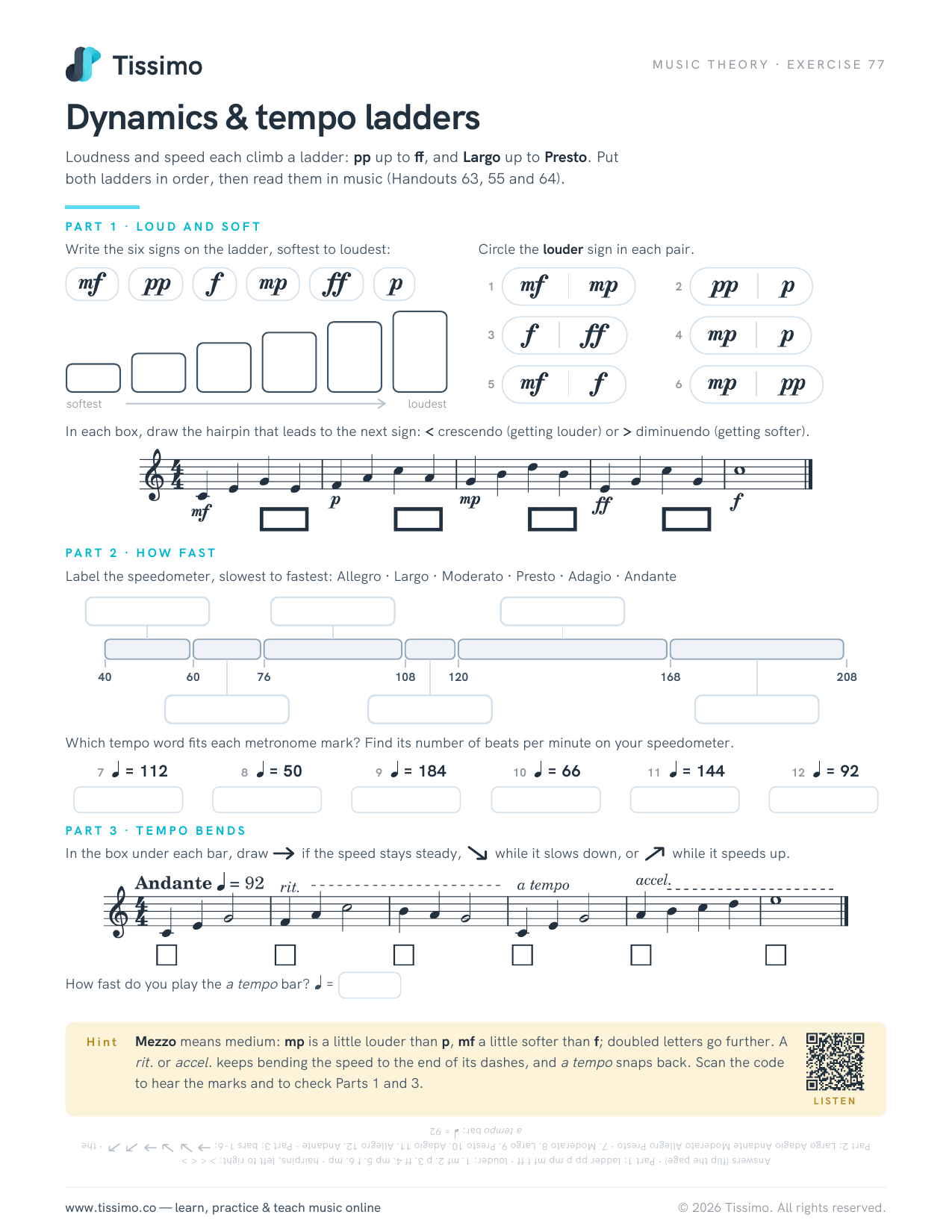 Dynamics & tempo laddersLoudness and speed each climb a ladder: pp up to ff, and Largo up to Presto. Put both ladders in order, then read them in music (Handouts 63, 55 and 64).
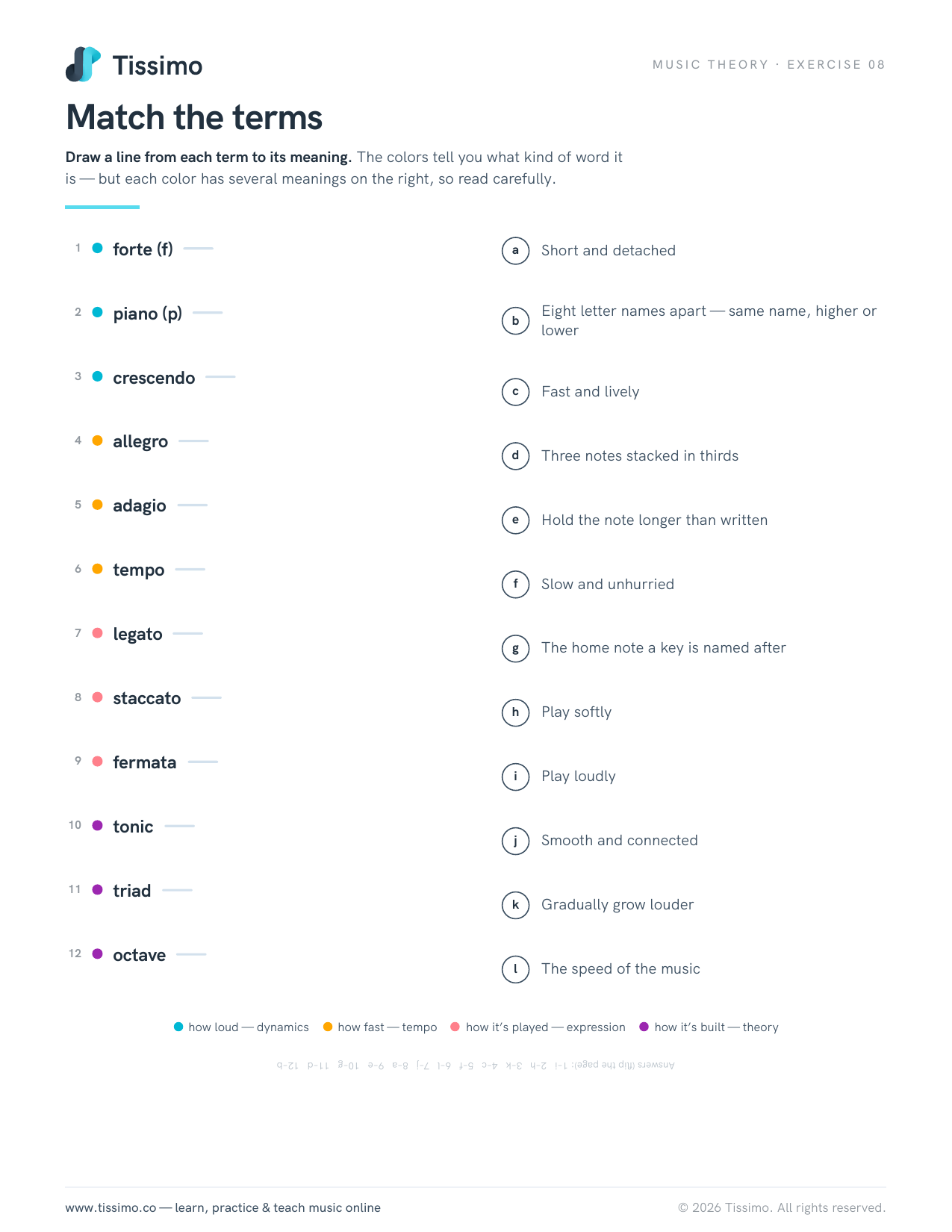 Match the termsDraw a line from each term to its meaning. The colors tell you what kind of word it is — but each color has several meanings on the right, so read carefully.
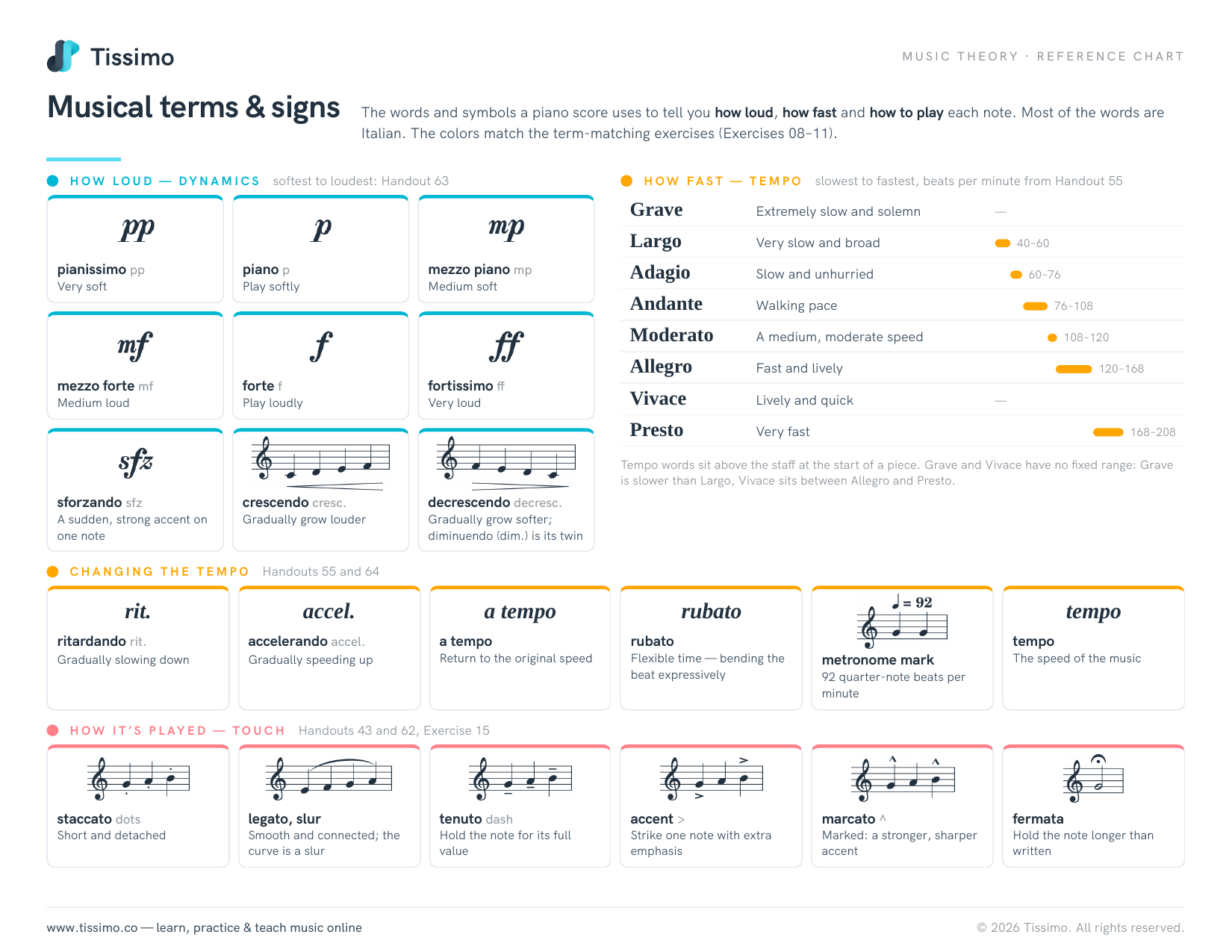 Musical terms & signsThe words and symbols a piano score uses to tell you how loud, how fast and how to play each note. Most of the words are Italian. The colors match the term-matching exercises (Exercises 08–11, 74 and 75).
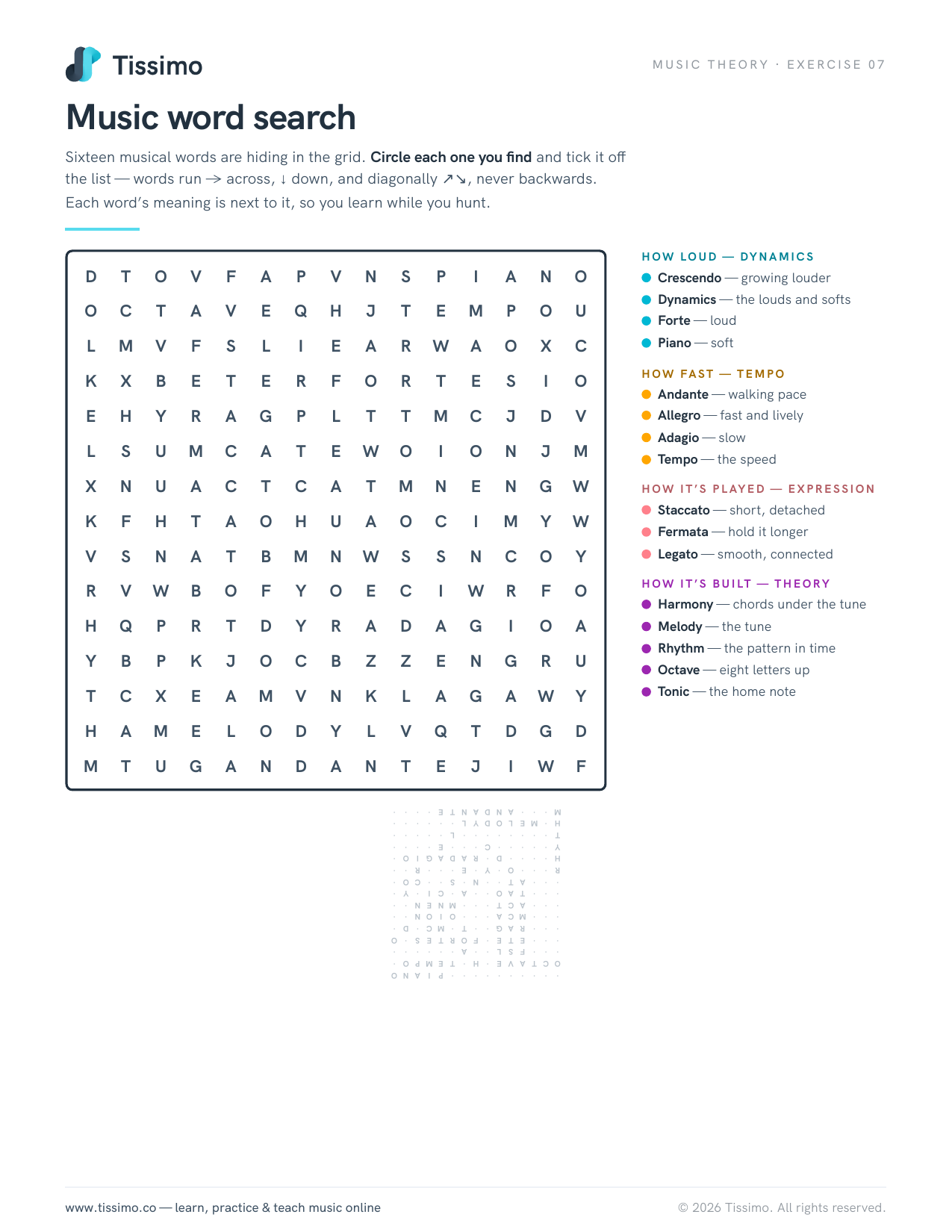 Music word searchSixteen musical words are hiding in the grid. Circle each one you find and tick it off the list — words run → across, ↓ down, and diagonally ↗↘, never backwards. Each word’s meaning is next to it, so you learn while you hunt.