Scales, Keys & Modes
Diatonic
Pronounced dye-uh-TON-ik
Diatonic describes notes, scales and chords that belong to a key's seven-note scale. A diatonic scale, such as the major scale, has five whole steps and two half steps in each octave.
Diatonic is an adjective with two closely related meanings.
- A diatonic scale is a seven-note scale made of five whole steps and two half steps, with the two half steps spread as far apart as they can be: two whole steps on one side of them, three on the other. The major scale, the natural minor scale and the seven church modes are diatonic scales. On the piano, the white keys form one.
- Diatonic notes and chords are the ones that belong to the key you are in. In C major, the diatonic notes are C D E F G A B. F♯ is not one of them, so in C major it is a chromatic note.
Diatonic chords
Build a triad on each degree of a major scale, using only the scale's notes, and you get the seven diatonic chords of the key. In C major they are C, Dm, Em, F, G, Am and B°. Their qualities come in the same order in every major key: major, minor, minor, major, major, minor, diminished. In Roman numerals that is I, ii, iii, IV, V, vi, vii°.
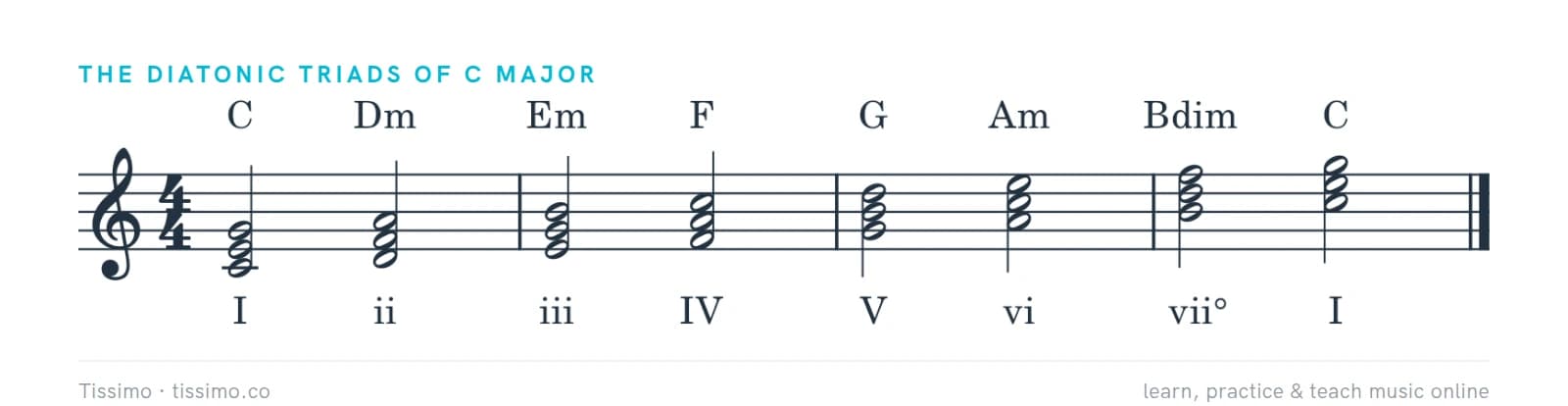
A chord that uses a note from outside the key, such as D major (with its F♯) in C major, is chromatic. Chromatic chords such as a secondary dominant or a borrowed chord add color, but in most tonal music the diatonic chords carry the bulk of the harmony. The chords of a key shows the pattern, and Name the chords of the key lets you practice it.
Diatonic and chromatic half steps
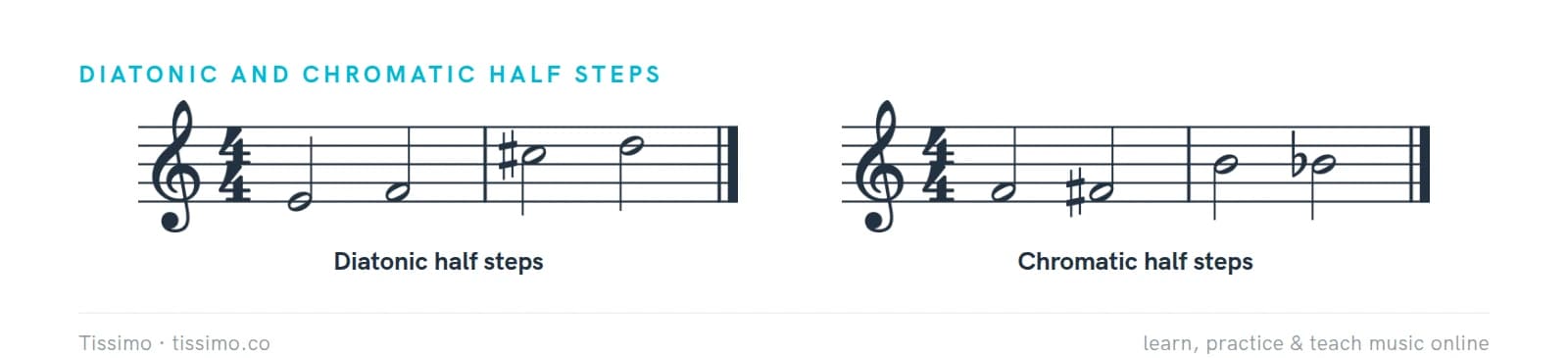
The word also sorts half steps. A diatonic half step moves to the neighboring letter name: E to F, or C♯ to D. A chromatic half step keeps the letter and changes the accidental: F to F♯, or B to B♭. On the piano they look and sound alike, but on paper they are different intervals: a minor second and an augmented unison.
Is the pentatonic scale diatonic?
Not in the strict sense. A diatonic scale has seven notes, and pentatonic scales have five. The five notes of a major pentatonic scale all belong to one diatonic scale, though, so a pentatonic melody sounds at home inside its key.
The opposite of diatonic is chromatic, and the chromatic scale, with all twelve notes, is the opposite of a diatonic scale.
Common questions
What does diatonic mean in music?
It means belonging to the key's scale. Diatonic notes and chords use only the seven notes of the key; chromatic ones add notes from outside it.
What is the opposite of diatonic?
Chromatic. A chromatic note, chord or scale includes notes outside the key's seven-note scale, such as F♯ in C major.
Practice it: free worksheets
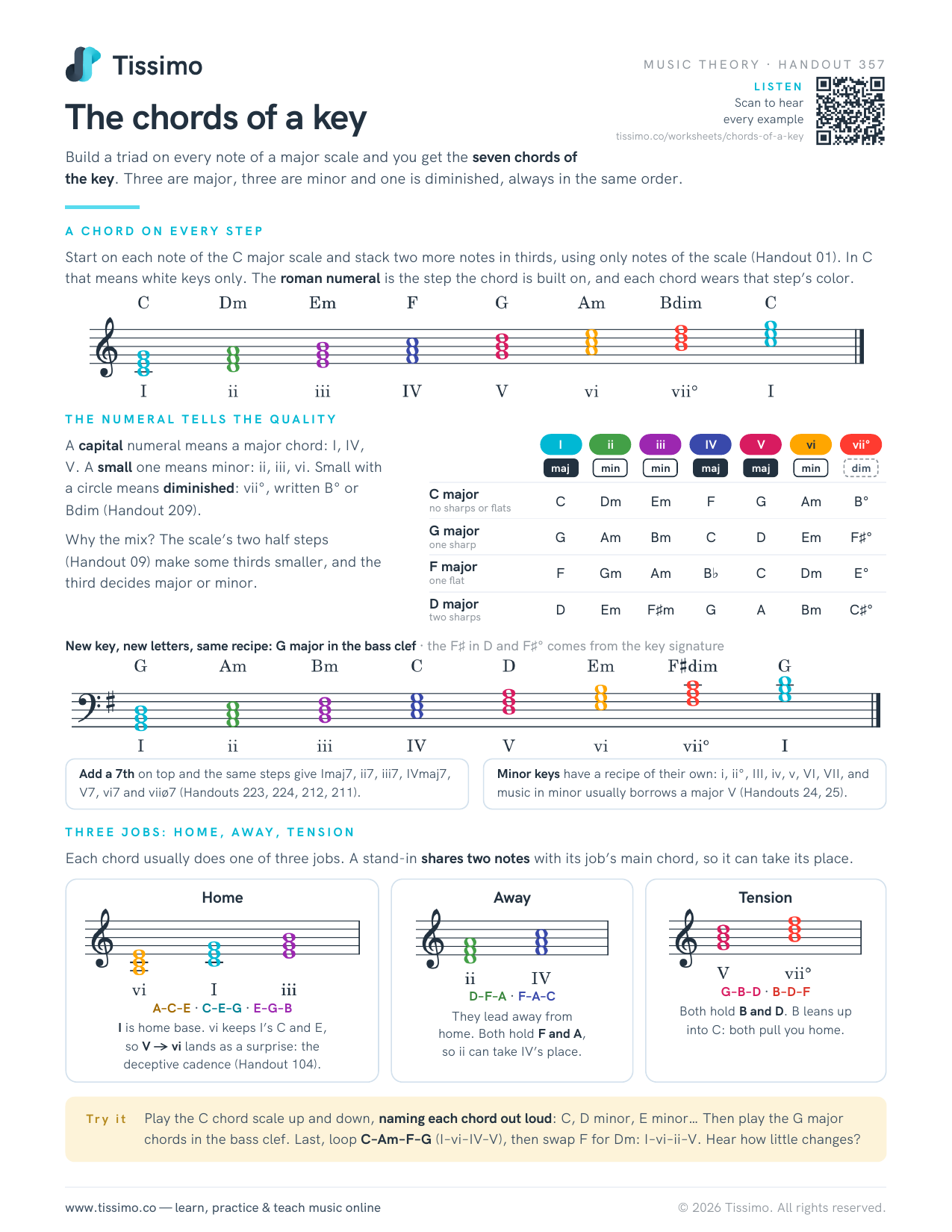 The chords of a keyBuild a triad on every note of a major scale and you get the seven chords of the key. Three are major, three are minor and one is diminished, always in the same order.
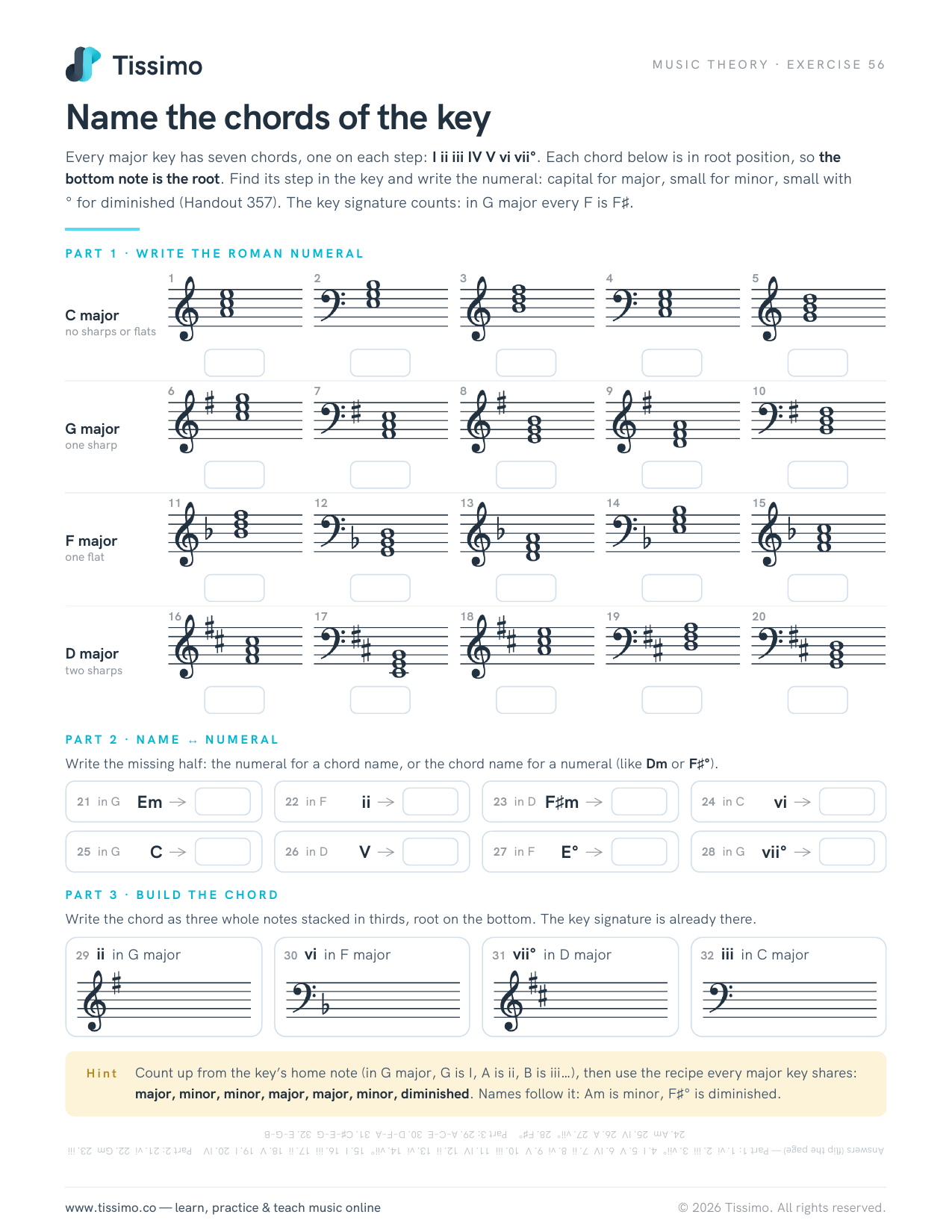 Name the chords of the keyEvery major key has seven chords, one on each step: I ii iii IV V vi vii°. Each chord below is in root position, so the bottom note is the root. Find its step in the key and write the numeral: capital for major, small for minor, small with ° for diminished (Handout 357). The key signature counts: in G major every F is F♯.
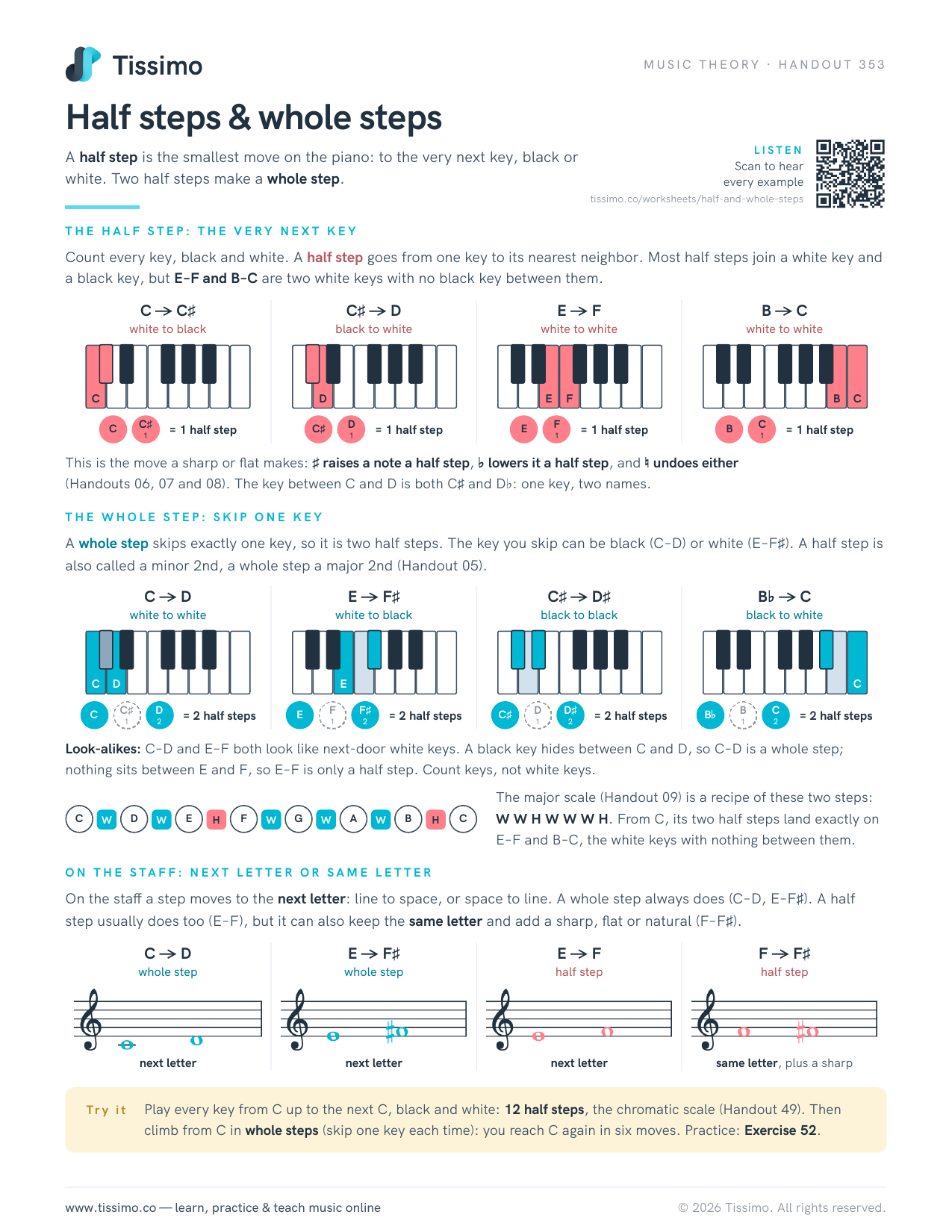 Half steps & whole stepsA half step is the smallest move on the piano: to the very next key, black or white. Two half steps make a whole step.
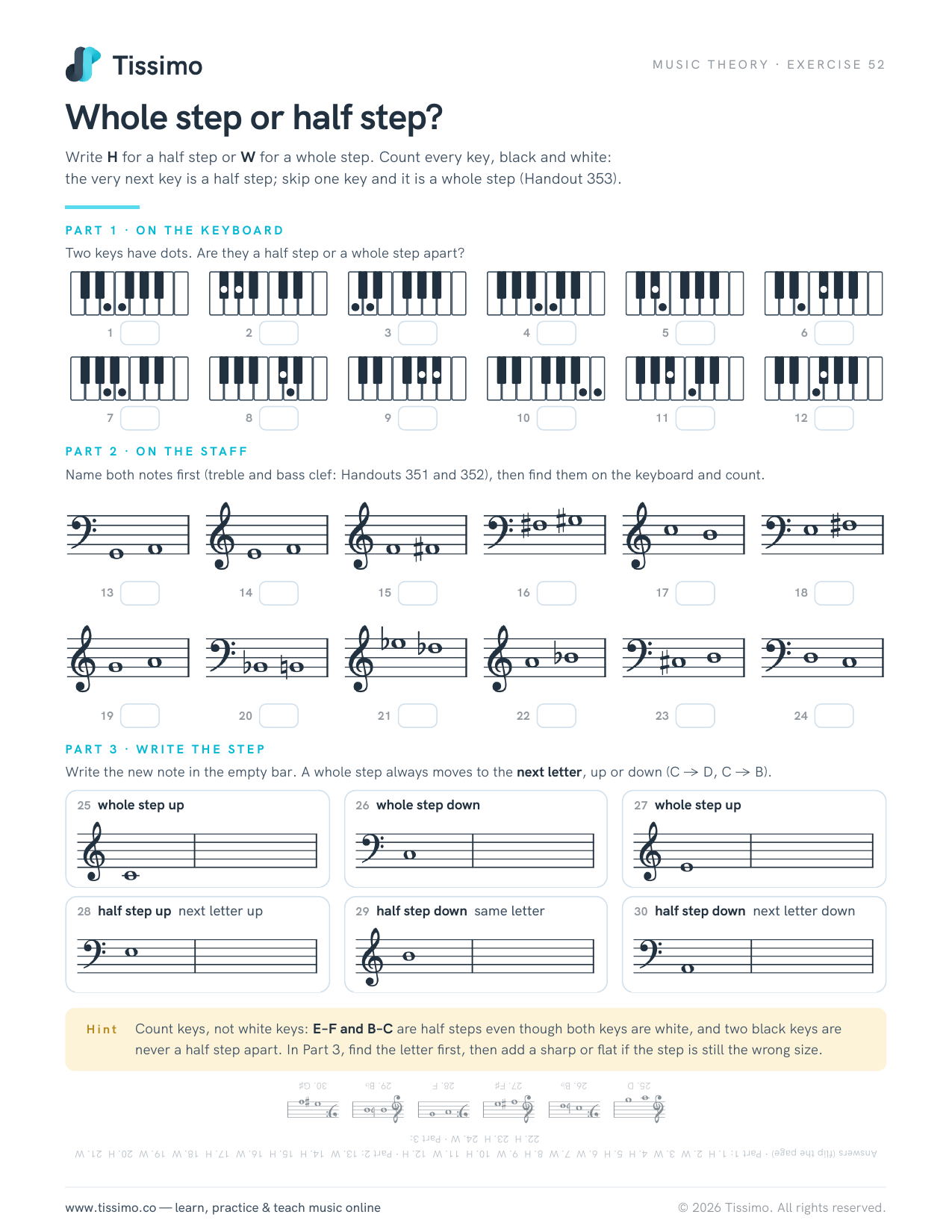 Whole step or half step?Write H for a half step or W for a whole step. Count every key, black and white: the very next key is a half step; skip one key and it is a whole step (Handout 353).