Rhythm & Meter
Meter
Meter is the way beats are grouped into a repeating pattern of strong and weak, usually in twos, threes or fours. The time signature at the start of the music shows it.
Meter is the way the beats of a piece are organized into a repeating pattern of strong and weak. Each group is one bar (or measure), and the first beat of each bar, the downbeat, carries the main accent. When you feel a march as ONE-two, ONE-two, or a waltz as ONE-two-three, you are feeling its meter.
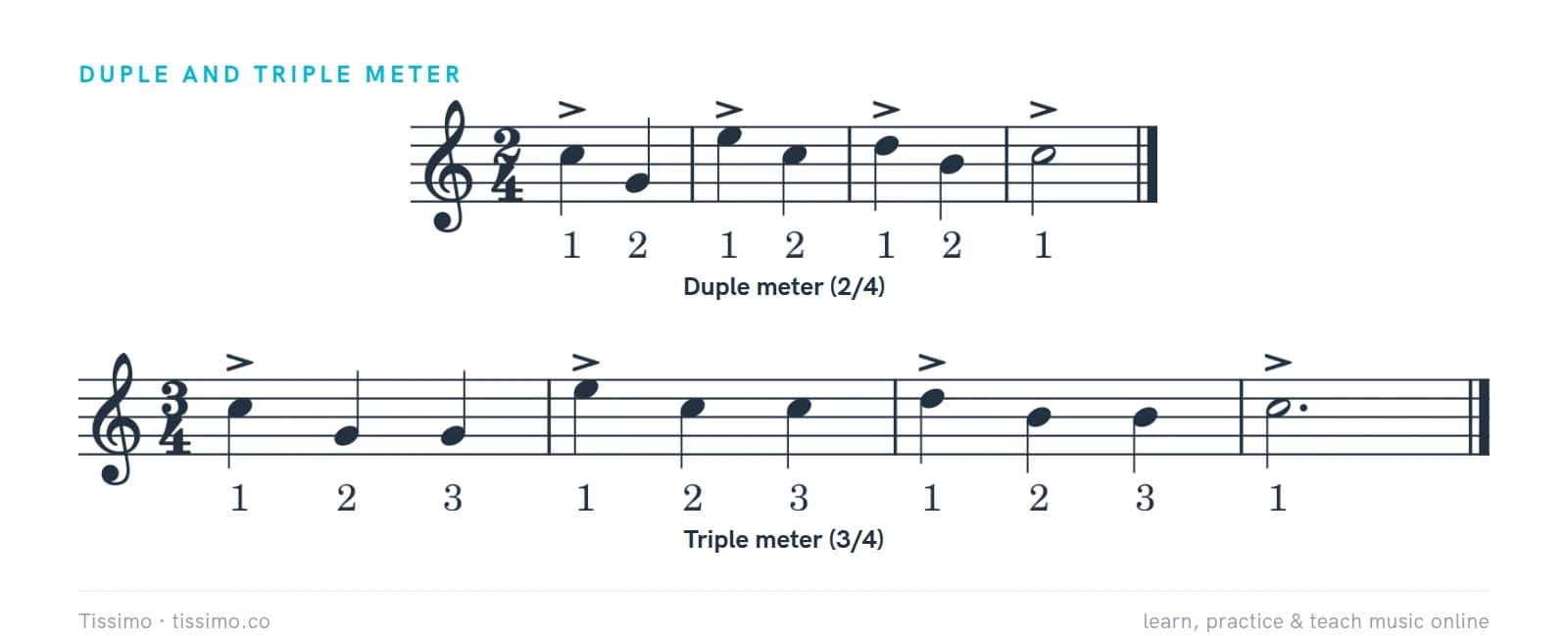
Naming a meter
Musicians describe a meter with two words. The first tells you how many beats are in a bar:
- Duple: two beats (strong-weak).
- Triple: three beats (strong-weak-weak).
- Quadruple: four beats (strong-weak-medium-weak).
The second tells you how each beat divides:
Put together, they give the standard names:
- 2/4: simple duple
- 3/4: simple triple
- 4/4: simple quadruple
- 6/8: compound duple
- 9/8: compound triple
- 12/8: compound quadruple
Meters whose beats are not all the same length, such as 5/8 or 7/8, are called irregular meters.
Meter and the time signature
The time signature is how meter is written down. It sits at the start of the music and tells you how much fits in each bar. The meter is the felt pattern behind those numbers. That is why 3/4 and 6/8, which both hold six eighth notes, feel so different: 3/4 has three beats, while 6/8 has two beats of three eighths each.
Hearing the meter
To find the meter of a piece by ear, tap the beat and count along. Try counting in twos, then threes, then fours, and notice which count keeps landing the strong beats on "1". The bass line and the chords help too: chords tend to change on the downbeat.
A piece can also change meter as it goes. Practice finding where each new bar starts with the Find the New Downbeat worksheet, and test yourself on time signatures with Meter Detective.
Common questions
What is the difference between meter and time signature?
Meter is the pattern of strong and weak beats you feel. The time signature is the written sign for it at the start of the music. One describes the music; the other tells the reader how to count it.
What is the difference between meter and rhythm?
Meter is the regular framework of beats and bars. Rhythm is the pattern of actual note lengths played within that framework, which can follow the meter or cut across it.
Practice it: free worksheets
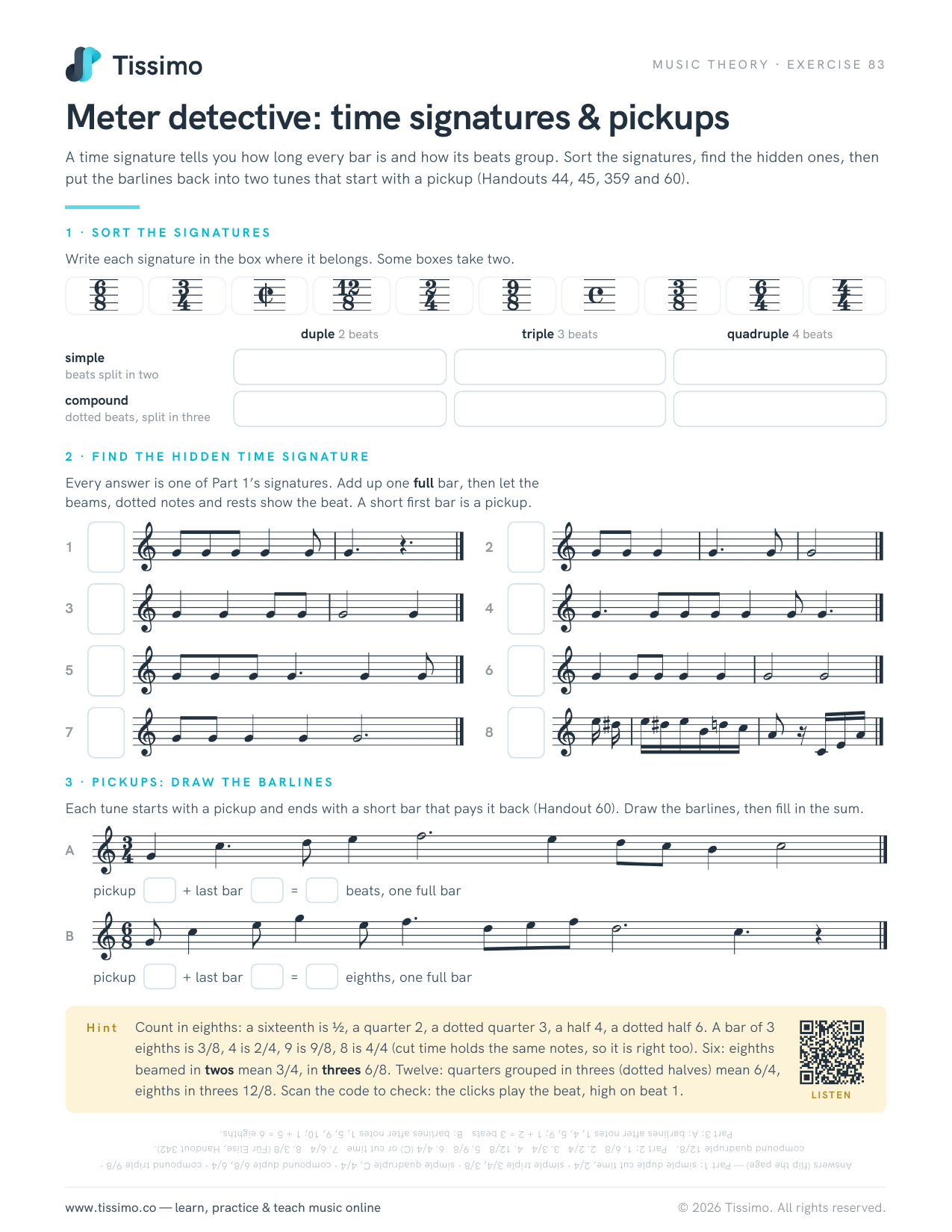 Meter detective: time signatures & pickupsA time signature tells you how long every bar is and how its beats group. Sort the signatures, find the hidden ones, then put the barlines back into two tunes that start with a pickup (Handouts 44, 45, 359 and 60).
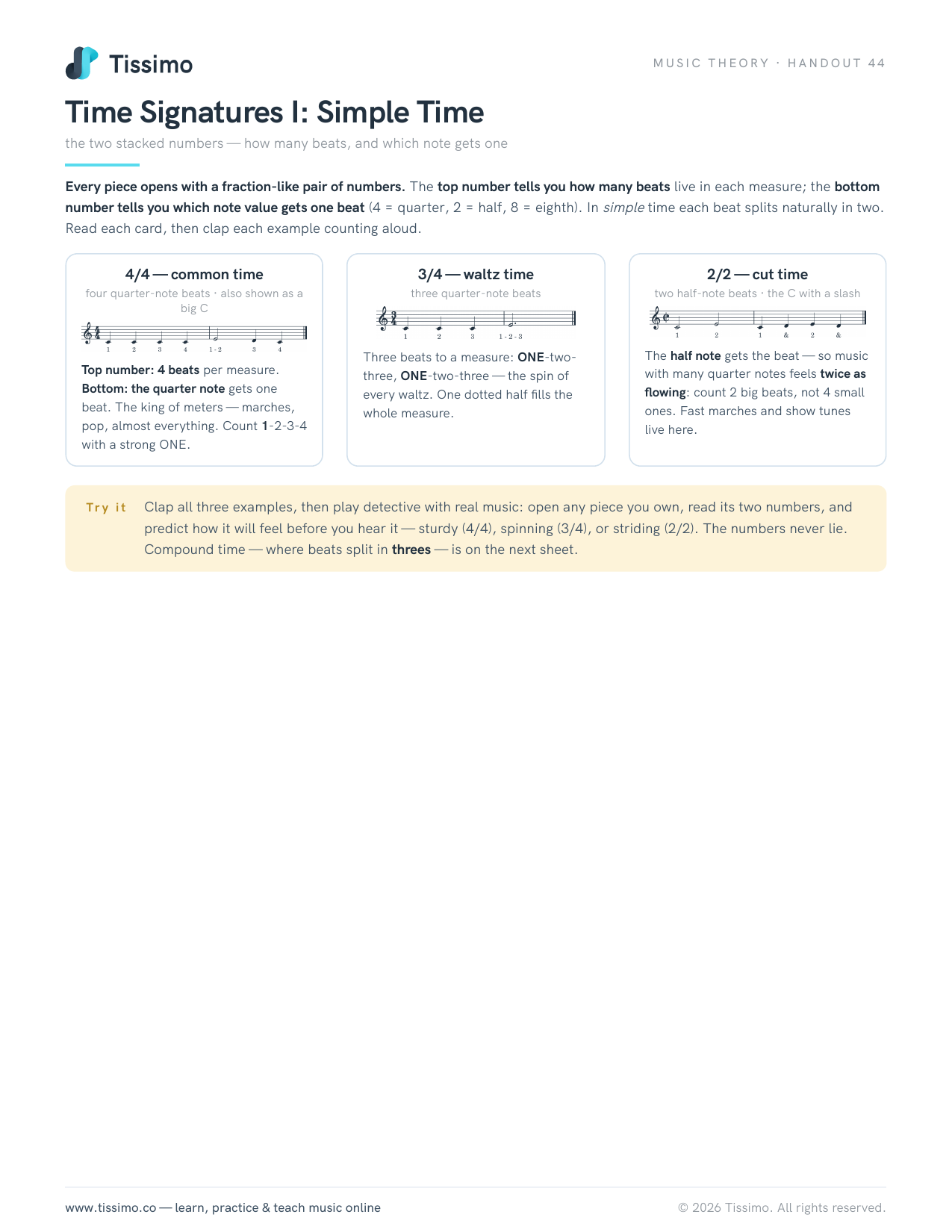 Time Signatures I: Simple Timethe two stacked numbers — how many beats, and which note gets one
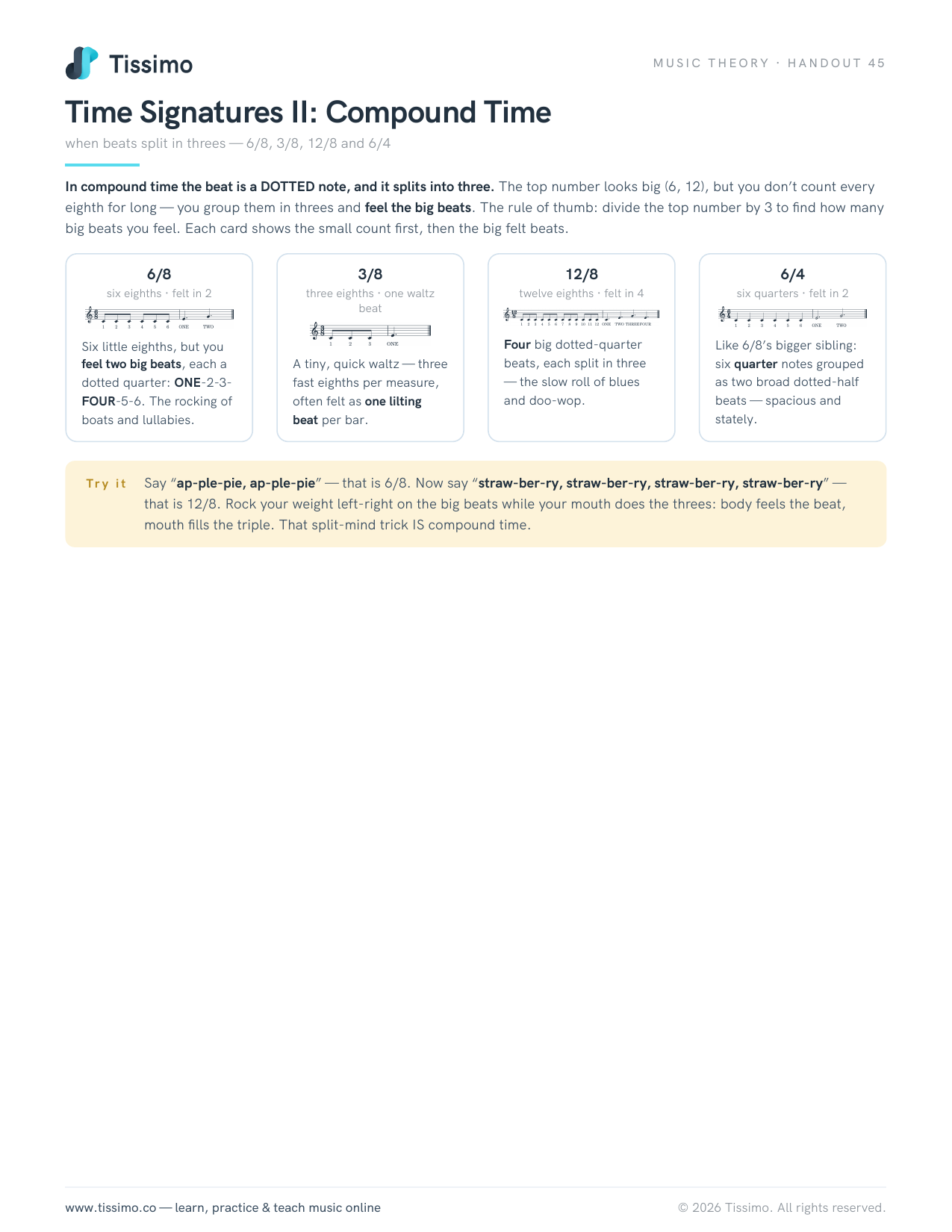 Time Signatures II: Compound Timewhen beats split in threes — 6/8, 9/8, 12/8 and 6/4
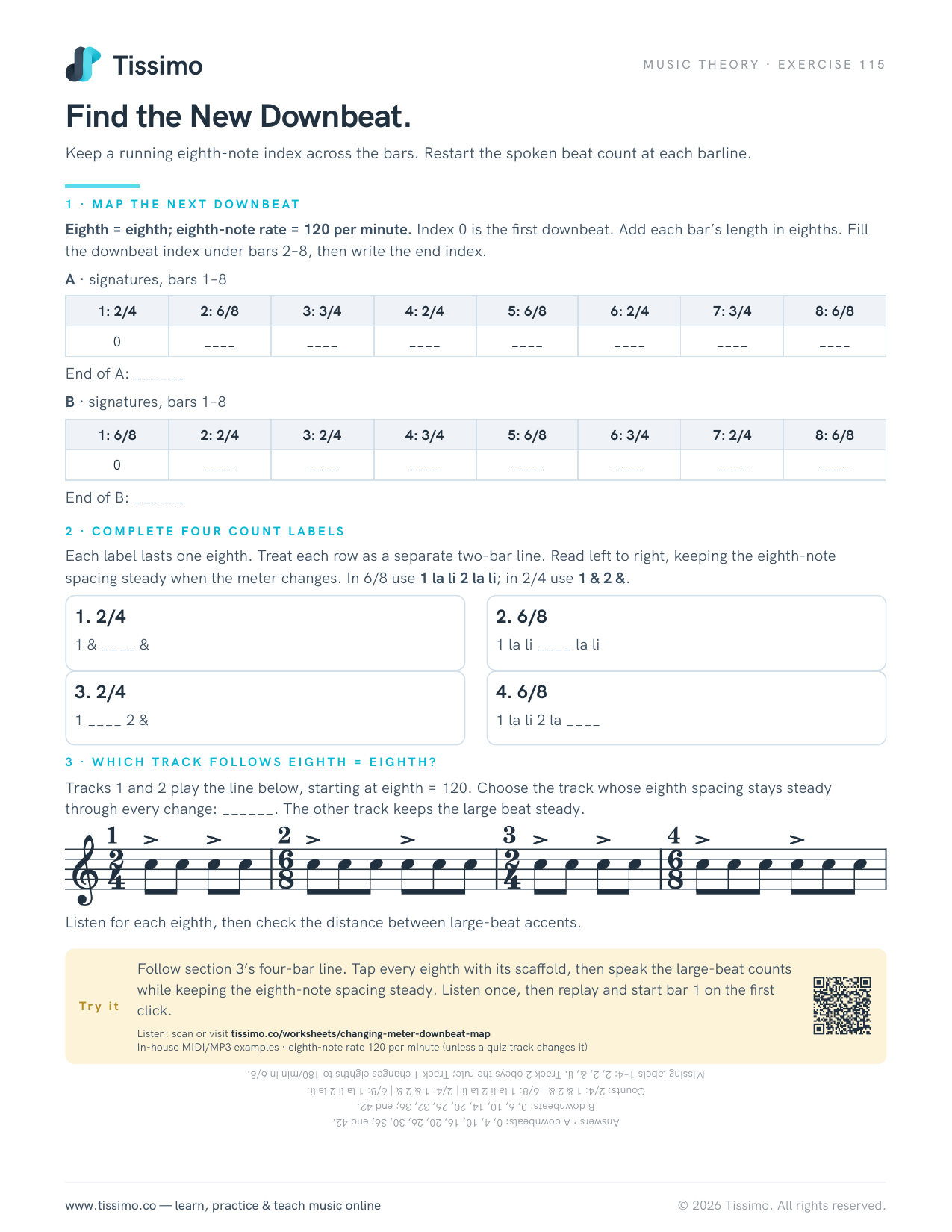 Find the New Downbeat.Keep a running eighth-note index across the bars. Restart the spoken beat count at each barline.