Scales, Keys & Modes
Circle of Fifths
The circle of fifths arranges the twelve keys like a clock, each a perfect fifth from the next. Going clockwise from C adds one sharp per key; going counterclockwise adds one flat.
The circle of fifths is a diagram of the twelve major keys, usually with their relative minors, arranged in a circle so that each key is a perfect fifth above the one before it. It is one of the most useful maps in music theory: it shows the key signature of every key, which keys are close relatives, and how chords like to move.
Going around the circle
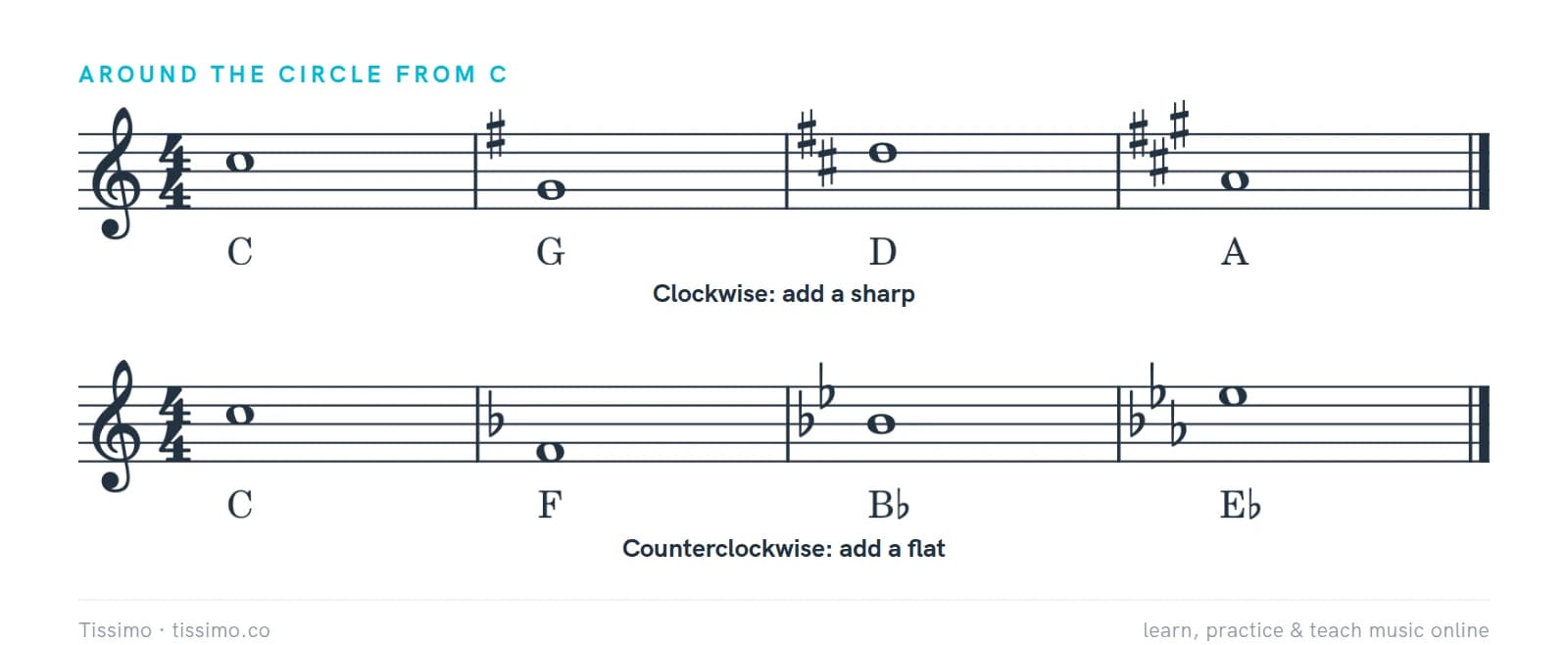
Start at the top with C major, which has no sharps or flats. Move clockwise and each step goes up a perfect fifth and adds one sharp:
- C (none), G (1♯), D (2♯), A (3♯), E (4♯), B (5♯), F♯ (6♯)
Move counterclockwise from C and each step goes down a fifth (or up a fourth) and adds one flat:
- C (none), F (1♭), B♭ (2♭), E♭ (3♭), A♭ (4♭), D♭ (5♭), G♭ (6♭)
At the bottom the two sides meet: F♯ major and G♭ major are the same key spelled two ways (enharmonic equivalent keys). Two more pairs overlap there: B major (five sharps) is the same as C♭ major (seven flats), and D♭ major (five flats) the same as C♯ major (seven sharps). That is why there are fifteen major key signatures but only twelve major keys.
The order of sharps and flats
The circle also gives you the order in which sharps and flats appear in a key signature. Each new sharp is a fifth above the last: F♯ C♯ G♯ D♯ A♯ E♯ B♯. The flats run the other way, each a fifth below the last: B♭ E♭ A♭ D♭ G♭ C♭ F♭. A popular memory aid for the sharps is "Father Charles Goes Down And Ends Battle"; read it backward for the flats.
Two shortcuts follow. In a sharp key, the tonic is a half step above the last sharp: two sharps, F♯ and C♯, means D major. In a flat key, the tonic is the second-to-last flat: three flats, B♭ E♭ A♭, means E♭ major. F major, with its single flat, is the one to memorize.
Relative minors
The inner ring of most circles shows the relative minor of each major key, which shares its key signature: A minor with C, E minor with G, D minor with F, and so on around. The minor keys follow the same order of fifths.
Neighbors on the circle
Keys next to each other on the circle differ by a single note. C major and G major share six notes and differ only in F versus F♯. That is why music most often modulates to a neighboring key, very often the dominant key one step clockwise. Keys on opposite sides, such as C and F♯, share the fewest notes and sound the most distant from each other.
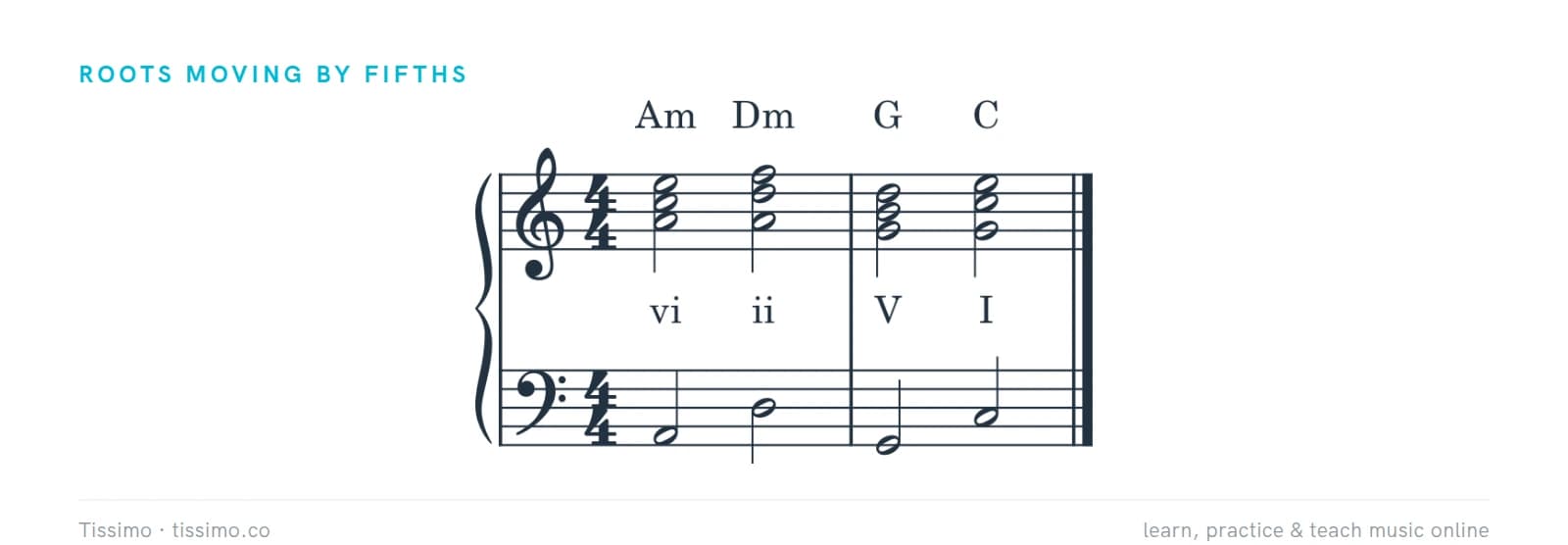
The circle also describes chord progressions. A bass line that moves counterclockwise by fifths, A, D, G, C, makes the strong progression vi–ii–V–I in C major, the root motion behind the ii–V–I progression and many other progressions.
Common questions
How do you remember the order of sharps and flats?
Sharps: F C G D A E B, often remembered as "Father Charles Goes Down And Ends Battle". Flats are the same letters backward, B E A D G C F: "Battle Ends And Down Goes Charles's Father".
Why is it called the circle of fifths?
Because each key is a perfect fifth from its neighbors, and after twelve fifths you arrive back at the key you started from, so the keys close into a circle.
Practice it: free worksheets
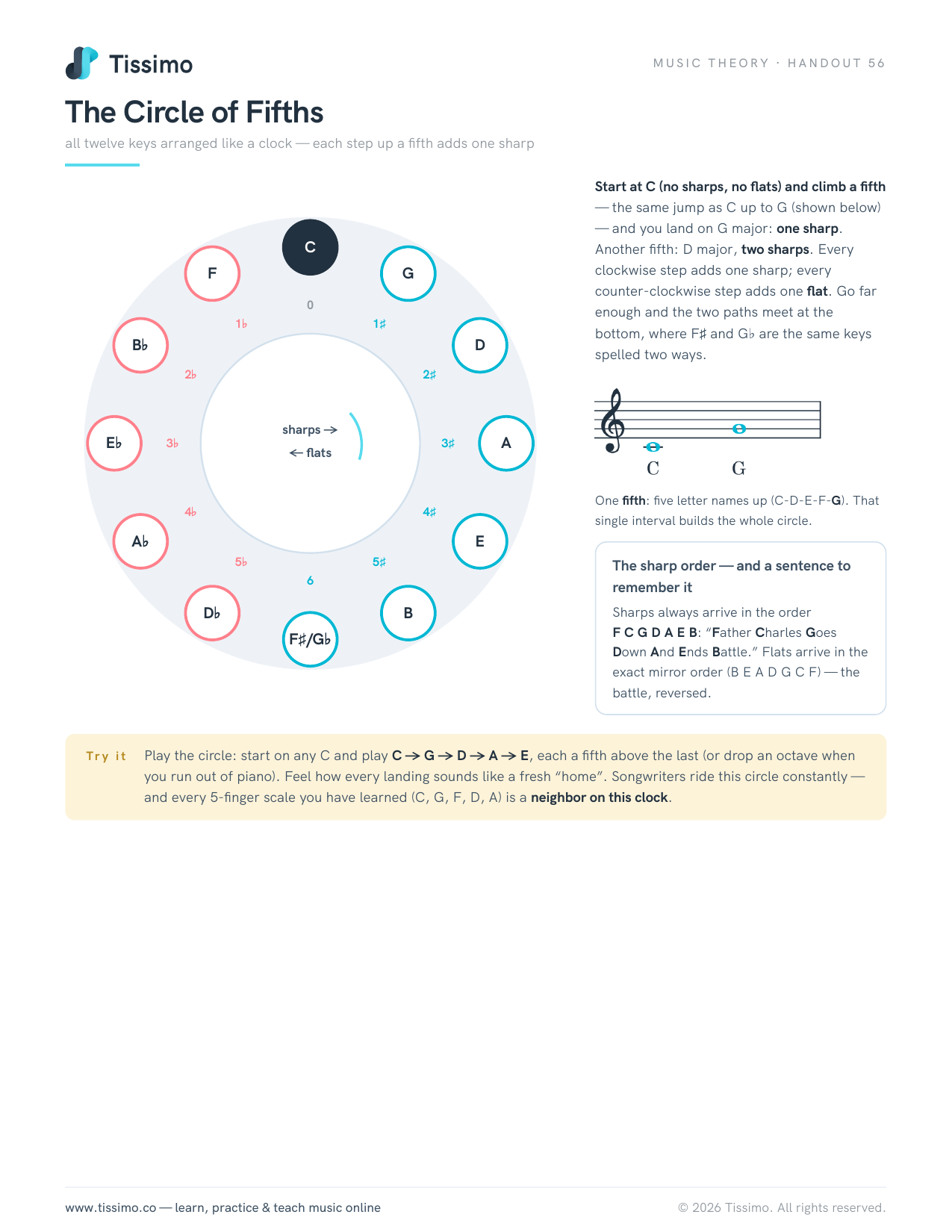 The Circle of Fifthsall twelve keys arranged like a clock — each step up a fifth adds one sharp
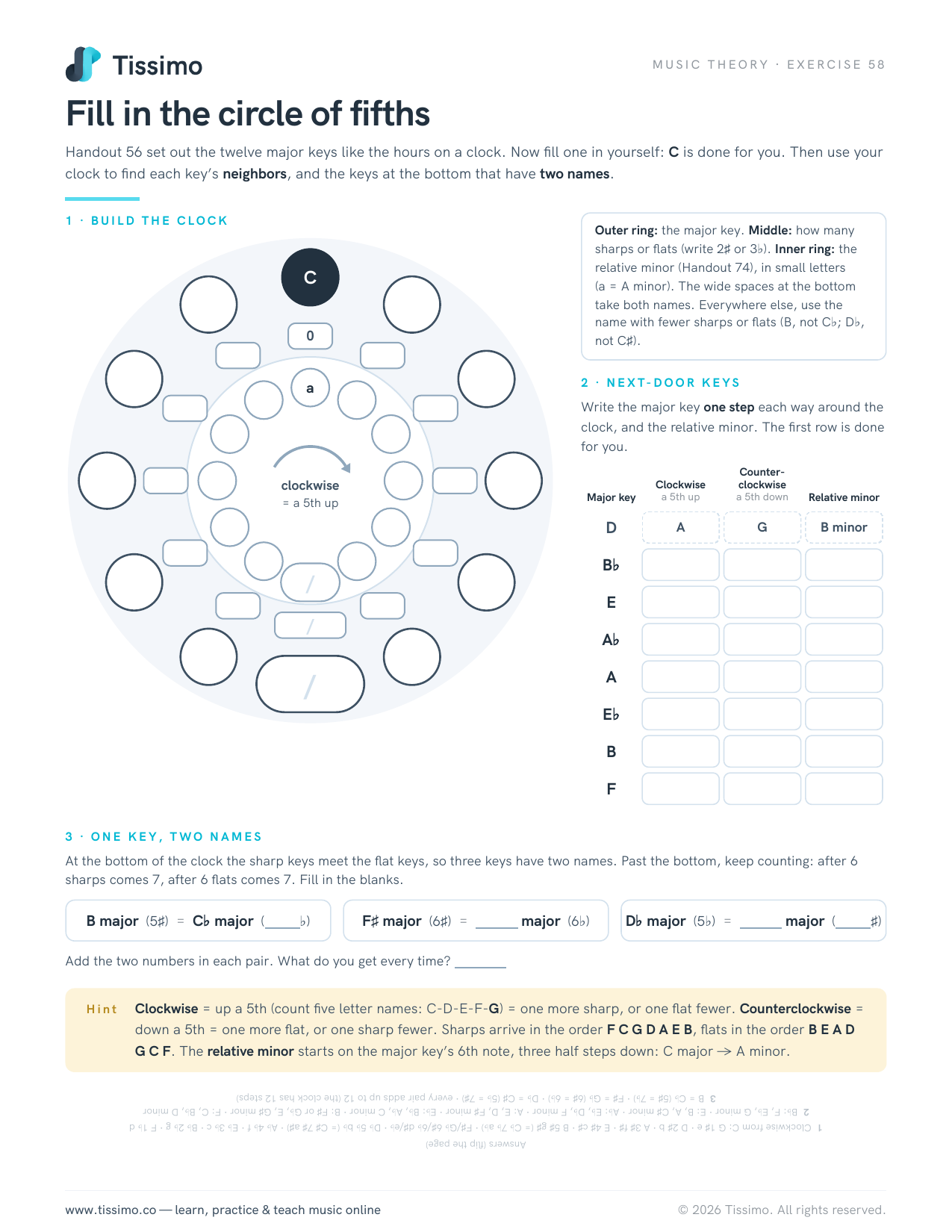 Fill in the circle of fifthsHandout 56 set out the twelve major keys like the hours on a clock. Now fill one in yourself: C is done for you. Then use your clock to find each key’s neighbors, and the keys at the bottom that have two names.
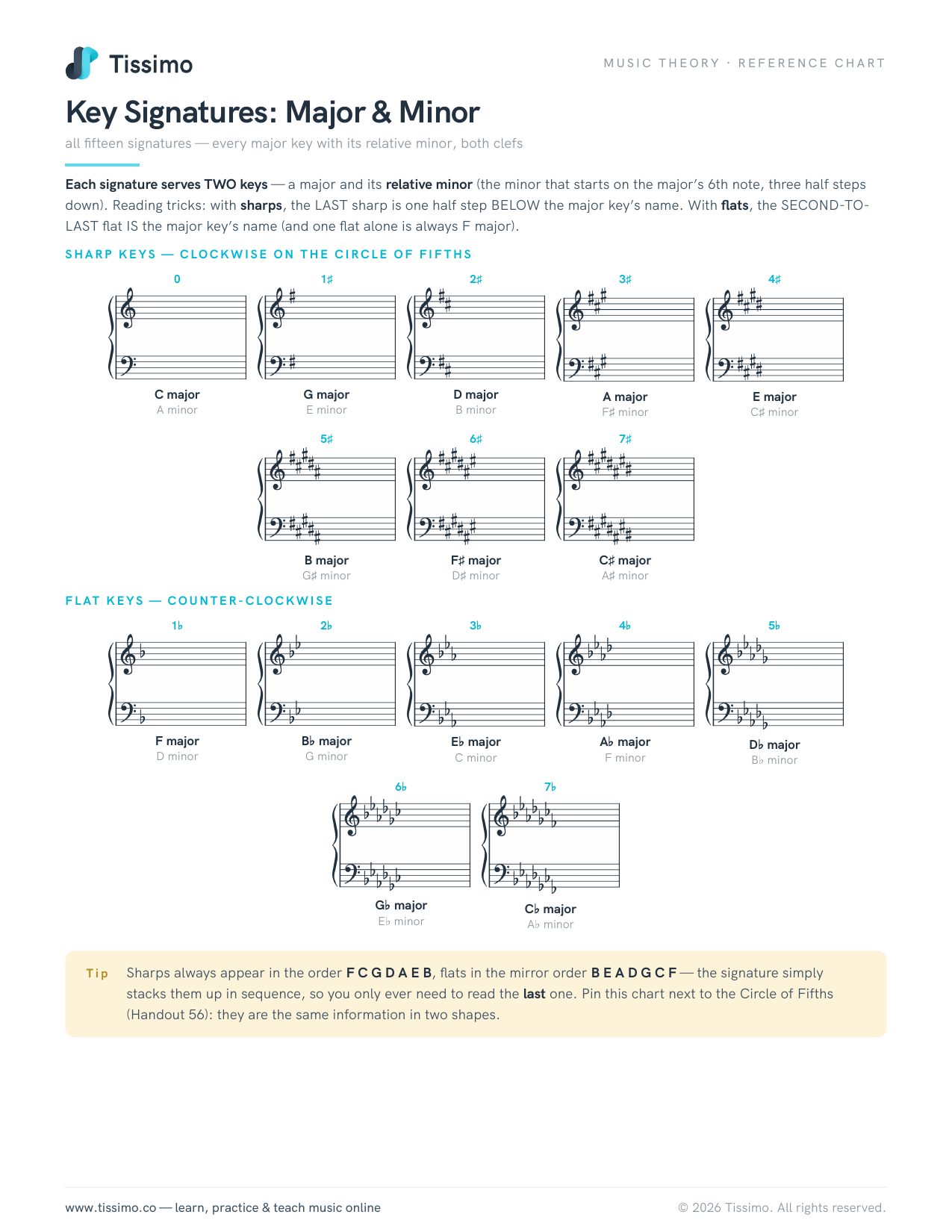 Key Signatures: Major & Minorall fifteen signatures — every major key with its relative minor, both clefs
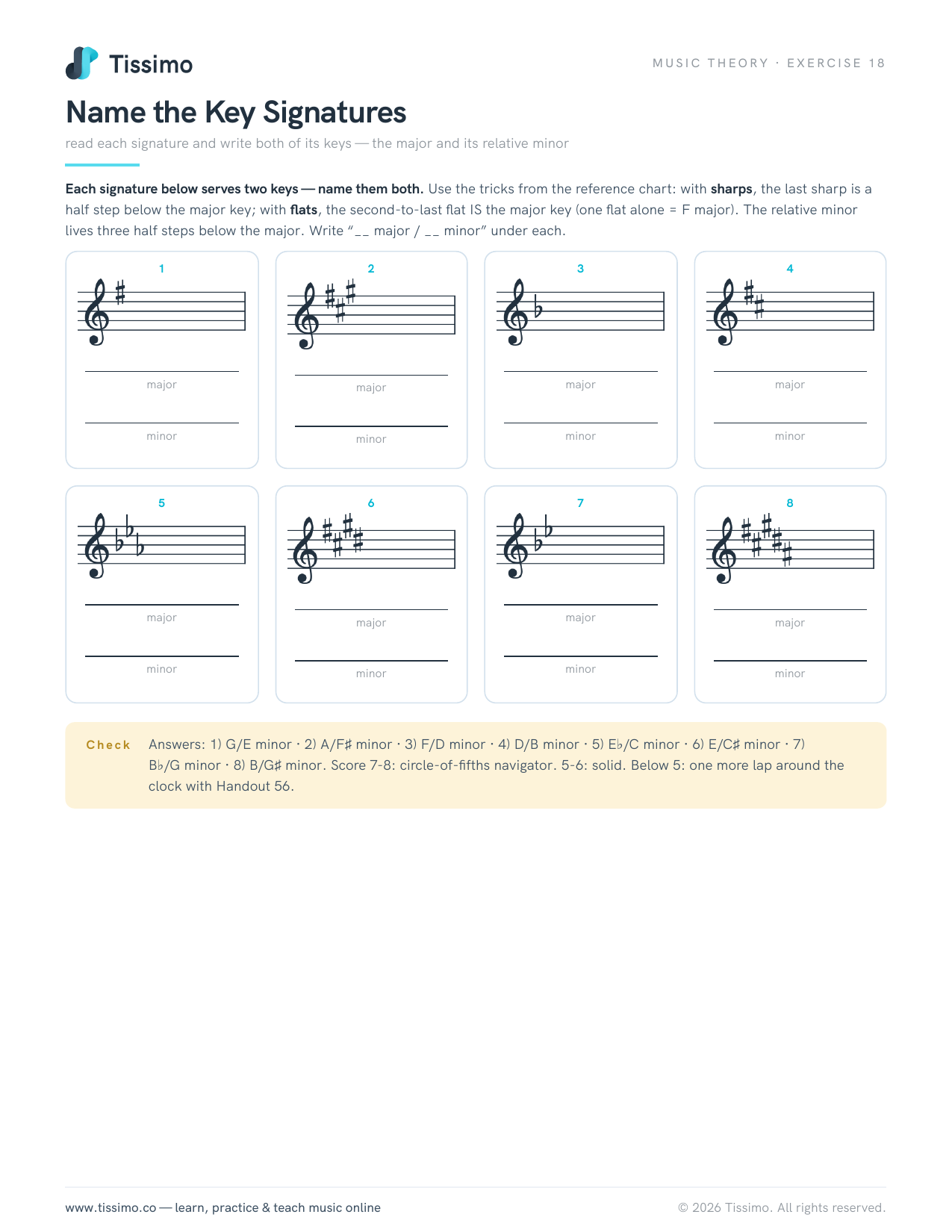 Name the Key Signaturesread each signature and write both of its keys — the major and its relative minor
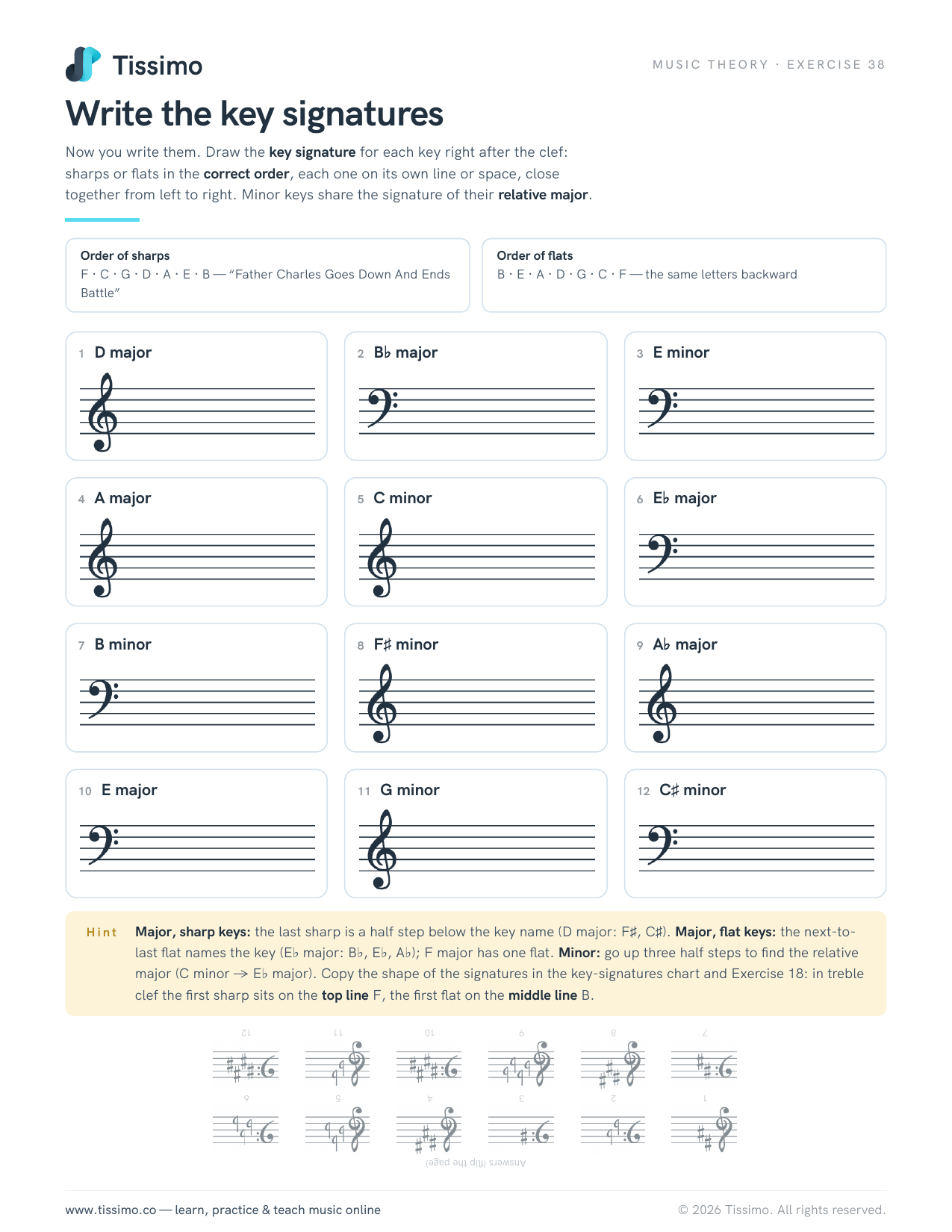 Write the key signaturesNow you write them. Draw the key signature for each key right after the clef: sharps or flats in the correct order, each one on its own line or space, close together from left to right. Minor keys share the signature of their relative major.
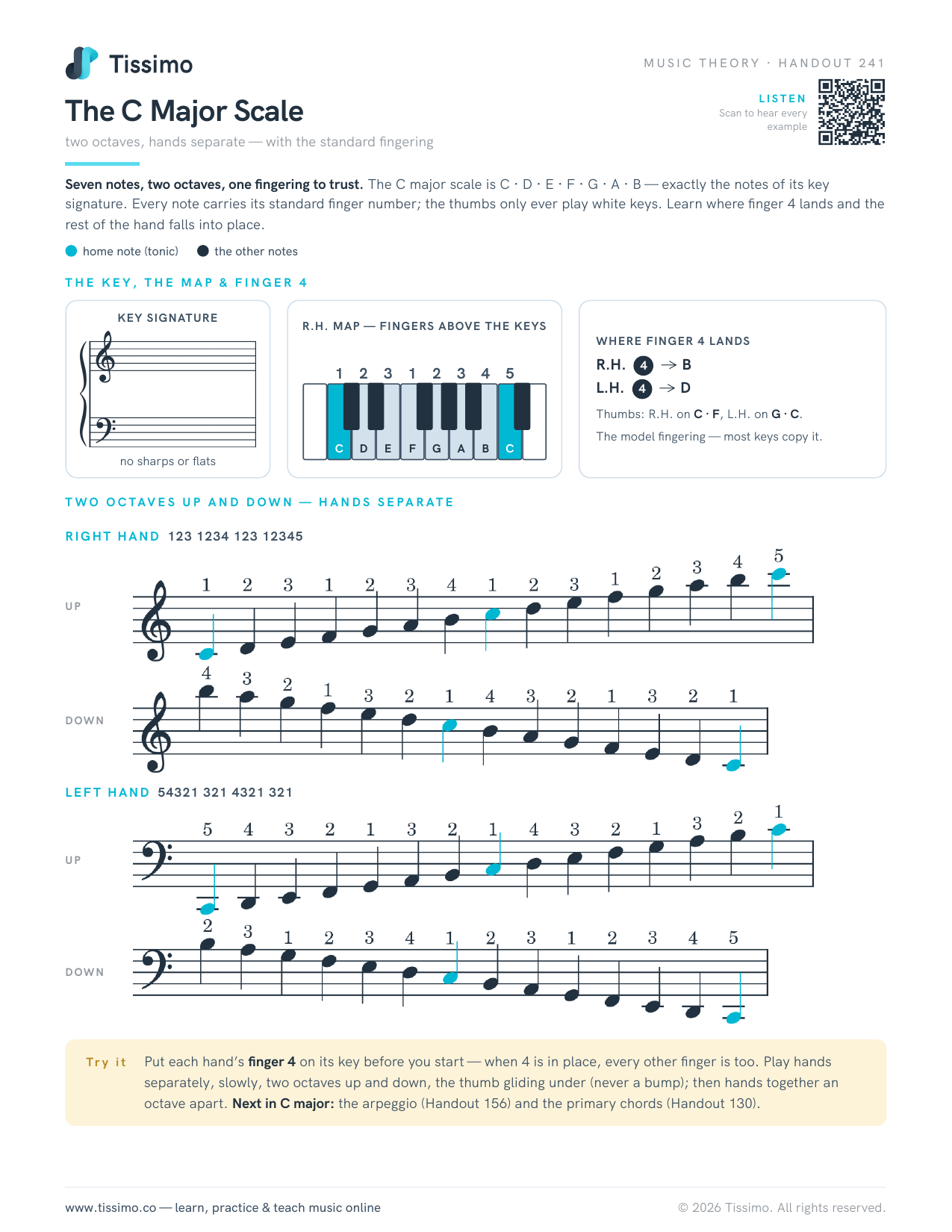 Scales in Every KeyTwo octaves up and down with the standard fingering on every note, in all 24 keys.