Instruments & Voices
Clarinet
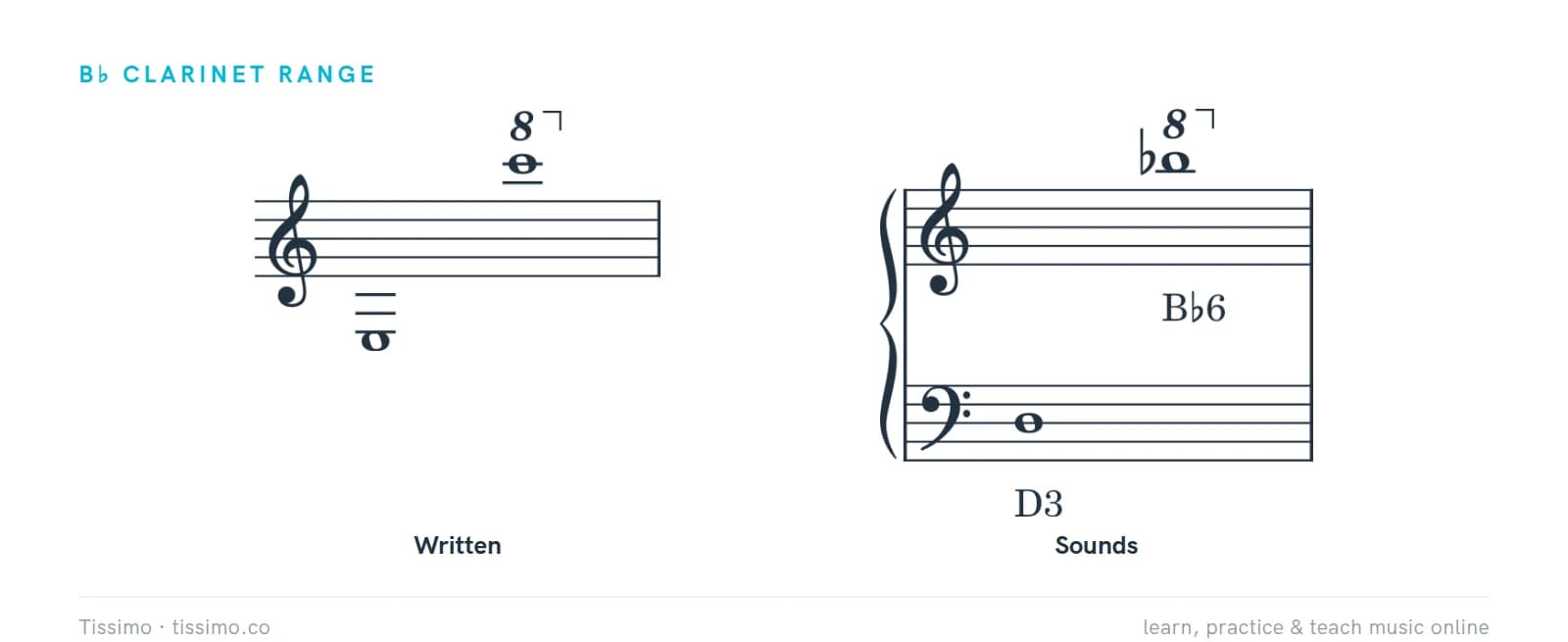
The clarinet is a single-reed woodwind with a mostly cylindrical tube. The common B♭ clarinet sounds a major second lower than written, and its written range runs from E3 to about C7.
The clarinet is a woodwind with one flat cane reed held against its mouthpiece by a metal or fabric ligature. When you blow, the reed vibrates against the mouthpiece and sets the air in the tube vibrating. Its tube is mostly cylindrical, which gives the clarinet a very wide range and a surprisingly different color in each register: dark and hollow at the bottom, clear and singing in the middle, brilliant at the top.
How a clarinet makes its sound
Keys and rings cover the tone holes to lengthen or shorten the air column. Because the tube is cylindrical and closed at one end by the reed, the clarinet does something unusual when you press the register key: instead of jumping up an octave, like the flute or saxophone, it jumps up a twelfth (an octave plus a fifth). That is why the clarinet needs different fingerings in its upper register and why crossing between the registers, called the break, takes practice.
The registers have names: the low chalumeau register, the short throat register around written G4 to B♭4, the clarion register above the break and the high altissimo register.
A transposing instrument
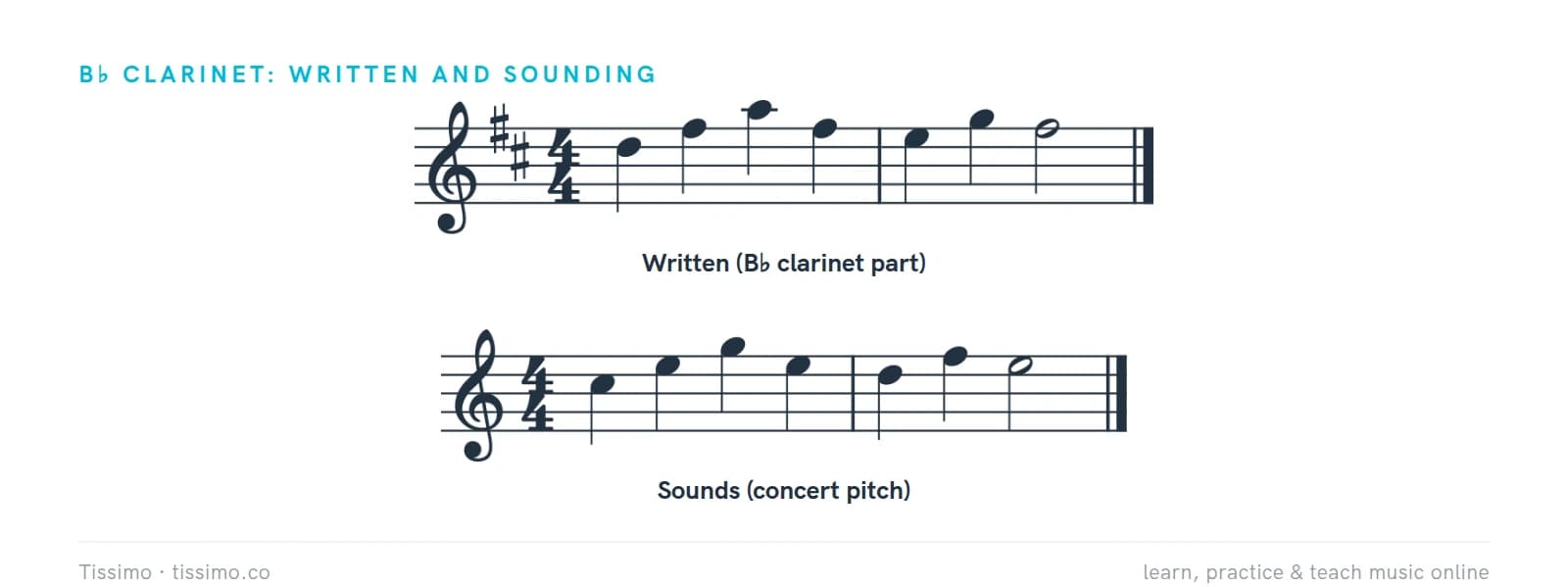
The most common clarinet is in B♭: when you play a written C, it sounds B♭, a major second lower. Clarinet parts are therefore written a major second higher than they sound, and in a key with two more sharps (or two fewer flats) than the music around them. Orchestras also use the A clarinet, which sounds a minor third lower than written. The bass clarinet in B♭ usually reads treble clef and sounds a major ninth lower than written.
Range
The B♭ clarinet's written range runs from E3 up to about C7, which sounds from D3 to about B♭6. The top notes belong to advanced players; school music usually stays below about written G6.
Its role
The clarinet is a core instrument of the orchestra, the concert band (where it often plays the role the violins play in an orchestra), jazz (especially in New Orleans jazz and the swing era), klezmer and solo and chamber music.
Tips for beginners
- Moisten the reed before you play, and rotate between a few reeds so each lasts longer.
- Cover the open tone holes completely with the pads of your fingers; a tiny leak makes squeaks.
- Keep the corners of your mouth firm and your chin flat, and use plenty of steady air.
- Practice crossing the break slowly, keeping the right-hand fingers down where you can.
Common questions
Why does a B♭ clarinet sound different from what is written?
It is a transposing instrument. Its written C sounds B♭, a major second lower, so the same fingerings work on every clarinet in the family. To play with a piano from a C part, a clarinetist reads every note a major second higher.
What is the break on the clarinet?
The break is the change between the low (chalumeau and throat) register and the clarion register, around written B♭4 to B4. Because the clarinet overblows a twelfth, the fingering changes a lot across it, which makes smooth crossing a key early skill.
Practice it: free worksheets
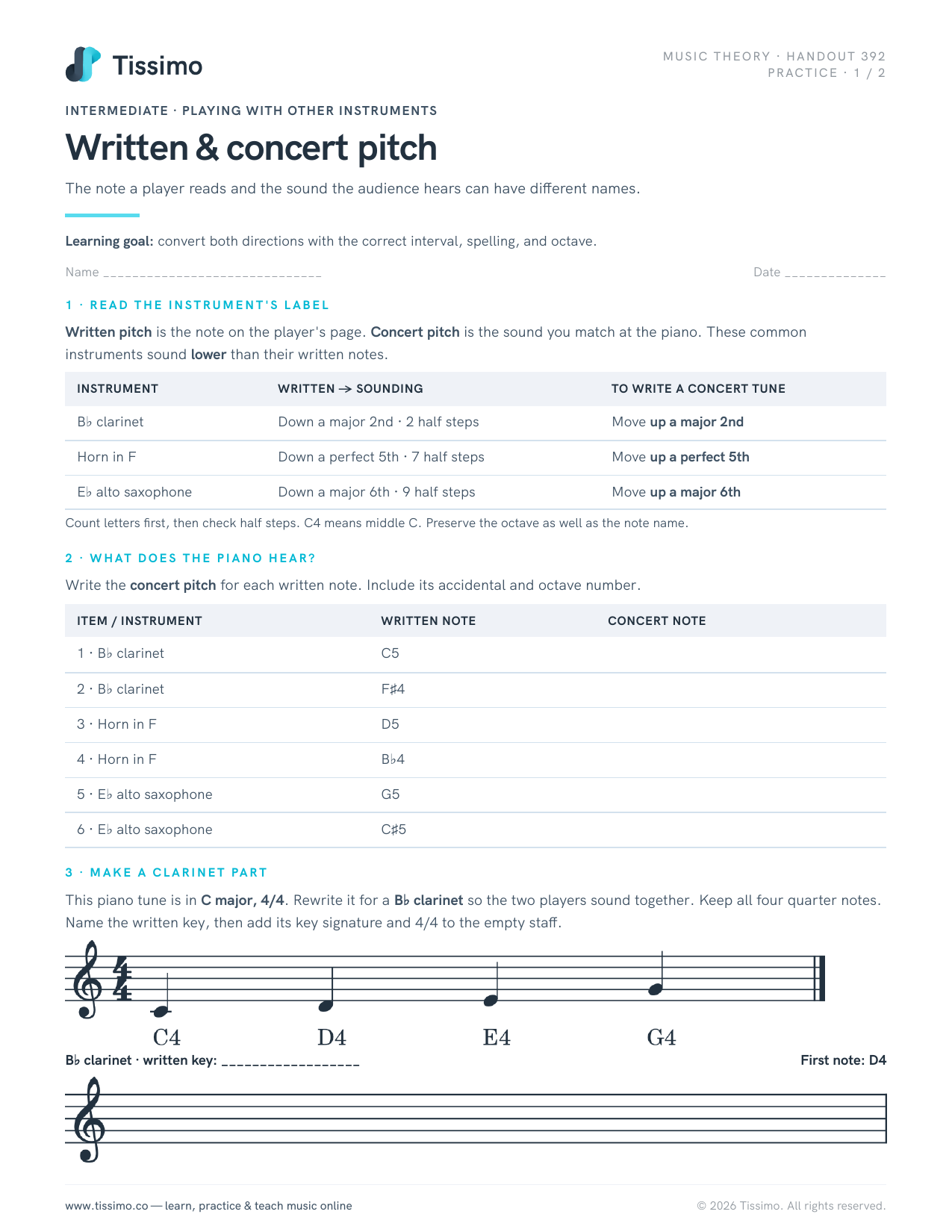 Written & concert pitchThe note a player reads and the sound the audience hears can have different names.
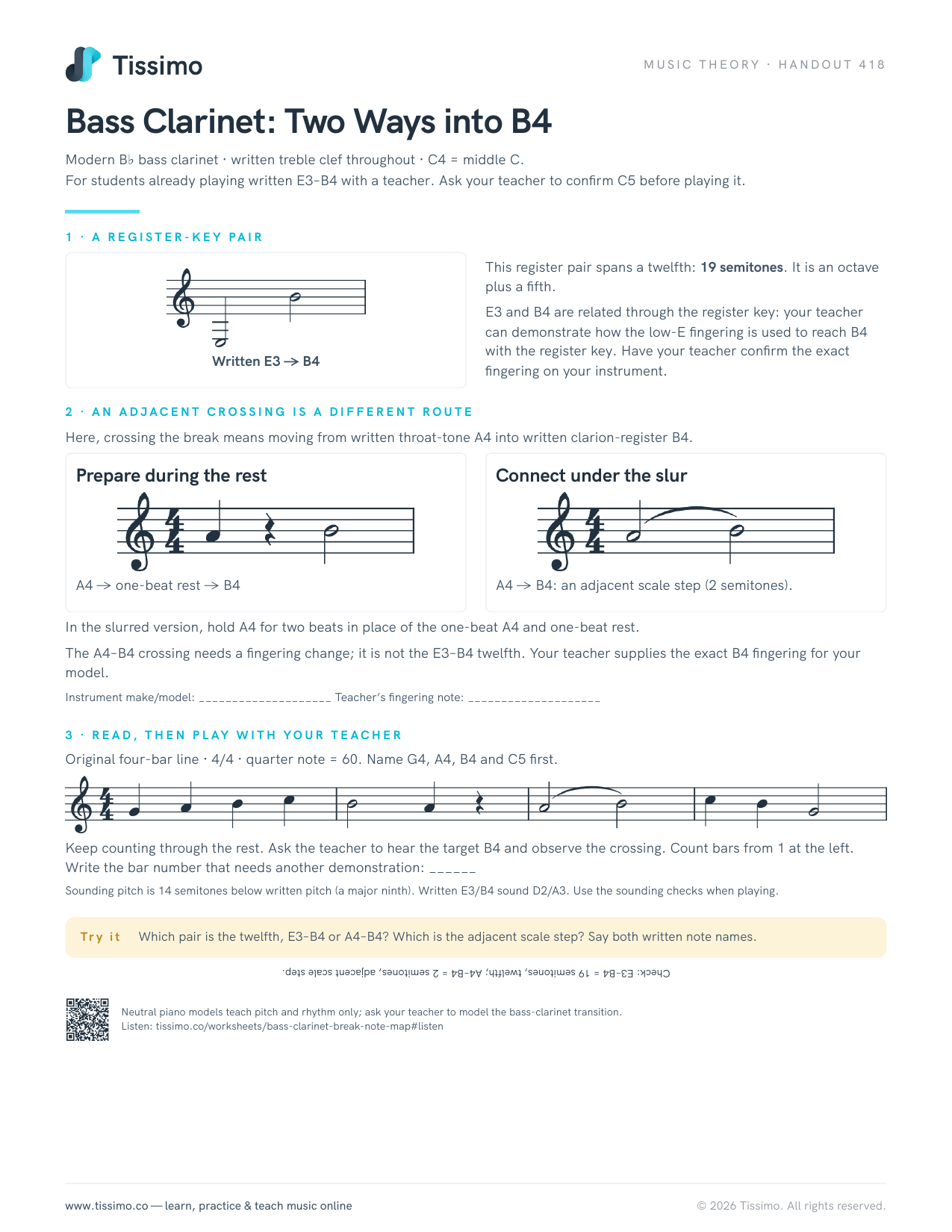 Bass Clarinet: Two Ways into B4Modern B♭ bass clarinet · written treble clef throughout · C4 = middle C. For students already playing written E3–B4 with a teacher. Ask your teacher to confirm C5 before playing it.
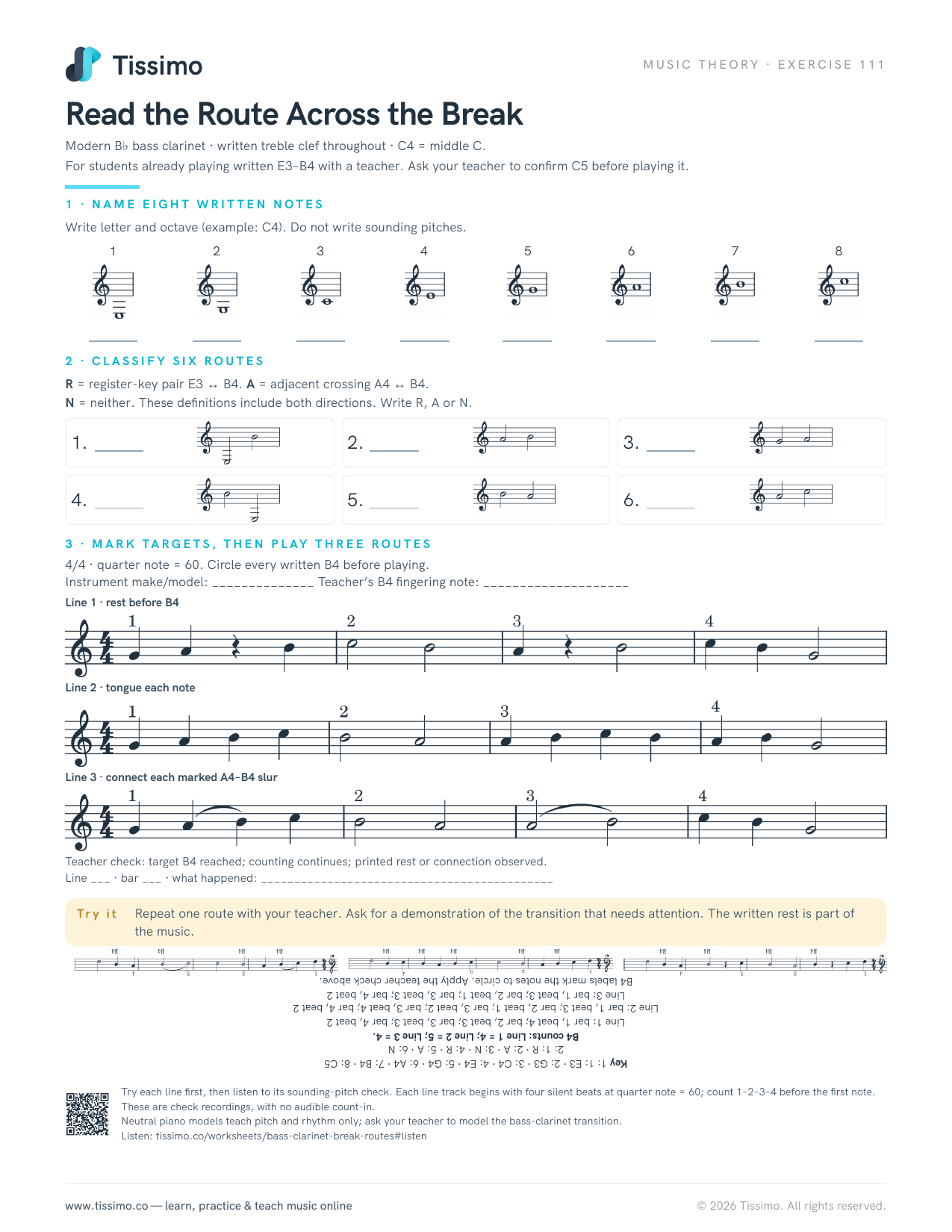 Read the Route Across the BreakModern B♭ bass clarinet · written treble clef throughout · C4 = middle C. For students already playing written E3–B4 with a teacher. Ask your teacher to confirm C5 before playing it.
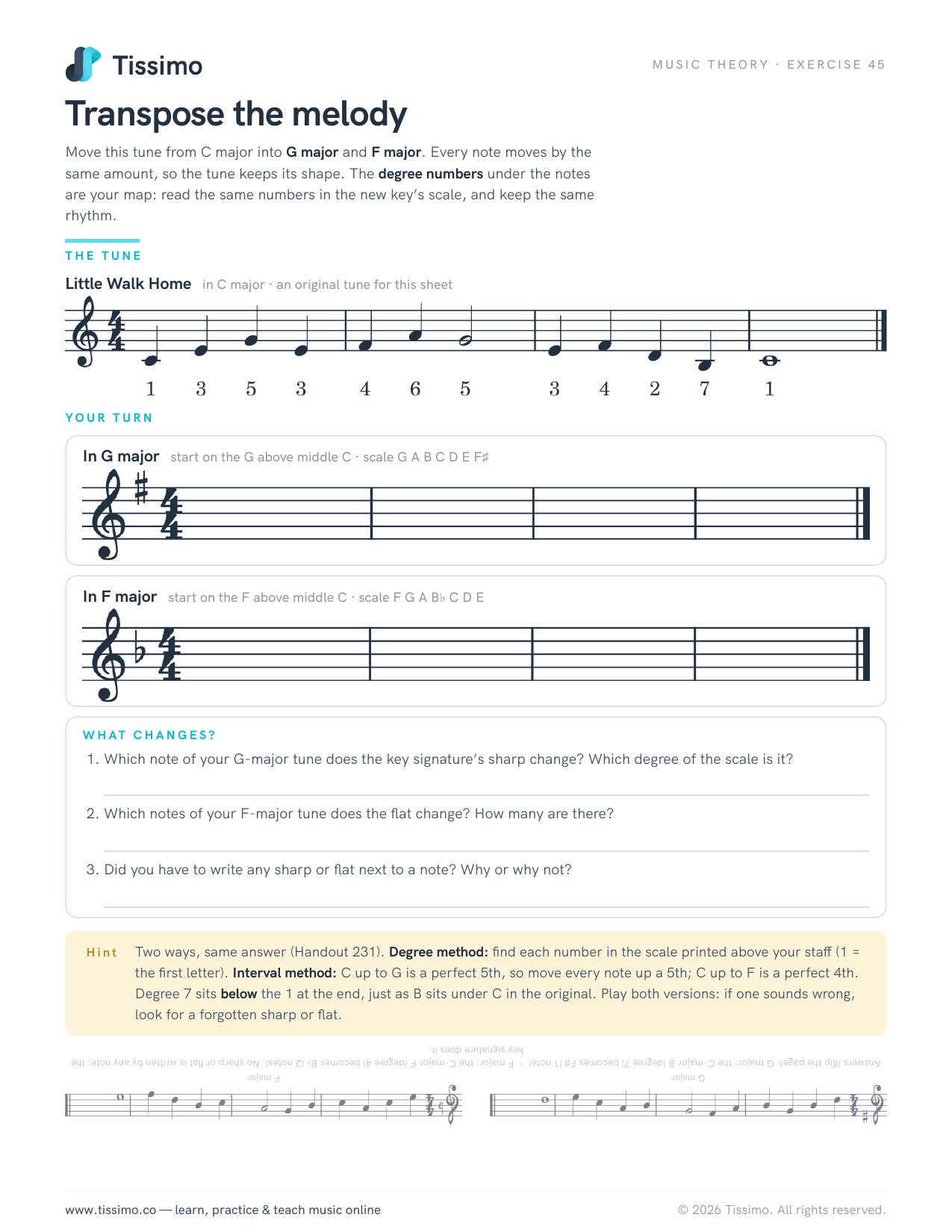 Transpose the melodyMove this tune from C major into G major and F major. Every note moves by the same amount, so the tune keeps its shape. The degree numbers under the notes are your map: read the same numbers in the new key’s scale, and keep the same rhythm.
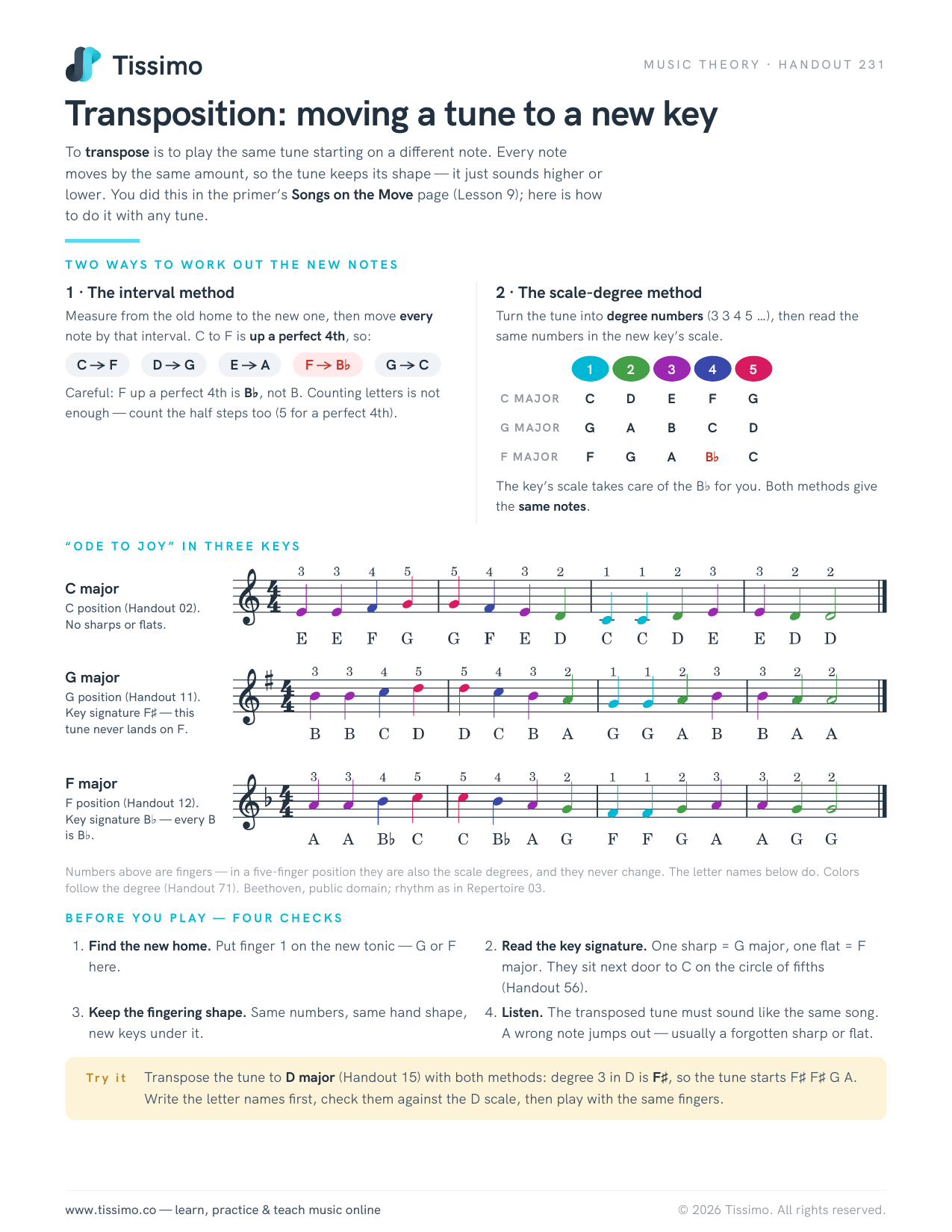 Transposition: moving a tune to a new keyTo transpose is to play the same tune starting on a different note. Every note moves by the same amount, so the tune keeps its shape — it just sounds higher or lower. Here is how to do it with any tune.