Tempo Markings
Molto
Pronounced MOHL-toh
Molto is an Italian modifier meaning 'very' or 'much'. It intensifies the word beside it: molto allegro is very fast, molto rit. slows down a lot, molto legato is very smooth.
Molto means "very" or "much". On its own it says nothing; it intensifies the word next to it. It can come before or after that word, and composers also write di molto, "very much".
Molto in real markings
- Tempo: Molto allegro or Allegro molto, very fast; Mozart's Symphony No. 40 in G minor opens Molto allegro. Molto adagio, very slow. Beethoven's Pathétique Sonata moves from its slow introduction into an Allegro di molto e con brio.
- Tempo changes: molto rit. (slow down a lot), molto accel., molto più mosso.
- Dynamics: molto cresc. (grow a lot louder), molto dim.
- Expression: molto legato, molto espressivo. Mendelssohn's Violin Concerto in E minor opens Allegro molto appassionato.
Molto, assai and poco
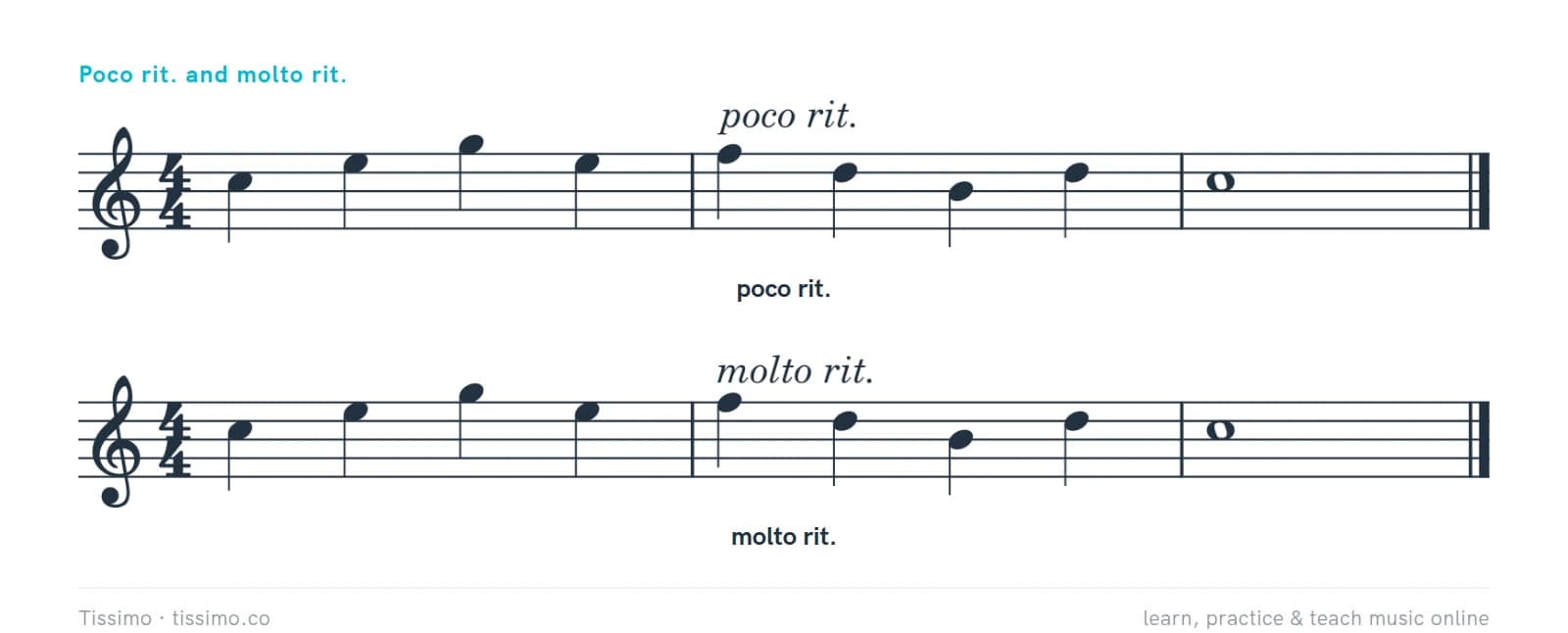
Assai also means "very" and is used in much the same places: Allegro assai and Allegro molto are close cousins. The opposite of molto is poco, "a little": poco rit. asks for a gentle slowing, molto rit. for a big one, as the example shows.
How much is "very"?
As with every tempo instruction, molto is relative. Molto rit. at the end of a quiet piece might halve the tempo; molto allegro in a dense passage of sixteenth notes still has to stay clear. Let the music, and your control of it, set the limit. Molto tells you to commit to the change, not to exaggerate it beyond what the music can carry.
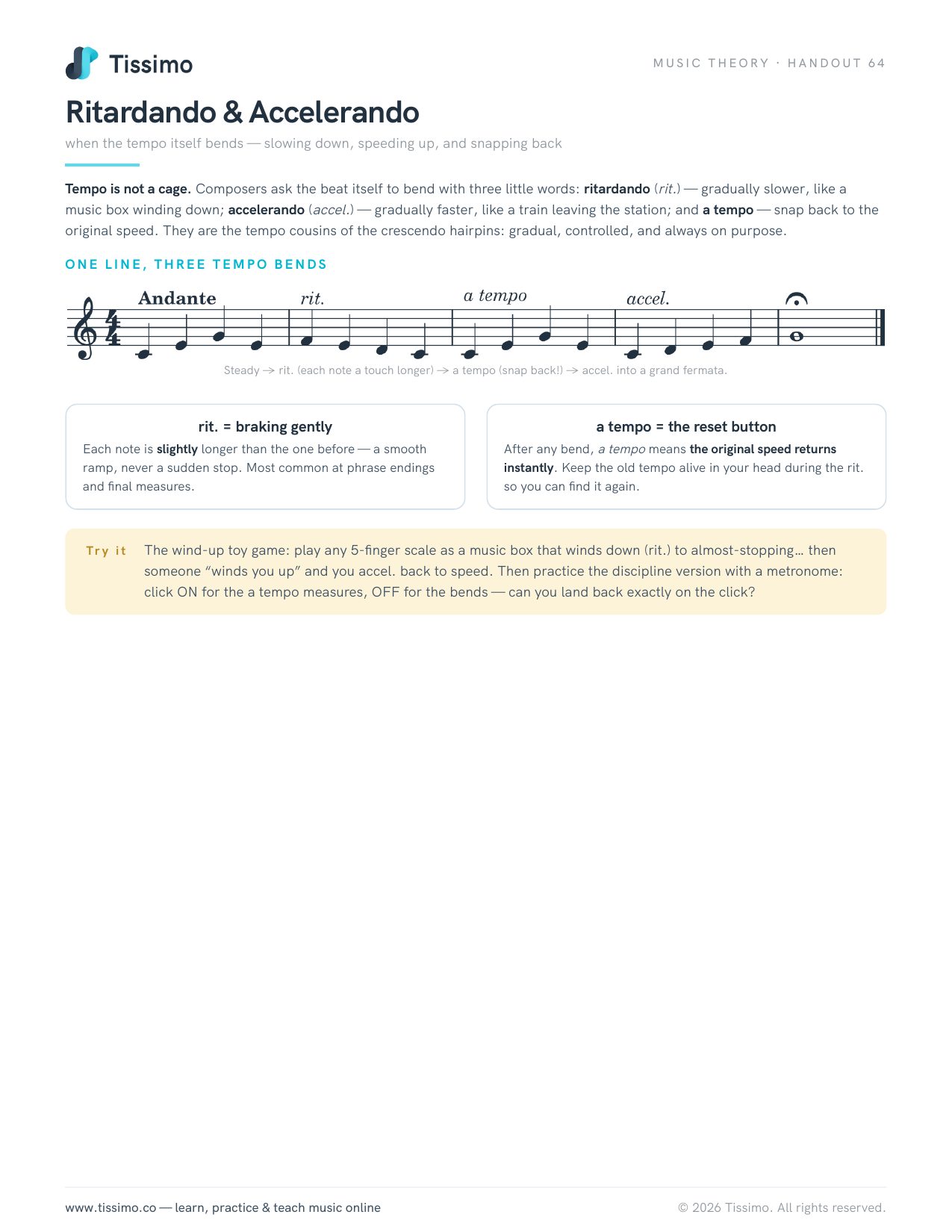
The ritardando itself is explained in Ritardando & Accelerando.
Common questions
What is the difference between allegro molto and molto allegro?
None in meaning: both are "very fast". Molto can stand before or after the word it strengthens.