Tempo Markings
Sempre
Pronounced SEM-preh
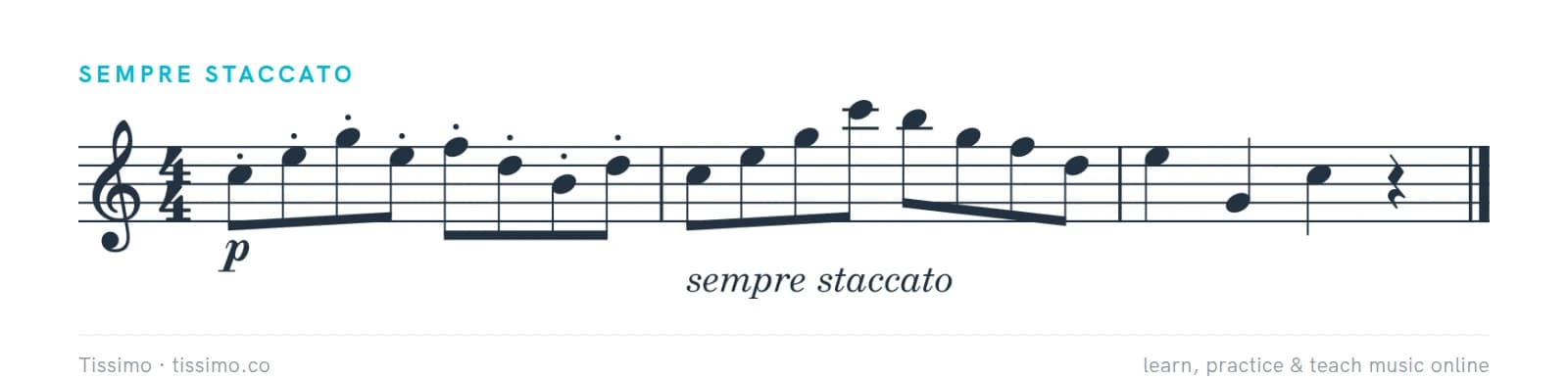
Sempre means 'always': keep doing something throughout the passage. Sempre legato means stay smooth, sempre staccato stay detached, sempre f stay loud, until the music says otherwise.
Sempre means "always". In a score it means "keep doing this": sempre legato, keep playing smoothly; sempre staccato, keep the notes detached; sempre p, stay soft. It saves the composer from writing the same mark on every note, and it warns you not to drift away from it.
Common sempre markings
- Touch: sempre legato, sempre staccato. Often the first few notes carry the marks and then sempre (or simile) takes over.
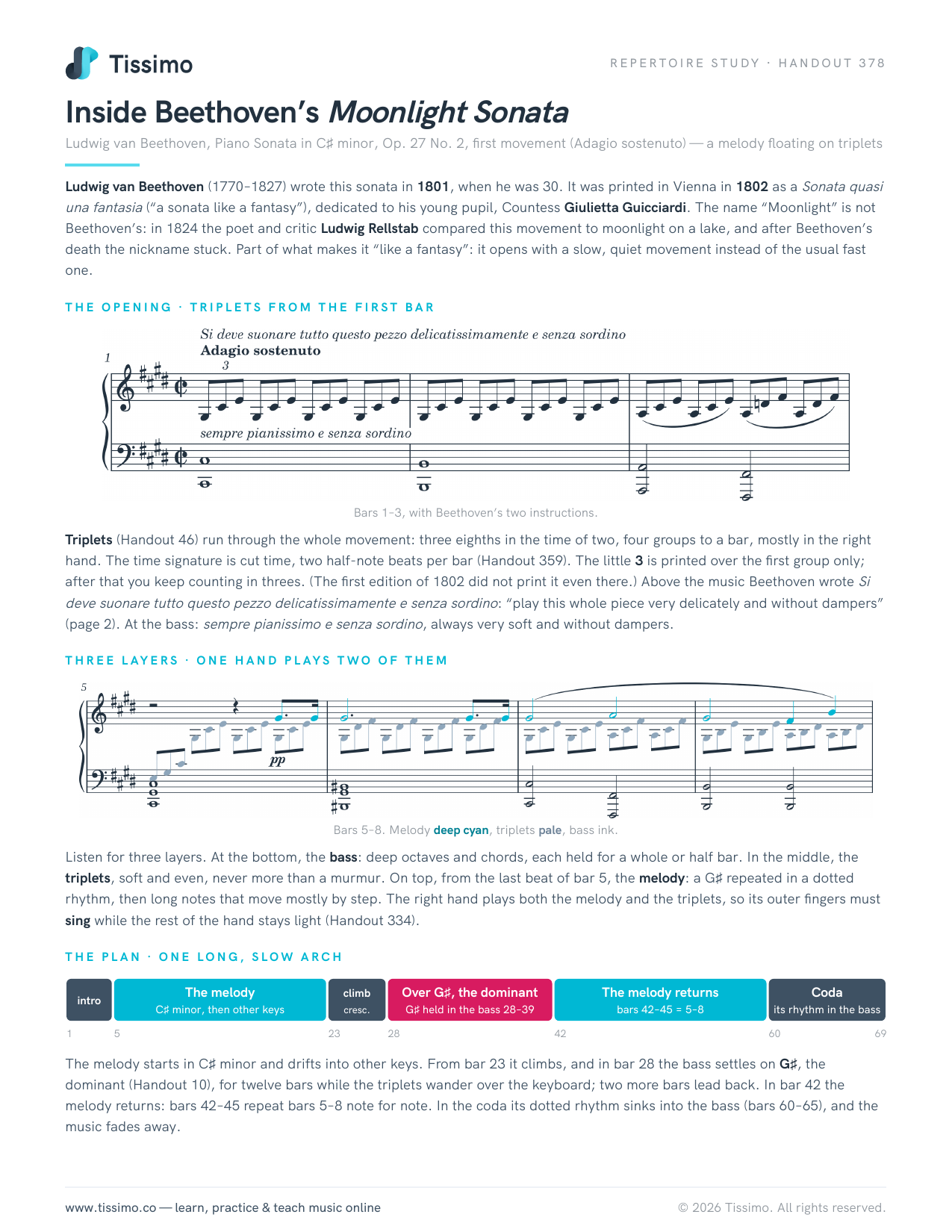
- Dynamics: sempre p, sempre f, sempre pp. Beethoven's "Moonlight" Sonata begins sempre pianissimo e senza sordino: always very soft, and without the dampers (that is, with the sustain pedal). Our Moonlight Sonata study explains what that means at the piano.
- Changes: sempre cresc. (keep getting louder), sempre più forte (louder and louder), sempre più mosso (faster and faster).
- Tempo: sempre allegro, stay fast, often after a passage that might tempt you to slow down.
Sempre and simile
Simile ("similarly") asks you to carry on in the same way as the notes just written, usually for articulation, pedaling or a figure. Sempre names the thing to keep doing. In practice the two often do the same job.
The trap
The longer a sempre instruction lasts, the easier it is to forget. A sempre p passage tends to creep louder; a sempre staccato line tends to start joining up when the notes get harder. When you see sempre, mark the end of its passage in pencil, and check yourself there.
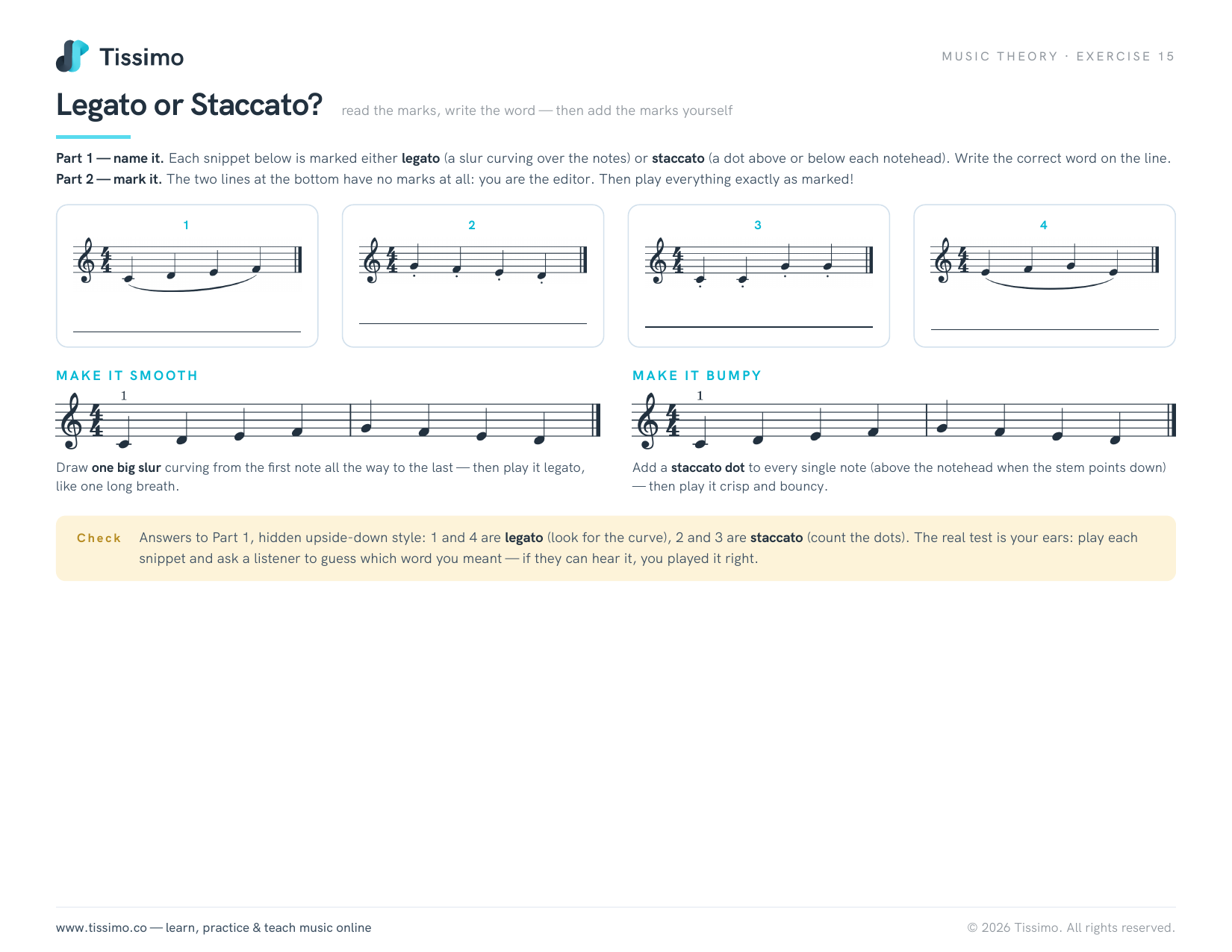
Legato or Staccato? practices the two touches that sempre most often keeps going.
Common questions
What does sempre mean in music?
"Always": keep doing what the next word says, such as sempre legato (stay smooth) or sempre p (stay soft), until the music tells you otherwise.