Notation & Symbols
Simile (sim.)
Pronounced SIM-ih-layWritten as sim.
Simile, often shortened to sim., is Italian for 'similarly'. It tells you to keep playing in the same way, with the same articulation, pedaling or bowing, after the marks themselves stop being printed.
Simile is Italian for "similar". When a composer has marked a pattern carefully for a bar or two (slurs, staccato dots, accents, pedal marks, bowings), they write simile or sim. and stop printing the marks. You carry on playing the same way until the pattern clearly changes or a new marking appears.
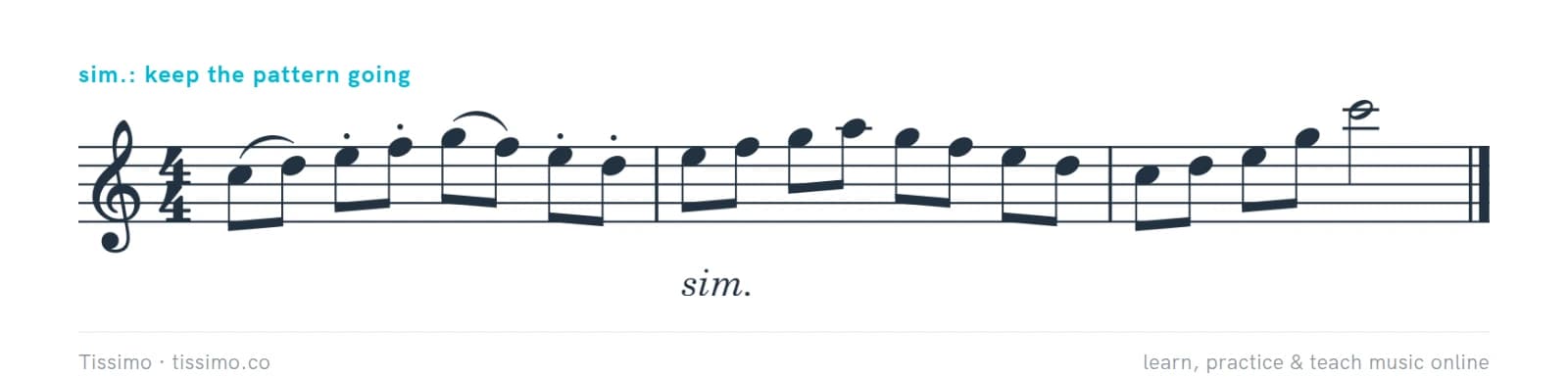
What it applies to
- Articulation: a pattern of slurs, staccato dots or accents, continued through a passage.
- Pedaling: the same sustain pedal change on every bar or every chord.
- Bowing and tonguing: the same grouping of slurred and separate notes for strings or winds.
Simile is close to sempre ("always"), as in sempre staccato, but simile points back to marks you have already been shown instead of naming them.
Bar-repeat signs
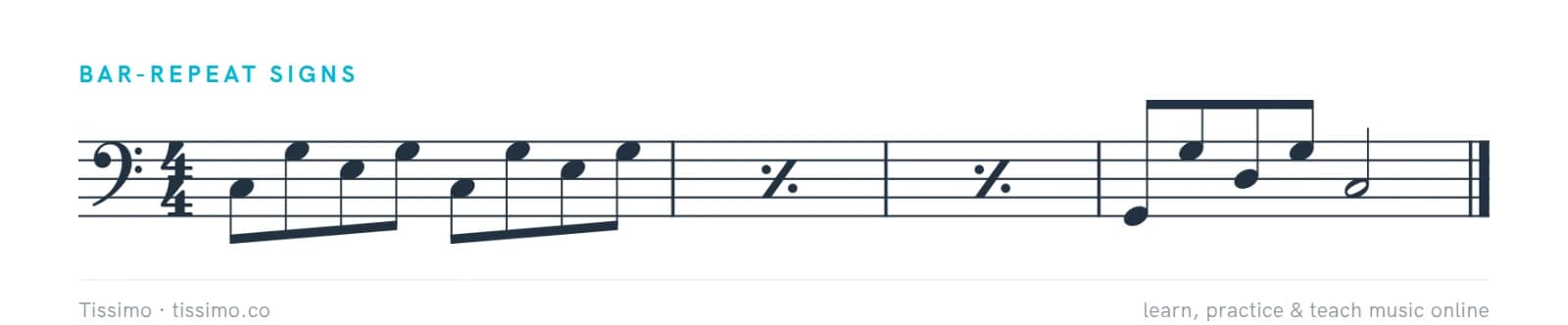
A related shortcut repeats whole bars, not just the way of playing them. The bar-repeat sign, a slanted line with a dot on each side filling the bar, means "play the previous bar again". A version with two slanted lines, centered on the bar line between two bars, repeats the previous two bars. These signs are common in drum parts, guitar and bass charts, and accompaniment patterns in orchestral parts, and they are sometimes called simile marks too.
How long does simile last?
Until the music changes. A new pattern, a different figure, new markings or a new section usually ends it. If you are unsure whether a bar is still "similar", play it in the way that continues the pattern most naturally, and check with your teacher.
Practice reading articulation marks in Read the marks: ties, slurs & accents and Legato or Staccato?.
Common questions
What does sim. mean in music?
It is short for simile, "similarly": keep playing with the same articulation, pedaling or pattern that was marked before, even though the marks are no longer printed.
How long does simile last?
Until the music clearly changes: a new pattern, new markings or a new section.
Practice it: free worksheets
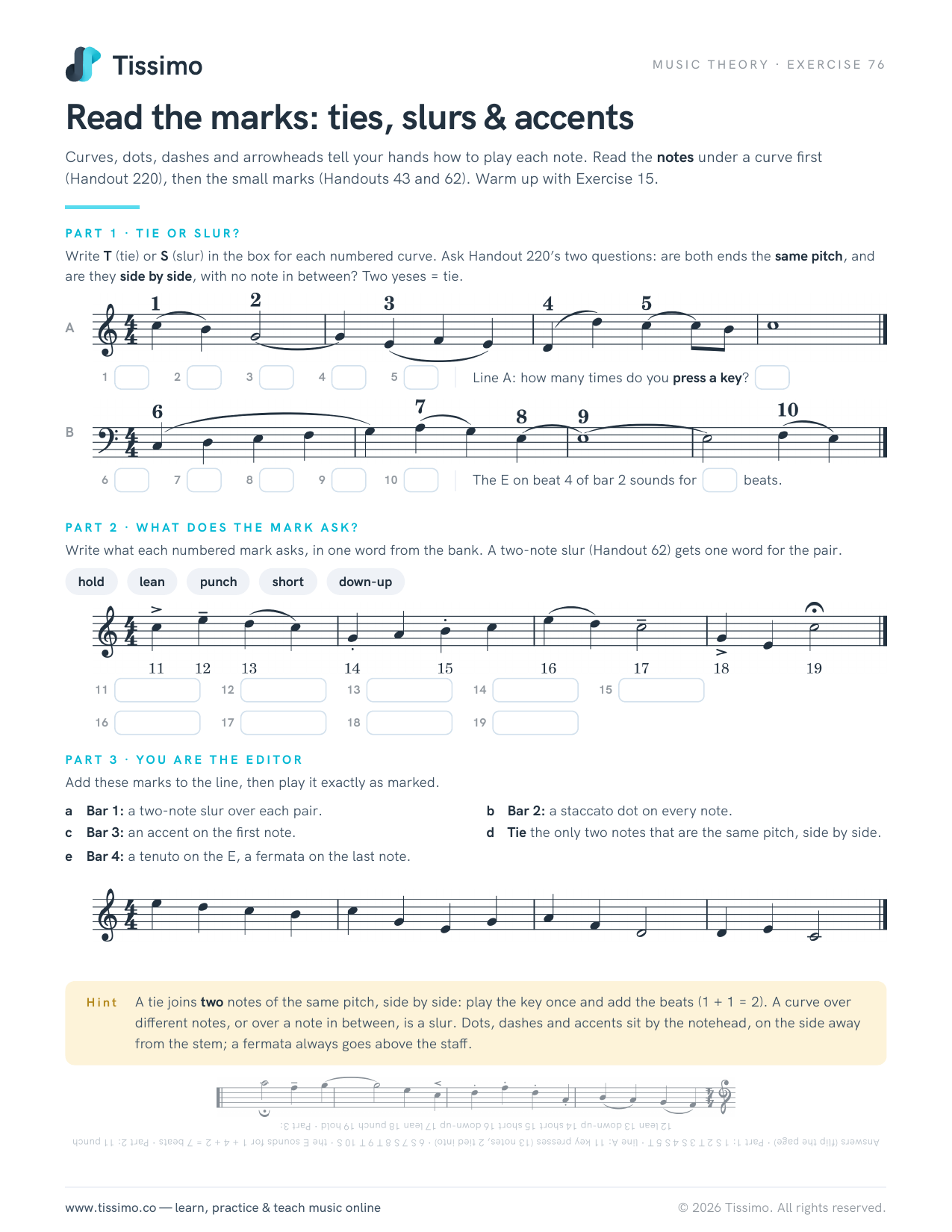 Read the marks: ties, slurs & accentsCurves, dots, dashes and arrowheads tell your hands how to play each note. Read the notes under a curve first (Handout 220), then the small marks (Handouts 43 and 62). Warm up with Exercise 15.
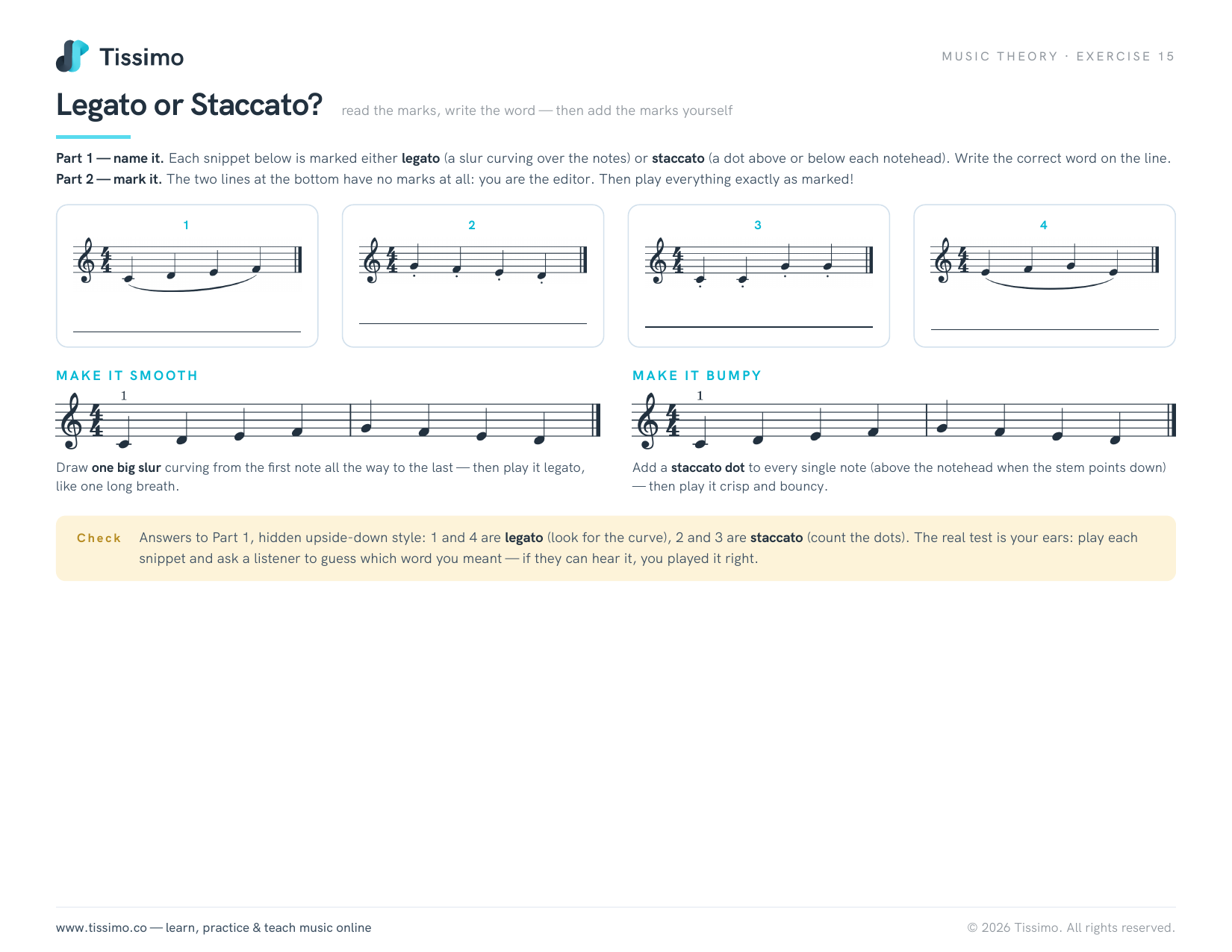 Legato or Staccato?read the marks, write the word — then add the marks yourself
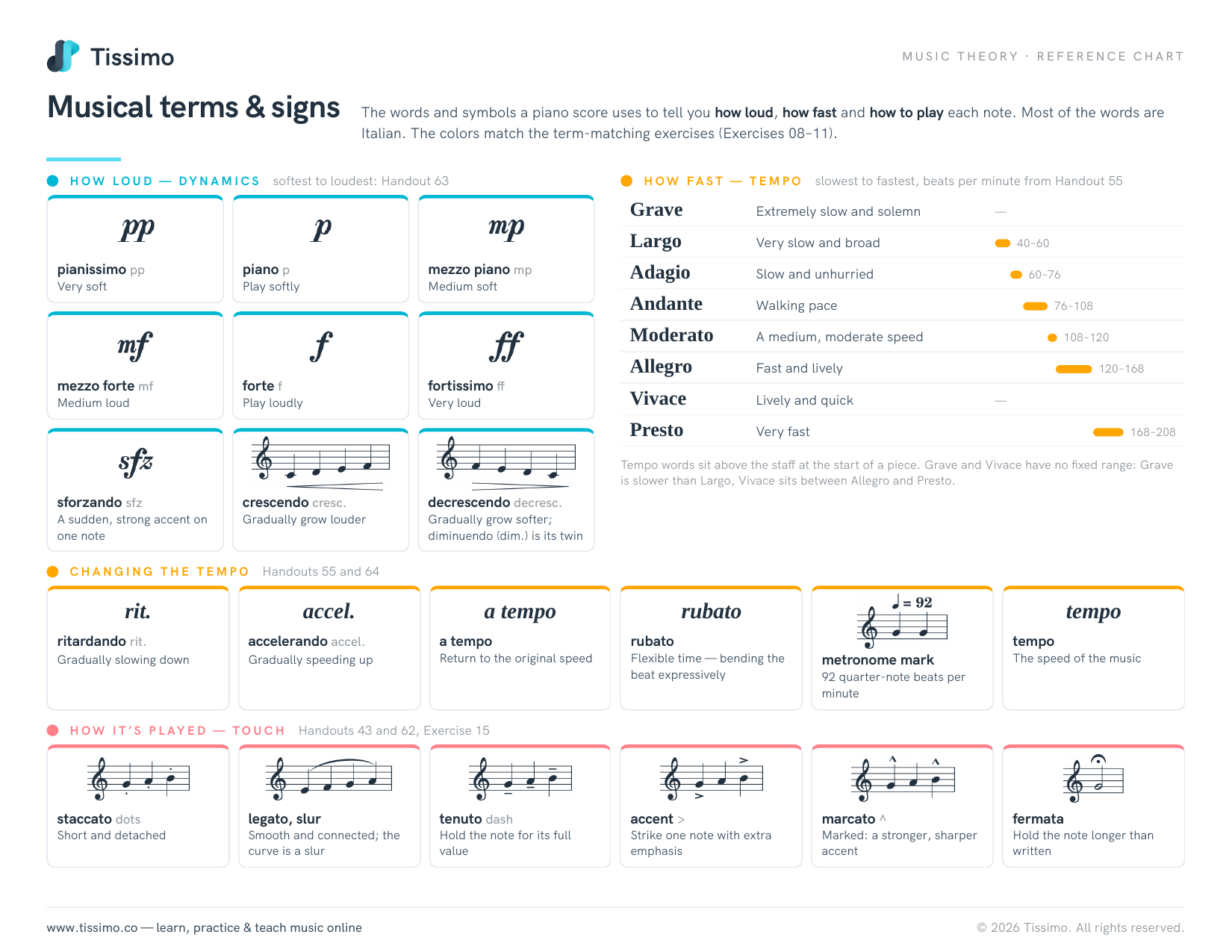 Musical terms & signsThe words and symbols a piano score uses to tell you how loud, how fast and how to play each note. Most of the words are Italian. The colors match the term-matching exercises (Exercises 08–11, 74 and 75).
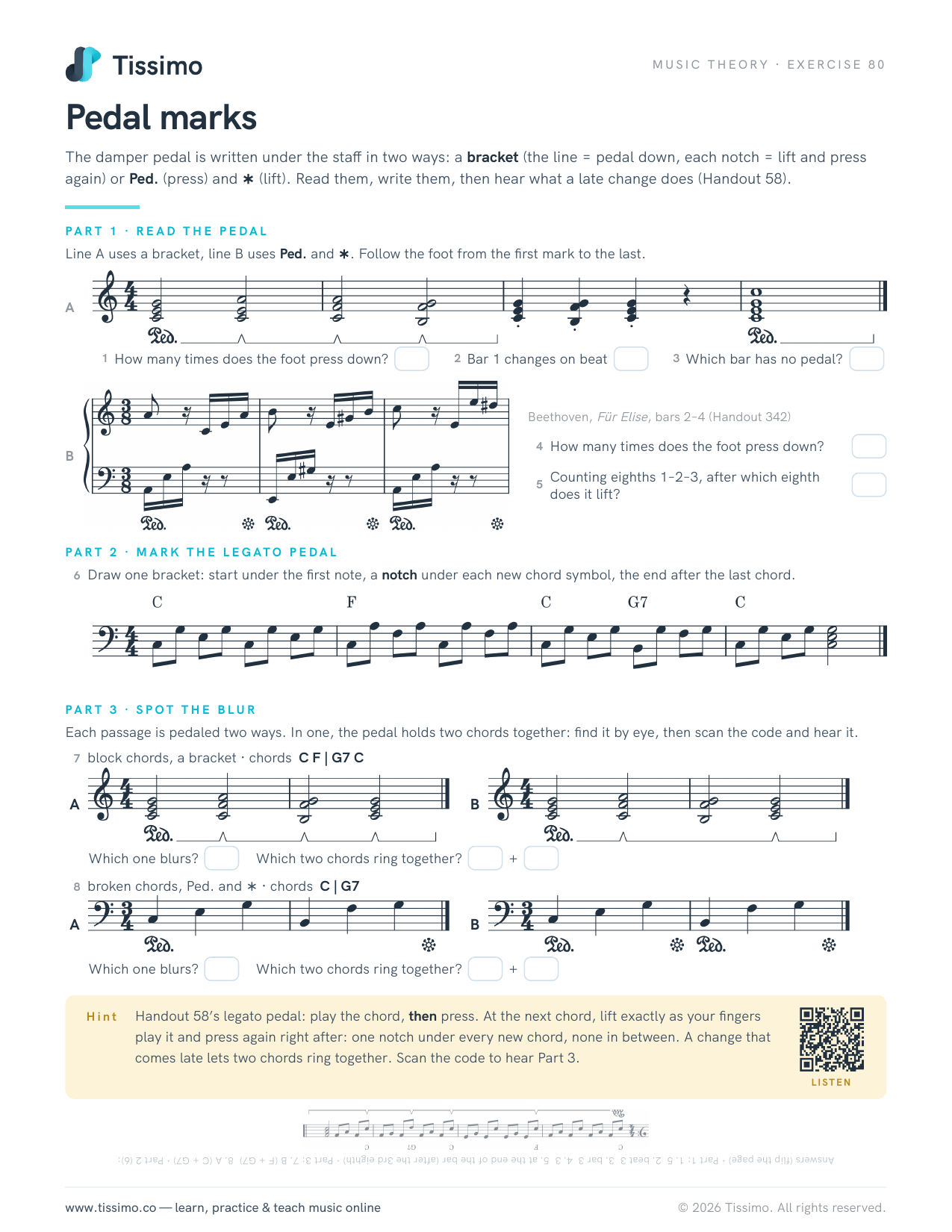 Pedal marksThe damper pedal is written under the staff in two ways: a bracket (the line = pedal down, each notch = lift and press again) or Ped. (press) and ∗ (lift). Read them, write them, then hear what a late change does (Handout 58).