Tempo Markings
Ritardando
Pronounced ree-tar-DAHN-dohWritten as rit.
Ritardando, written rit. or ritard., means gradually getting slower. The tempo slows little by little from the marking until a new, slower tempo is reached or the music ends.
Ritardando means "slowing down" or "holding back", from the Italian ritardare, to delay. Written rit. or ritard., it tells you to slow the tempo gradually, starting where the word appears, until the music reaches a slower speed or comes to an end.
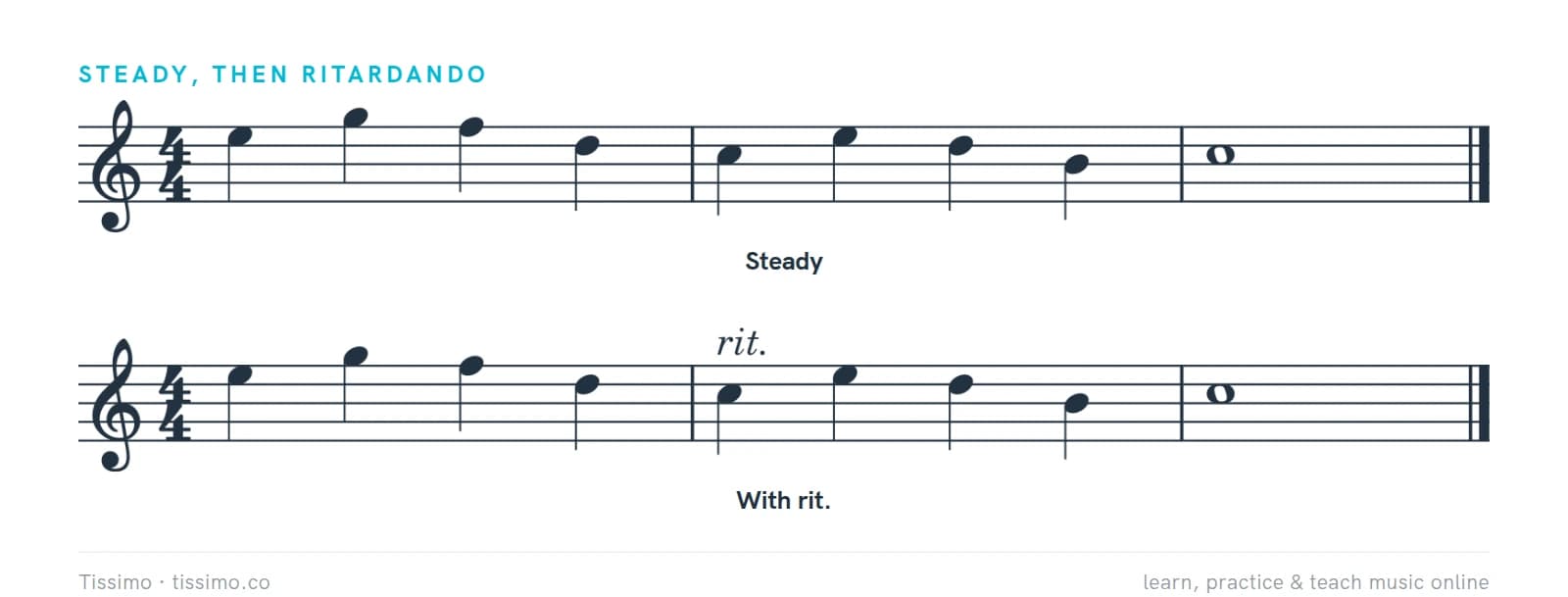
How it looks on the page
The abbreviation is printed above the staff (or between the staves in piano music), often followed by a dashed line, rit. - - - -, that shows how far the slowing lasts. After it you will usually find one of three things: the end of the piece, a fermata, or A tempo, which brings back the original speed at once. Modifiers change the amount: poco rit. slows a little and molto rit. a lot (see poco and molto).
How to play a good ritardando
- Make it gradual. Each beat a little longer than the last: a smooth ramp, not a sudden brake. If the first note after the word is already much slower, you are playing a ritenuto.
- Know your destination. Decide how slow the last note should be before you start, so you neither run out of room nor stop too early.
- Start where it is written. A common habit is to begin slowing a bar early. Keep the tempo until the word.
- Keep counting. Subdivide in your head. The subdivisions get longer, but they stay even with one another.
- Remember the old tempo. If a tempo follows, you will need the original speed again instantly.
Ritardando, rallentando and ritenuto
Rallentando (rall.) means almost the same thing, and most musicians treat the two as synonyms. Ritenuto (riten.) is different: it holds back at once, a sudden slower tempo rather than a gradual one. Because "rit." could abbreviate either word, careful editions write ritard. or riten. when the difference matters. The opposite of a ritardando is an accelerando.
Our Ritardando & Accelerando handout has a line that slows down, snaps back and speeds up, and Dynamics & Tempo Ladders asks you to mark each bar as steady, slowing or speeding up.
Match the terms: level 2 and the Musical terms & signs chart both list rit. with its meaning.
Common questions
What is the difference between rit. and rall.?
Very little. Ritardando and rallentando both mean slowing down gradually, and most musicians treat them as the same instruction.
Does rit. mean ritardando or ritenuto?
Usually ritardando, a gradual slowing. Because rit. can also abbreviate ritenuto (an immediate holding back), some editions write ritard. and riten. to make the meaning clear.
Practice it: free worksheets
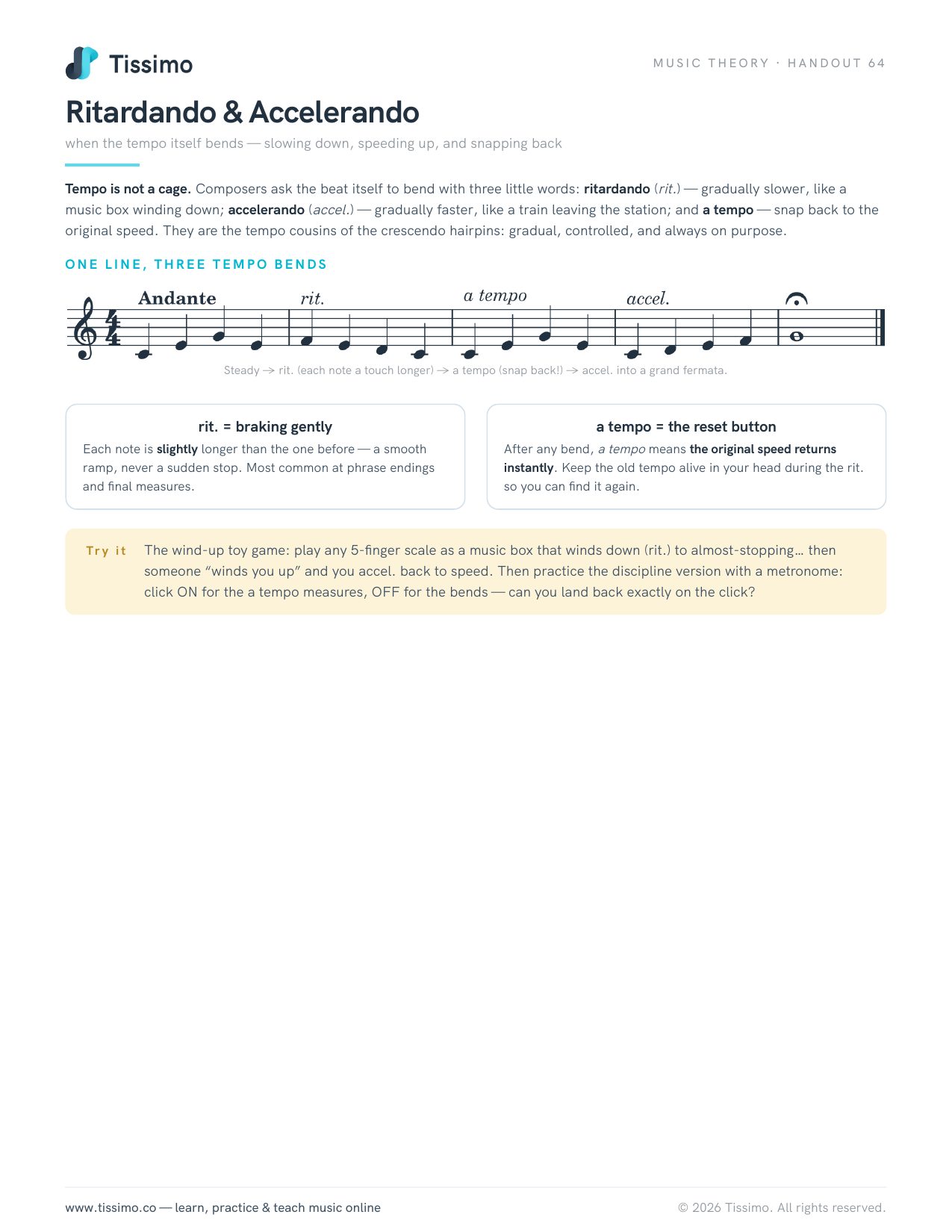 Ritardando & Accelerandowhen the tempo itself bends — slowing down, speeding up, and snapping back
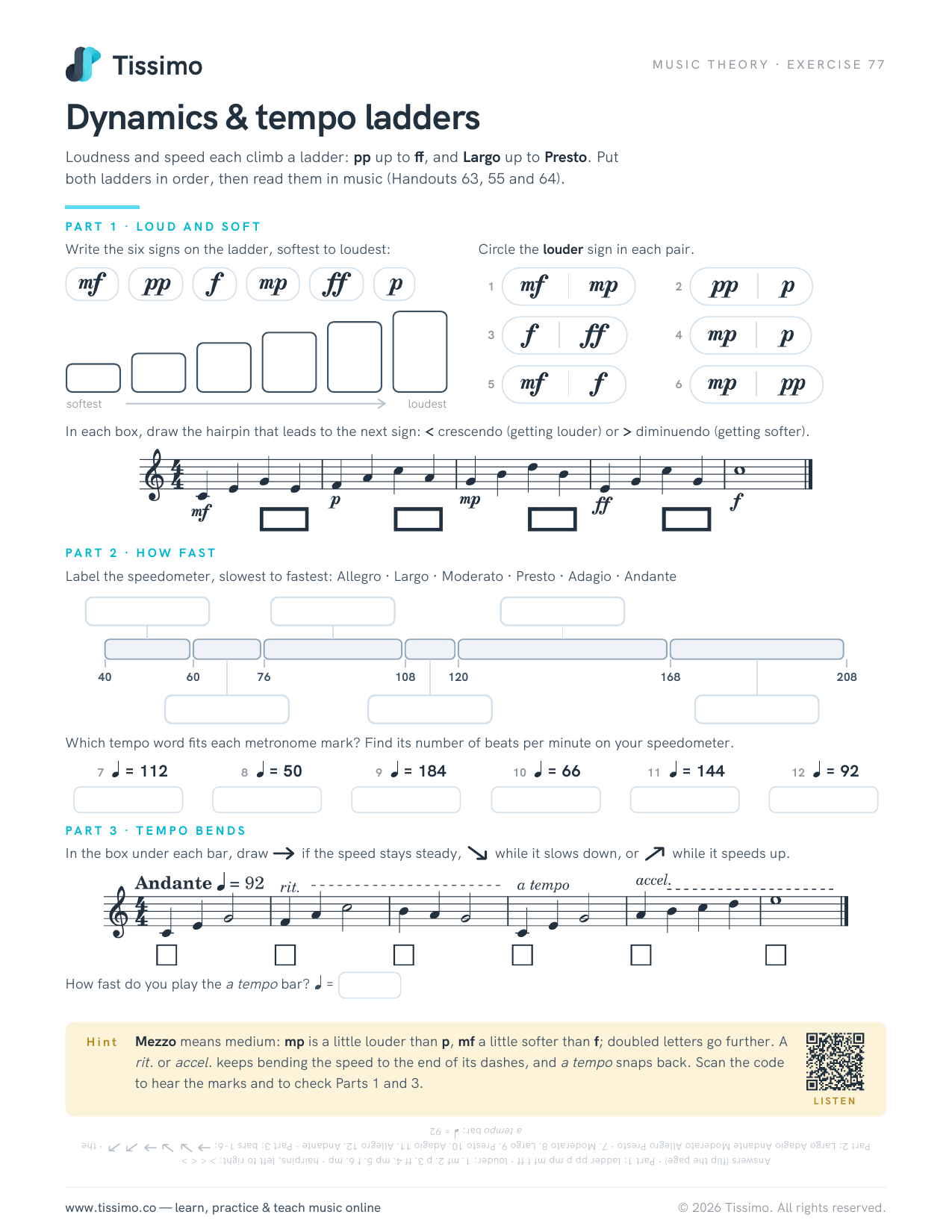 Dynamics & tempo laddersLoudness and speed each climb a ladder: pp up to ff, and Largo up to Presto. Put both ladders in order, then read them in music (Handouts 63, 55 and 64).
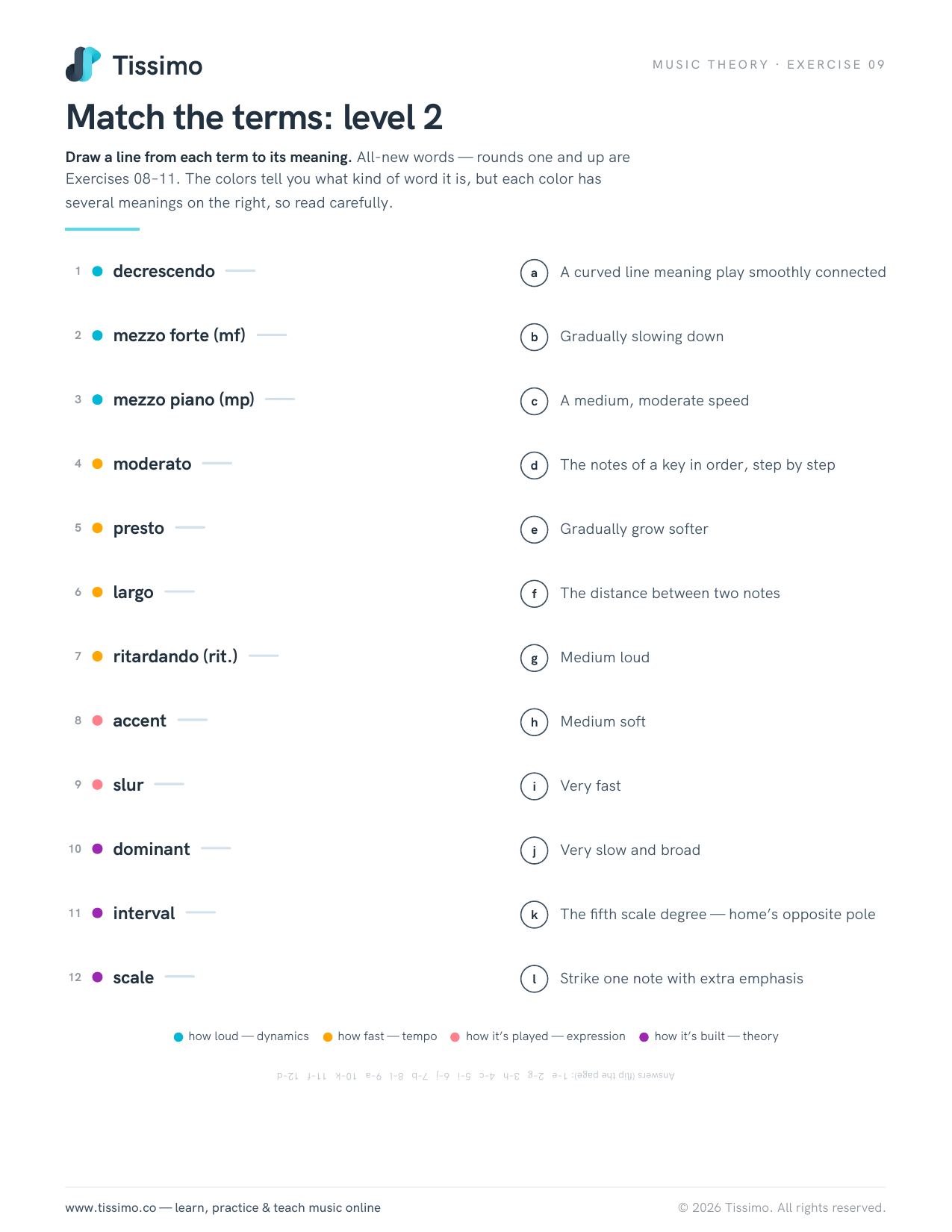 Match the terms: level 2Draw a line from each term to its meaning. All-new words — rounds one and up are Exercises 08–11. The colors tell you what kind of word it is, but each color has several meanings on the right, so read carefully.
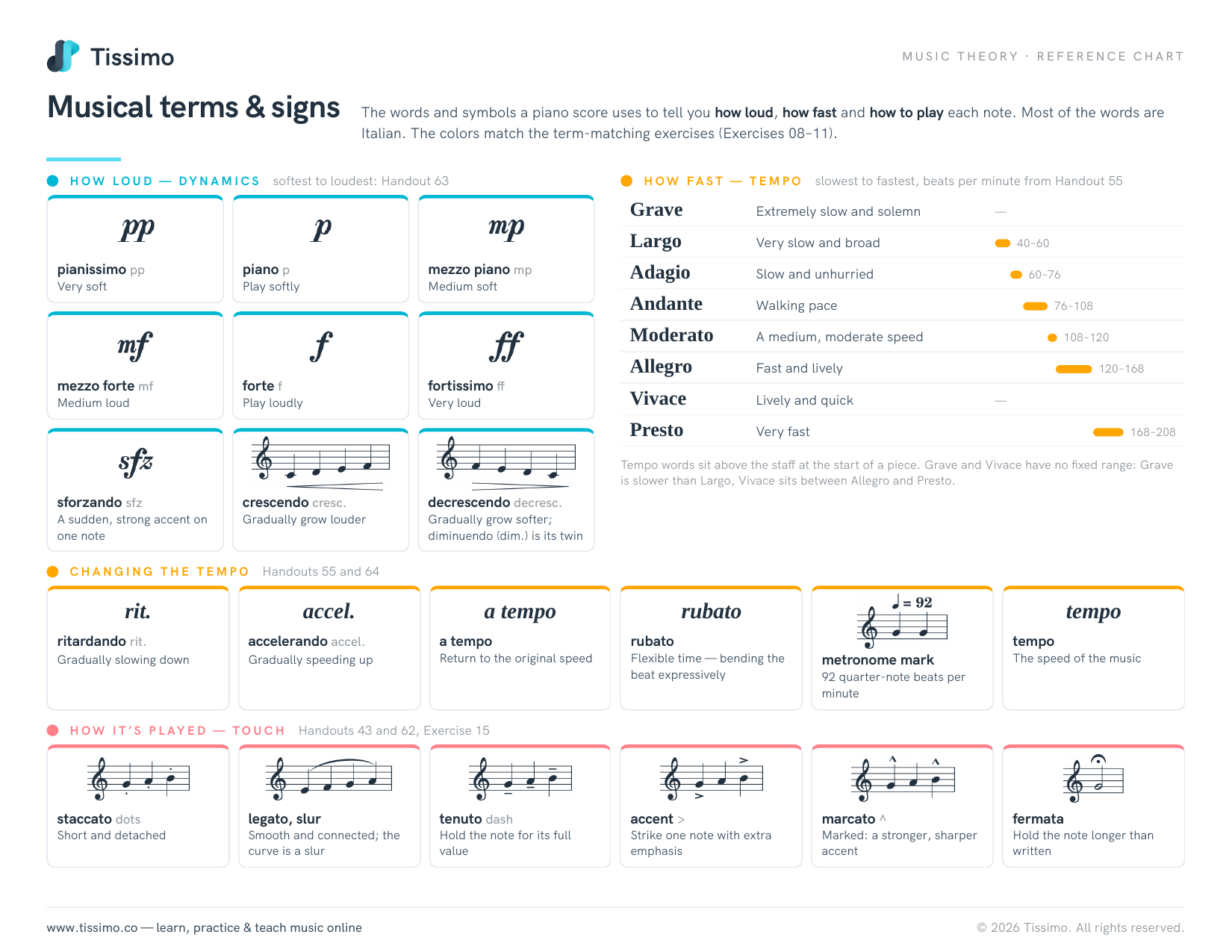 Musical terms & signsThe words and symbols a piano score uses to tell you how loud, how fast and how to play each note. Most of the words are Italian. The colors match the term-matching exercises (Exercises 08–11, 74 and 75).