Tempo Markings
Adagio
Pronounced ah-DAH-joh
Adagio is a tempo marking meaning slow, from the Italian for 'at ease'. It is slower than andante and a little faster than largo, often about 60 to 76 beats per minute. An Adagio can also be a slow piece or movement.
Adagio comes from the Italian ad agio, "at ease". It asks for a slow, relaxed tempo: slower than andante and usually a little faster than largo and lento. Many charts give roughly 60 to 76 beats per minute, but they disagree, and the music on the page matters more than the chart.
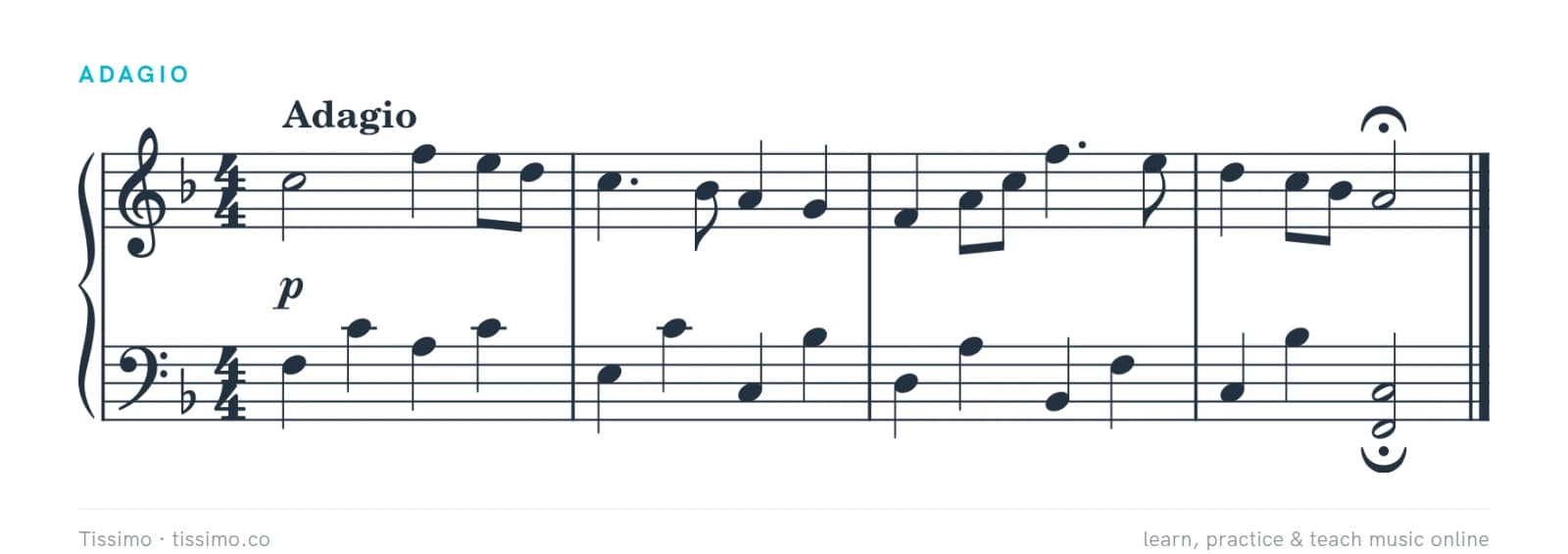
An Adagio: the slow movement
The word is also used as a noun. In a sonata, symphony or concerto, "the Adagio" is often the slow movement, and some stand-alone pieces take it as their title, such as Samuel Barber's Adagio for Strings. In ballet, an adagio is a slow, sustained section built on balance and line.
Adagio in real music
Beethoven marked the first movement of his "Moonlight" Sonata Adagio sostenuto, slow and sustained; our Moonlight Sonata study shows how the melody floats on the triplets at that tempo. The slow movement of his Pathétique Sonata is marked Adagio cantabile, slow and singing. Both show how often adagio is paired with an expression word such as sostenuto or cantabile.
Playing adagio
- Count in eighth notes. At 60 to 70 beats per minute a quarter-note beat is long. Feeling the eighths keeps dotted rhythms and rests exact.
- Keep it at ease, not heavy. If an adagio starts to sound like a funeral march, you are playing it as grave.
- Shape the long notes. A singer would sustain them with breath. On the piano, listen to each note fade and match the next note to it.
The related word adagietto, "a little adagio", marks a tempo slightly faster than adagio.
Adagio has its own band on the speedometer in Tempo & the Metronome. Put it in order with the other tempo words in Dynamics & Tempo Ladders, match it to its meaning in Match the terms, or look it up on the Musical terms & signs chart.
Common questions
How fast is adagio?
Slow: often given as about 60 to 76 beats per minute. Treat that as a starting point; the shortest notes in the piece and the length of its phrases should decide the final tempo.
What does adagio mean literally?
"At ease" or "at leisure", from the Italian phrase ad agio. It describes a relaxed character as well as a slow speed.
Practice it: free worksheets
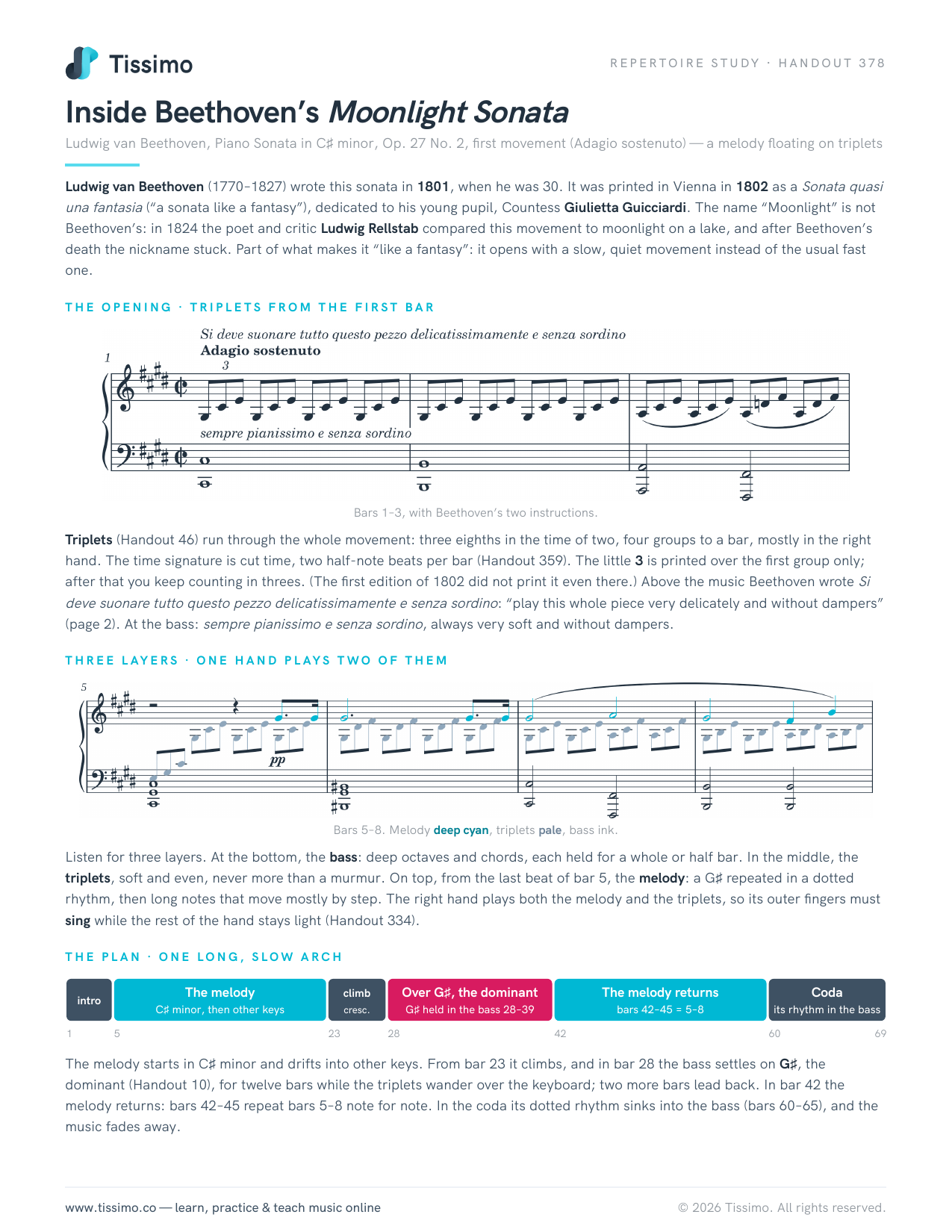 Inside Beethoven’s Moonlight SonataLudwig van Beethoven, Piano Sonata in C♯ minor, Op. 27 No. 2, first movement (Adagio sostenuto) — a melody floating on triplets
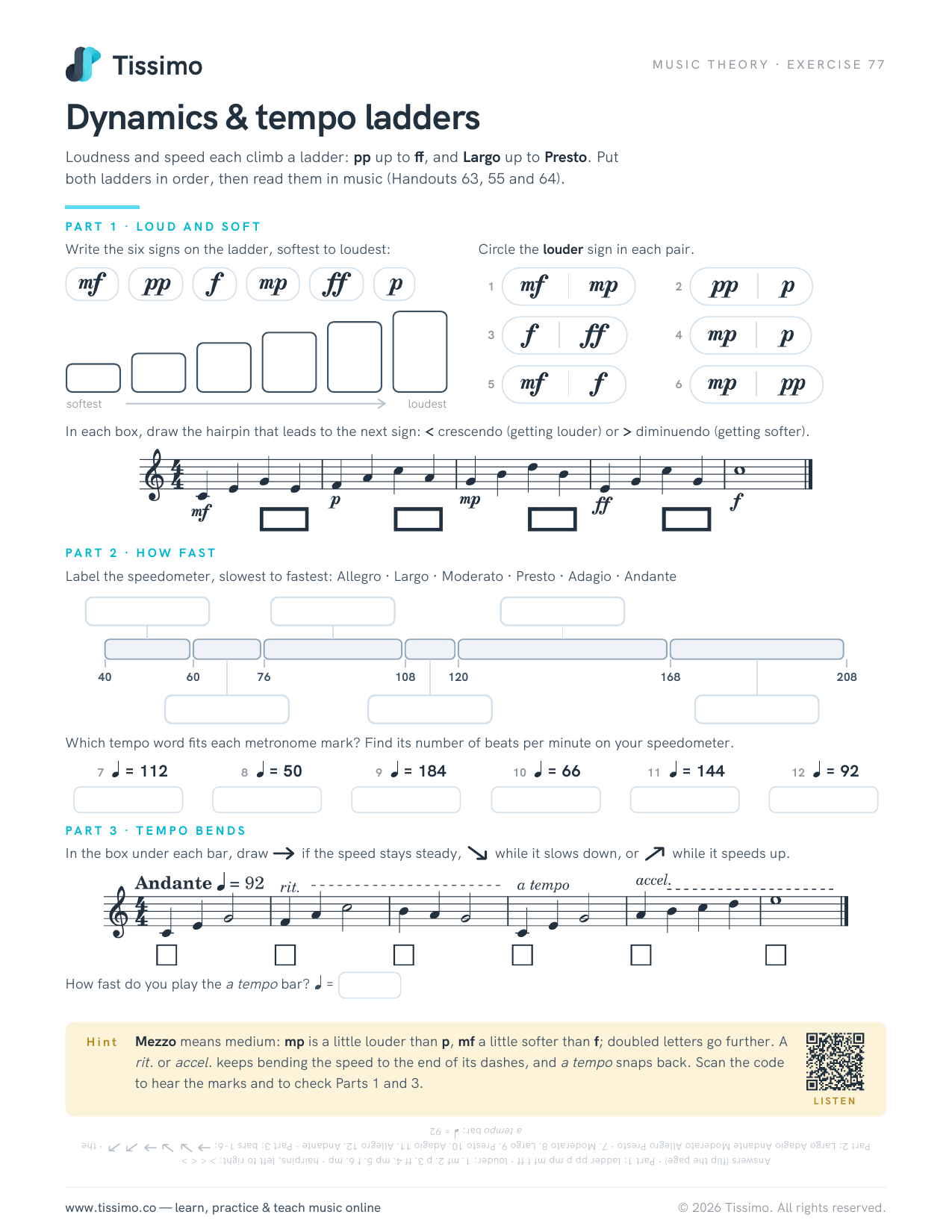 Dynamics & tempo laddersLoudness and speed each climb a ladder: pp up to ff, and Largo up to Presto. Put both ladders in order, then read them in music (Handouts 63, 55 and 64).
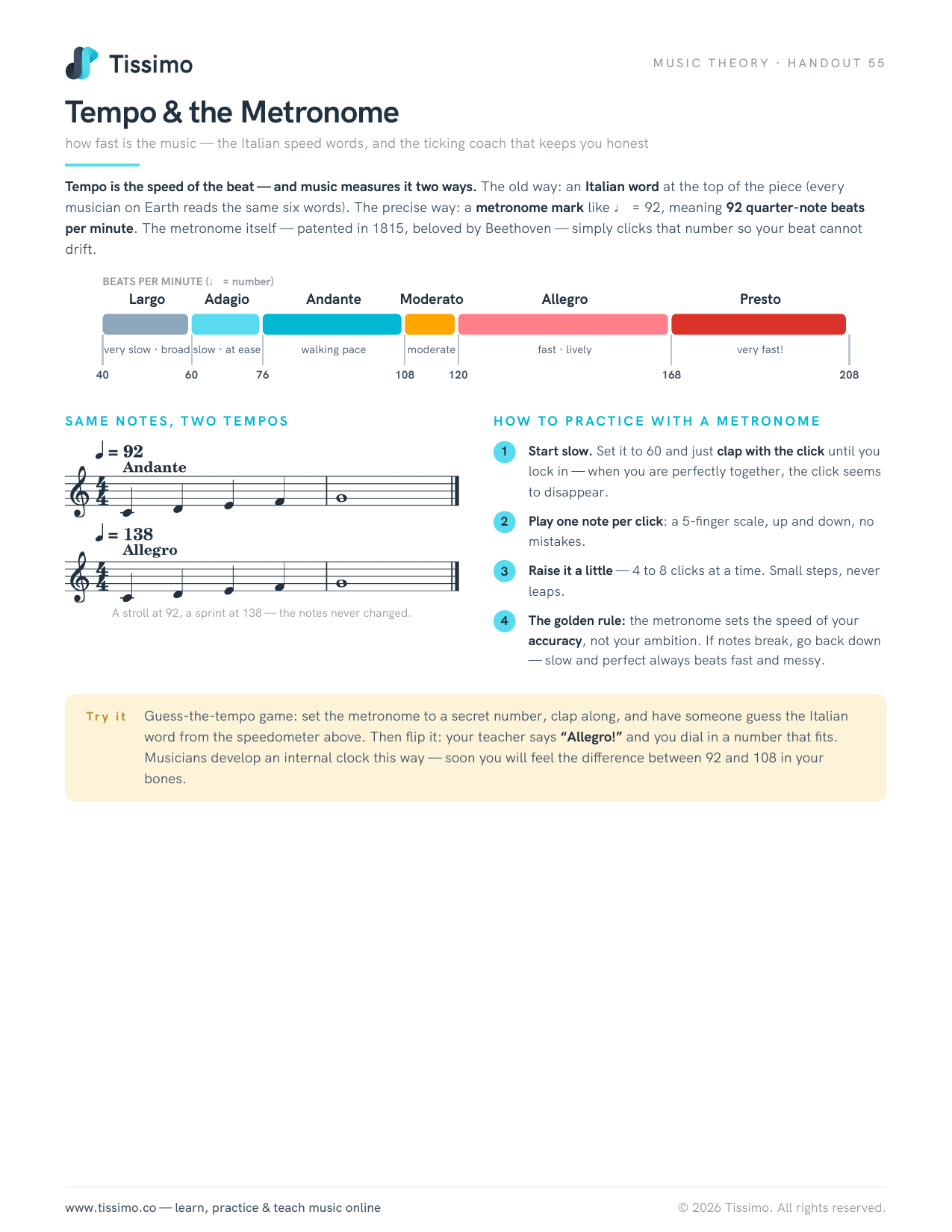 Tempo & the Metronomehow fast is the music — the Italian speed words, and the ticking coach that keeps you honest
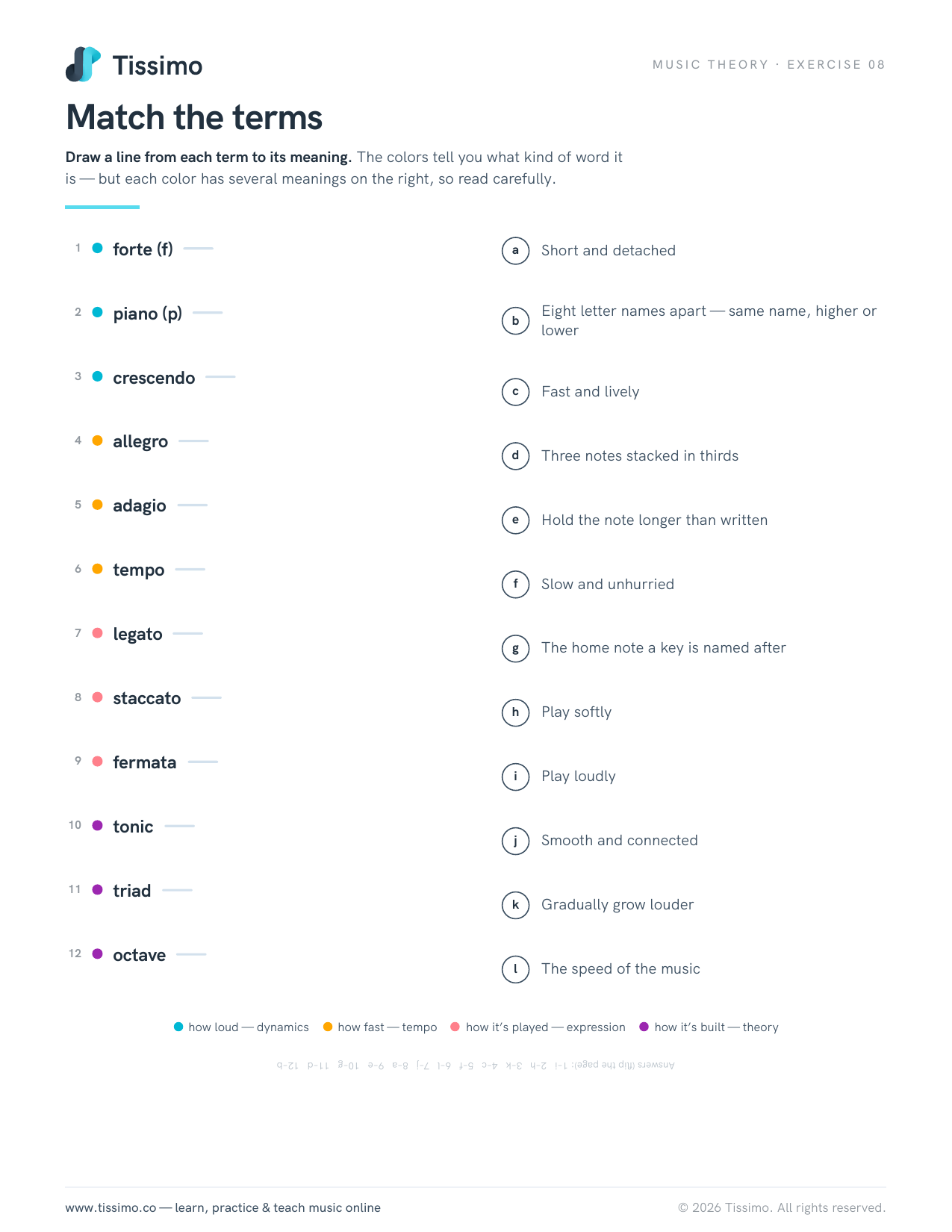 Match the termsDraw a line from each term to its meaning. The colors tell you what kind of word it is — but each color has several meanings on the right, so read carefully.
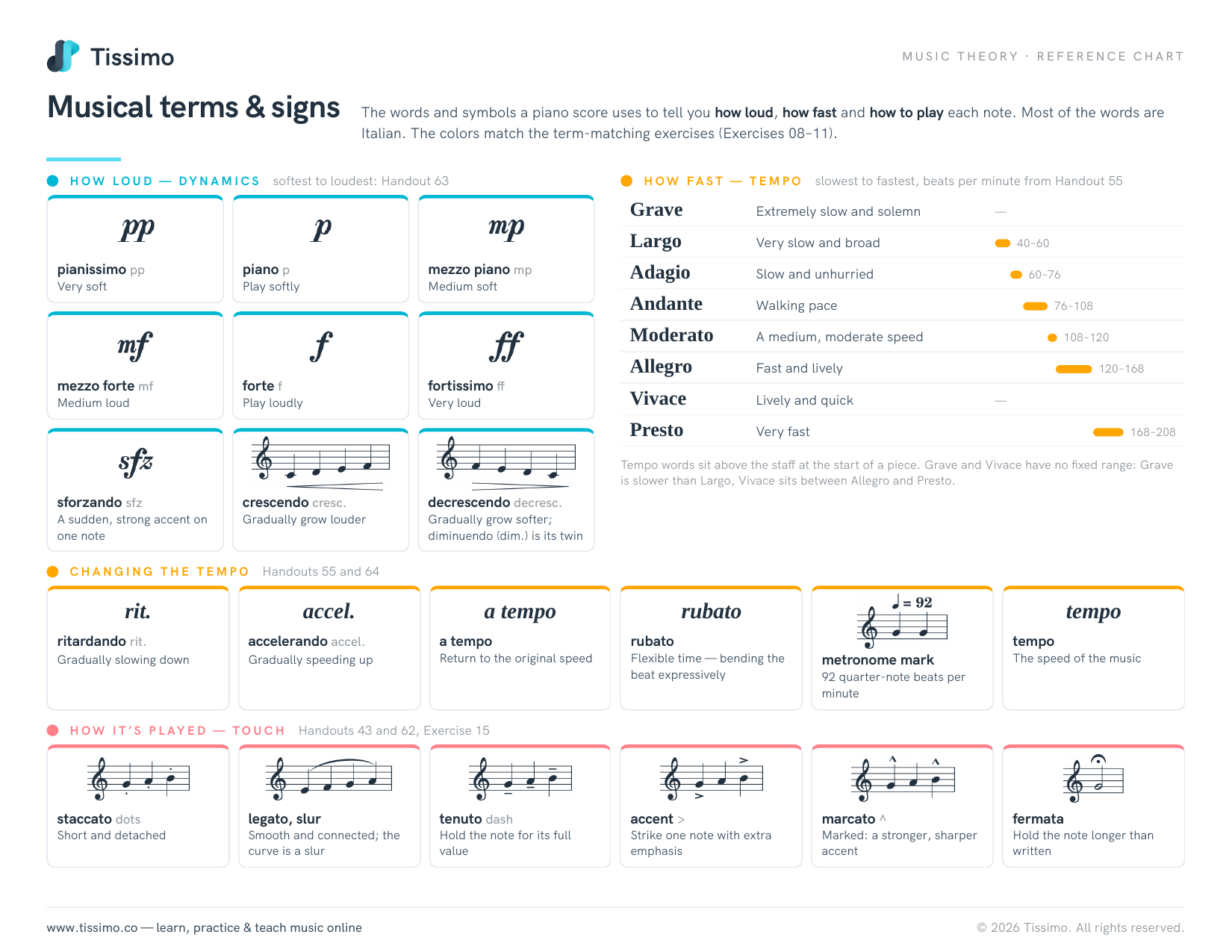 Musical terms & signsThe words and symbols a piano score uses to tell you how loud, how fast and how to play each note. Most of the words are Italian. The colors match the term-matching exercises (Exercises 08–11, 74 and 75).