Tempo Markings
Andantino
Pronounced ahn-dahn-TEE-noh
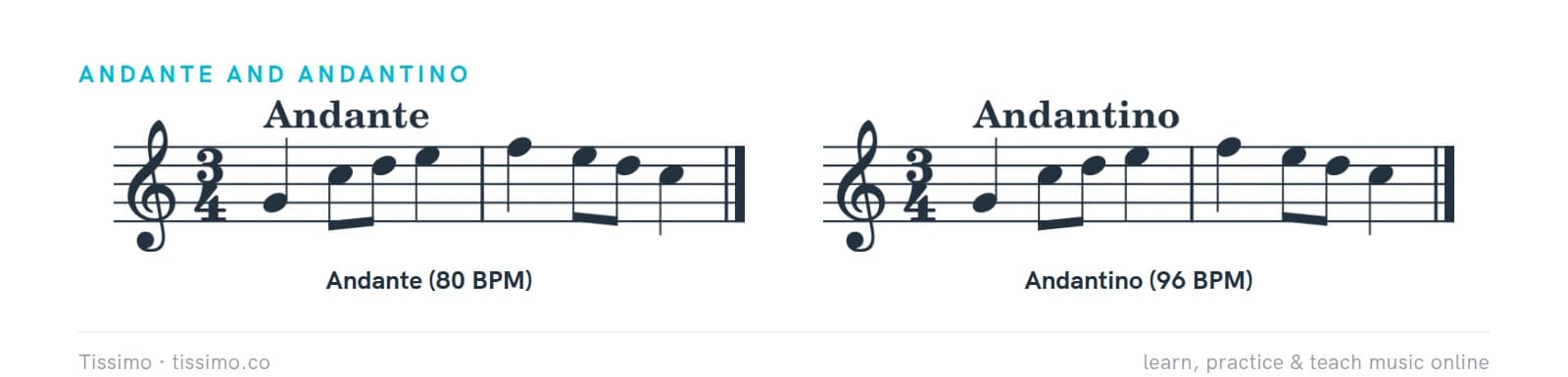
Andantino is a tempo marking meaning 'a little andante'. Today it usually means slightly faster than andante, a light walking pace, although musicians in the past did not agree on whether it was faster or slower.
Andantino adds the diminutive ending -ino to andante, so it means "a little andante". Most musicians today take that as a little less andante in the sense of less slow: a light, easy walking pace, slightly faster than andante. Many charts place it at roughly 80 to 108 beats per minute, overlapping andante's range.
A word with two readings
The diminutive can be read two ways. If andante is "slow", a little andante is less slow, so faster. If andante is "walking", a little andante might be a smaller, slower walk. Musicians in the 18th and 19th centuries did not agree, and some composers' andantinos make more sense at the slower reading. Today the faster reading is standard, but the context of the piece should decide: look at the shortest notes and the length of the phrases before you settle on a number.
Compare larghetto and allegretto, where the diminutive clearly moves the tempo toward the middle.
Andantino in real music
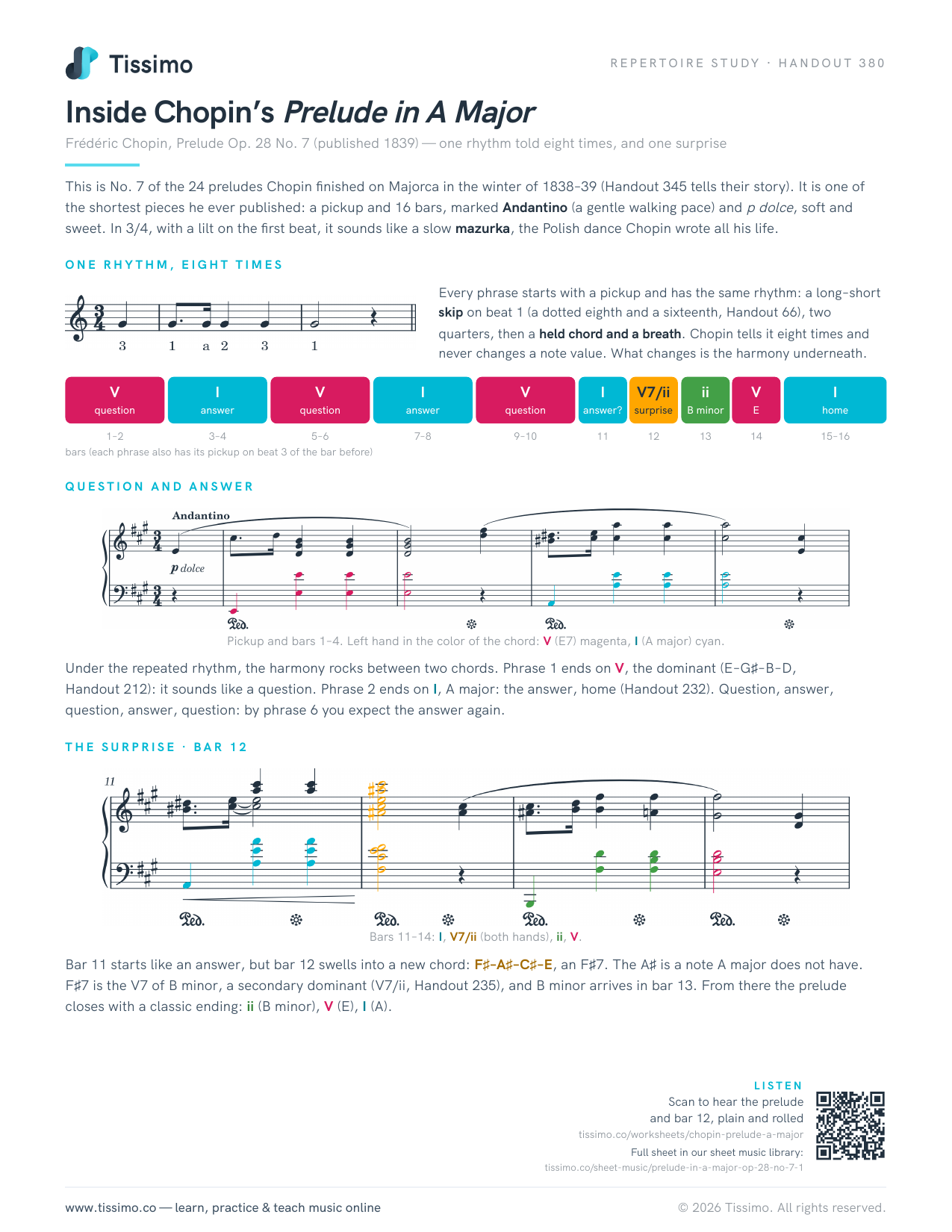
Chopin's Prelude in A major, Op. 28 No. 7, is marked Andantino: a short, gentle piece in 3/4 that repeats one rhythm eight times. Our Prelude in A major study shows how it is built. Played too slowly it sounds heavy; at a light andantino it sounds like a quiet dance.
Playing andantino
Keep the beat buoyant. Andantino often has a lilt, especially in 3/4 or 6/8, so lean slightly on the first beat of the bar and let the other beats float.
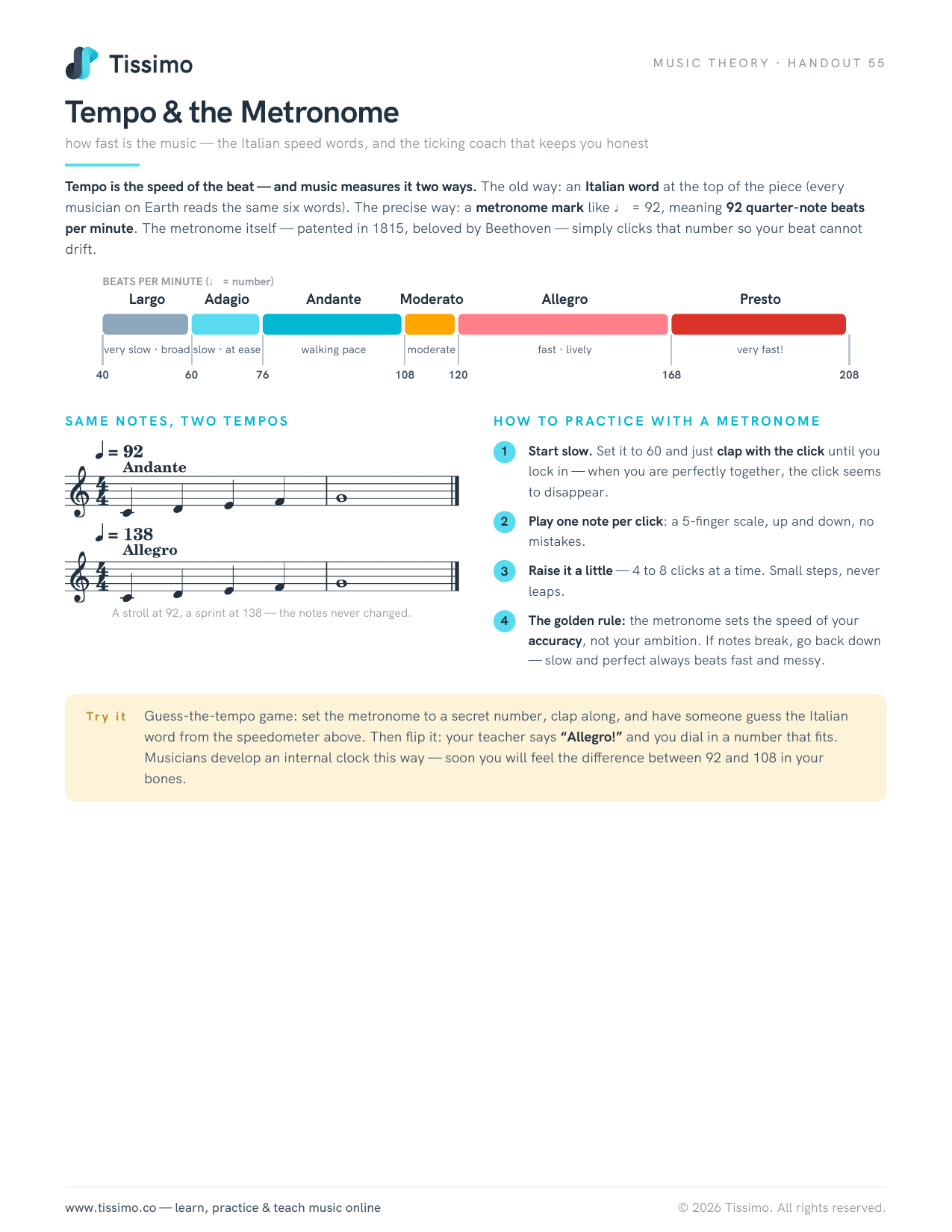
Andantino is not one of the six words on the speedometer in Tempo & the Metronome, but you can pencil it in yourself, just above Andante.
Common questions
Is andantino faster than andante?
In modern usage, usually yes: slightly faster and lighter. Older music sometimes meant the opposite, so let the character of the piece guide you.