Dynamics & Expression
Sostenuto
Pronounced soh-steh-NOO-tohWritten as sost.
Sostenuto means 'sustained': hold each note for its full value with a connected, singing tone. In tempo headings such as Andante sostenuto it can also suggest a slightly broader tempo.
Sostenuto means "sustained". It asks you to hold notes for their full length and to keep the sound connected and full, so the music feels supported rather than clipped. It is abbreviated sost.
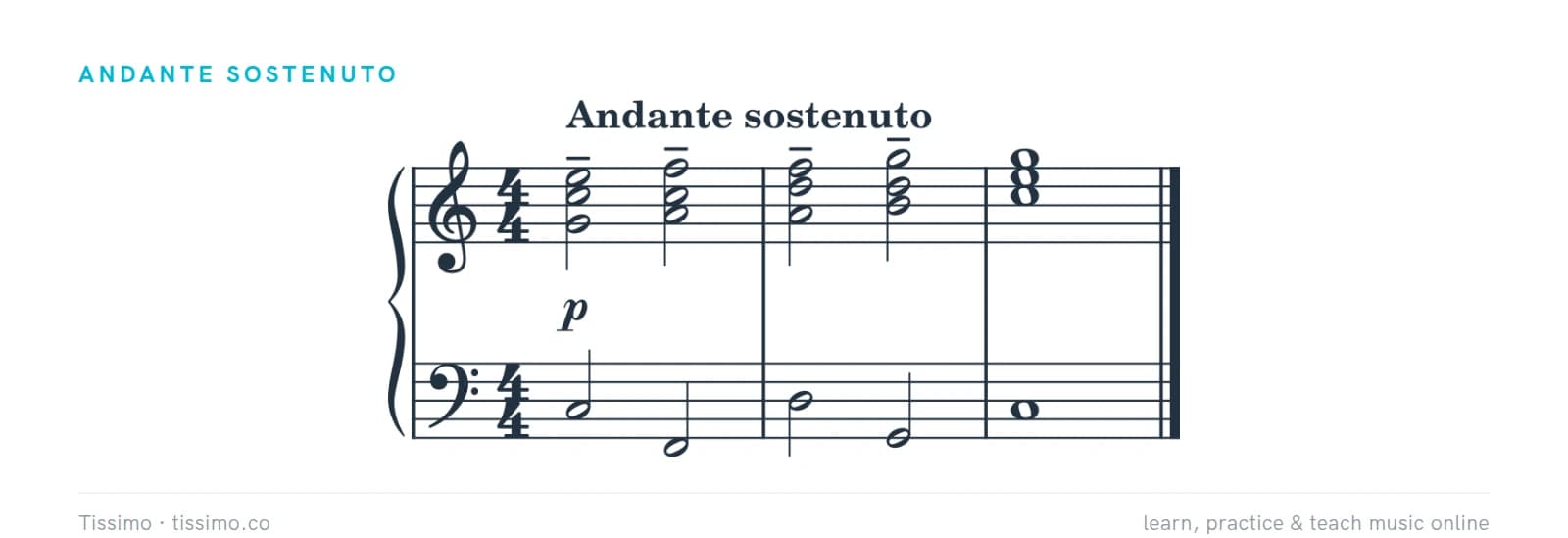
Two ways it is used
- As an expression word, below the staff: play sustained, with full-length notes and a smooth, even tone. In a chordal passage, every chord lasts until the next one begins.
- In a tempo heading, as in Andante sostenuto or Adagio sostenuto: the tempo word sets the speed, and sostenuto asks for breadth, a feeling of holding back slightly and letting the sound bloom. Beethoven's "Moonlight" Sonata opens Adagio sostenuto (see our Moonlight Sonata study), and his Seventh Symphony begins with a Poco sostenuto introduction.
Not the sostenuto pedal
The middle pedal on many grand pianos (and some uprights) is called the sostenuto pedal. It holds only the notes whose keys are down when you press it. The word sostenuto in a score does not ask for that pedal; it describes how the music should sound.
How to play sostenuto
- Full value. Hold every note and chord to the end of its written length; release exactly as the next sound begins.
- Even, deep tone. Sink into the keys with relaxed arm weight rather than striking them.
- Pedal with care. The sustain pedal can help connect chords, changed cleanly at each harmony so the sound stays clear.
Sostenuto is close to tenuto ("held"), which marks single notes, and to legato. Its opposite in spirit is staccato.
Tenuto, the single-note cousin of sostenuto, is practiced in Fermata, Tenuto & Accent, and Legato or Staccato? practices the connected touch.
Common questions
Is sostenuto the same as the sostenuto pedal?
No. As a word in the music, sostenuto means play sustained. The sostenuto pedal is the piano's middle pedal, which holds only the notes already pressed down when you use it.
Practice it: free worksheets
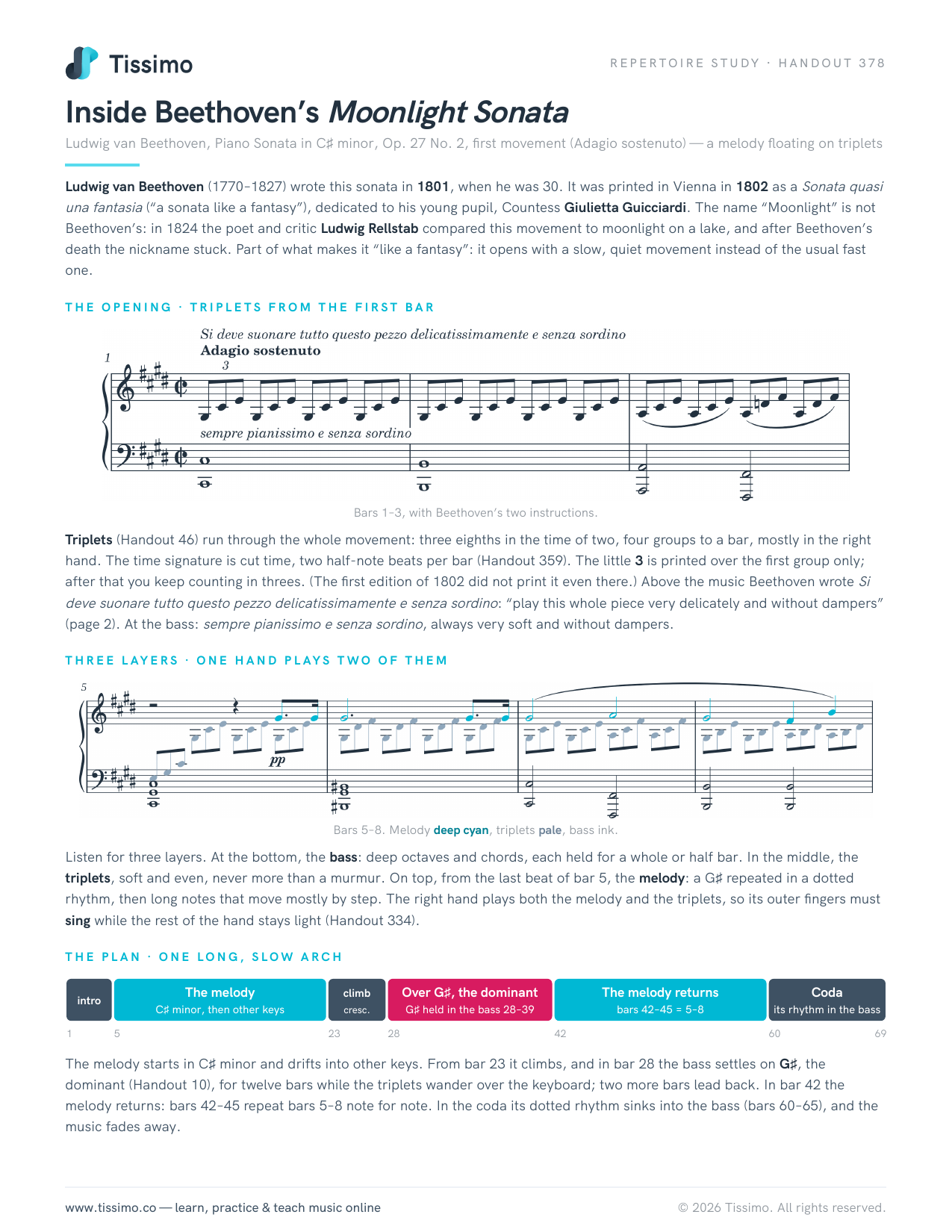 Inside Beethoven’s Moonlight SonataLudwig van Beethoven, Piano Sonata in C♯ minor, Op. 27 No. 2, first movement (Adagio sostenuto) — a melody floating on triplets
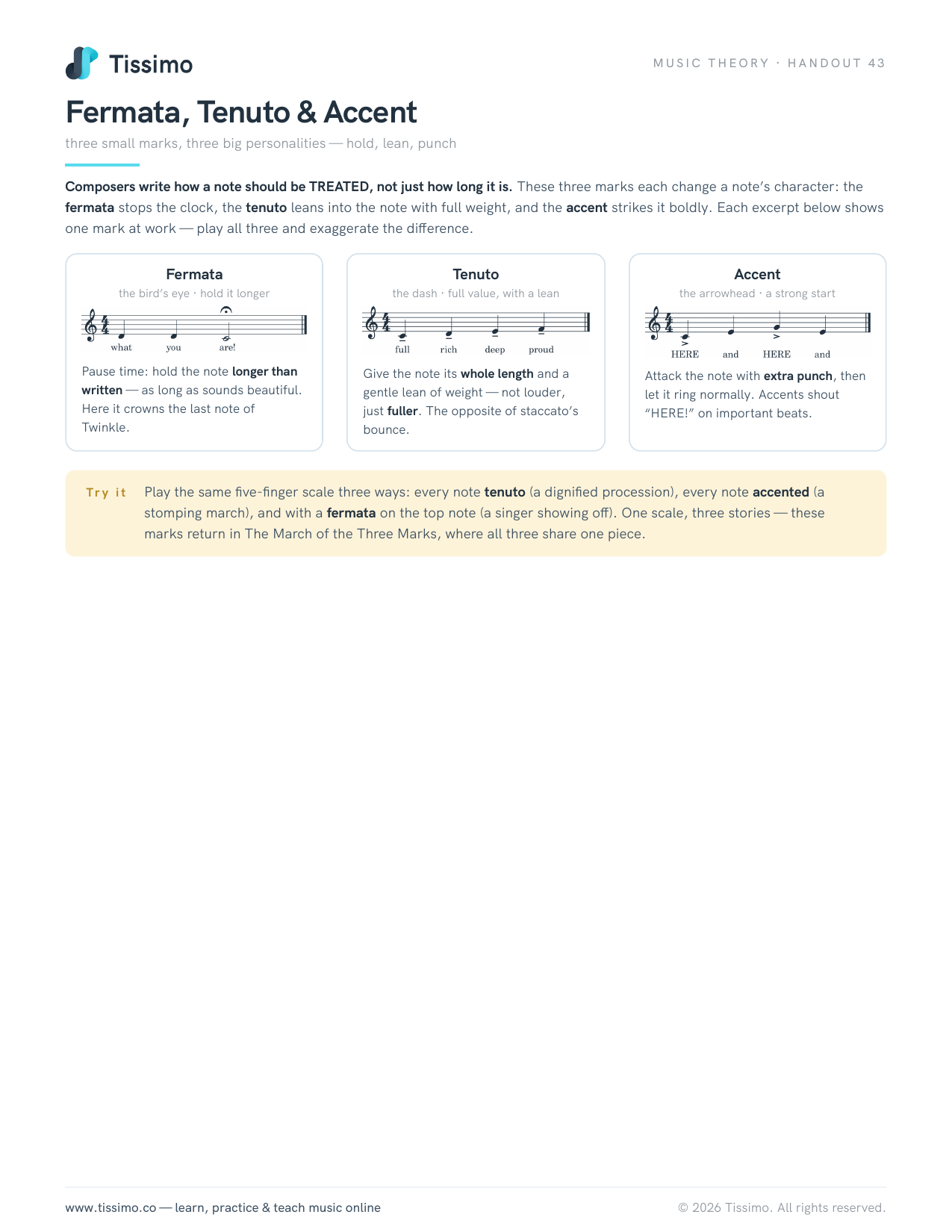 Fermata, Tenuto & Accentthree small marks, three big personalities — hold, lean, punch
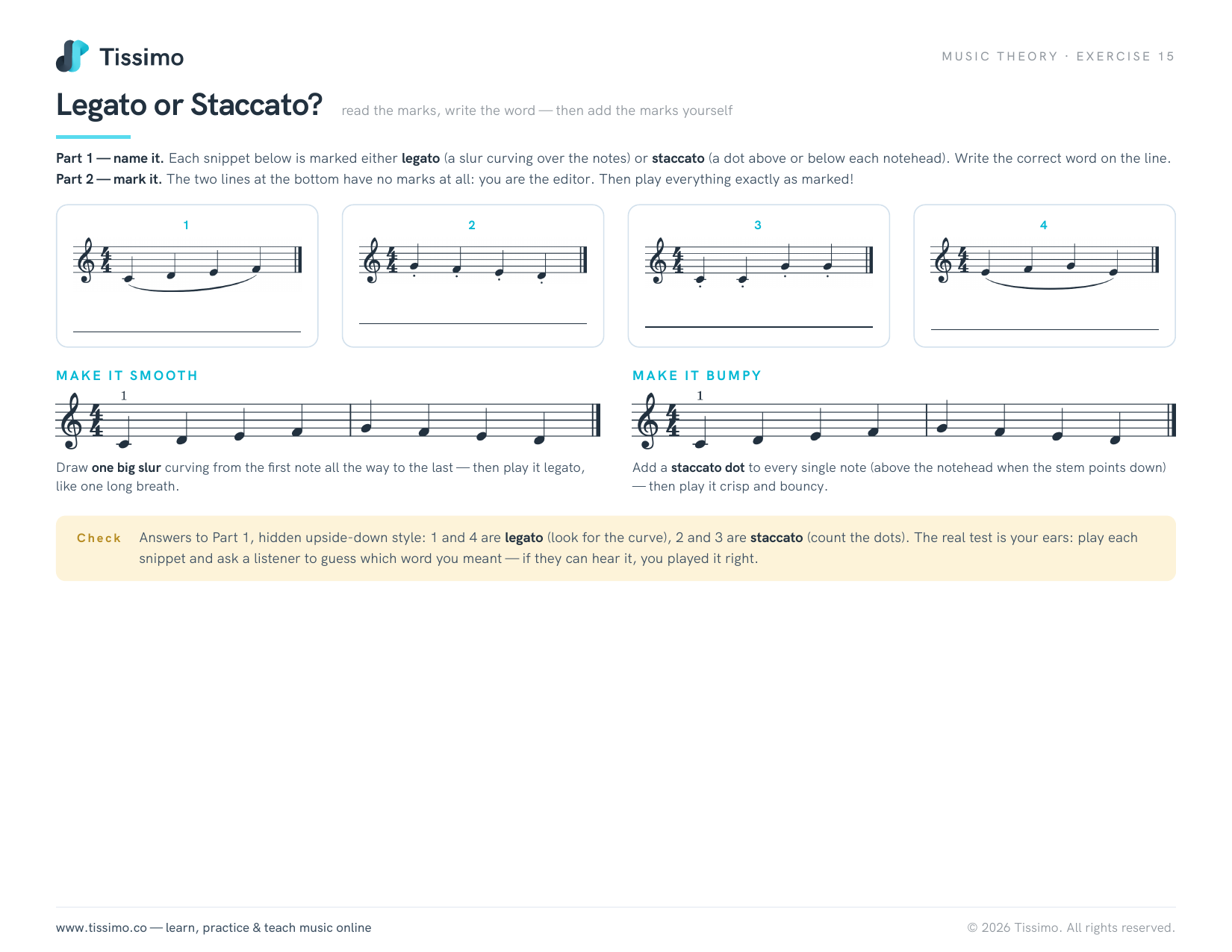 Legato or Staccato?read the marks, write the word — then add the marks yourself